I’m still editing Needle’s Edge. It’s biographical fiction. Think of those movies that open with based on true events or some such, save for the Coen Brothers.
This book is about prostitutes and the drug culture around the Philadelphia-adjacent area, PA, DE, NJ, and MD, circa 2016 to 2023, give or take. It primarily follows one woman in particular. I call her Sarah, one of those change the names to protect the innocent sorts of things.
Although renamed, Sarah is real. The events are real. But I also consider other renamed sex workers, particularly Alice, Amanda, Ashley, and some whose names even start with other letters.
I haven’t substantially written any fiction since September 2025, as I’ve been focusing more on philosophy. I documented much of this on my Substack. Interestingly or otherwise, ChatGPT Work was running in the background, and it prompted a reminder that formed a question: Would you like help organising an approach to finish Needle’s Edge? – something I hadn’t touched since 22 September last year. I ignored it for a few days, thinking that I may have inadvertently done something. And then I clicked it.
In essence, it read: I can help you to create an action plan and manage your schedule – things like this. I’ve been considering reengaging with this book for the entire time, but I wanted to publish some philosophical material, and can’t really do both because each requires its own headspace. And then one project became another, each feeling more important than fiction. It still feels this way, but I’ve got a half dozen fiction books in process and at least as many unfinished philosophical manuscripts. Such is the life of a writer. In fact, such is life – c’est la vie.
I’ll leave this here, but I expect to not only share my writing process, but to articulate the backstory for this particular novel – half a decade in the works.
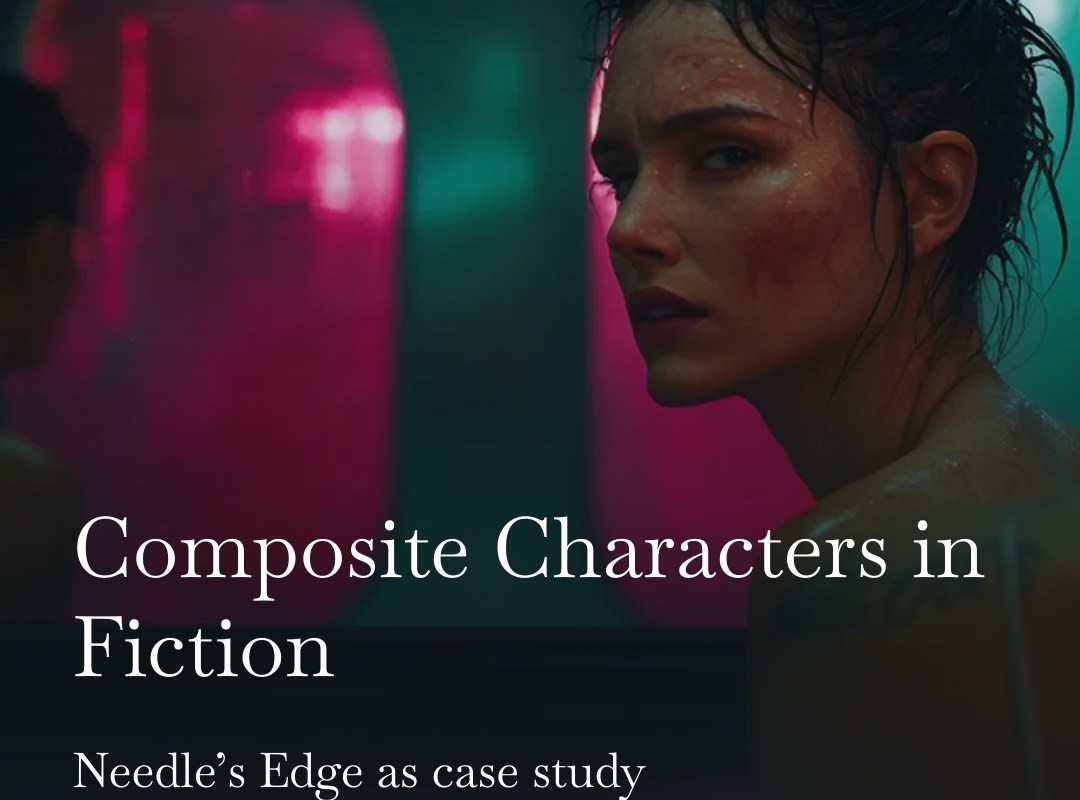
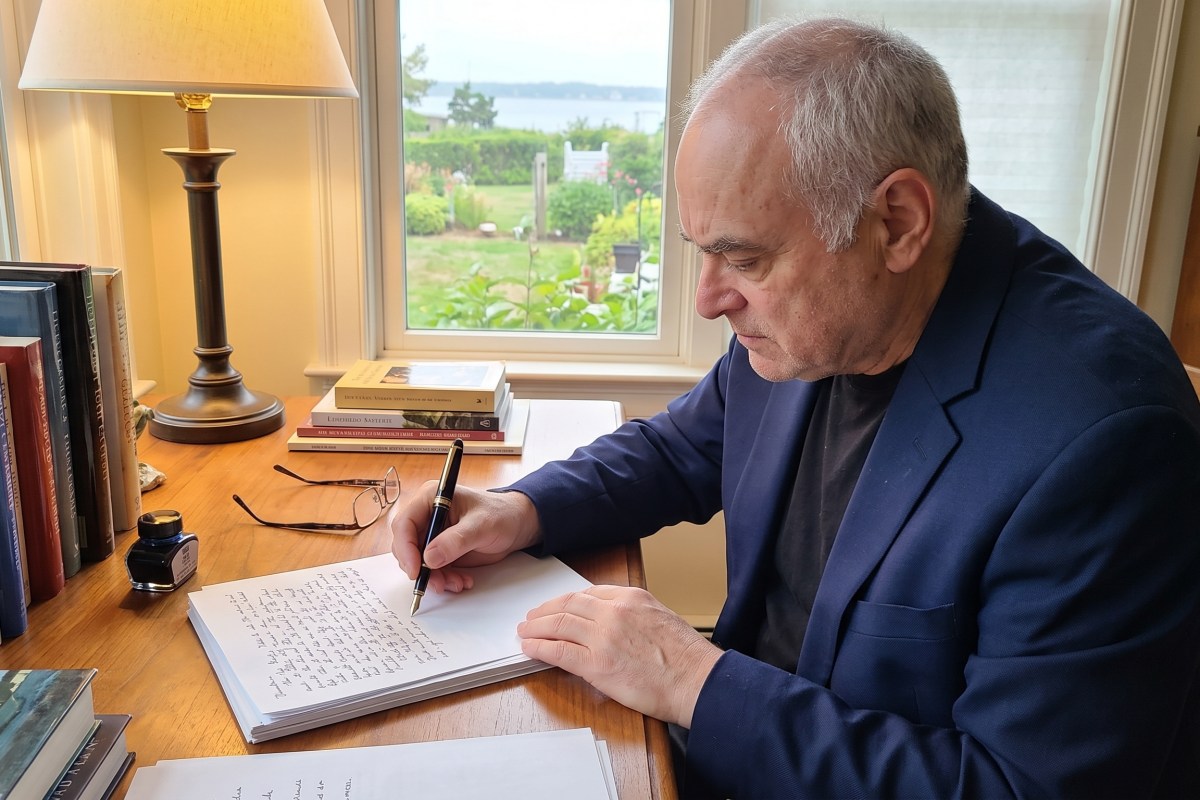
NB: I asked Gemini to generate the cover image based on a recent photo of me cast as an author writing a manuscript with pen and paper. This is the result. I’m not sure why it’s given me a sports coat, as I was wearing a tracksuit at the time, per usual. Whatevs. Otherwise, it’s pretty me-ish.
EDIT: I’ve finished this book and wrote about it on my Substack.
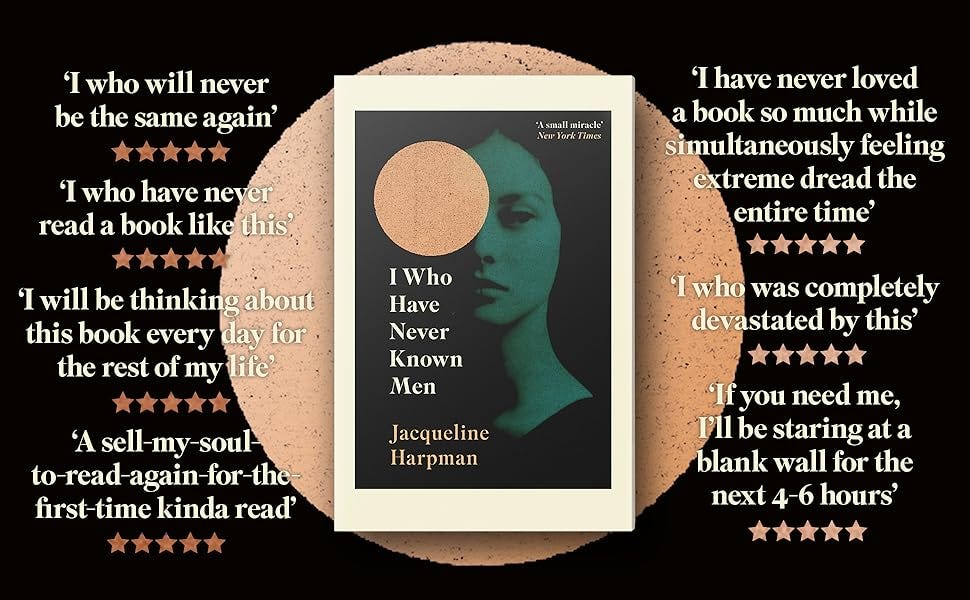
I’m about a quarter done with I Who Have Never Known Men. The pacing feels about right, but much of the mystery has yet to be revealed, if ever it will be. In fact, there are a few loose ends that need to be traced.
I am genuinely interested to see where it goes. A group of 40 women in a guarded cell in an unknown location. The protagonist is the youngest of them, likely by at least a decade. She doesn’t know how old she is, but she tells us that she stopped maturing, as it were, part-way through puberty, which evidently has implications for the story. No one seems to remember much of the past, including how they came to be there, but it seems to be a long time, and despite odd ageing profiles, they do seem to age and die.
This book appears to be both psychological and metaphorical, but I’ll reserve further comment for another time.
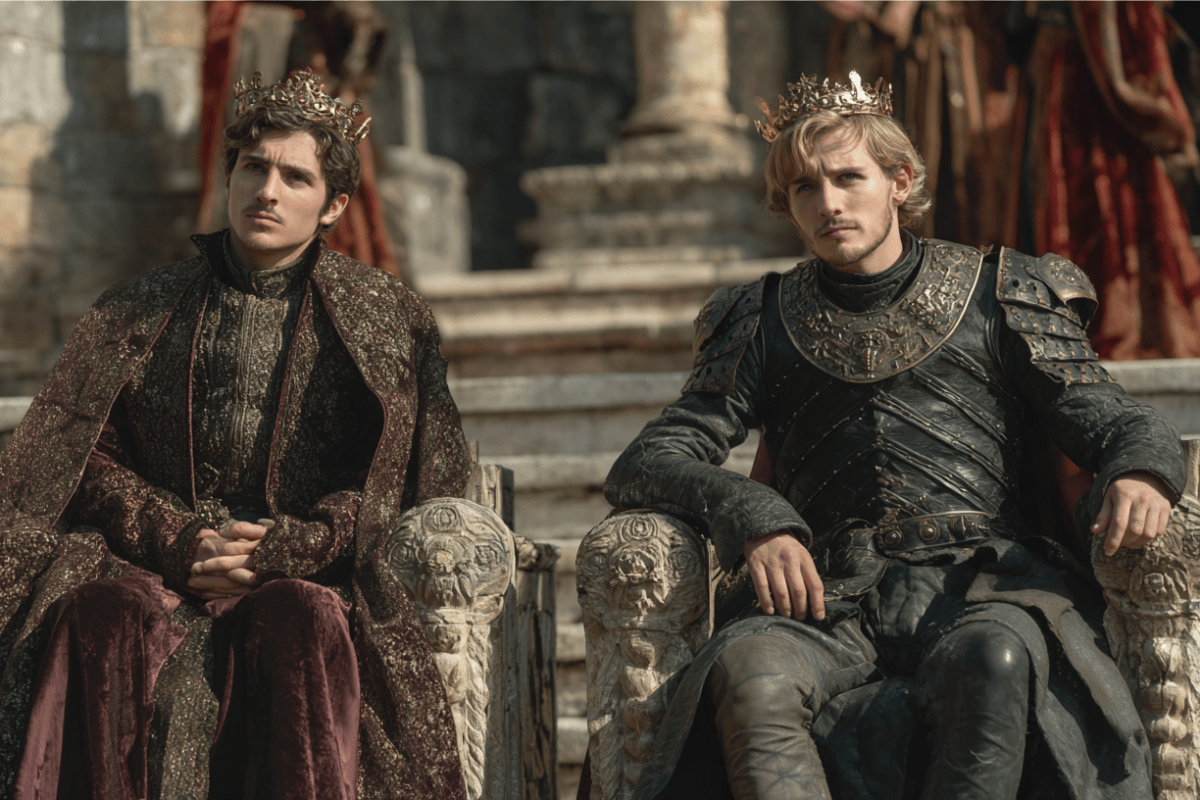
I was too clever by half. I am drafting a new project, likely to be a novella, and I wanted to try something different.
Before Claude dashed my hopes, I thought I was onto something novel. The working title is Two Kings. The device was to employ a camera-dolly metaphor from a third-person perspective. Distant scenes were captured even in a casual past tense, whilst close shots would be intimate, in the immediate present tense.
I imagined framing, focus, aperture, and focal length. Is it a wide establishing shot or macrophotography?
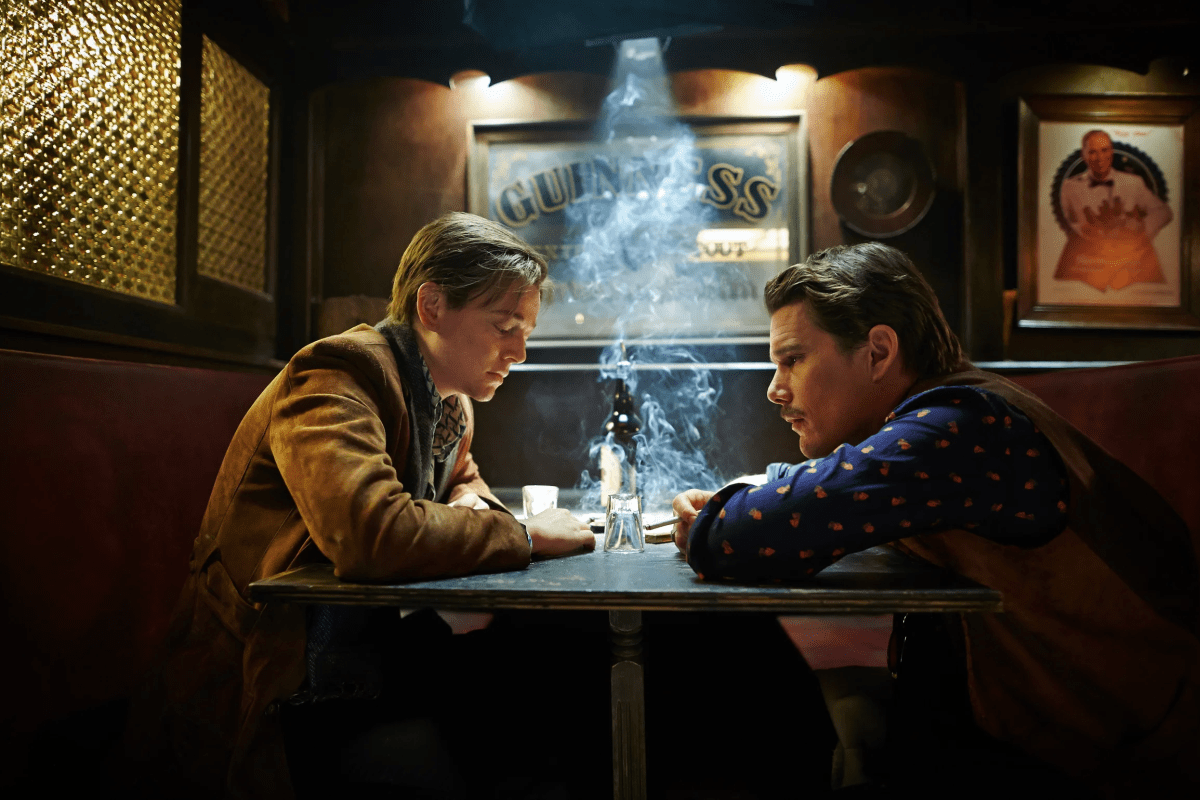
I don’t wish to overshare his book, but this is the essence. I have since read the book and will incorporate some of it, including this, in this manuscript.
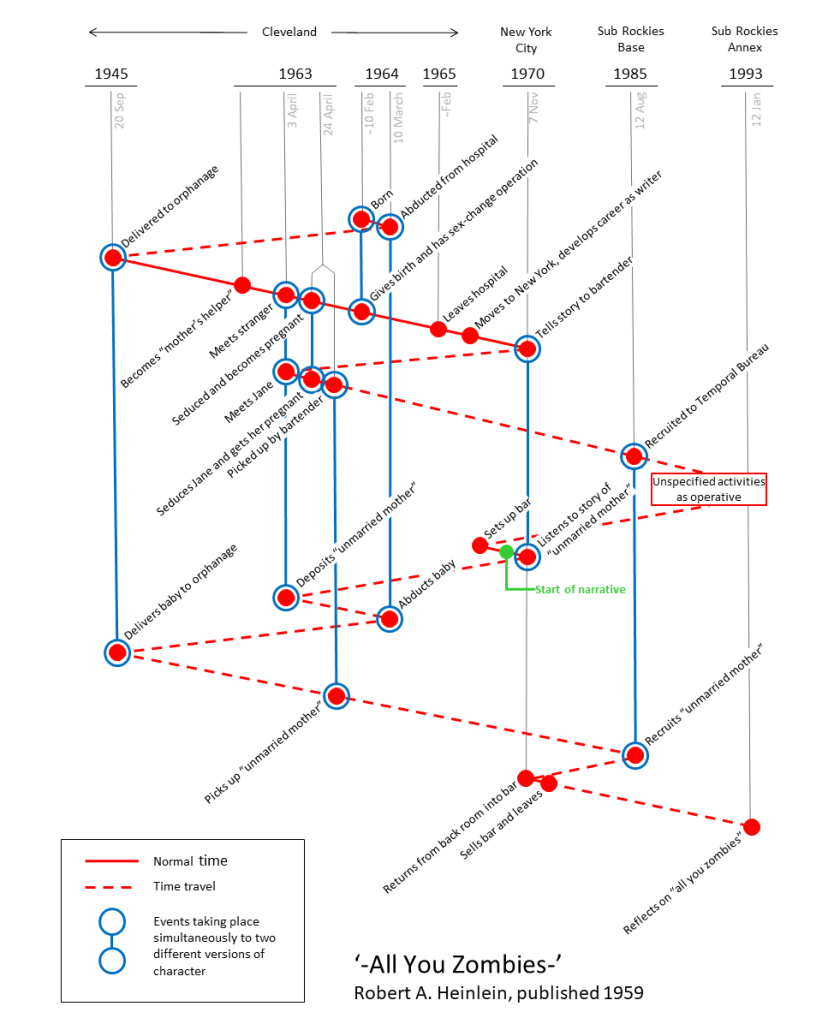
After watching a review of –All You Zombies–, a short story published in 1959 by Robert Heinlein, I found an online copy and read it. It’s about 9 pages long – an easy read. Here’s another audio version on YouTube.
In essence, it’s a story of self-discovery masquerading as time-travel sci-fi. I found the premise of the short story to be better than the execution. Despite decent reception and reviews, I didn’t really like the movie. Full disclosure: I don’t tend to like many movies or television, so consider the source. The script and acting felt contrived and wooden. I feel it could have been done better. The direction didn’t help. Even so, it’s only about an hour and a half, so it could have been worse.
Image: Time locations in the story.
The Hooters released a song named All You Zombies in 1983, though with a different theme.
Mainly, I’ve been working on academic nonfiction, so I felt it was time to post something here, especially since my last (but yet to be published) project involved a manner of time travel as well.
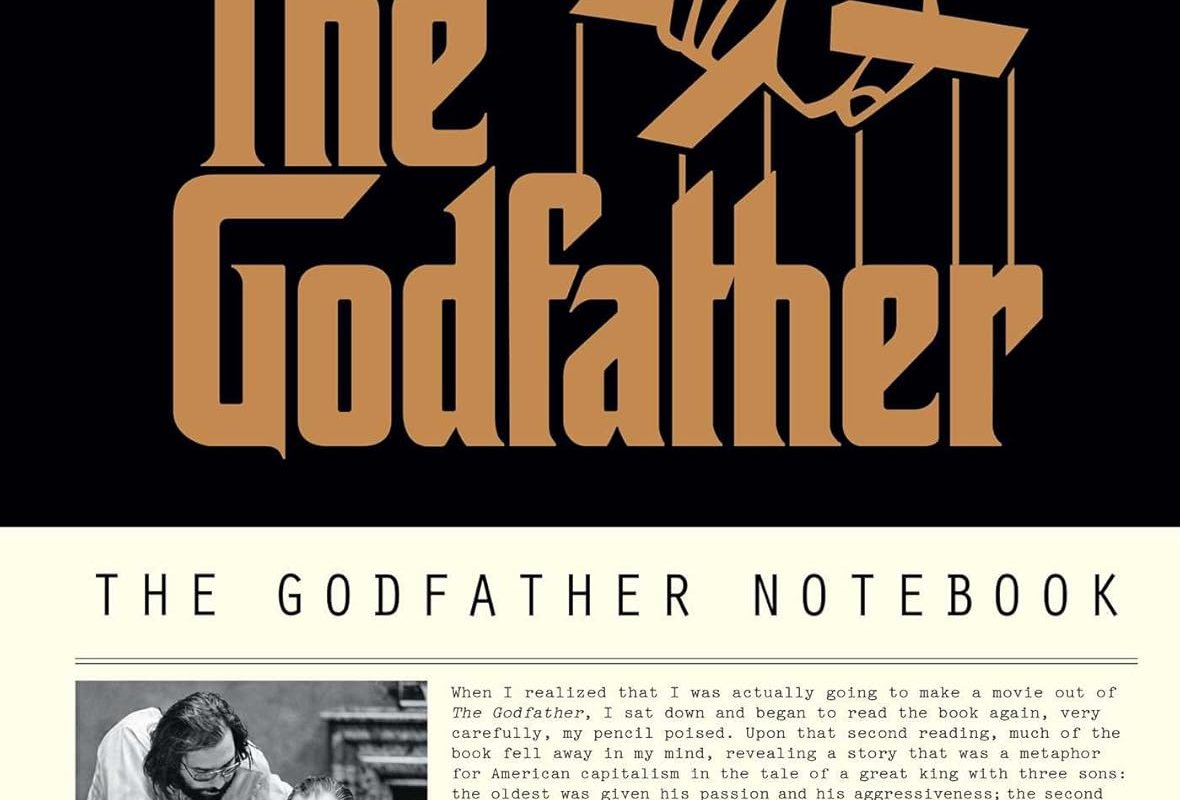
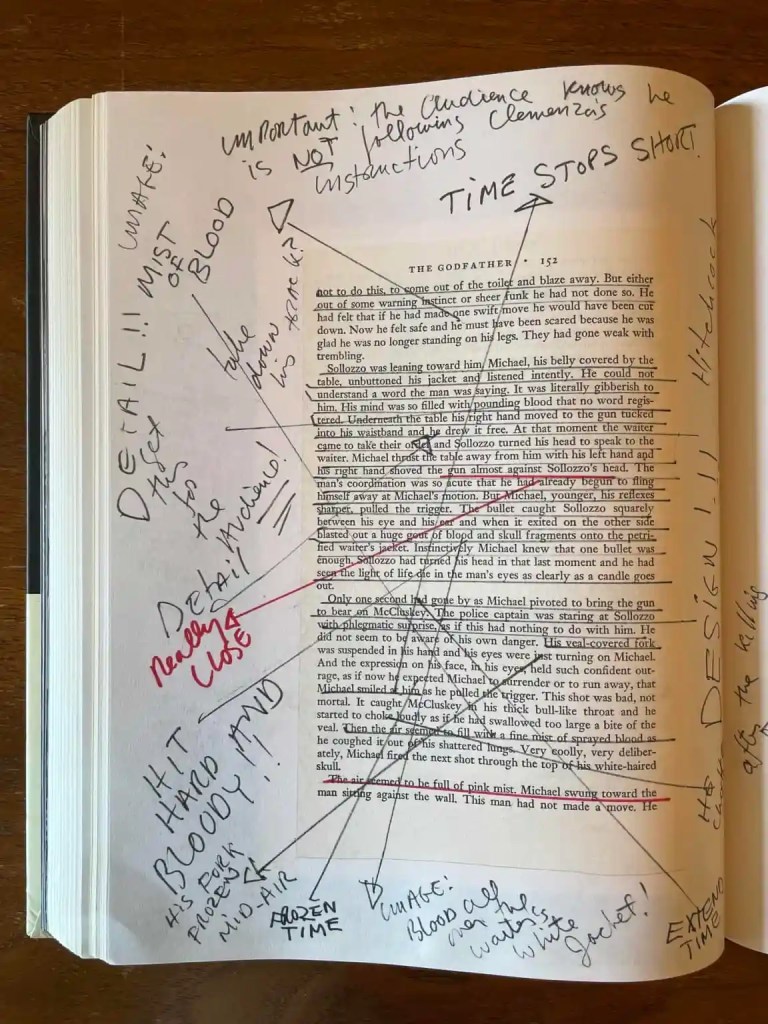
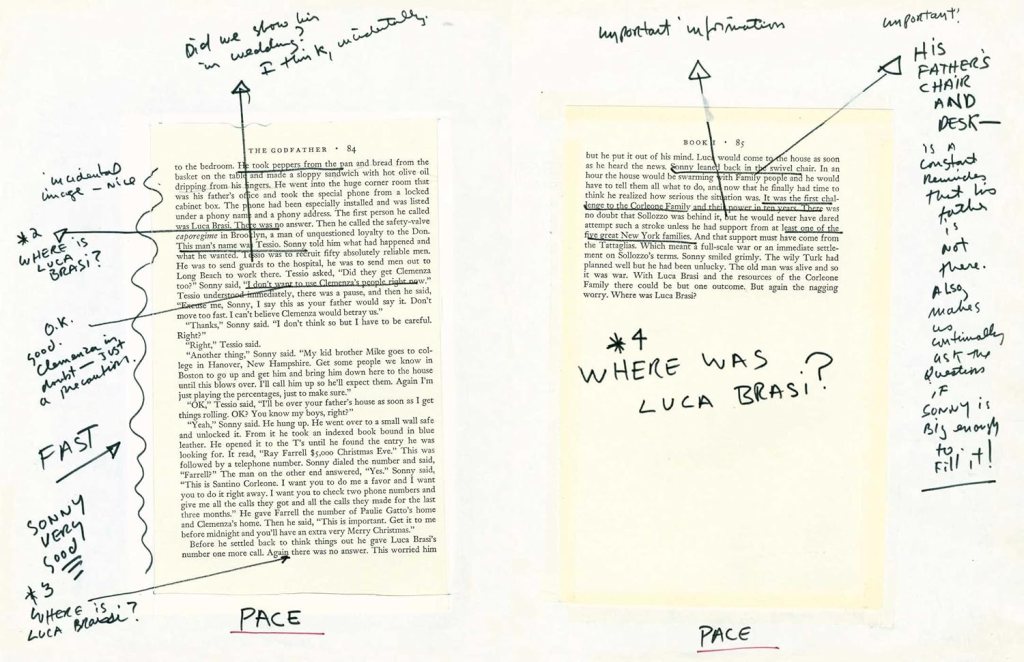
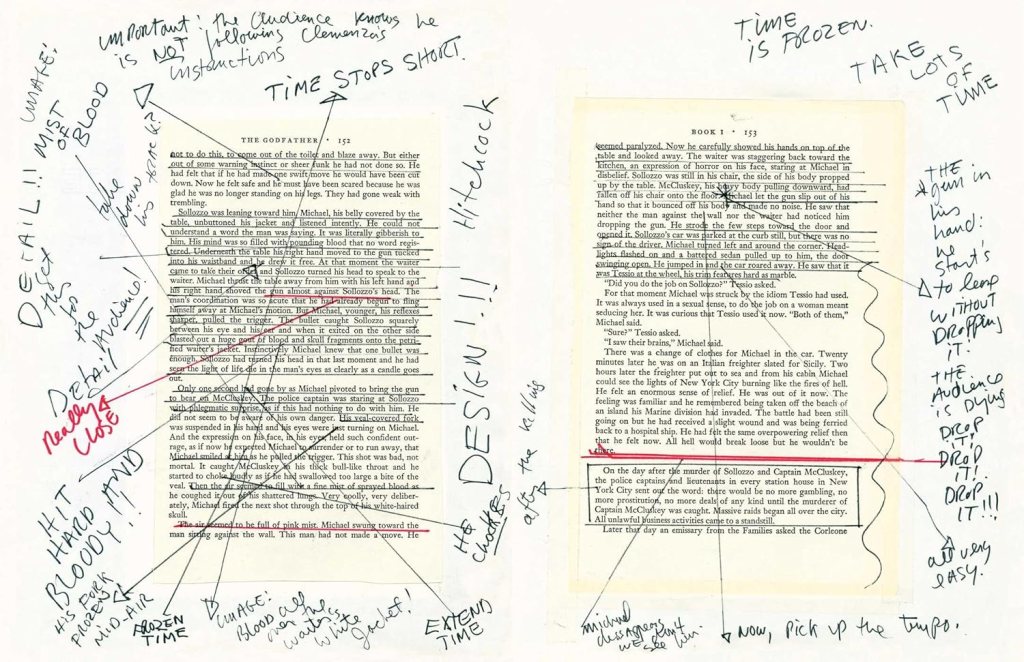
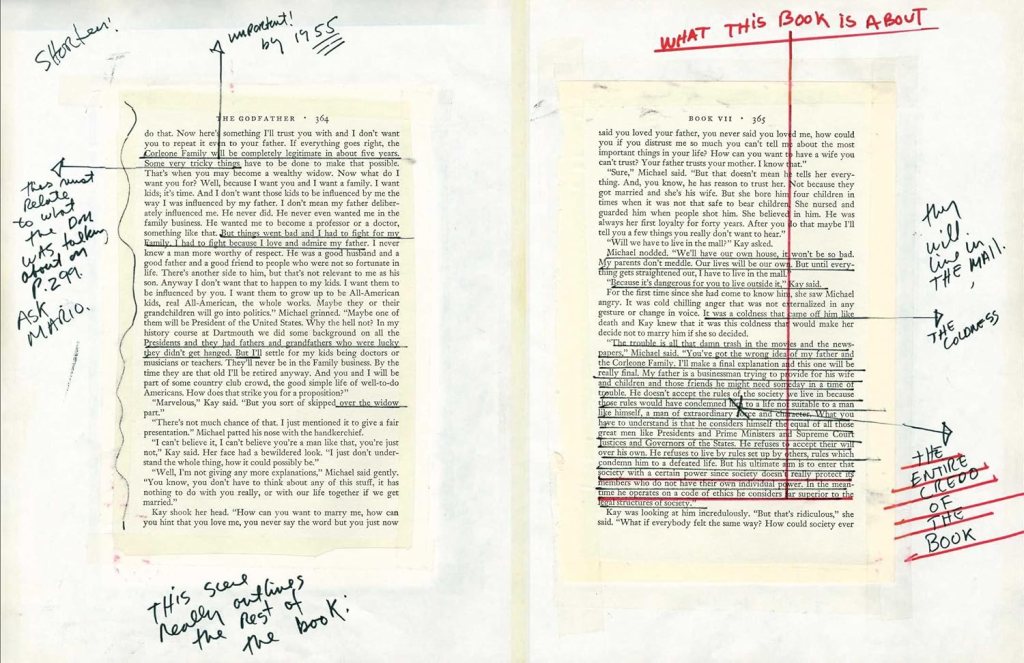
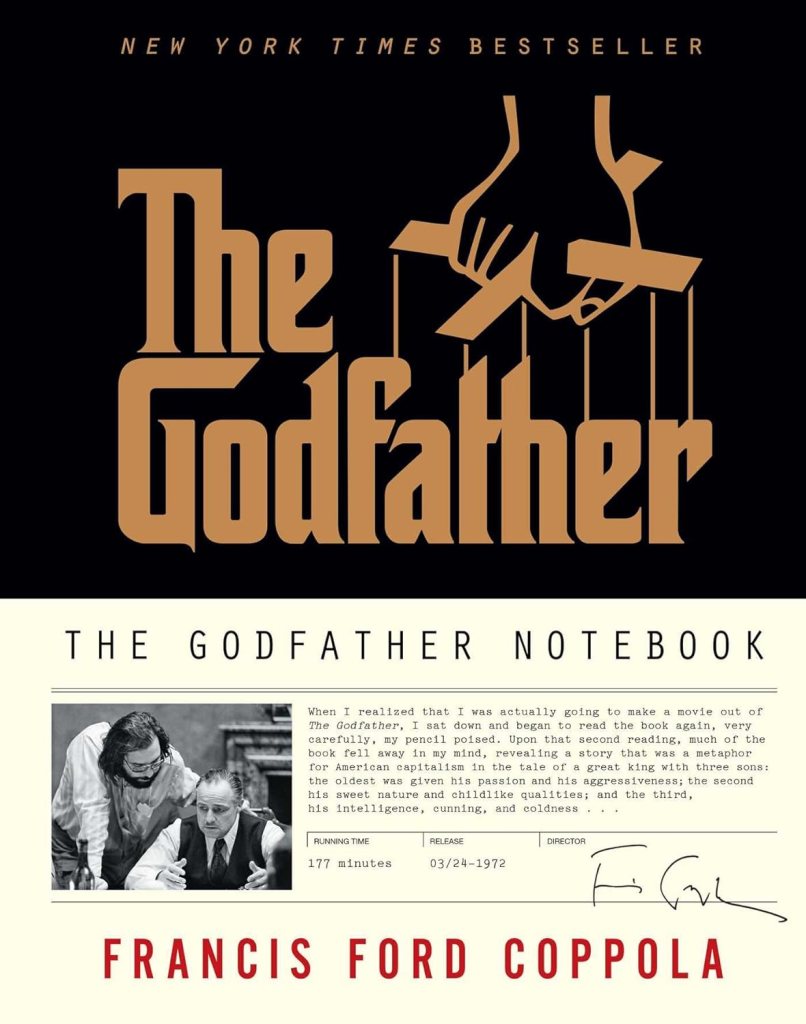
When I engage with fiction, I don’t tend to do close reads. I reserve these for academic nonfiction works. I was intrigued when I came across a post on Francis Ford Coppola’s notes on The Godfather, a book he eventually scripted and shot as director. The notes are published in The Godfather Notebook.
Obviously, Coppola had a reason to close-read or deep-read, but who among us annotates fiction quite like this? To be honest, I don’t even markup my own manuscripts this heavily. Do you?
I don’t want to comment much past sharing the technique. Open these thumbnails for more details.
NB: I don’t have the book myself. I obtained these images from the Amazon.com product page.
Two days, and you’ve only managed this? 154 words? Are you serious?
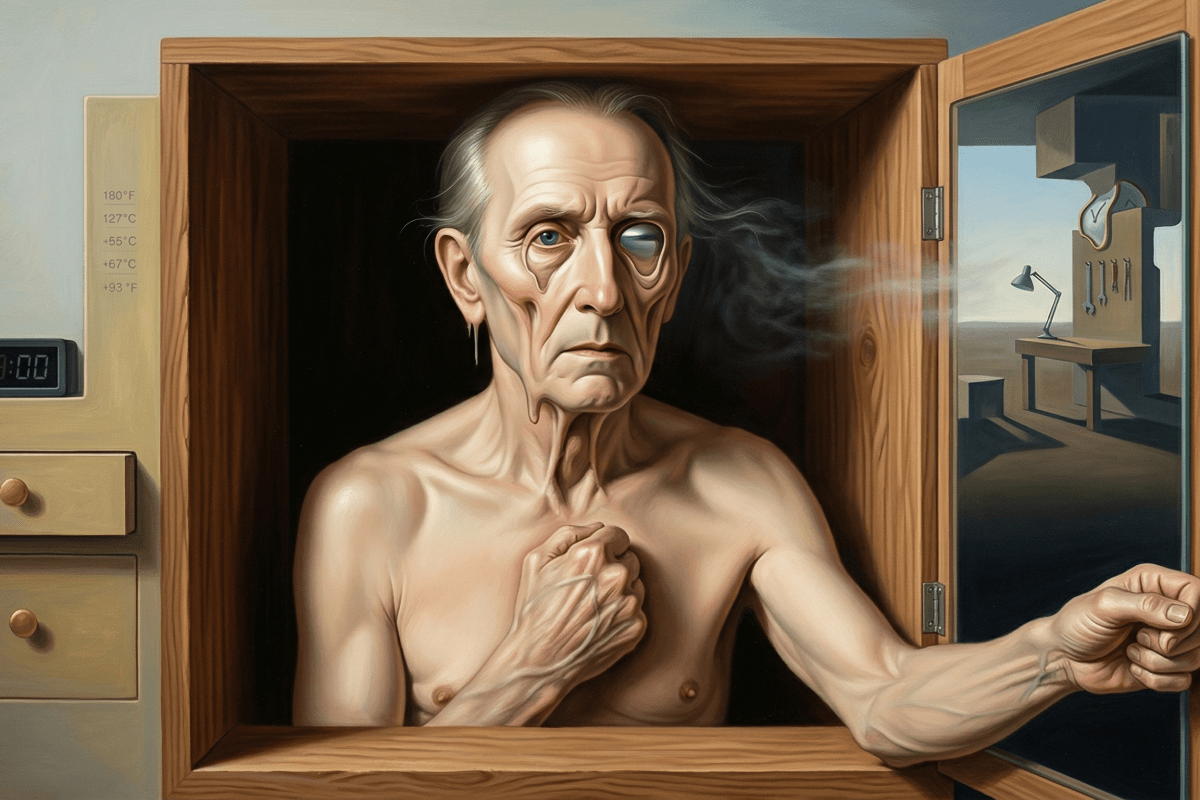
A seat. A button at knee height. An old man in a wooden box. Cedar and something like warmth.
Fist against his chest. Pressing hard.
His breath hitches. Shoulders forward. The hand slips and claws. Comes back to his chest. He looks at the button. The look of a man who has forgotten what a thing is for.
Reaches for it. Stops.
He turns. The box creaks. Fingers on the latch. Misses it. Finds it. The seal breaks and the door swings out. Cooler air rushes across his face.
He doesn’t move.
Half turned. Arm outstretched. The button. The door. A correction only he understood.
The workshop beyond. Bench and lamp. Tools on their hooks. The quiet order of a room that had always been his. It would outlast him now by hours. Temperature settings on the outer panel. An LED timer gone dark.
A man in a box in a basement.
A father.
Indeed, I am.
My last two days were occupied outlining and annotating a short story or novellette, depending on how many words I muster. At this rate, short story is the easy bet. This is the opening scene.
This is somewhat experimental literary speculative fiction, but I am not a fan of genre constraints. This isn’t as experimental as some of my writing, but it is as philosophical.
I’m not sure that I’ll finish this manuscript anytime soon. I just decided to use the Easter holiday weekend as an excuse to ignore my academic writing, having just finished revising and publishing an essay I had originally published in February.
The basis is a secret. 🤫 Shhhh… It follows another academic essay, but as a publisher once insisted: nobody reads nonfiction. It’s boring. If you want to make a point, write fiction. It’s like warm water to a box of frogs.
I didn’t question him on the frogs.
Apparently, I should complete my Gravatar profile. If this is complete in the future, you’ll know I succeeded.
A social media connexion on another account shared this link with me, on the notion of anti-libraries. This is perfect for a writing (or reading) blog.
The library should contain as much of what you do not know as your financial means … allow you to put there. You will accumulate more knowledge and more books as you grow older, and the growing number of unread books on the shelves will look at you menacingly. Indeed, the more you know, the larger the rows of unread books. Let us call this collection of unread books an antilibrary.
As for me, it’s been too long since I’ve set aside time to write fiction, so many manuscripts remain unfinished and await time in my attention cycle.
If you are interested in what I am doing in general, check out Philosophics Blog.
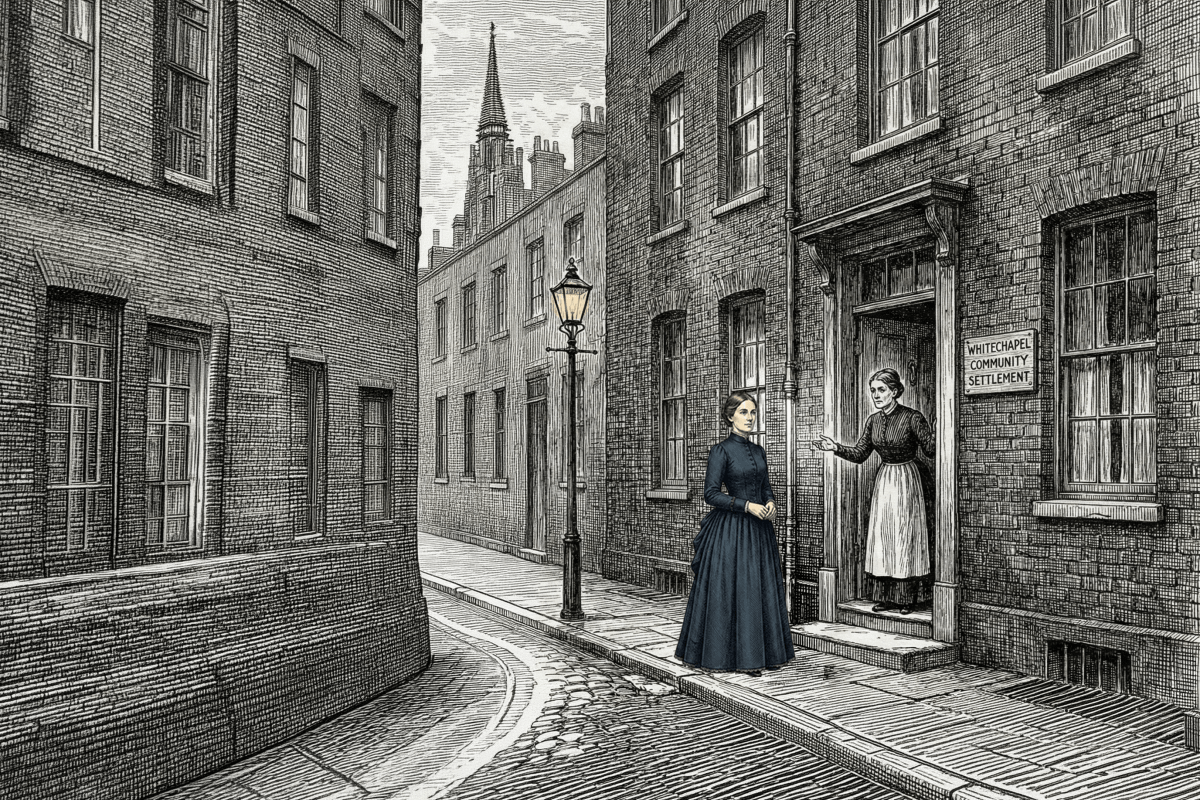
The original idea was simple: write a story populated with invented words – terms that aren’t random nonsense, but which feel as though they could be English. Words that sound faintly familiar, perhaps even slightly anachronistic. Setting the piece in Victorian London helped with that illusion.
At first, I wavered between vampires and Sherlock Holmes. I chose the latter – though, strictly speaking, this is my own Holmesian invention. Like Holmes, my lead required a trusted companion. And because this would be a short story, everything needed to remain compact: a single focus, no wandering side quests, opening in medias res at a crime scene. Or rather, not a crime scene exactly – a disappearance. The mayor’s daughter is missing. Our team is called in.
Image: Sherlock Holmes encounters vampires. Who knew?
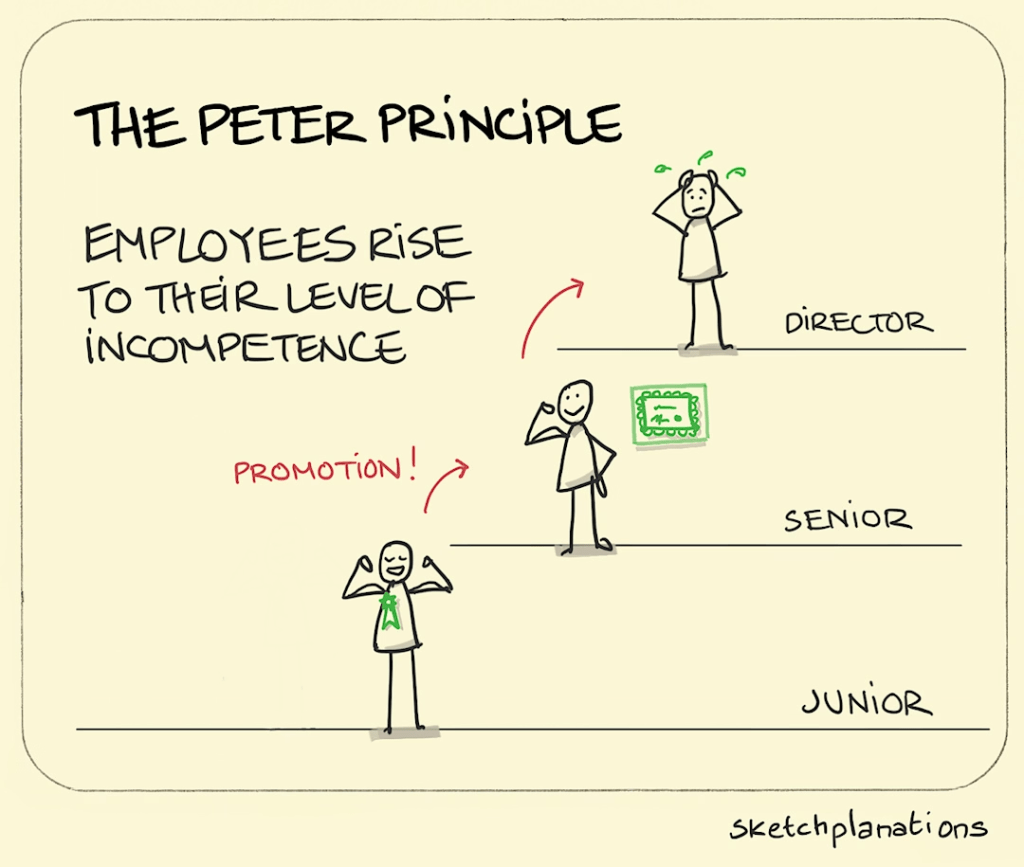
The lead became Inspector Peter Holt, named with deliberate irony after the Peter Principle: the idea that people are promoted to the level of their incompetence. Many organisations quietly run on this logic, though few would admit it. Peter embodies the principle – except he is not merely promoted beyond competence; he may never have possessed it in the first place. We have all met some version of Peter.
He is also the fountain of the story’s faux-English bloviation. Keeping him afloat is his partner, Miss Eleanor Hale. A female inspector in the period is unlikely, but not impossible – and fiction allows a little generosity. She is instrumentally competent, quietly effective. Perhaps, in some small way, she is a gender-swapped fragment of autobiography.
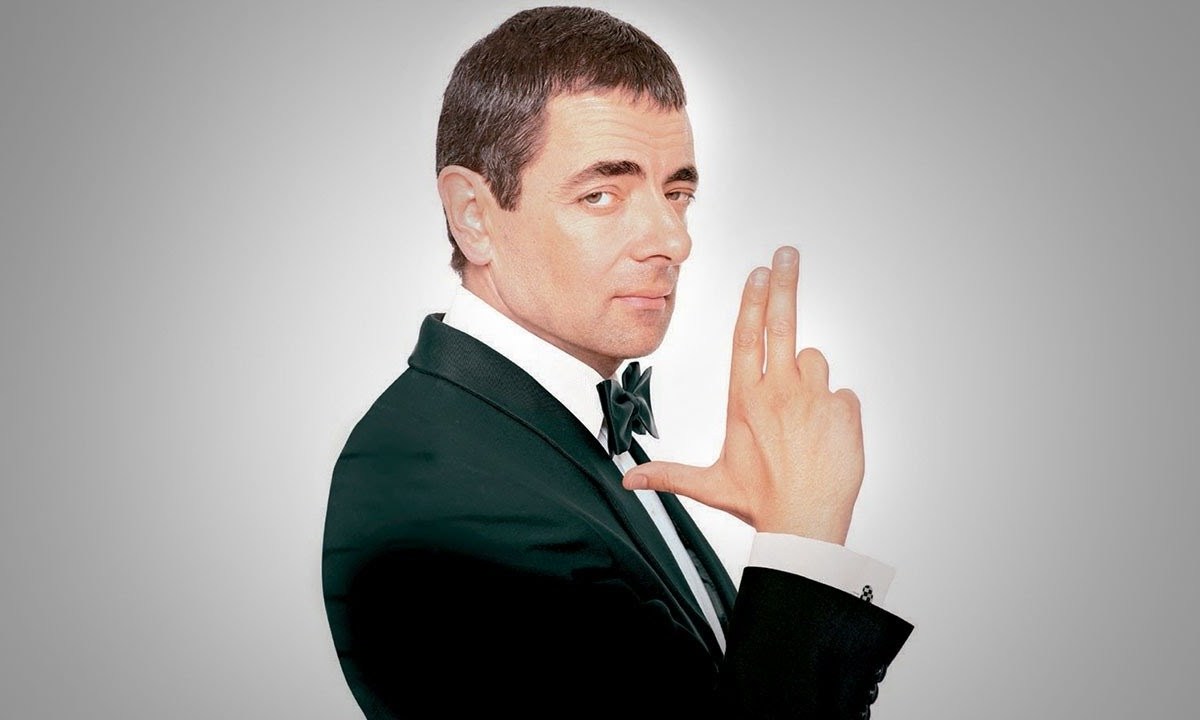
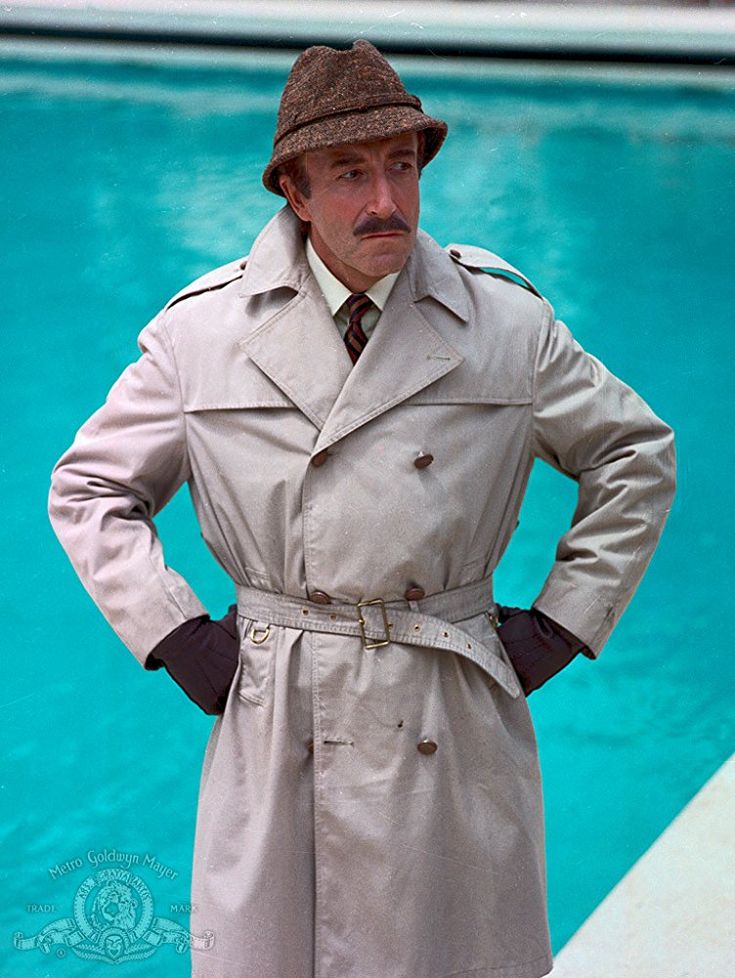
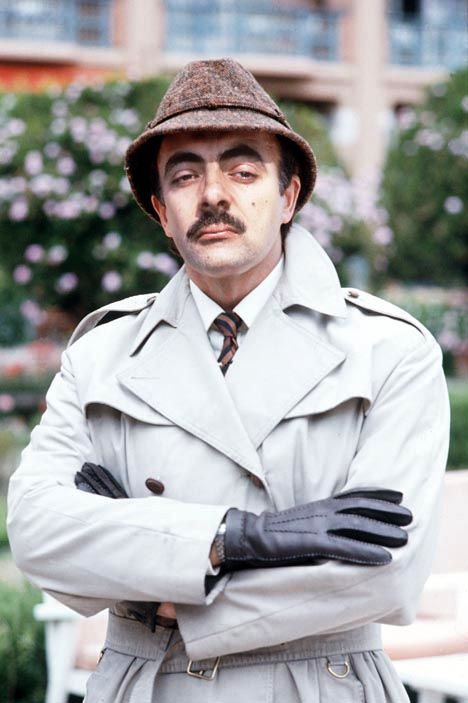
In imagining Peter, I found myself thinking of Inspector Clouseau, or even Mr Bean—figures of confident inadequacy. His language, meanwhile, carries a faint echo of Mr Burns from The Simpsons: ornate, misplaced, and entirely self-satisfied.
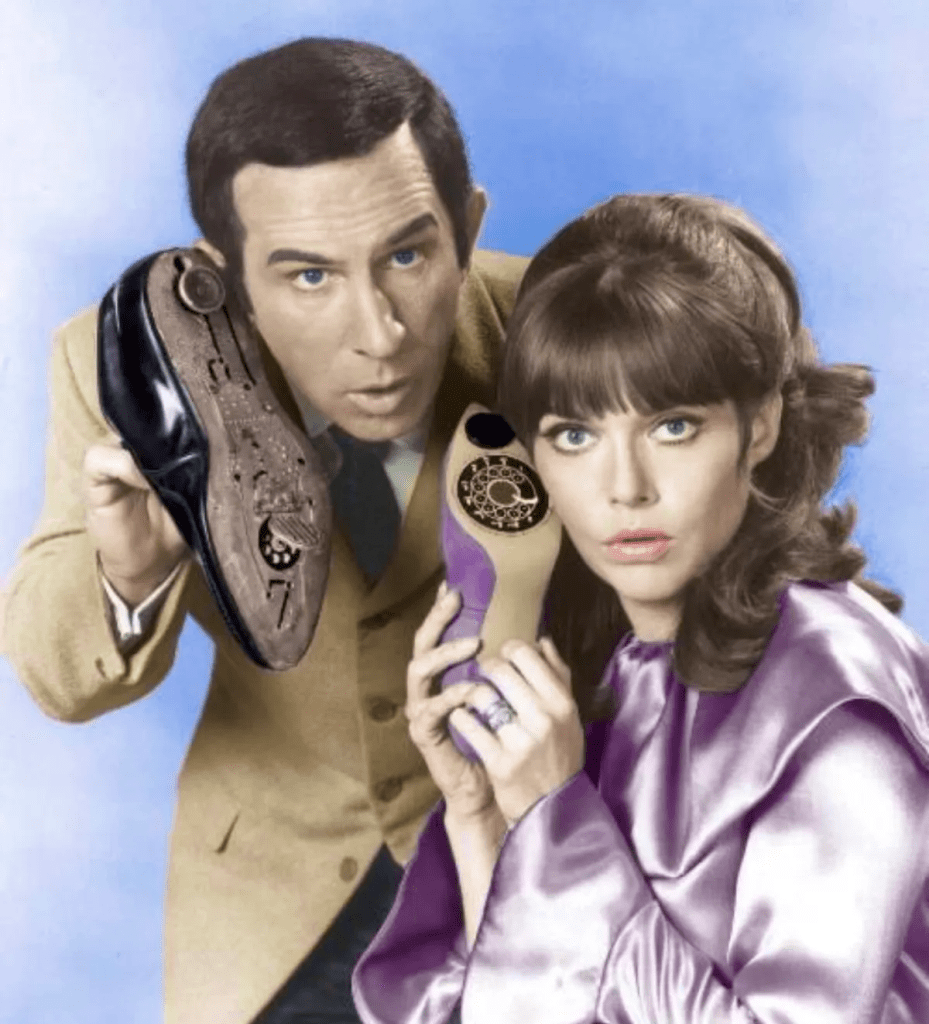
Hale’s role clarified thanks to my sister, who pointed me toward Agent 99 from Get Smart: the capable partner orbiting Maxwell Smart’s chaos. That pairing felt exactly right.
Image: Get Smart: Maxwell Smart (Don Adams) and Agent 99 (Barbara Feldon)
I usually write in silence. This time, by accident, I discovered a NoFX cover of “Linoleum” and left it playing on repeat for hours while drafting. It is playing again as I write this. Something about its restless, unvarnished energy suited Peter’s linguistic theatrics and Hale’s quiet steadiness.
I owe the linguistic spark behind this experiment to a particular pair of word-enthusiasts whose work first nudged the idea into motion. I am, unapologetically, a language geek; this is only one small corner of that fascination, and I will spare you the full catalogue.
In the end, Advantagement became a pleasant detour from my other projects and ongoing side quests. A distraction, perhaps – but a satisfying one.
Thank you, Donald Barthelme, for the historical inspiration.