Back Again

I haven’t substantially written any fiction since September 2025, as I’ve been focusing more on philosophy. I documented much of this on my Substack. Interestingly or otherwise, ChatGPT Work was running in the background, and it prompted a reminder that formed a question: Would you like help organising an approach to finish Needle’s Edge? – something I hadn’t touched since 22 September last year. I ignored it for a few days, thinking that I may have inadvertently done something. And then I clicked it.

In essence, it read: I can help you to create an action plan and manage your schedule – things like this. I’ve been considering reengaging with this book for the entire time, but I wanted to publish some philosophical material, and can’t really do both because each requires its own headspace. And then one project became another, each feeling more important than fiction. It still feels this way, but I’ve got a half dozen fiction books in process and at least as many unfinished philosophical manuscripts. Such is the life of a writer. In fact, such is life – c’est la vie.

I’ll leave this here, but I expect to not only share my writing process, but to articulate the backstory for this particular novel – half a decade in the works.

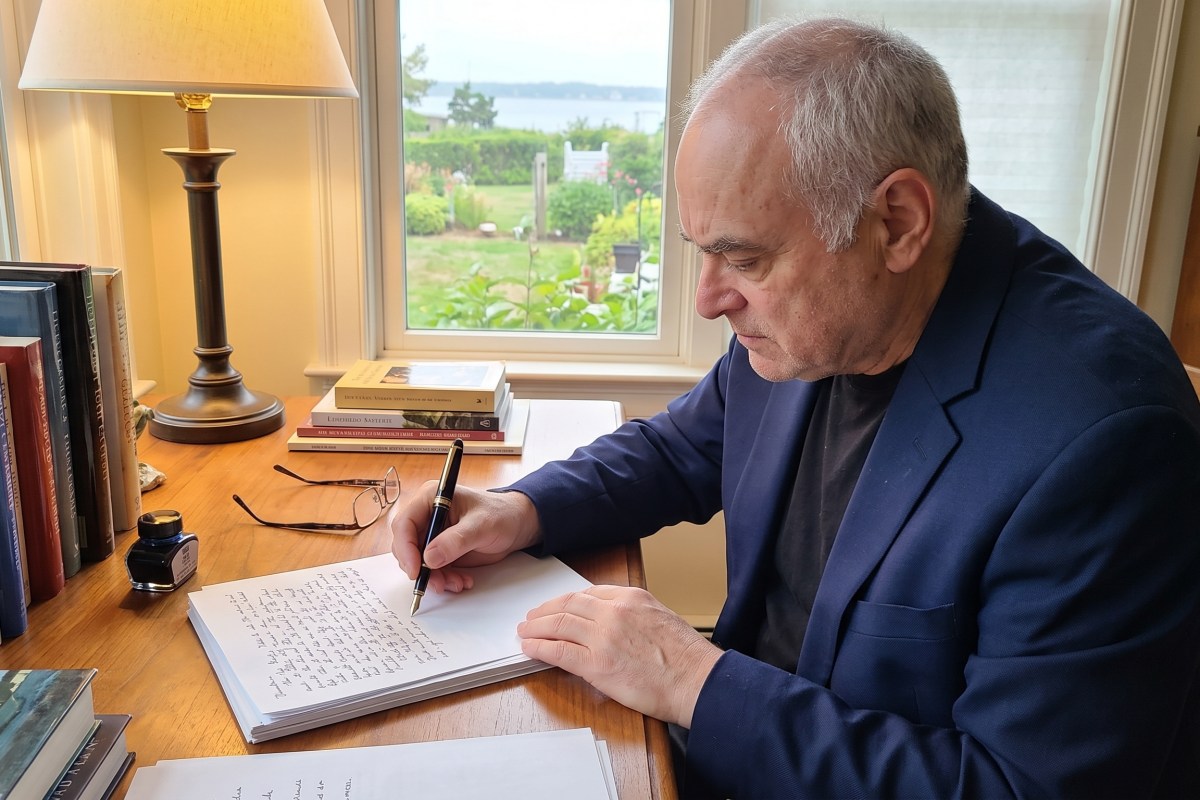
NB: I asked Gemini to generate the cover image based on a recent photo of me cast as an author writing a manuscript with pen and paper. This is the result. I’m not sure why it’s given me a sports coat, as I was wearing a tracksuit at the time, per usual. Whatevs. Otherwise, it’s pretty me-ish.
Persona, Identity, and the Many Faces of Sarah

(Notes from the cutting room floor)

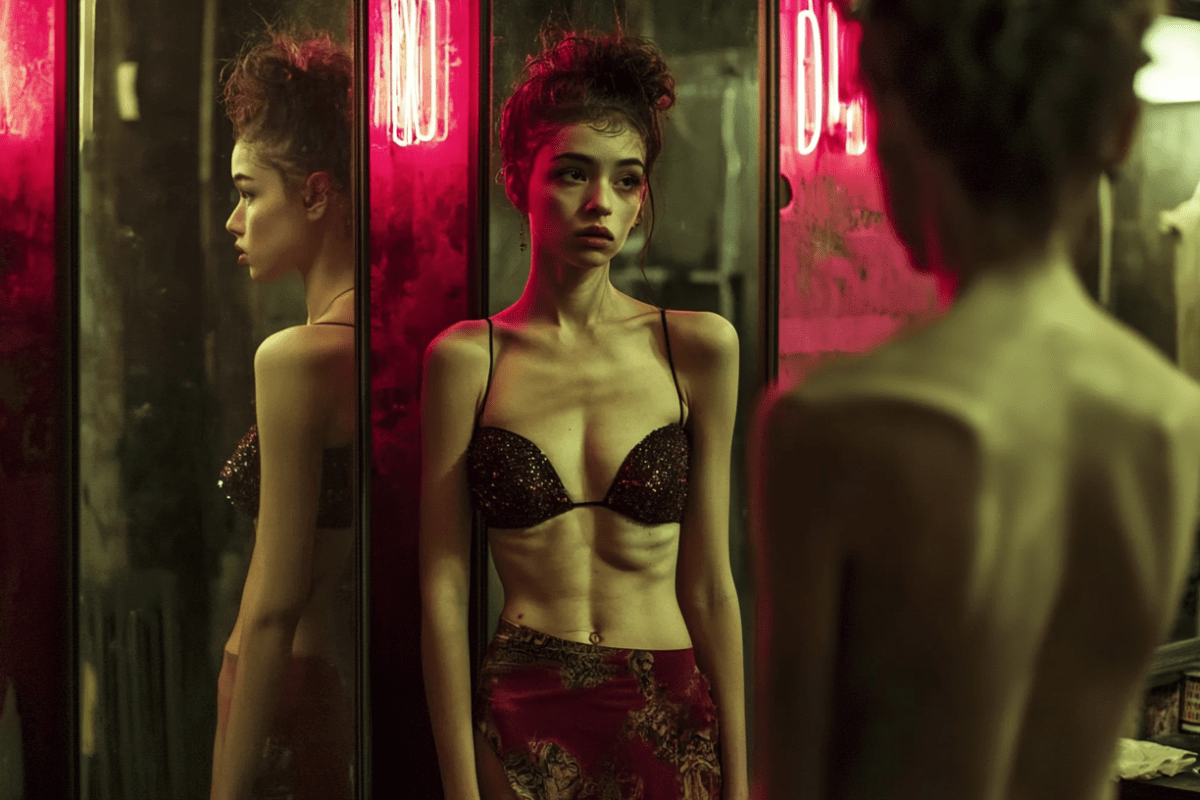
I’m taking a break from editing to share something about the protagonist in my latest novel-in-progress, Needle’s Edge. She’s a woman – yes, but not just. She’s a prostitute. She’s an addict. And she’s three people.

Audio: NotebookLM podcast on this topic. (Direct)

There’s Sarah, her given name. The name reserved for friends, family, and those rare few who know her without conditions. It’s the name she hears in moments of tenderness, or shame, or memory.

Then there’s Stacey, the escort, the stripper, the performer. This is the name on her ads. The one whispered in hotel rooms and shouted in clubs. Stacey is curated. Sexual. Selective. She knows what sells and how to sell it.

And then there’s Pink, the street persona. The user. Pink is who shows up when Sarah needs to score. She trades in slang and silence. She wears a different skin. A different currency.

Three names. One woman. No seams showing – if she can help it.

In her world, compartmentalisation is survival. If a dealer connects the dots and knows she’s an escort, she’s vulnerable. If a client finds out she’s using, her value drops. Appearances are everything. Rates depend on it. Reputation is a balancing act on a razor’s edge. And so each name carries its own set of rules, risks, and rituals.

But here’s the deeper cut: Who’s the “real” Sarah?

Is Stacey fake? Is Pink less than? Is Sarah just the base layer beneath the makeup and muscle memory?

They’re all her. None of them. Some of each. Identity is slippery.

The left hemisphere of the brain craves coherence. It wants simplicity, categories, reduction. But the truth is, identity is a heuristic. A convenient fiction. And Sarah, more than most, knows this. Where most people perform one role and pretend it’s a self, she splits hers openly. She curates them. Manages them. Leverages them.

And yet, the cost is high.

Stacey and Pink are exhausting. High maintenance. High risk. But being Sarah isn’t a comfort either. It’s just what’s left when the others are stripped away. She doesn’t retreat into Sarah so much as collapse into her.

In that way, Sarah isn’t a self – she’s a default.

The irony? For all this agency, for all her awareness, she’s still trapped in identities designed for consumption. For transaction. For escape. Whether it’s sex, drugs, or memory, she’s always negotiating something.

Three names.
Three roles.
Still no way out.