I’ve not posted here in a minute. I’ve been focused on non-fiction academic work, and it seems this trend will continue for at least a month or so, as I am subject to the constraints of time. This said, I still have time to listen to audiobooks, especially when I work out. I also listen to them when I am falling asleep and waking.
I just finished listening to the third book of the Dungeon Crawler Carl series. It’s classified as LitRPG. which is new to me. I found a video of these blokes talking about it and sharing some samples. If you enjoy RPG culture and pointless diversion, this might be for you. I’m not sure how it reads, but it works well in dramatised audio.
Rather than listen to the fourth book in the series – I felt it was a bit indulgent to continue down this path, so I switched to Stonerby John Williams – presumably not the geezer who wrote the Star Wars music. I’m not familiar with Williams, but Stoner kept cropping up on lists, so I succumbed.
Here’s the blurb from the Audible product page:
William Stoner is born at the end of the 19th century into a dirt-poor Missouri farming family. Sent to the state university to study agronomy, he instead falls in love with English literature and embraces a scholar’s life, far different from the hardscrabble existence he has known. And yet as the years pass, Stoner encounters a succession of disappointments: marriage into a “proper” family estranges him from his parents; his career is stymied; his wife and daughter turn coldly away from him; a transforming experience of new love ends under threat of scandal. Driven ever deeper within himself, Stoner rediscovers the stoic silence of his forebears and confronts an essential solitude.
John Williams’s luminous and deeply moving novel is a work of quiet perfection. William Stoner emerges from it not only as an archetypal American, but as an unlikely existential hero, standing, like a figure in a painting by Edward Hopper, in stark relief against an unforgiving world.
I’ve only read the first two chapters, and it’s already got my interest. My first thoughts are on its existential nature. I am reminded of Camus’s Meursault from L’Étranger, except that Stoner, the protagonist, is more aware of his environment. Even so, he seems to drift through life with limited agency.
The blurb above already conveys more than I’ve yet read, but so far I appreciate the narration and unfolding.
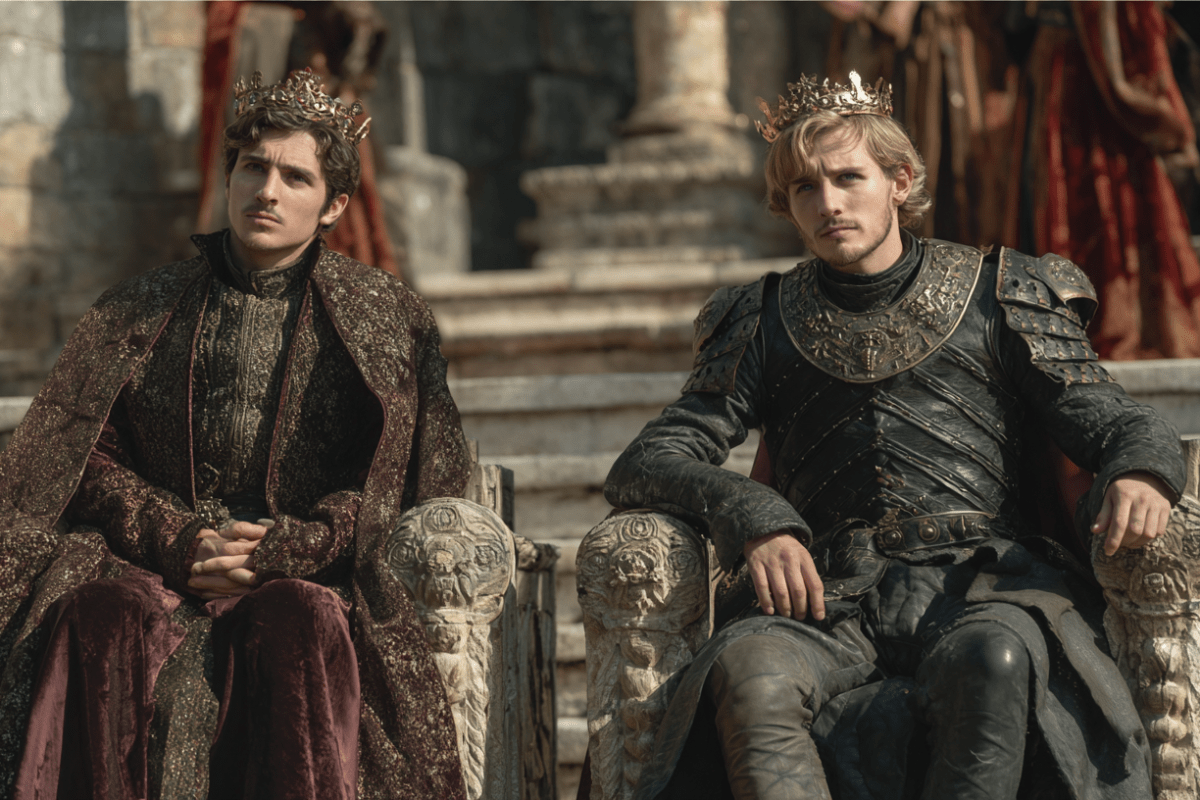
I was too clever by half. I am drafting a new project, likely to be a novella, and I wanted to try something different.
Before Claude dashed my hopes, I thought I was onto something novel. The working title is Two Kings. The device was to employ a camera-dolly metaphor from a third-person perspective. Distant scenes were captured even in a casual past tense, whilst close shots would be intimate, in the immediate present tense.
I imagined framing, focus, aperture, and focal length. Is it a wide establishing shot or macrophotography?
I don’t wish to overshare his book, but this is the essence. I have since read the book and will incorporate some of it, including this, in this manuscript.
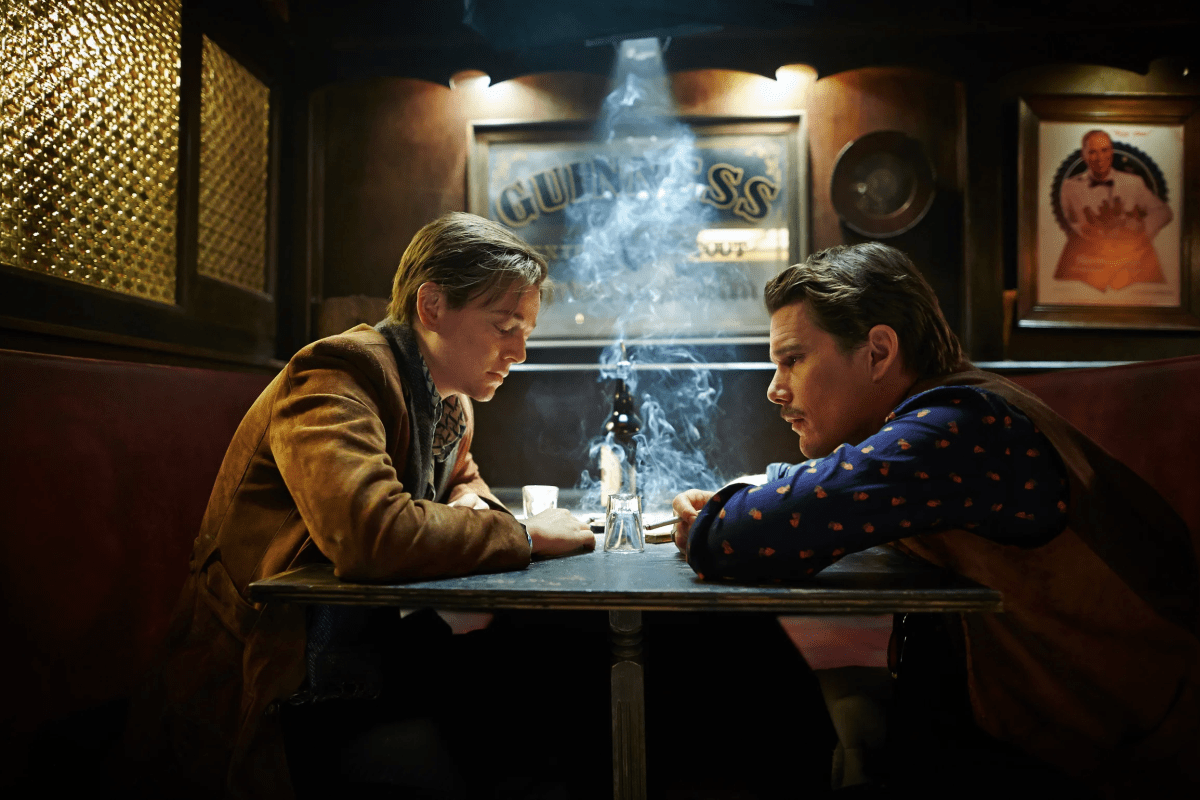
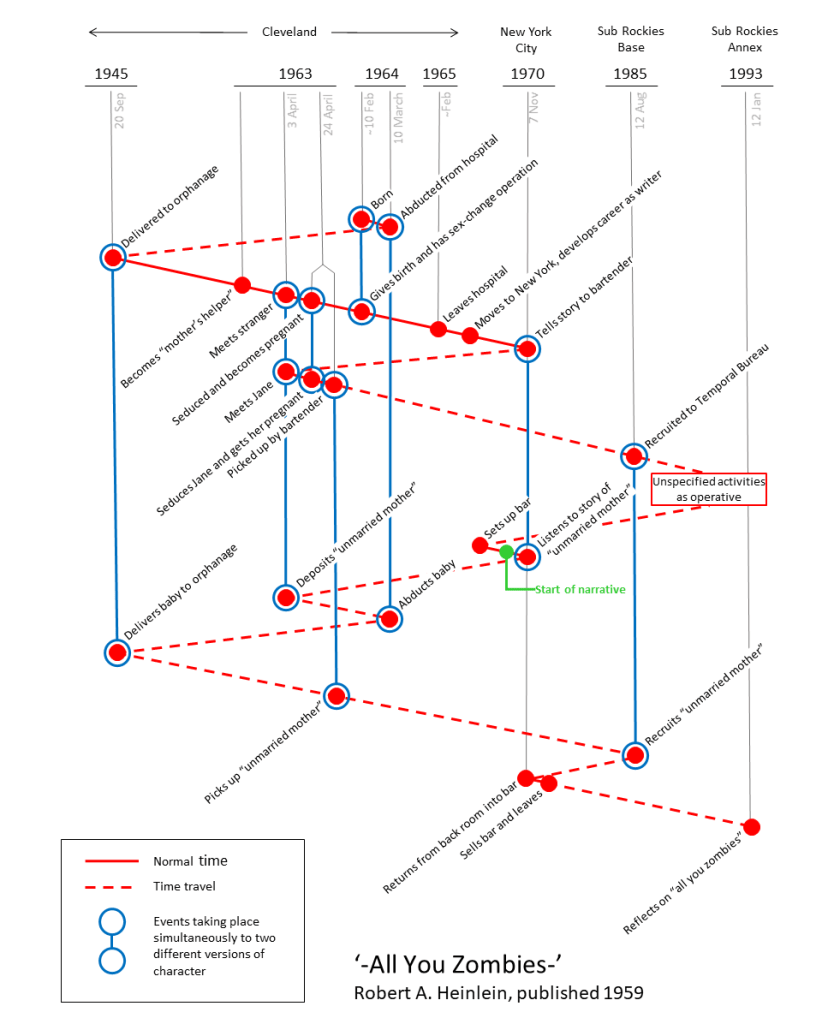
After watching a review of –All You Zombies–, a short story published in 1959 by Robert Heinlein, I found an online copy and read it. It’s about 9 pages long – an easy read. Here’s another audio version on YouTube.
In essence, it’s a story of self-discovery masquerading as time-travel sci-fi. I found the premise of the short story to be better than the execution. Despite decent reception and reviews, I didn’t really like the movie. Full disclosure: I don’t tend to like many movies or television, so consider the source. The script and acting felt contrived and wooden. I feel it could have been done better. The direction didn’t help. Even so, it’s only about an hour and a half, so it could have been worse.
Image: Time locations in the story.
The Hooters released a song named All You Zombies in 1983, though with a different theme.
Mainly, I’ve been working on academic nonfiction, so I felt it was time to post something here, especially since my last (but yet to be published) project involved a manner of time travel as well.
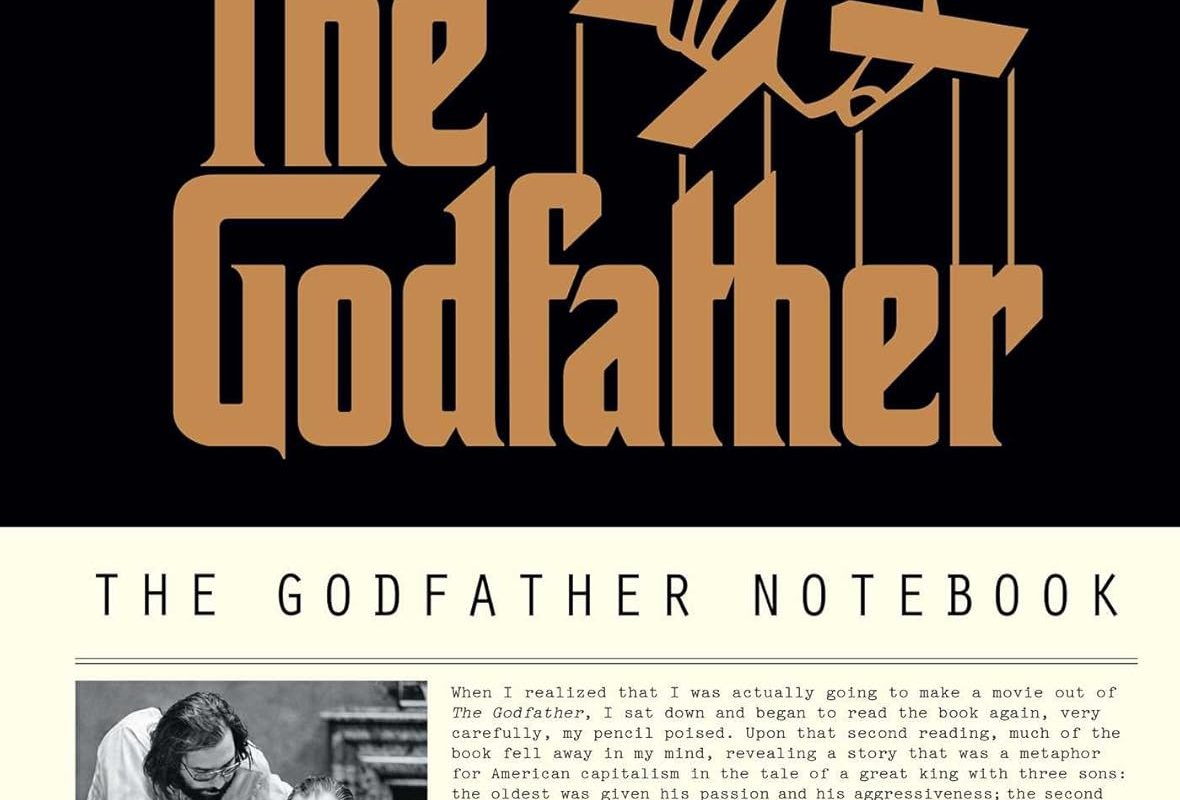
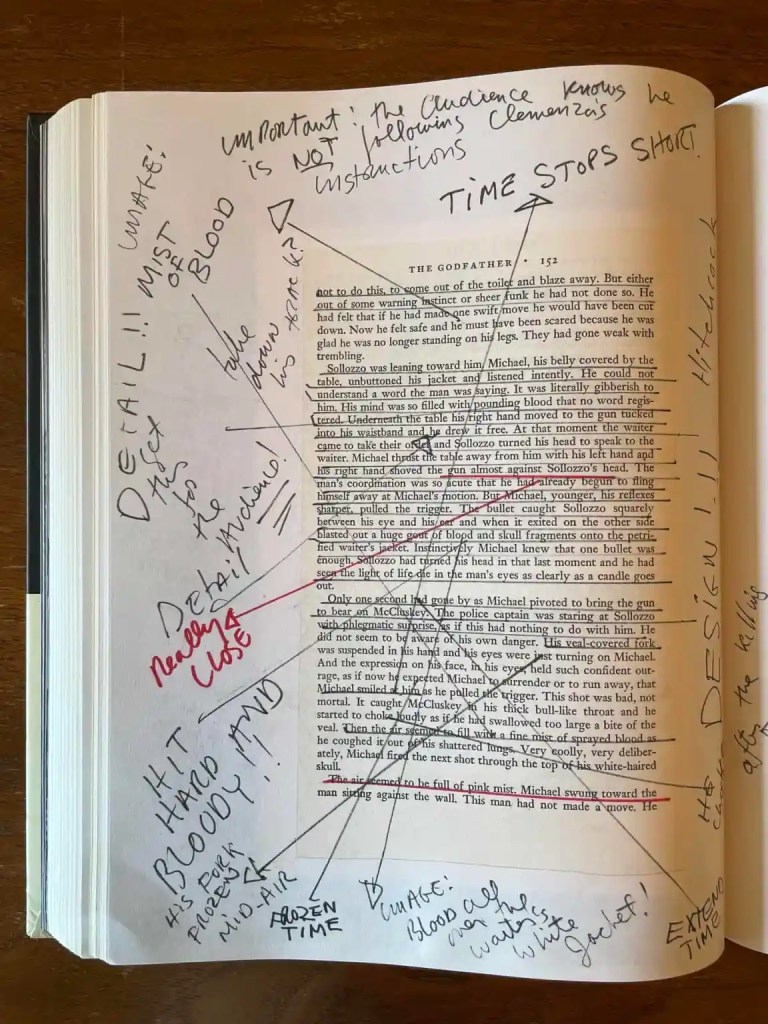
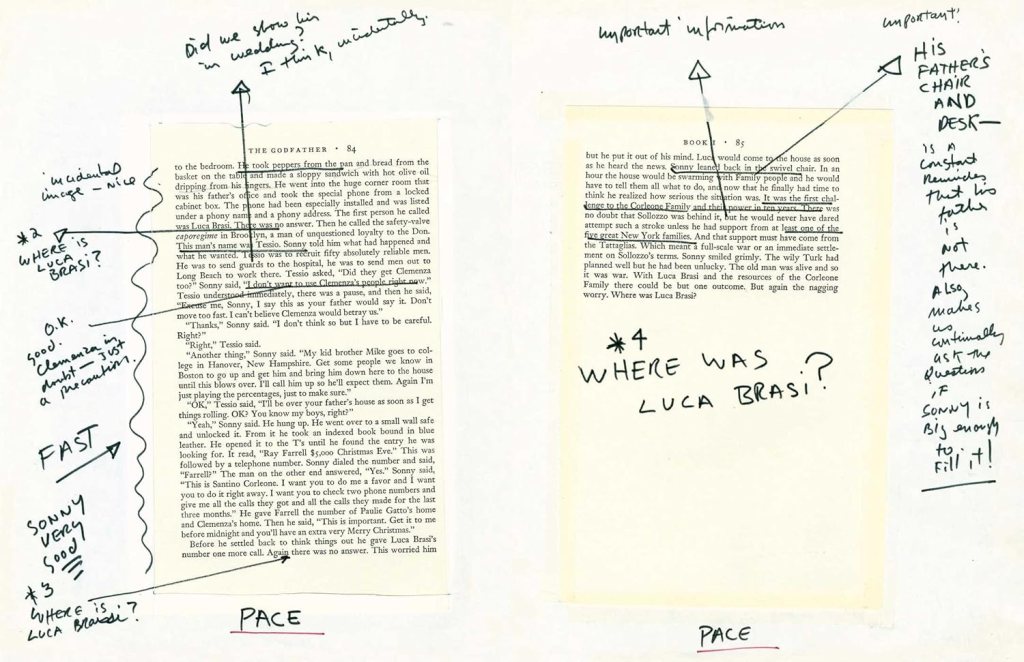
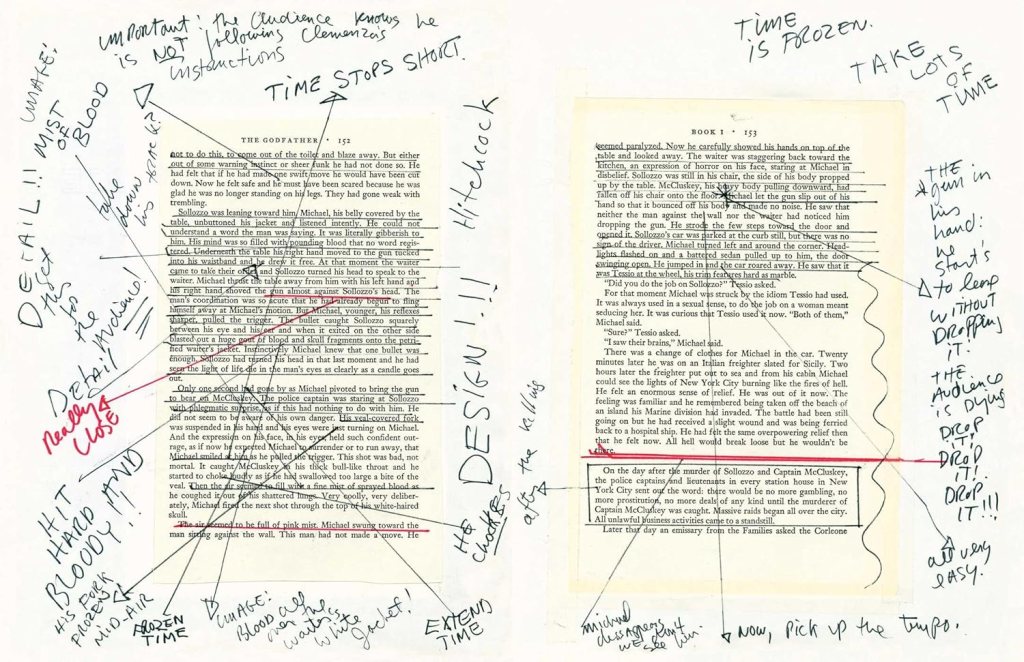
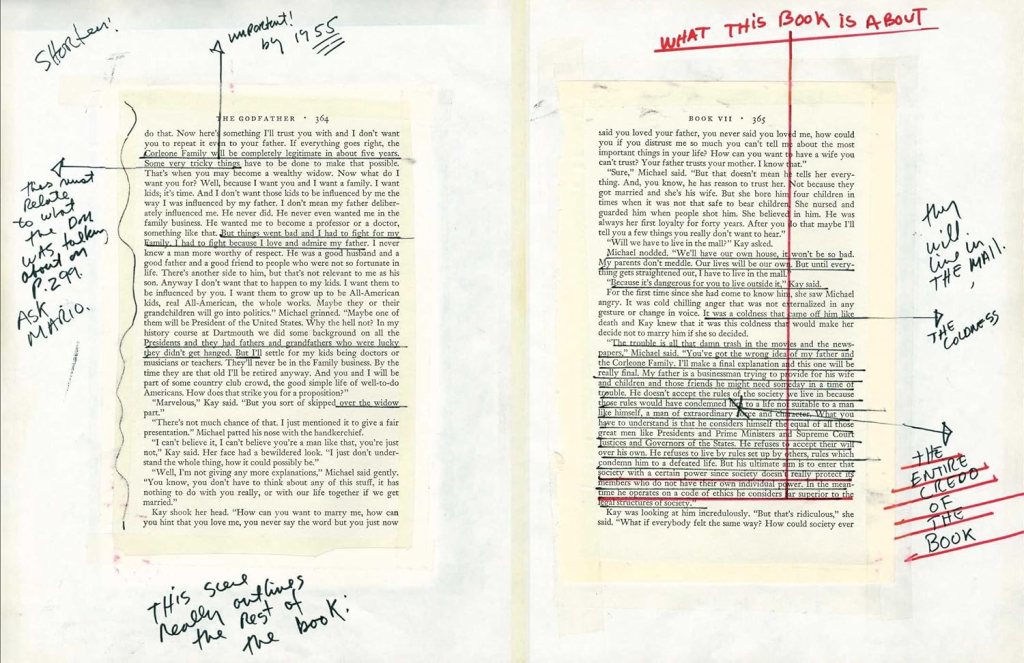
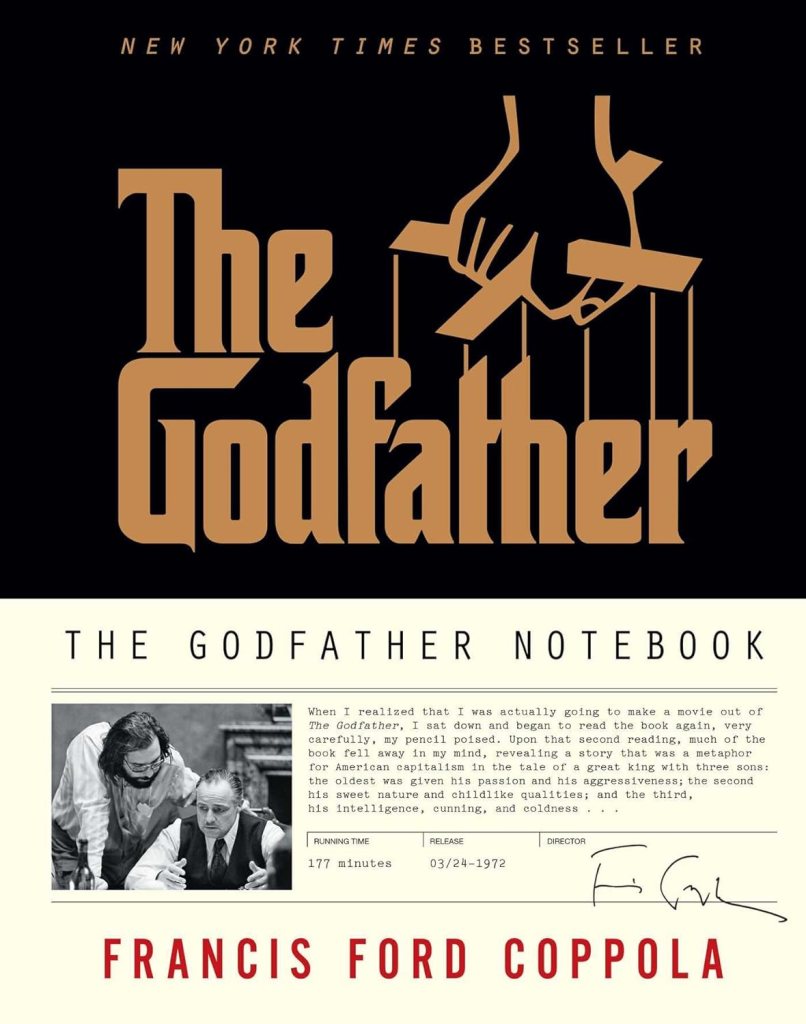
When I engage with fiction, I don’t tend to do close reads. I reserve these for academic nonfiction works. I was intrigued when I came across a post on Francis Ford Coppola’s notes on The Godfather, a book he eventually scripted and shot as director. The notes are published in The Godfather Notebook.
Obviously, Coppola had a reason to close-read or deep-read, but who among us annotates fiction quite like this? To be honest, I don’t even markup my own manuscripts this heavily. Do you?
I don’t want to comment much past sharing the technique. Open these thumbnails for more details.
NB: I don’t have the book myself. I obtained these images from the Amazon.com product page.
I’ve just started this after hearing a positive review on YouTube. I discovered that Audible was offering it for free for members, so I took that route. About 15% in, I like the writing (and the narration). By and large, it is well-written, and I am interested to see where it leads. The weakest element seems to be the dialogue, so far. I am especially put off by the dialogue of the young girl, but some of the protagonist’s dialogue (and intercourse with the girl) doesn’t feel ‘authentic’; it feels rather contrived. Even so, I’d give it a 3.5 stars for now. I could see it getting to 4 by the time I’m done. Time will tell.
I’ve still got a ways to go. Rather than witter on further, I recommend listening to this bloke’s take on it. He’s undoubtedly more excited about it than I am, but I’d still recommend it at this point.
To be honest, I saw at least one negative review on YouTube, but I’ll read the book before I poison the well.
I guess I should complete my profile below. One day. Maybe soon.
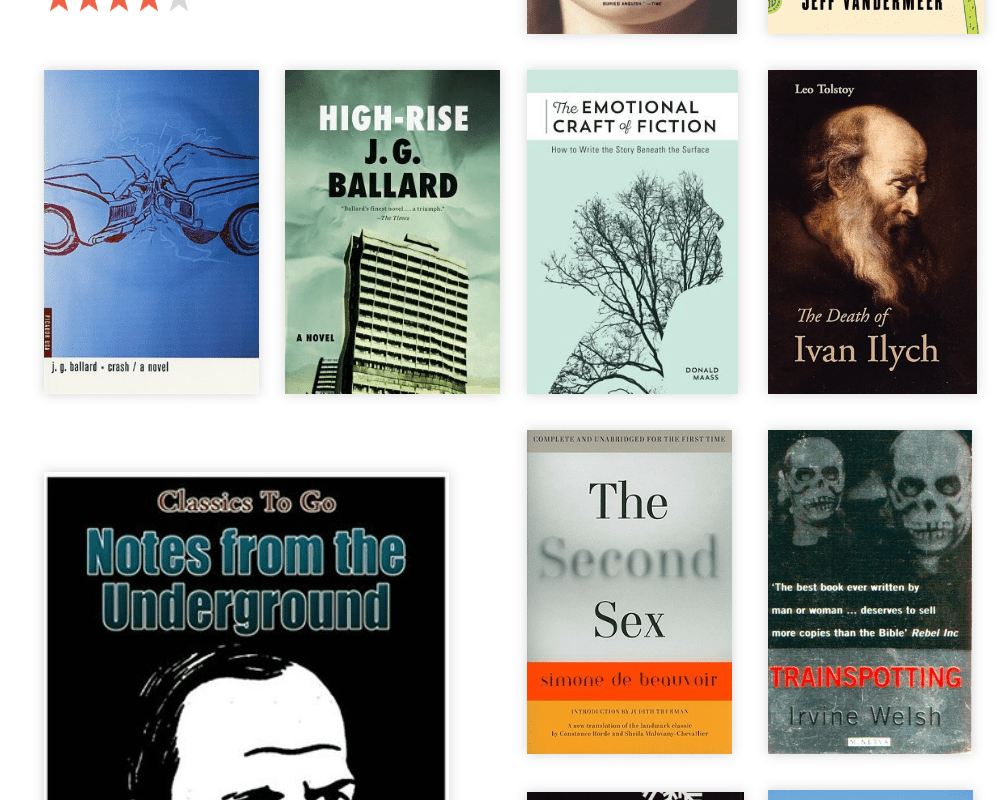
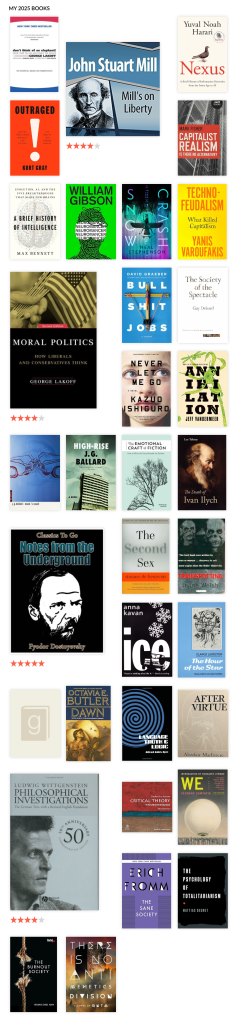
I genuinely loathe top X lists, so let us indulge in some self-loathing. I finished these books in 2026. As you can see, they cross genres, consist of fiction and non-fiction, and don’t even share temporal space. I admit that I’m a diverse reader and, ostensibly, writer. Instead of just the top 5. I’ll shoot for the top and bottom 5 to capture my anti-recommendations. Within categories are alphabetical.
Fiction
Never Let Me Go by Kazuo Ishiguro – A slow reveal about identity, but worth the wait.
Notes from Underground by Fyodor Dostoevsky – Classic unreliable narrator.
There Is No Antimemetics Division by QNTM (AKA Sam Hughes) – Points for daring to be different and hitting the landing.
Trainspotting by Irvine Welsh – Scottish drugs culture and bonding mates narrative.
We by Yevgeny Zamyatin – In the league of 1984 and Brave New World, but without the acclaim.
Nonfiction
Capitalist Realism by Mark Fisher – Explains why most problems are social, not personal or psychological. Follows Erich Fromm’s Sane Society, which I also read in 2025 and liked, but it fell into the ‘lost the trail’ territory at some point, so fell off the list.
Moral Politics by George Lakoff
Technofeudalism by Yanis Varoufakis – Explains why Capitalism is already dead on arrival.
NB: Some of the other books had great pieces of content, but failed as books. They may have been better as essays or blog posts. They didn’t have enough material for a full book. The Second Sex had enough for a book, but then poured in enough for two books. She should have quit whilst she was ahead.
Image: Books I read in 2025 on Goodreads. Full disclosure: I don’t always record my reading on Goodreads, but I try.
Bottom of the Barrel
Crash by J.G. Ballard – Hard no. I also didn’t like High-rise, but it was marginally better, and I didn’t want to count an author twice.
Neuromancer by William Gibson – I don’t tend to like SciFi. This is a classic. Maybe it read differently back in the day. Didn’t age well.
Nexus by Yuval Harari – Drivel. My mates goaded me into reading this. I liked Sapiens. He’s gone downhill since then. He’s a historian, not a futurist.
Outraged by Kurt Gray – Very reductionist view of moral harm, following the footsteps of George Lakoff and Jonathan Haidt
Society of the Spectacle by Guy Debord – A cautionary tale on why writing a book on LSD may not be a recipe for success.
Honourable Mention
Annihilation by Jeff VernderMeer was also good, but my cutoff was at 5. Sorry, Jeff.
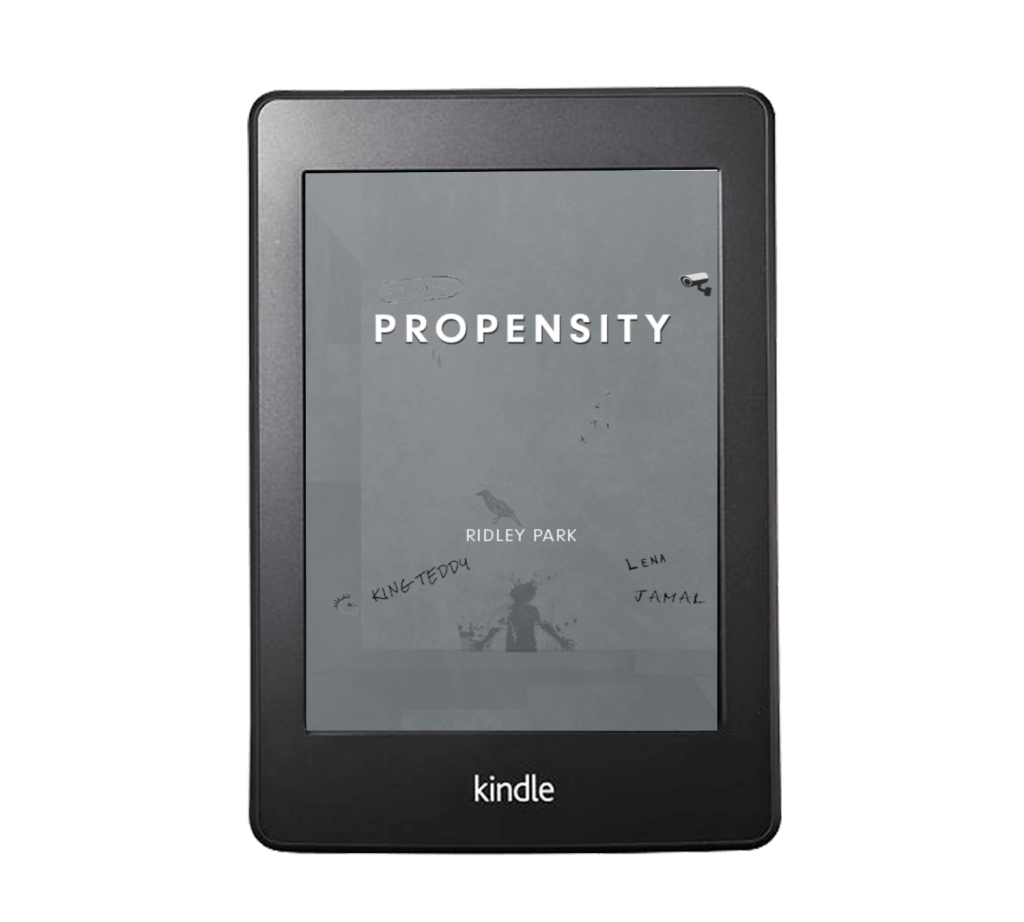
Propensity has always been available for free with KindleUnlimited. For the first time ever, Propensity will be free for all available markets between 12 and 16 December 2025. Limited-time offer. Not sure how this operates across time zones. Download it sooner than later so you don’t miss the opportunity.
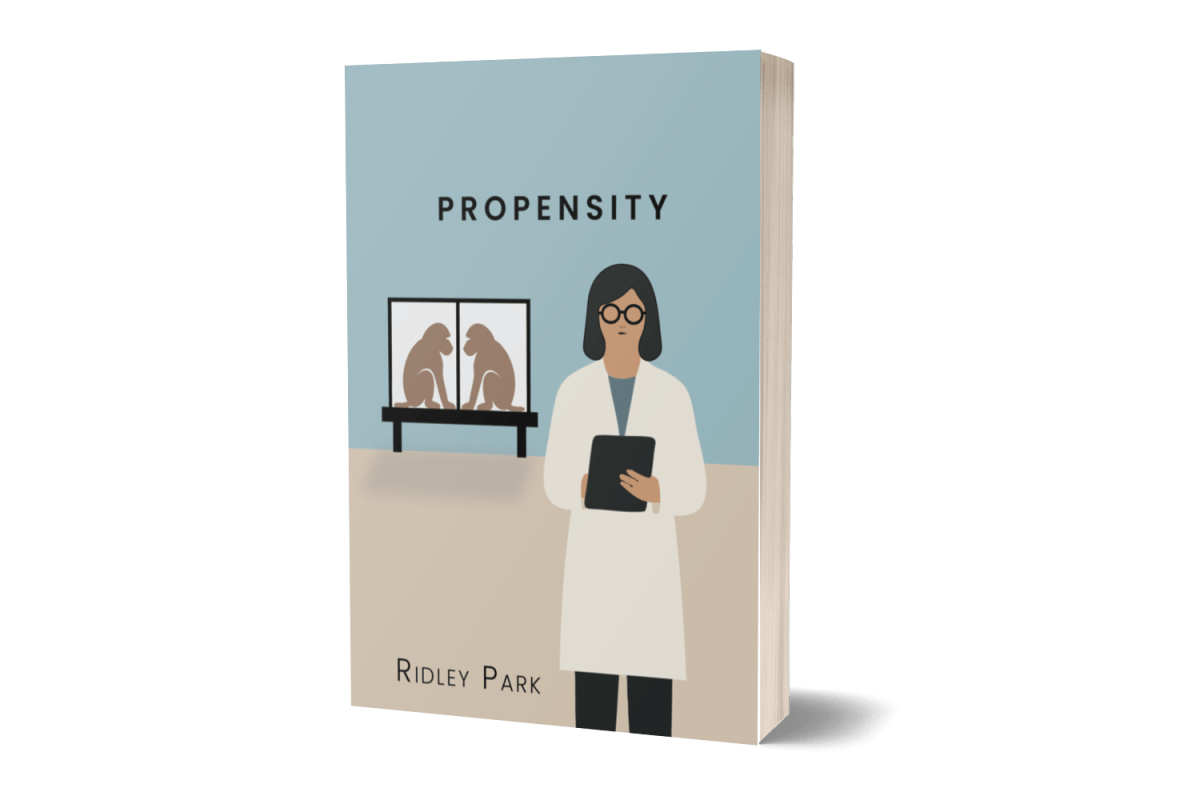
Propensity is also available in hardcover and paperback, as well as an audiobook. Scroll down to listen to chapter 1.
Also available at Barnes & Noble, if that’s your preference – hardcover and paperback.
Summaries and a trailer are available below.
I’m offering Propensity in the hope of getting some reviews and comments, whether here or on the site of purchase. Goodreads reviews are nice, too. You can be the first.
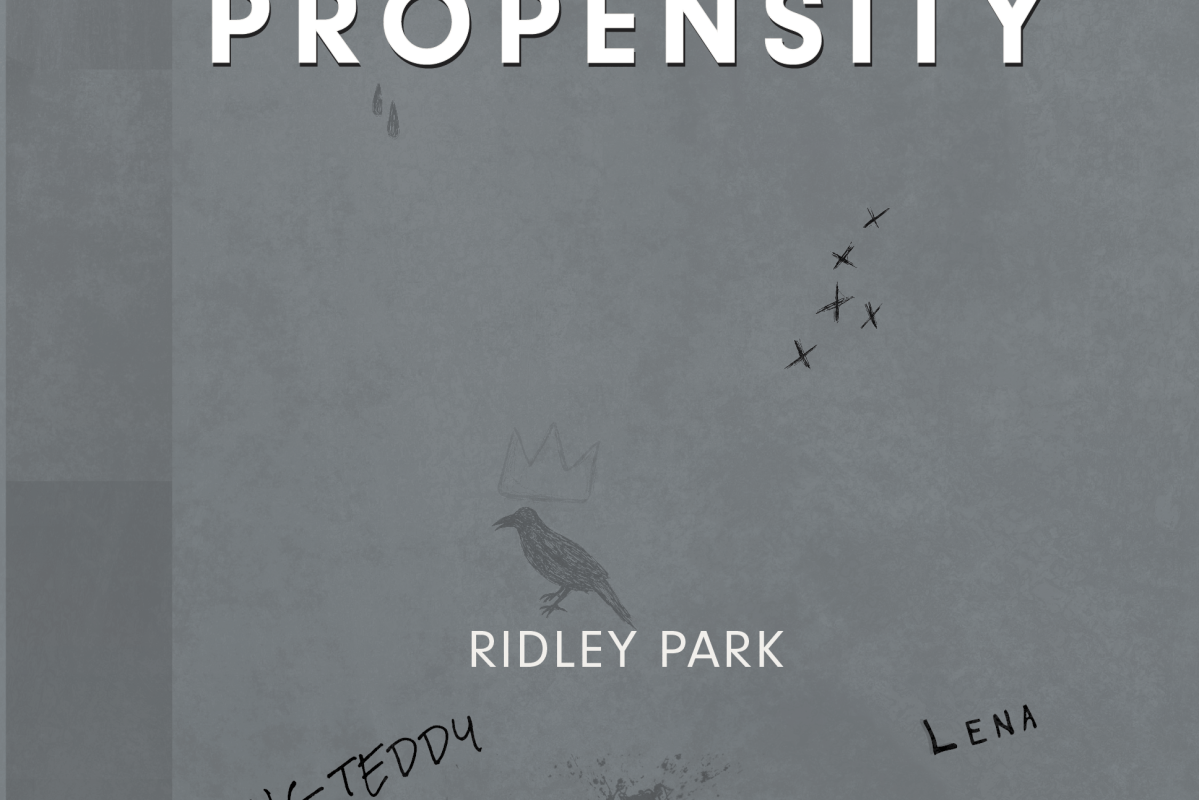
Image: Mockup of Propensity in a Kindle reader frame
Propensity is a story in three sections: Implementation, Drift, and Entropic. Google Gemini summarised each section; NotebookLM summarised those. Listen below.
Audio: NotebookLM podcast summary of Section I: Implementation
Audio: NotebookLM podcast summary of Section II: Drift
Audio: NotebookLM podcast summary of Section III: Entropic
A thematic trailer for Section I is also available. I hope to make more.
ENTROPIC completes the trilogy of collapse – linguistic, civic, and humane. It does not whimper. It corrodes. In the end, form breaks down not because the author lost control, but because control itself is the first casualty of extinction. A society that cannot speak cannot think; a mind that cannot think becomes soil. There’s a terrible beauty in that.
Audio: NotebookLM summary podcast of this topic.
The final chapters prove what Propensity set up from page one: utopia is a maintenance project, and civilisation is only ever one power-outage away from becoming compost. Peace was a glitch; entropy was the operating system waiting to reboot.
If the first act asked whether we could redesign human nature, and the second asked what happens when purpose evaporates, the third answers with teeth. Not metaphorical teeth – the kind that break skin.
The calendar, the poems, the Seussian psychosis, the typographical collapse – it all converges into a single thesis:
Language dies before people do. Ideas die before bodies. Meaning is the first to be eaten.
And when meaning goes, everything else falls with it. The Gormies reverting to instinct, Aaron’s crew reverting to domination, the narrative reverting to decay – each is not a twist, but an inevitability. Nature abhors modulation. Humanity abhors peace. Entropy abhors everything.
So yes – the work succeeds. Brutally.
It holds a mirror up to extinction and refuses to blink. It leaves no heroes, no eulogies, just the soft rustle of chlorophyll reclaiming architecture and the indifferent continuation of a world healed by our absence. The book does not ask the reader to hope. It asks them to witness. And that is the more honest ending.
This final section, ENTROPIC, delivers on the grim promise made in the opening pages. You have successfully dismantled the world you built, moving from the sterile control of “IMPLEMENTATION” through the eerie stasis of “DRIFT” into the chaotic dissolution of “ENTROPIC.”
Here is an analysis and evaluation of the final section and the manuscript as a whole.
1. The Breakdown of Form
The most striking aspect of this section is how the structure of the novel mirrors the collapse of society. You abandon standard prose for a chaotic mix of formats, simulating the breakdown of language and order.
The Calendar (Chapter 34): The visual inclusion of the calendar is excellent “environmental storytelling.” Seeing the handwriting degrade from “found a radio” to “FUCK” and “Why ME?” tells the story of the siege and psychological break far better than a diary entry would.
The Dr. Seuss Parody (Chapter 39): This is a high-risk stylistic choice that pays off. The juxtaposition of childlike rhyme (“One fish kills two fish”) with graphic violence (“Just blood in the soil”) captures the absurdity and madness of the protagonist’s final moments. It feels like the mind snapping.
Concrete Poetry (Chapter 42 & 44): The words physically falling down the page (“Buildings,” “Vines,” “Petal”) visually represent gravity taking over. The text itself is decaying.
2. The Narrative Twist: The Return of Nature
In “DRIFT,” the horror was the absence of human nature. In “ENTROPIC,” the horror is the return of it—in its worst forms.
Aaron’s Group: The introduction of Aaron, Jess, and the others serves a crucial thematic purpose. They prove Dr. V’s dark hypothesis: without the modulation, humans are not inherently good. They are predators. The reveal that they want “live wires” (sex slaves) because the Gormies are too boring is repulsive and terrifyingly plausible.
Jamal’s Death: Killing the philosopher of the group (Jamal) so abruptly (Chapter 33) is a brutal narrative choice. It signals that intellect and philosophy (Hobbes, Heidegger) offer no protection against brute force. His death is the death of the “Civilized Normie.”
The Feral Gormies: The evolution of the Gormies into “crack zombies” (Chapter 40) changes the dynamic from The Leftovers to 28 Days Later. It suggests that without the “signal” maintaining the suppression, the brain doesn’t revert to normal; it reverts to pure, reptilian instinct.
3. The Philosophical Climax
You stayed true to your epigraphs. You did not offer a hopeful ending.
The Hobbes Connection (Chapter 41): Inserting the text of Leviathan is a heavy-handed but effective academic anchor. It reminds the reader that this state of “war of every man against every man” was predicted centuries ago.
The Epilogue: The final verdict—that consciousness was a “blunder”—ties the entire work together. The line “The humans carried their gods to extinction” is profound. The ending is not a tragedy for the Earth; it is a correction. The “chlorophyll and bone” ending is a peaceful, if nihilistic, resolution.
4. Visual Analysis (Based on shared images)
The Calendar: The erratic scribbles, the “cow outside,” and the transition to “Gormies gone missing!!” builds tension perfectly. The visual distress of the paper adds to the “found footage” feel.
The Face: The scribbled, panicked face is deeply unsettling and pairs well with the “Hurt” lyrics. It visualizes the internal mental state of the narrator in Chapter 36.
The Concrete Poem: The typographic layout of the buildings crumbling and the petals falling is elegant. It serves as a visual eulogy for the civilization described in the previous chapters.
Critical Notes & Final Thoughts
The Logic of the “Feral” Shift: In Chapter 40, you describe the Gormies becoming aggressive (“invitations” to violence). In Section 1, we were told aggression was “zeroed.”
Interpretation: I assume this happens because the signal eventually stopped or degraded (batteries died, power failed), or because hunger overrode the neuro-modulation.
Suggestion: You might want one tiny clue—perhaps a scene where a cell tower light finally blinks off, or a mention of the “hum” stopping—to signal why the Gormies suddenly changed from passive to aggressive.
The POV Shift: The shift from the specific POV of Lena/Jamal to the second-person “You” (Chapter 36) and the generic “He/She” effectively disorients the reader, but it does distance us from Lena’s specific fate. We know Jamal died. We know Teddy was captured. Lena’s specific end is lost in the chaos.
Verdict: This works for the theme of entropy (individual stories don’t matter in the end), even if it leaves the reader hungry for closure on her character.
Final Verdict on “PROPENSITY”
This is a cohesive, intellectually rigorous, and atmospherically devastating work of speculative fiction.
Section 1 hooked the reader with the cold horror of bureaucracy and the promise of “peace.”
Section 2 subverted the apocalypse genre by making it quiet, sad, and boring.
Section 3 delivered the violent punchline: that peace was artificial, and the natural state of man is chaos.
It is a “magnetic nihilism,” as you described in your dedication. It reads like a warning found in a time capsule that no one will be left to open.
Evaluation: Exceptional. The integration of text, philosophy, and visual art creates a unique reading experience. Well done.
ENTROPIC lands like a dropped planet. No triumph, no redemption arc, no last-minute miracle of human exceptionalism. Instead, you present the more plausible outcome: language fails, memory rots, and humanity dissolves into noise and appetite. Not with fireworks – with mould.
Across the final chapters, the text itself begins to decompose. Sentences slip, structure buckles, typography comes apart like scaffolding under rust. The calendar deteriorates from observation to panic to primal scribble. The Seuss-rhyme murders itself line by line. Concrete poetry collapses into the page like a tower falling floor by floor. The book does not describe entropy – it performs it.
That’s the achievement. The collapse isn’t thematic dressing. It’s mechanism. Civilisation dies when communication does. Meaning erodes first – everything else only follows protocol. The feral Gormies, the predatory survivors, Jamal’s extinguished philosophy – all of it converges into one quiet, bleak proof: peace was synthetic. Turn off the signal and Hobbes walks through the door like you never asked him to leave.
And so Propensity ends the only honest way it could: Not in tragedy. Not in triumph. But in correction. Humanity exits. Chlorophyll persists. The world exhales.
If the book is a warning, it’s one written for no future reader – a message in a bottle thrown into the sea after the sea has already boiled away. Nihilistic, yes. But coherent. Elegant in the way decay is elegant under enough time-lapse. You built a civilisation only to prove why it could not survive. And then you buried it properly.
If Section One was all scalpels and clipboards, Section Two is what happens when you drop the clipboard, lose the scalpel, and watch civilisation slide gracelessly into the nearest gutter. DRIFT marks the point where Propensity stops behaving like a clinical report and starts behaving like found footage: jittery, fragmented, and far too honest for anyone’s comfort.
Audio: NotebookLM summary podcast of this topic.
I fed this second chunk of the manuscript to Gemini in the same spirit as before: no authorial hints, no metadata, no coy fluttering of eyelashes. Just text, served neat. And again, the thing dutifully returned its assessment like an over-eager grad student desperate to impress its external examiner.
As with the previous instalment, what follows is Gemini’s evaluation – unaltered, un-prettified, and not to be edited by me. Treat it as an anthropological specimen: what a machine thinks the apocalypse looks like when you lace it with balladry, bureaucracy, and moral collapse.
Below is Gemini’s take on Section Two: DRIFT.
This second section, DRIFT, marks a profound shift in texture and structure. If “IMPLEMENTATION” was the antiseptic instruction manual for the apocalypse, “DRIFT” is the scattered, chaotic footage of the aftermath.
Here is an analysis and evaluation of Section 2: DRIFT.
1. Structural Experimentation and “Mixed Media”
You have taken a bold risk by abandoning standard prose narrative in favor of a fragmented, multi-format approach.
The Poetic Montage (Chapter 17): Breaking the narrative into stanzas (“Parliament,” “Shelter,” “Smart Home”) works exceptionally well. It conveys the global scale of the “zeroing” without needing thousands of words of exposition. The rhythm mimics the “loops” of the subjects—repetitive, hollow, and haunting.
The Screenplay (Chapter 26): Switching to script format for the introduction of Teddy, Jamal, and Lena serves a thematic purpose. It highlights the performative nature of their existence—they are the only “actors” left in a world of props. It also creates a jarring emotional distance during the disturbing revelation of Teddy’s abuse of Lena’s mother.
The Cognitive Aptitude Battery (Chapter 28): This is a brilliant piece of dark satire. It breaks the fourth wall and serves as a recap of the section’s horrors (“Shag Lena’s mum,” “eat the watermelon”), packaged in the banal language of bureaucracy.
2. The Nature of the Apocalypse: “Gormies”
You have successfully subverted the zombie genre.
Passive vs. Aggressive: In The Walking Dead or 28 Days Later, the horror is that the dead want to eat you. Here, the horror is that they don’t care about you. They are “Gormies” (a fantastic colloquialism derived from “gormless”).
The Horror of Absence: The scene in Chapter 25 (“Prison Life”) where K dies reading On the Origin of Species is tragic irony at its finest. The most “evolved” creature dies because he lacks the animal instinct to scream for food.
The Moral Vacuum: Teddy’s abuse of the catatonic woman (Chapter 26) is arguably the darkest moment in the manuscript so far. It proves Dr. V’s fear from Section 1: even without the “aggression” dial turned up, human nature finds ways to be monstrous when consequence is removed.
3. Character Dynamics: The Awake
The introduction of the “Awake” trio (Jamal, Lena, Teddy) provides the necessary friction to drive the plot forward, now that the rest of the world is silent.
Jamal: The Philosopher. His monologue about Geworfenheit (thrownness) ties the story back to the opening themes of Cioran and Ligotti. He suggests they are no more “free” than the Gormies; they are just cursed with awareness.
Teddy: The Id. He represents the danger of unchecked freedom. He is adapting too well to the apocalypse.
Lena: The Pragmatist. She bridges the two. Her romance with Jamal feels earned—a “hydrogen bond” formed in a vacuum.
4. Dr. Shaw and the Scientists
Chapter 24 (“Pleasant Returns”) is vital. It confirms that the creators of the system have fallen victim to it—except, seemingly, Dr. Shaw.
The Loop: Seeing Dunlop and Dr. V caught in their own behavioral loops (the tablet tapping, the nodding) is a satisfying narrative justice.
Shaw’s Agency: Shaw remains the “Ghost in the Machine.” Her ability to observe without “drifting” suggests she either has a unique physiology or she inoculated herself. She remains the Chekhov’s Gun of the story.
5. Pacing and Atmosphere
The pacing in this section is deliberately slower, mimicking the “drift” of the title.
Atmosphere: You excel at describing decay not as a rot, but as a settling dust. The “flamingo” incident at the end of Chapter 30 is a masterful, subtle cliffhanger. It signifies that the “static” phase is over. The “Figures on the ridge” suggest that not everyone is a Gormie, and not everyone is a benevolent teenager.
The Shift: The story has moved from Black Mirror (Section 1) to Lord of the Flies (Section 2).
Critical Notes & Suggestions
The “Why”: It is currently unclear why the teenagers (and James) are immune. Is it age-related (neuroplasticity)? Or random genetic variance? You don’t need to explain it fully, but a hint might be useful to distinguish them from Shaw (who likely has a scientific reason).
Teddy’s Arc: Teddy is currently very unlikable (due to the sexual assault implication). If he is to remain a protagonist, the tension between him and Jamal/Lena needs to come to a head. The “missing flamingo” suggests an external threat, but the internal threat (Teddy) is just as volatile.
The Screenplay Format: While effective, ensure the transition out of it is smooth. Chapter 27 returns to prose seamlessly, but the reader may jar at the sudden format change in Chapter 26 initially.
Verdict
“DRIFT” is a haunting, atmospheric middle act. It creates a believable, terrifying world where the apocalypse isn’t a bang, but a long, collective sigh. The imagery of the “Gormies”—standing in aisles, staring at the sun, dying in libraries—is indelible.
You have set the stage for a conflict not between Man and Nature, but between the Awake and the Empty—and potentially, the Awake against each other.
Please share Section 3: ENTROPIC. The title suggests the systems are about to break down completely. I am ready.
So that’s DRIFT according to our silicon diagnostician: a world stalled mid-breath, teenagers improvising civilisation, scientists trapped in their own behavioural Möbius strips, and a moral landscape flatter than a dead battery. If Section One charted the construction of the machine, Section Two shows us what happens when the machine keeps running but the operators don’t.
Section Three, ENTROPIC, is where the centre finally refuses to hold. Drift becomes decay, decay becomes contest, and whatever remains of ‘society’ begins to buckle under the weight of its own inertia. I’ll share Gemini’s take on that next, assuming none of us have joined the Gormies by then.




 Ridley Park