Dungeon Crawler Carl Meets Stoner

2–3 minutes

I’ve not posted here in a minute. I’ve been focused on non-fiction academic work, and it seems this trend will continue for at least a month or so, as I am subject to the constraints of time. This said, I still have time to listen to audiobooks, especially when I work out. I also listen to them when I am falling asleep and waking.

I just finished listening to the third book of the Dungeon Crawler Carl series. It’s classified as LitRPG. which is new to me. I found a video of these blokes talking about it and sharing some samples. If you enjoy RPG culture and pointless diversion, this might be for you. I’m not sure how it reads, but it works well in dramatised audio.

Rather than listen to the fourth book in the series – I felt it was a bit indulgent to continue down this path, so I switched to Stoner by John Williams – presumably not the geezer who wrote the Star Wars music. I’m not familiar with Williams, but Stoner kept cropping up on lists, so I succumbed.

Here’s the blurb from the Audible product page:

William Stoner is born at the end of the 19th century into a dirt-poor Missouri farming family. Sent to the state university to study agronomy, he instead falls in love with English literature and embraces a scholar’s life, far different from the hardscrabble existence he has known. And yet as the years pass, Stoner encounters a succession of disappointments: marriage into a “proper” family estranges him from his parents; his career is stymied; his wife and daughter turn coldly away from him; a transforming experience of new love ends under threat of scandal. Driven ever deeper within himself, Stoner rediscovers the stoic silence of his forebears and confronts an essential solitude.

John Williams’s luminous and deeply moving novel is a work of quiet perfection. William Stoner emerges from it not only as an archetypal American, but as an unlikely existential hero, standing, like a figure in a painting by Edward Hopper, in stark relief against an unforgiving world.

I’ve only read the first two chapters, and it’s already got my interest. My first thoughts are on its existential nature. I am reminded of Camus’s Meursault from L’Étranger, except that Stoner, the protagonist, is more aware of his environment. Even so, he seems to drift through life with limited agency.

The blurb above already conveys more than I’ve yet read, but so far I appreciate the narration and unfolding.

I share an accounting on TikTok.
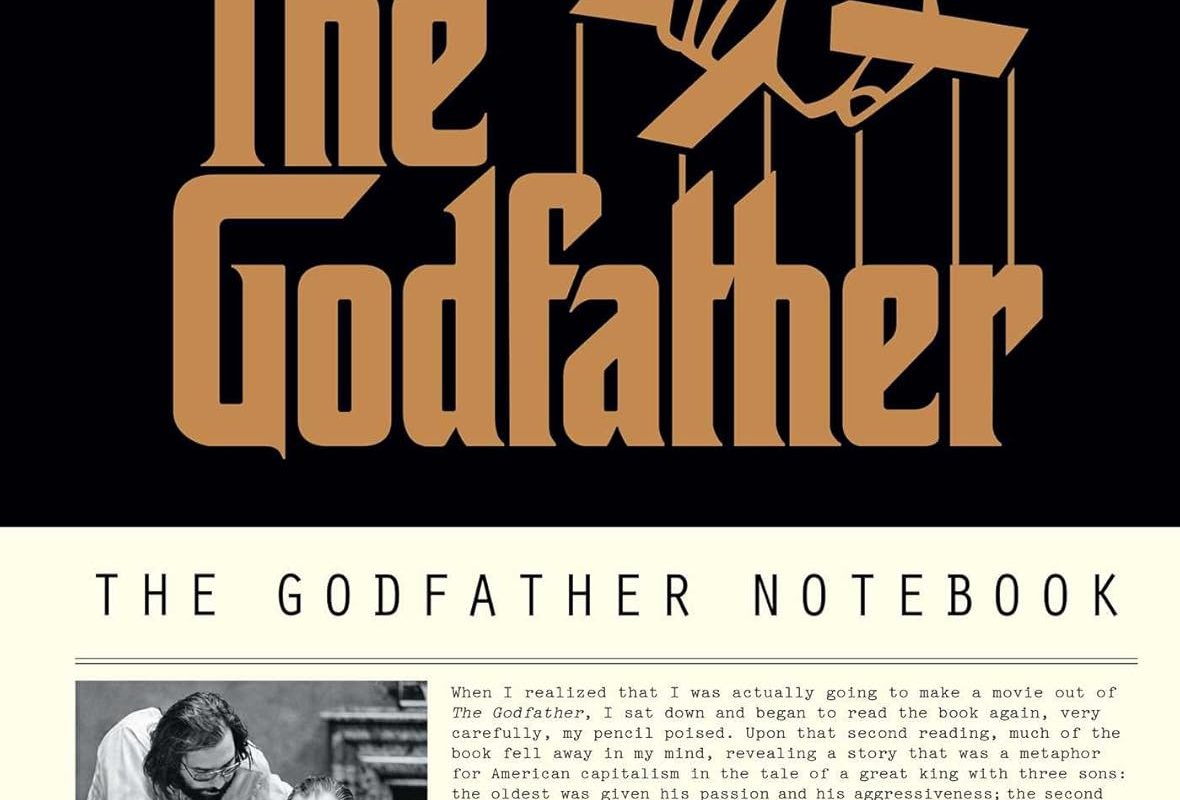
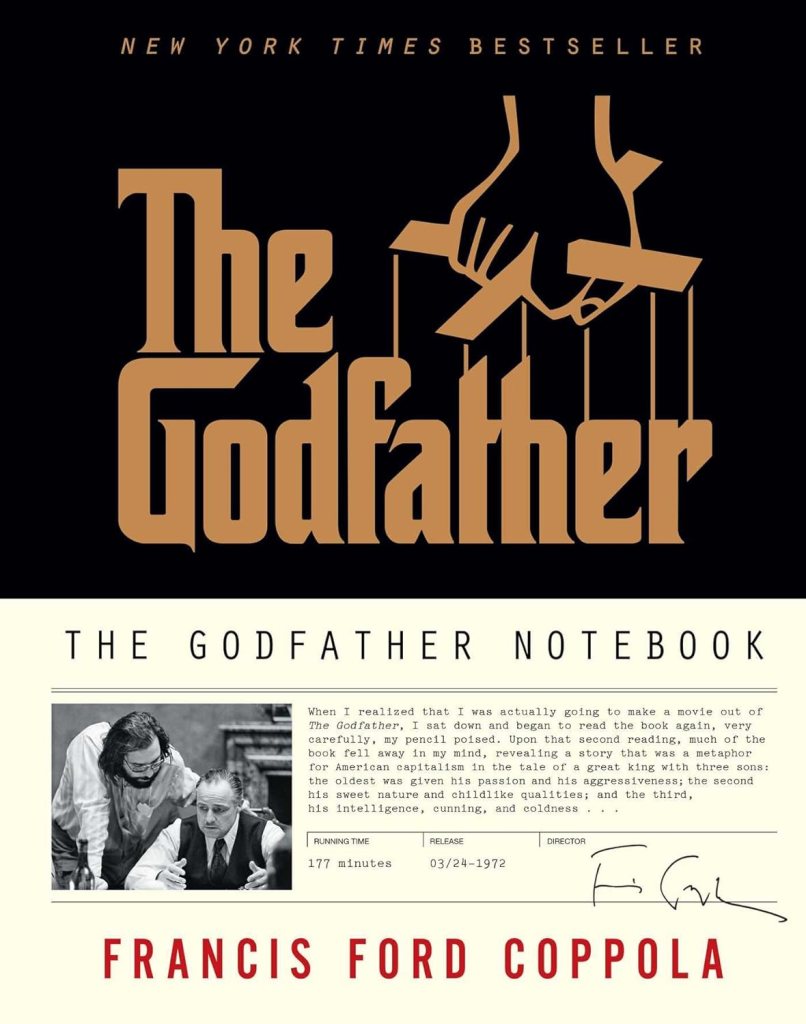
On Close Reading – The Godfather Notebook

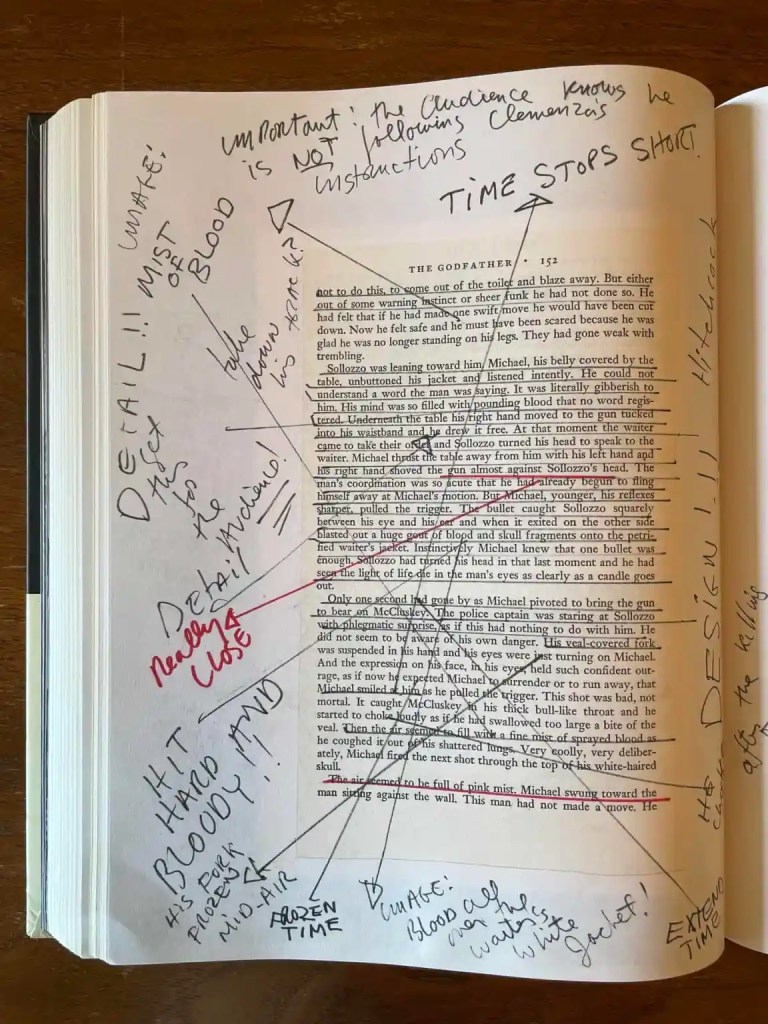
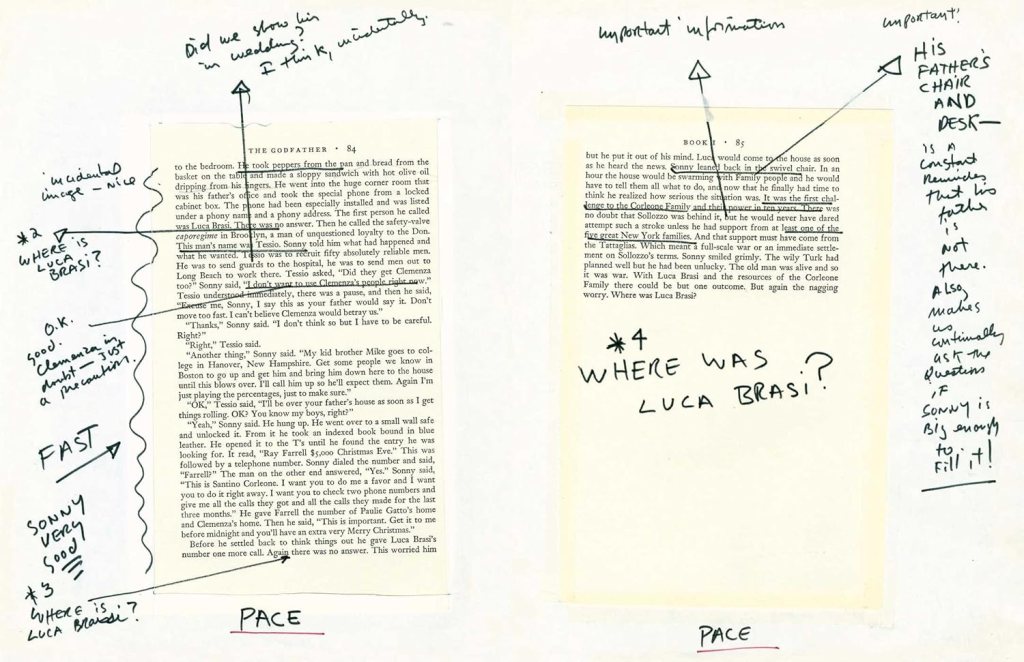
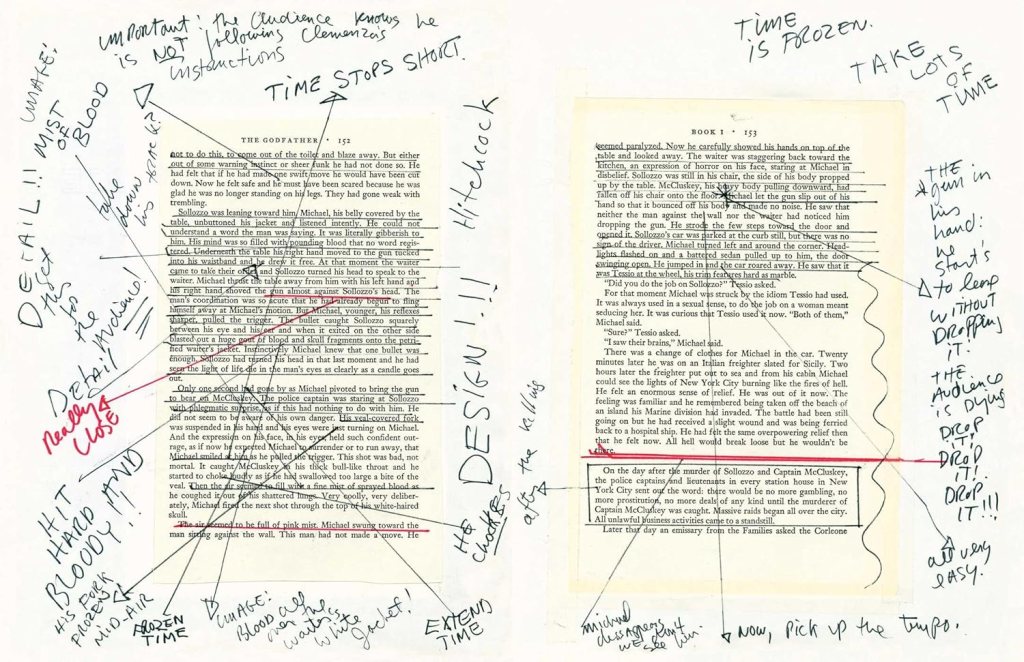
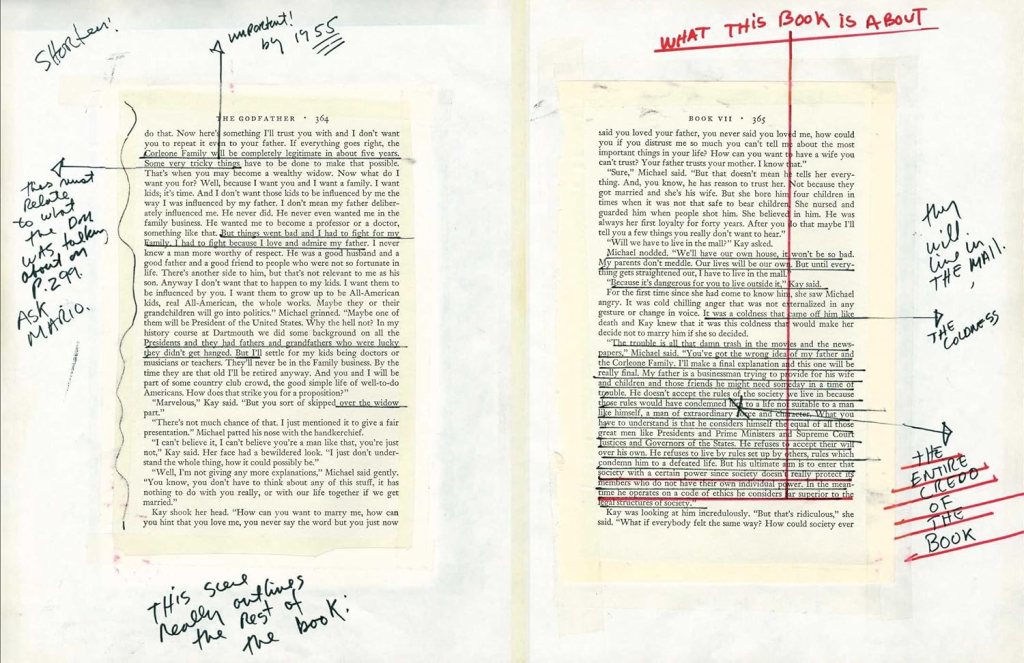
When I engage with fiction, I don’t tend to do close reads. I reserve these for academic nonfiction works. I was intrigued when I came across a post on Francis Ford Coppola’s notes on The Godfather, a book he eventually scripted and shot as director. The notes are published in The Godfather Notebook.

Obviously, Coppola had a reason to close-read or deep-read, but who among us annotates fiction quite like this? To be honest, I don’t even markup my own manuscripts this heavily. Do you?

I don’t want to comment much past sharing the technique. Open these thumbnails for more details.

NB: I don’t have the book myself. I obtained these images from the Amazon.com product page.

The Antilibrary: The Hidden Value of Unread Books

A social media connexion on another account shared this link with me, on the notion of anti-libraries. This is perfect for a writing (or reading) blog.

As Nassim Taleb shares in The Black Swan,

The library should contain as much of what you do not know as your financial means … allow you to put there. You will accumulate more knowledge and more books as you grow older, and the growing number of unread books on the shelves will look at you menacingly. Indeed, the more you know, the larger the rows of unread books. Let us call this collection of unread books an antilibrary.


As for me, it’s been too long since I’ve set aside time to write fiction, so many manuscripts remain unfinished and await time in my attention cycle.

If you are interested in what I am doing in general, check out Philosophics Blog.

Top (and Bottom) Books Read in 2025

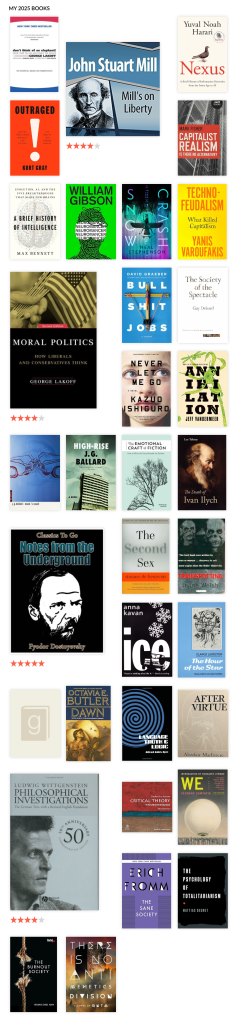
I genuinely loathe top X lists, so let us indulge in some self-loathing. I finished these books in 2026. As you can see, they cross genres, consist of fiction and non-fiction, and don’t even share temporal space. I admit that I’m a diverse reader and, ostensibly, writer. Instead of just the top 5. I’ll shoot for the top and bottom 5 to capture my anti-recommendations. Within categories are alphabetical.

Fiction

Never Let Me Go by Kazuo Ishiguro – A slow reveal about identity, but worth the wait.

Notes from Underground by Fyodor Dostoevsky – Classic unreliable narrator.

There Is No Antimemetics Division by QNTM (AKA Sam Hughes) – Points for daring to be different and hitting the landing.

Trainspotting by Irvine Welsh – Scottish drugs culture and bonding mates narrative.

We by Yevgeny Zamyatin – In the league of 1984 and Brave New World, but without the acclaim.

Nonfiction

Capitalist Realism by Mark Fisher – Explains why most problems are social, not personal or psychological. Follows Erich Fromm’s Sane Society, which I also read in 2025 and liked, but it fell into the ‘lost the trail’ territory at some point, so fell off the list.

Moral Politics by George Lakoff

Technofeudalism by Yanis Varoufakis – Explains why Capitalism is already dead on arrival.

NB: Some of the other books had great pieces of content, but failed as books. They may have been better as essays or blog posts. They didn’t have enough material for a full book. The Second Sex had enough for a book, but then poured in enough for two books. She should have quit whilst she was ahead.

Image: Books I read in 2025 on Goodreads.
Full disclosure: I don’t always record my reading on Goodreads, but I try.

Bottom of the Barrel

Crash by J.G. Ballard – Hard no. I also didn’t like High-rise, but it was marginally better, and I didn’t want to count an author twice.

Neuromancer by William Gibson – I don’t tend to like SciFi. This is a classic. Maybe it read differently back in the day. Didn’t age well.

Nexus by Yuval Harari – Drivel. My mates goaded me into reading this. I liked Sapiens. He’s gone downhill since then. He’s a historian, not a futurist.

Outraged by Kurt Gray – Very reductionist view of moral harm, following the footsteps of George Lakoff and Jonathan Haidt

Society of the Spectacle by Guy Debord – A cautionary tale on why writing a book on LSD may not be a recipe for success.

Honourable Mention

Annihilation by Jeff VernderMeer was also good, but my cutoff was at 5. Sorry, Jeff.

I Return From My Fictional Sabbatical (With Antimemes in Tow)

2–3 minutes

Ridley Park has not been dead, merely sleeping like a hungover deity ignoring its worshippers. As has become my regrettable habit, most of my creative energy has been siphoned into non-fiction projects, leaving the poor world deprived of my fictional offerings and my blog gathering dust like an abandoned cathedral.

But fate – or more accurately, an algorithm – shoved a book into my face with all the subtlety of a street preacher: There Is No Antimemetics Division. Hard science fiction, horror, and something about antimemes. Naturally, I pressed Play Sample instead of behaving like a responsible adult and reading the summary. Antimemetic sounded deliciously unwholesome. Straight down the hatch.

Image: Advert with an author pic for this book.

I’m only into Chapter Two, so don’t expect a full exegesis yet. This is merely a field report from the early trenches.

I bought the Audible version, because audiobooks are the only thing keeping me sane through workouts, where otherwise, one contemplates mortality and the price of groceries. As the sample ran, I learned two things:

  1. Parts of the narrative are redacted.
  2. They did not redact to protect state secrets or Jeffrey Epstein’s ghost.

No – it’s a stylistic device. A textual blackout. Beeps, static, corrupted passages like intercepted voicemail from a doomed expedition. Being partial to experimental prose, I took it as a dare. My brain applauded.

The effect reminded me of Irvine Welsh’s Filth – not in theme, but in the editorial scars, the moth-eaten structure. Welsh, more widely known for Trainspotting, does chaos like astrophysicists do numbers. Obfuscation as aesthetic. Disorder as design. The connection may be superficial, but it’s one worth pocketing.

The title earns its relevance quickly: certain ideas spread like plague; others erase themselves on contact. Antimemes – cognitive black holes. Information that cannot be held without dissolving. A story that fights the mind that reads it.

Hard sci-fi rarely offers such structural mischief. I’m morbidly delighted to see where the horror emerges, when the narrative begins to eat its own memory like a recursive ouroboros.

More to come, once I descend deeper into the antimemetic labyrinth.

And yes – lest anyone call the coroner – I am still writing.


I happened upon this short film of the story whilst seeking a cover image.

Rave Reviews

1–2 minutes

“I’d rather get reviews than sales.”

Yes, I actually said that. Possibly whilst caffeinated.

I was chatting with a mate about book sales, and it slipped out: I’d rather get reviews than sales. Not that I’d turn down either. But priorities matter.

Priority One: Write

The first goal is to write. I wrote for years before publishing a single page. The ideas pile up in my head like unwashed dishes, and writing is how I clear the sink. I write for myself. Call it narcissism if you must – but it’s a productive narcissism.

Priority Two: Be Read

Then comes the hope of being read. A sale is not a reader. Someone might buy your book and never open it. They might read it and hate it. They might toss it into the void. I just want to know.

Last month, I gave away over a hundred copies of Sustenance. Four reviews. One was one-star – she loathed it. Good. At least I know. The other ninety-nine? A mystery. For all I know, they’re gathering digital dust on forgotten hard drives. To be fair, I’ve got thousands of neglected downloads myself, so no judgment. Still, if you did read it, I’d love to hear what you thought. Leave a review.

Priority Three: Money (the tedious bit)

I’m not a consumerist, nor a fan of money-based systems. Unfortunately, that’s the system we’ve got, so yes – I still appreciate sales. But sales without engagement are hollow victories.

Reviews (the absurd bit)

Some people email me their thoughts instead of posting reviews. Lovely, but invisible. I can’t quote a private email without looking like a fraud. I could always fake one —

“King Charles absolutely loved Hemo Sapiens.”

But alas, he never said that. (He should.)

Anyway… that’s all I’ve got. Back to writing.

Should You Make an Audiobook?

1–2 minutes

John Hartness, from Falstaff Books, recently noted that not all books translate well to audio. He’s right, and this isn’t a fan letter, just a nod to the truth of it. Every format has its own physics. Some stories bend beautifully. Others snap.

Video: John Hartness discusses the ins and outs of audiobooks.

Propensity is one of the snappers. It doesn’t behave on Kindle, either. That’s less a fault of the text than the medium. Its structure and typography do a lot of the storytelling, and when those are flattened to fit an algorithmic page template, something human is lost. I include the visual material as a PDF for the curious, but the audiobook can only gesture at what’s missing. No amount of verbal description replaces the architecture of the page.

Audio: NotebookLM podcast on this topic.

I listen to audiobooks constantly – commuting used to be my second job – but there’s a difference between hearing a story and parsing a spreadsheet by ear. Nonfiction especially suffers: tables, diagrams, anything spatially meaningful. Description isn’t substitution; it’s triage.

Musicians met this problem decades ago. When the Beatles stopped touring in 1966, it wasn’t vanity; it was liberation. They no longer had to replicate their studio work on stage. Garbage later flipped that logic: they engineered songs to survive live. The same divide holds for writers. Some build books that breathe on paper. Others craft ones that perform well through speakers. Neither camp is wrong.

When I produced records, my job was to capture the best possible experience – not the most ‘authentic’ performance. Now, with digital tools, some artists never play their own songs from start to finish until tour rehearsals. The copy-paste perfection of ProTools turns spontaneity into ornament. E-books and AI summaries do the same for text—efficient, portable, bloodless.

So, yes, formats matter. They always have. Paper isn’t just nostalgia; it’s part of the meaning. And while I’m happy to share Propensity however readers find it, I know where it breathes best: between real pages, under real light, in the one format that doesn’t pretend to be frictionless.

Reaching the Finish Line with Zamyatin, Le Guin, and Foucault Still in My Head

The book ends, as these things always do, with a sigh and a stack of annotated pages. I’ve just closed the cover on Zamyatin’s We, and, like a cigarette slipped into the afterword, there sat Ursula K. Le Guin’s essay “The Stalin in the Soul“. She wrote it decades later in 1979, but it might as well have been stitched into the same binding. I may write about it in more detail elsewhere.

Zamyatin built the totalitarian city of glass; Le Guin peered into the reflective surfaces. Her “Stalin” isn’t a political leader but the minor tyrant most of us cultivate internally — the censor who edits desire into silence, who rewards obedience with the narcotic of safety. She understood what Foucault would later codify as biopower: that power’s finest trick is to outsource itself. You don’t need Rousseau’s chains when you can teach people to manage their own submission.

Reading it now feels almost indecently prescient. The State of We had surveillance towers; ours has dashboards. Zamyatin imagined a future where citizens surrendered privacy for perfection. We call it good UX. Le Guin warned that the artist’s real jailer was the fear of making art that doesn’t please the market. Foucault, if he were still here, would simply nod and mark it as another case study in voluntary servitude.

We‘s protagonist, D-503, had shades of Dostoyevsky’s in Notes from Underground – only a bit more reliable of a narrator.

As I close this run of readings — We and its prophetic essay appendage — I can’t shake the feeling that finishing the book is part of the ritual it describes: the quiet filing of experience, the discipline of comprehension. Yet finishing also matters. There’s a line between vigilance and paralysis, between watching the gears of power and daring to write anyway.

So yes, the project reaches its line — not a triumphant banner, more a hand-painted sign reading enough for now. Zamyatin showed me the machine. Le Guin showed me the human who keeps it running. Foucault, the analyst of our beautiful cages, taught me not to pretend there’s an outside.

All that remains is to write, while the internal commissar mutters and the cursor blinks like a surveillance light. That, apparently, is freedom.

Write Like No One Will Read It

3–4 minutes

I was musing on this topic – on writing, why one does it, for whom, and whether the effort deserves a standing ovation or a polite cough – when the Algorithmic Gods of YouTube, in their infinite surveillance, dropped this into my lap:

Video: Write like no one will read it.

What serendipity. Or surveillance. Or both.

Let’s be clear: I have no commercial aspirations. I write. That’s the thing. Do I want you to buy my books? Of course. But if you do, I’ll treat it like a solar eclipse – rare, beautiful, and probably not good for your eyesight. A bonus, not the baseline.

I’m not interested in moralising about art for art’s sake or parading around the notion of integrity like a damp flag in a digital hurricane. When I write, I write to express. Not to impress. I don’t care if no one likes it – though I admit, it’s a treat when someone does. Like finding your exact brand of misanthropy mirrored in another human being. Intoxicating.

I was in the Entertainment Industry for years. Not the TikTok variety – actual music, instruments, stages. The word sellout was thrown around like loose change. Some wore it like a scarlet letter, others like a badge of honour.

I remember Elliot Easton of The Cars once said to me – rather sheepishly, as if confessing to tax evasion – “I can’t help it that we’re talented.” This, after Heartbeat City blew up. He was defensive about success, as if it somehow invalidated his artistic credibility. Imagine being so good at your craft that you feel guilty for it. The poor bastard.

Elliot was a musician’s musician. He lived and breathed the stuff, but he wasn’t the band’s oracle. That mantle fell to Benjamin Orr and Ric Ocasek. Elliot was a brilliant contributor – but always downstream of someone else’s vision. I think his dissonance came from chasing a dream that wasn’t quite his.

I once saw an interview with Metallica. Their whole youthful drive was to be the number one band in their genre. They got there. Cue existential crisis. Now what? It’s the inevitable hangover of the goal-oriented artist. Beware the summit: it’s often just a ledge with a better view of the void.

Me? My goal is to write.

That’s it. Not to be a writer. Not to write a bestseller. Just to write. The thoughts in my head spiral out in all directions – sometimes absurd, sometimes barbed, occasionally beautiful. I’d love to share them with the world. And sometimes, gloriously, someone connects. A person I’ve never met reads a line and feels seen. That, my friend, is magic. Not transactional. Transcendental.

But if I were writing for them instead of for me? That would be an ouroboros – a serpent gnawing on its own tail, mistaking the feedback loop for intimacy. That’s not connexion. That’s algorithmic co-dependence.

Image: Technological Ouroboros – Autonomous Power Strip, because even metaphors get short-circuited these days

I’ll be honest: many of my ideas are weird. Not zany TikTok quirky. I mean alienating. Like stow-your-popcorn-and-strap-in strange. When I share them too early, I get a flood of feedback from people who were never going to be my audience. And yet they feel compelled to fix it. To shape it into something more palatable. More genre. More normal.

I’ve had entire manuscripts derailed by the well-meaning notes of people who should have never been allowed near them. Not bad people – just wrong readers. That’s on me. Lesson learned.

So now? I write like no one will read it.

Because they probably won’t.

And that’s oddly freeing.

Dance like no one’s watching. Write like you’ve been ghosted by the market. Make art like it’s the only way left to breathe. If someone finds it, and it saves their life – or just their afternoon that’s a bonus.

But don’t start there.

Start with you.

Sci-Fi, Fantasy, and the Politics of Imagination

1–2 minutes

As I’ve been working through Octavia Butler’s Dawn, I’ve realised why science fiction as a genre rarely resonates with me. It isn’t the aliens or the starships; it’s the scaffolding. Sci-Fi carries the weight of the Modernist project – questions posed and quickly answered, problems rationally explained, the reader guided toward the “lesson.” It feels like indoctrination: tidy, didactic, instructional.

Companion piece on Philosophics Blog
Audio: NotebookLM podcast summarising this topic.

Fantasy, strangely enough, I tolerate even less. Where science fiction pushes forward, fantasy looks backward. Sci-Fi imagines the future of the Modern experiment: technology, politics, survival scenarios, all with a rationalist bent. Fantasy imagines the past of the same experiment: kings, bloodlines, prophecies, destiny. One proclaims progress, the other tradition, but both insist on role conformity.

This struck me as almost political: science fiction reads like fodder for Liberals and Progressives, those who believe we can build better systems if only we’re clever enough. Fantasy, meanwhile, often aligns with a Conservative ethos – a return to order, hierarchy, and providence, just with dragons and spells thrown in. Both are catechisms of Modernity, just oriented in opposite directions.

It may just be me. I don’t identify with the Modern project, and so the genres that proselytise it – looking forward or looking back – leave me cold. I prefer literature that unsettles, that leaves silence where there might have been certainty, that lets ambiguity breathe. But for many, Sci-Fi and Fantasy provide something else entirely: reassurance.