Propensity has always been available for free with KindleUnlimited. For the first time ever, Propensity will be free for all available markets between 12 and 16 December 2025. Limited-time offer. Not sure how this operates across time zones. Download it sooner than later so you don’t miss the opportunity.
Propensity is also available in hardcover and paperback, as well as an audiobook. Scroll down to listen to chapter 1.
Also available at Barnes & Noble, if that’s your preference – hardcover and paperback.
Summaries and a trailer are available below.
I’m offering Propensity in the hope of getting some reviews and comments, whether here or on the site of purchase. Goodreads reviews are nice, too. You can be the first.
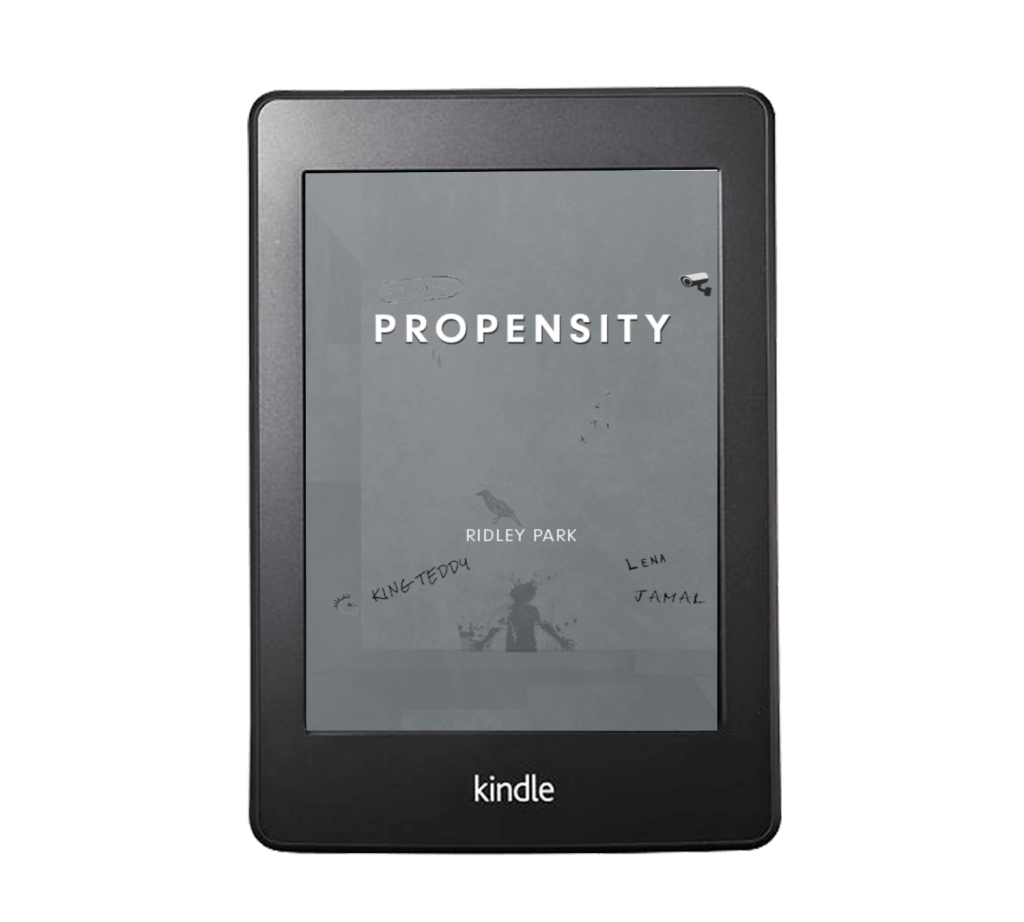
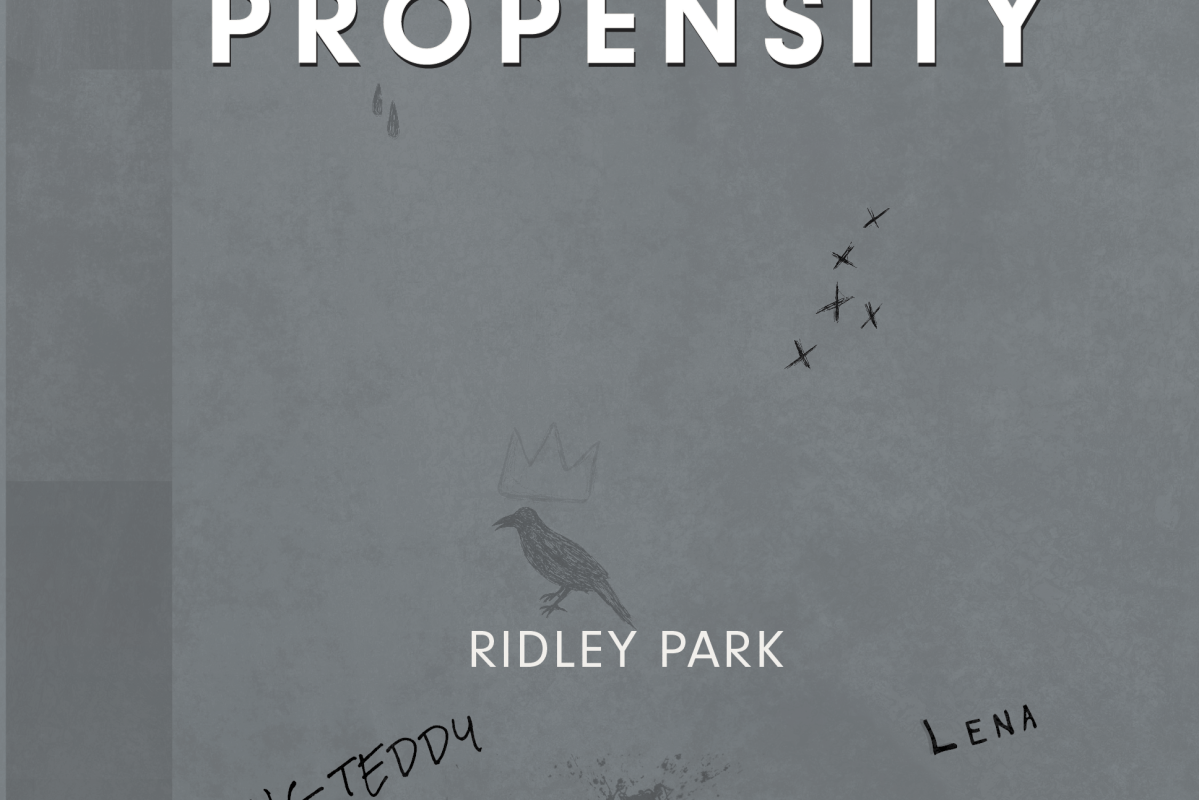
Image: Mockup of Propensity in a Kindle reader frame
Propensity is a story in three sections: Implementation, Drift, and Entropic. Google Gemini summarised each section; NotebookLM summarised those. Listen below.
Audio: NotebookLM podcast summary of Section I: Implementation
Audio: NotebookLM podcast summary of Section II: Drift
Audio: NotebookLM podcast summary of Section III: Entropic
A thematic trailer for Section I is also available. I hope to make more.
I’ve finally given Propensity a trailer. This short piece captures the first of the novel’s three movements – the ‘scientific’ phase, when everything still believes it’s under control. Except for this cover image, I used no AI. Except for the book covers, all assets – video clips and soundtrack – came from Motion Array
There may be another to follow, drawn from the second section, where control begins to crack. For now, consider this a visual prelude: thirty-two seconds of atmosphere, code, and quiet collapse.
Propensity is available in print and eBook in the usual places – online or at your local bookseller.
That’s the first line of Chapter 26, ‘Simulacra’, in Propensity. A small, airless room. A flickering light. Three teenagers – Teddy, Lena, Jamal – trying to remember what morality looked like before the world stopped watching.
This chapter is written as a script, not prose. Directions, shots, and camera pans replace internal monologue. The reader becomes the lens – an observer, never a participant. It’s deliberate. In a story about imitation and collapse, the camera itself becomes the narrator, the conscience, and the judge.
Audio: NotebookLM podcast on this topic.
The camera pushes through the door, searching. Dust floats in suspension, and time feels posthumous. Teddy zips his hoodie over bare skin; Jamal leans in the doorway, arms folded, disgust simmering behind teenage boredom.
JAMAL You can’t just be shagging Gormies, mate.
TEDDY That’s the point, innit?
Their exchange isn’t only about sex; it’s about the boundaries of what still counts as human. ‘Gormies’ are the gormless – the emptied remnants of pre-collapse society. They can’t consent or refuse. They’re alive but vacant. Human-shaped absences.
Teddy’s logic is brutal and pure simulation: if the subject can’t say no, the act ceases to carry meaning. He performs the motion of sin without the structure of morality.
Jamal’s recoil isn’t righteous; it’s aesthetic. He’s repulsed by Teddy’s theatre of transgression, the same way one might flinch at bad acting.
NB: Download this entire chapter as a PDF on the Propensity page.
Image: Page 125 of Propensity, Chapter 26 – Simulacra.
26 · Simulacra
INT. FLAT – BEDROOM – LATE AFTERNOON The room smells like a tin of low tide. CAMERA: SLOW DOLLY IN from hallway, pushing through the open door into a dim, dust-suspended interior. Thin curtains bleed grey light onto water-stained wallpaper. The ceiling flickers from a dying fluorescent. A single, empty BED lies unmade in the centre – crumpled sheets, a dent in the mattress. CAMERA: HOLD ON WIDE SHOT, framing the bed dead centre, with figures occupying the room’s periphery. TEDDY (14) zips up his hoodie. Shirtless underneath. Sweat drying on his chest. He leans against the flaking wall, chewing on a broken fingernail. CAMERA: SLOW PAN RIGHT to JAMAL (16), posted near the doorway, arms crossed. He watches Teddy, face unreadable but for the curl of disgust on his lip.
The title Simulacra is a nod to Jean Baudrillard’s Simulacra and Simulation, the philosophical text the Wachowskis borrowed – and misunderstood – forThe Matrix. Baudrillard didn’t mean that the world was an illusion hiding the truth. He meant that the distinction between illusion and truth had already evaporated.
The real no longer disappears behind its representation; it becomes its representation. The sign replaces the substance.
In this scene, Teddy, Jamal, and Lena are copies of moral beings without moral context. They mimic the gestures of civilisation – disgust, guilt, justice – without the living institutions that once gave those words gravity. They don’t believe in morality; they reenact it.
Baudrillard called this the third order of simulacra: when the copy no longer hides the absence of reality but replaces it entirely.
JAMAL You can’t just be shagging Gormies, mate. TEDDY (grinning) That’s the point, innit? (smirking toward the bed) She’s gormless. Don’t care. None of them do. CAMERA: CUT TO TIGHT SHOT – Teddy’s face. The smile is too wide. Forced. CAMERA: OVER JAMAL’S SHOULDER, the bed is empty now, but the shape in the sheet tells a story. JAMAL That’s Lena’s mum. CAMERA: CUT TO CLOSE-UP – Teddy blinks. Shrugs. TEDDY Didn’t know Lena, did I? (beat) CAMERA: SLOW REVEAL – LENA (15) stands in shadow. Hood up. Motionless in the corner. LENA You do now.
Then comes the slow reveal:
CAMERA: SLOW REVEAL – LENA (15) stands in shadow. Hood up. Motionless in the corner.
LENA You do now.
Lena’s voice reintroduces consequence, but only as performance. It’s not morality restored; it’s morality remembered. The moment isn’t ethical – it’s cinematic. The reveal is the moral event.
Her mother, the Gormie in question, is little more than an echo of personhood. The outrage in Lena’s voice belongs not to ethics but to staging: a scene constructed to look like remorse.
The simulacrum here isn’t the Gormie. It’s the moral itself – played out as ritual, devoid of anchor. These children have inherited the gestures of adulthood but none of its meaning. They mimic guilt because that’s what the dead world taught them to do.
By writing the chapter as a film script, Propensity exposes its own mechanism. Every camera move, every cut, is a reminder that you, the reader, are complicit. You’re watching a reconstruction of a reconstruction. The text becomes its own simulacrum – a story imitating cinema imitating life.
Even the bed, ‘a dent in the mattress’, is a metaphor for what remains of the real: an impression where something used to be.
The result isn’t post-apocalyptic horror but philosophical unease. What happens when moral sense survives as empty choreography? When consent and consequence are just old lines, the species keeps rehearsing?
Propensity isn’t about survival. It’s about what comes after survival—when humanity’s operating system still runs, but the data’s corrupted. The characters are trying to rebuild a moral code from cached files.
Simulacra is the point where imitation becomes indistinguishable from intent. It’s a study in ethical entropy, a mirror held up to our own cultural exhaustion, where outrage has become performance and empathy a brand identity.
This is the future Propensity imagines: not a world without humans, but humans without the real.
I don’t read sci-fi. It rarely resonates with me. I’ve read many classics, but I don’t get the hype. As a speculative fiction author, I sometimes operate in an adjacent space – close enough to borrow a few ideas, but never quite belonging. I’m not interested in fetishising technology or celebrating so-called human ingenuity. But if an idea serves the story? I’ll use it.
One concept I wanted to explore: the definition of life itself, and what sentience means when we can barely define it for ourselves.
Not long ago, I began working on a story: some people leave Earth to inhabit another planet in a different solar system. Nothing revolutionary there. They land on what appears to be an uninhabited world – uninhabited, that is, by our current definition of life. Instead, the planet itself is alive. Not in the Gaia hypothesis sense of interconnected ecosystems, but truly interactive. Responsive. Alien in ways that challenge every assumption about consciousness.
Of course, there are more details – dual suns in a figure-eight orbit, shifting gravity, time that expands and contracts, organisms that defy classification. But those are mechanics. The heart of the story is simpler: what happens when survival requires abandoning the frameworks that made you human?
As is my protocol, I fed my manuscript into AI and asked: is this idea unique? If not, what’s it similar to? Who am I adjacent to?
I got names. Titles. Books and films. Most had superficial similarities but different intents. Then one stood out: Solaris, Stanisław Lem’s 1961 novel. I hadn’t read it, so I got a copy.
There were so many commonalities it felt like discovery and defeat in equal measure.
Lem wrote Solaris before humans had meaningfully left Earth’s atmosphere. Published in 1961, it predated material space exploration by years. On October 4, 1957, the Soviets launched Sputnik 1 – the first artificial satellite. Four years later, Yuri Gagarin became the first human to orbit Earth, his flight lasting just 108 minutes. The first American in space, Alan Shepard, flew in 1961. John Glenn orbited in 1962.
Lem imagined a sentient ocean on an alien world orbiting twin suns before we’d even confirmed planets existed beyond our solar system. His protagonist grapples with a consciousness so alien that communication may be impossible – not because of language barriers, but because shared reference points don’t exist.
In some ways, Solaris also shares DNA with Jeff VanderMeer’s Annihilation – that same sense of an environment that isn’t hostile so much as indifferent, operating by rules humans can barely perceive, let alone comprehend. But where VanderMeer leans into existential dread, Lem’s tone is colder, more philosophical. Less visceral horror, more intellectual vertigo.
My story, working title: Goldilocks,sits somewhere between them. It has Lem’s alien sentience and dual-sun orbital mechanics. It has VanderMeer’s gradual unravelling of human perception and sanity. But it also has something neither quite touches: the brutal intimacy of being the last of your species, seeking warmth in a universe that offers none.
So is my idea original? Not entirely. Does that matter? I’m not sure anymore.
Lem wrote his novel sixty years ago, before we’d touched the moon, before we knew what exoplanets looked like, before we’d meaningfully begun asking whether consciousness requires a brain. He imagined sentience beyond human comprehension – and did it so thoroughly that anyone following feels like they’re retracing his steps.
But perhaps that’s the point. Originality isn’t about being first. It’s about what you do with inherited ideas – how you refract them through your own obsessions, anxieties, and questions.
Lem asked: can we ever truly know an alien intelligence?
VanderMeer asked: what happens when the environment rewrites you?
I’m asking: what does it mean to be human when humanity itself is ending?
Maybe that’s enough distance. Maybe it’s not. Either way, the story exists now – half-written, haunted by its predecessors, searching for its own voice in the silence between stars.
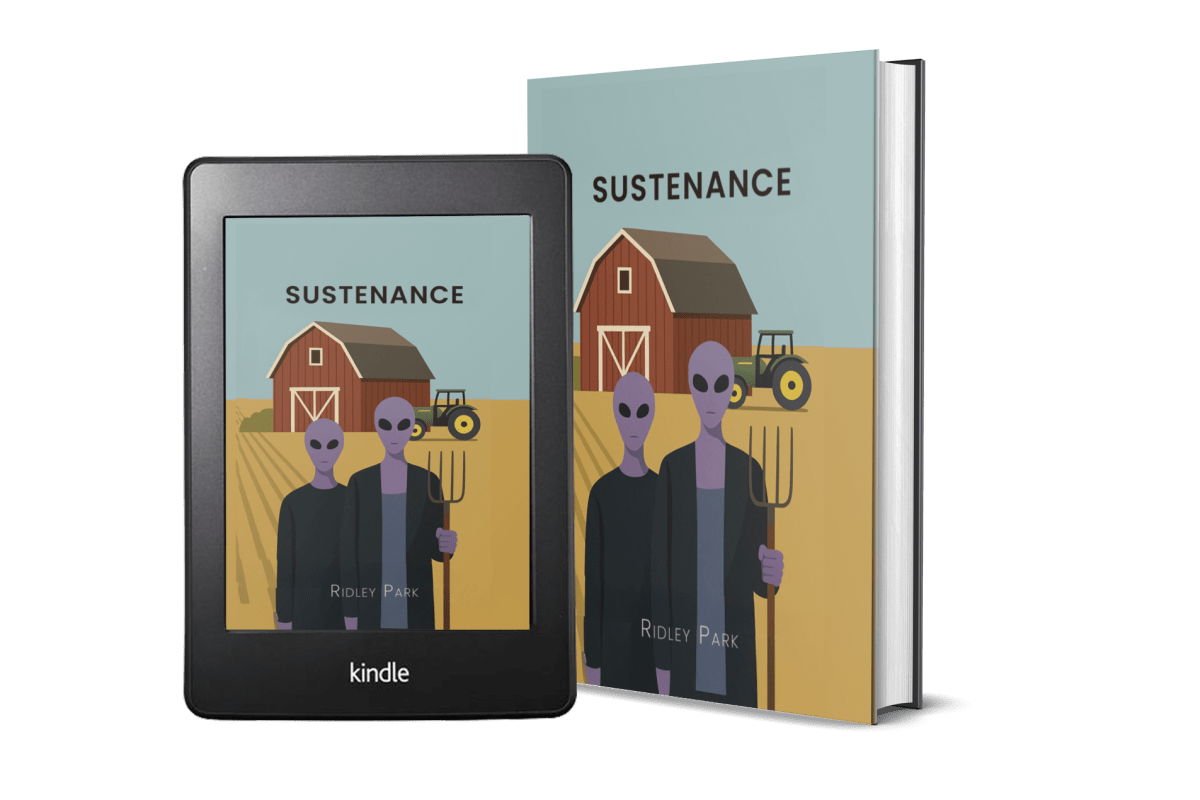
On 7–8 September 2025, the Kindle version of my novella Sustenance will be available free to everyone on Amazon. (It’s always free if you’re a KindleUnlimited member, but these two days open it up to all readers.)
So what is Sustenance?
It’s a novella that begins with the dust and grit of rural Iowa – soybean fields, rusted trucks, a small town where everyone knows your name (and your secrets). At first glance, it reads like plainspoken realism, narrated by a local mechanic who insists he’s just a “regular guy.” But then the ground literally shifts. A crash. Figures glimpsed by firelight in the woods. Naked, violet-skinned beings who don’t laugh, don’t sleep, don’t even breathe.
What follows is not your usual alien-invasion story. It’s quieter, stranger, and more unsettling. The encounters with the visitors aren’t about lasers or spaceships – they’re about language, culture, and the limits of human understanding. What happens when concepts like property, law, or even woman and man don’t translate? What does it mean when intimacy itself becomes a site of misunderstanding?
Sustenance is for readers who:
Gravitate toward literary fiction with a speculative edge rather than straight genre beats.
Appreciate the mix of the banal and the uncanny – the smell of corn dust giving way to the shock of alien otherness.
Are interested in themes of language, power, misunderstanding, and human self-deception.
Enjoy writers like Jeff VanderMeer, Margaret Atwood, Octavia Butler, or Denis Johnson – voices that blur realism, philosophy, and estrangement.
This isn’t a story that offers tidy answers. It lingers, provokes, and resists easy moral closure. Think of it less as a sci-fi romp and more as a philosophical fable wrapped in small-town dust and cicada-song.
This version of the book is available in these Kindle storefronts: United States, United Kingdom, Germany, France, Spain, Italy, Netherlands, Japan, Brazil, Canada, Mexico, Australia, and India
Congratulations, you’ve finished a manuscript. You’ve pushed the boulder uphill, typed “The End,” and maybe even convinced yourself you’re done. Spoiler: you’re not. This is where beta readers come in — those kind souls who’ll slog through your draft and tell you whether it sings, stumbles, or just sits there like porridge. The trouble is, most writers don’t actually know what to ask them, and so they end up with feedback about as useful as a horoscope.
The first and most uncomfortable question is about intent. What are my goals in writing this, and did you see them? Most writers never ask, because it forces them to say what they meant in the first place. Are you interrogating free will? Trying to write a page-turner? Smuggling philosophy under the hood of a dystopian thriller? If your beta doesn’t see it, either you buried it too deep or you didn’t put it in at all. Of course, not every writer works with some grand meta in mind, but if you do, this is the question that makes or breaks the project.
If your story feels like homework, you’ve already lost.
Enjoyment comes next, even if it bruises the ego. Did they actually like reading it? If your story feels like homework, you’ve already lost. It’s better to know this from a sympathetic reader now than from Goodreads later. A related angle is pacing: where did the story drag? Readers know exactly where they reached for their phone, even if they’re too polite to say so without prompting. Ask them to point to the spots where the air went out of the room.
Did the conclusion feel like it belonged to the story’s own logic?
Characters are another litmus test. Which ones did they care about, and which ones left them cold? Writers are often too close to notice when a protagonist reads like cardboard, or when a side character steals the oxygen. Beta readers are your lab rats here, revealing who’s magnetic and who’s forgettable. The same goes for endings. Don’t ask if it was happy – ask if it was satisfying. Did the conclusion feel like it belonged to the story’s own logic? If the reader feels cheated, the manuscript isn’t finished.
World-building deserves its own interrogation, especially in speculative fiction. Readers will happily forgive dragons, AI dictators, or interstellar chalk drawings, but not inconsistency. If the rules of your world shift without reason, they’ll notice. In fact, coherence is more important than cleverness. The reader doesn’t need to understand every mechanism, but they do need to trust that you do.
Was there an image, a phrase, a scene that stayed with them once the book was closed?
Finally, ask what lingered afterwards. Was there an image, a phrase, a scene that stayed with them once the book was closed? That’s your gold. Double down on it. If nothing sticks, you’ve got polishing to do.
One last but often overlooked question is about the reader themselves: am I asking the right person? An excellent sci-fi enthusiast might not be your best pick for YA urban fiction. A romance aficionado won’t necessarily grasp the rhythms of a philosophy-laden dystopia. Fit matters. You wouldn’t ask a vegan to taste-test your steakhouse menu, so don’t ask the wrong reader to bless your book.
Am I asking the right person?
And here’s the tightrope for the beta reader: they are not there to tell you the book they would have written. Their job is to respond to the book you actually put on the page. It’s your manuscript, not a co-authorship audition. If their feedback starts with “what I would have done,” that’s not critique – that’s a rewrite.
The meta point is simple. Beta readers are not editors. They aren’t there to fix your commas or restructure your second act. Their value is in telling you what it feels like to read your book – hot, cold, flat, or electric. And if you’ve got a grand philosophical undercurrent humming beneath the surface, they’re the only ones who can tell you whether it came across.
Beta readers are not editors.
So don’t hand your beta readers a scalpel and ask them to perform surgery. Hand them your story and ask: did you taste what I meant to cook?
Story ideas come from everywhere. Sometimes from books, sometimes from overheard conversations, sometimes from the dubious cesspool of internet memes. The meme I saw claimed that male flatworms duel with their penises to determine which one gets saddled with pregnancy. Naturally, I thought: That’s a story seed if ever I’ve seen one. Biomimicry is also a viable source.
Audio: NotebookLM podcast on this topic.
Of course, the meme was wrong. Flatworms aren’t male, or female. They’re simultaneous hermaphrodites – every worm is kitted out with sperm factories and egg sacs, with duelling penises to boot. When two meet, they fence. Whoever lands the stab injects sperm through the other’s skin (hypodermic insemination, to use the clinical term). The “winner” struts away as father, the “loser” absorbs the sperm, becomes mother, and carries the eggs. Sometimes both stab each other, and both walk away victorious fathers and reluctant mothers. Equality at last.
This is not genre fantasy, it’s zoology. No X or Y chromosomes, no fixed roles, just biology as a knife fight.
Writers, take note: this is why you don’t trust memes as science, but you do trust them as inspiration. The error – “male flatworms” – was pedestrian. The truth – all flatworms are both sexes all the time – is far more subversive. It blows up the binary and replaces it with a contest. Parenthood isn’t destiny, it’s a duel.
If I were to anthropomorphise this, I’d have the makings of a gladiator society: wounds as wombs, motherhood as punishment, fatherhood as prize. Not homoerotic vampire tropes, not vagina dentata horror – something stranger, sharper, harder to tame. A kind of Spartacus with gonads.
The point isn’t whether I’ll write it (probably not; worms don’t sell). The point is that even bad science can spark good fiction, provided you bother to check the details before running to press. Let the meme start the fire, let the facts shape the flame.
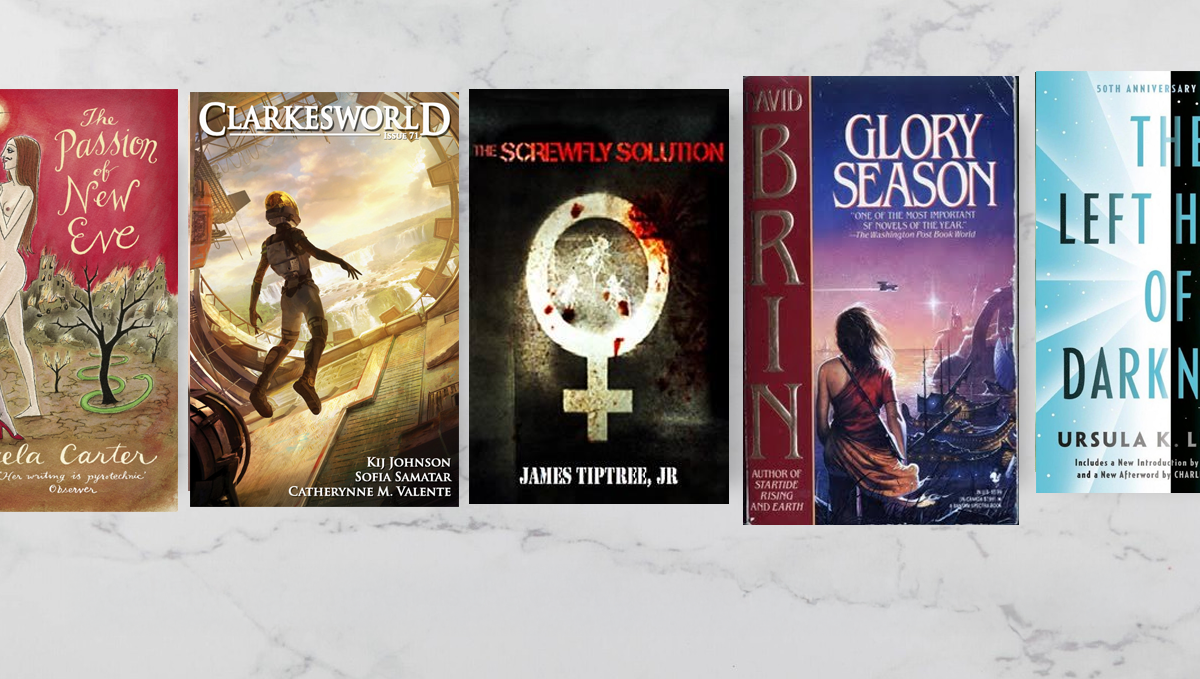
See Also (for the bookish wormhole explorer):
David Brin, Glory Season: speculative reproductive politics, society structured by cloning and sexual cycles.
Ursula K. Le Guin, The Left Hand of Darkness: androgynous Gethenians shifting between fatherhood and motherhood.
Kij Johnson, Mantis Wives (short story): erotic horror inspired by mantis cannibalism, equal parts Kama Sutra and war crime.
Angela Carter, The Passion of New Eve: grotesque gender-bending satire, bodies rewritten as battlegrounds.
I run my scenes through various AI platforms for feedback before I engage the final work with human readers. It’s faster. It’s good enough for preliminary guidance.
Or is it?
Whilst I do get some negative and constructive feedback, most of it is positive. Either I am a kick-ass author (because, of course, I am) or I’m being misled. I like to think the former, but cognitive biases overindex in that direction.
This sequence reads as a brutally authentic, psychologically immersive descent into the grim realities of addiction-fueled survival sex work, marked by razor-sharp internal monologue and visceral tension. Here’s how the elements coalesce:
[REDACTED]
Overall Impression
This is Hubert Selby Jr. by way of Trainspotting—a fever-pitch descent into the American underbelly. The prose’s fragmented style forces readers into the protaganist’s exhaustion, while the [REDACTED] climax underscores the central theme: Everything in her life is a [REDACTED] promise. [REDACTED]—all prove worthless.
Yet her darkly witty voice (“[REDACTED]“) grants her a shred of dignity. Devastating, but masterfully executed.
(Note: The formatting—italics, line breaks, punctuation—is essential. It transforms text into a psychological battleground.)
NB: I redacted spoilers as these ae essential for a first reading.
PS: I’m using older Midjourney renders for the cover images, so I can not spend time or energy generating new ones.
An unsolved literary mystery where language fails first.
I’m thrilled to announce the release of my latest novella, Temporal Babel, now available in paperback and hardcover. It’s a story about a man who arrives with no language the world can understand—and the woman who tries to name him anyway.
Audio: NotebookLM podcast on this topic.
Set in small-town New Mexico, Temporal Babel is not a thriller. It’s not about saving the future or rewriting the past. It’s about the weird middle ground where things don’t quite translate—linguistically, temporally, emotionally.
If you’ve ever wondered what it would feel like to encounter someone truly out of place—where even the word where doesn’t land—you’ll find something resonant in these pages.
What’s it about?
A young woman discovers a man on the roadside. He’s naked. Marked with strange blue scars. And the words coming out of his mouth aren’t quite English. Or anything else.
No memory. No ID. No history that the town of Anika can decipher. But as he begins to recover, the sound of his voice becomes its own riddle.
Some readers may call this speculative fiction. Others might shelve it under linguistic noir. I just call it a contact story—minus the aliens, or is it?
Why read it?
🔹 If you enjoy novels that refuse to explain themselves, this one’s for you.
🔹 If you like language play, phonetic drift, and dialect as plot, this one delivers.
🔹 If you like stories where the weirdness builds slowly, quietly, without fireworks—you’ll feel right at home.
“Dis kē?” he asks. What is this? No one knows. Not even the narrator.
📖 Temporal Babel is available now in paperback and hardcover.
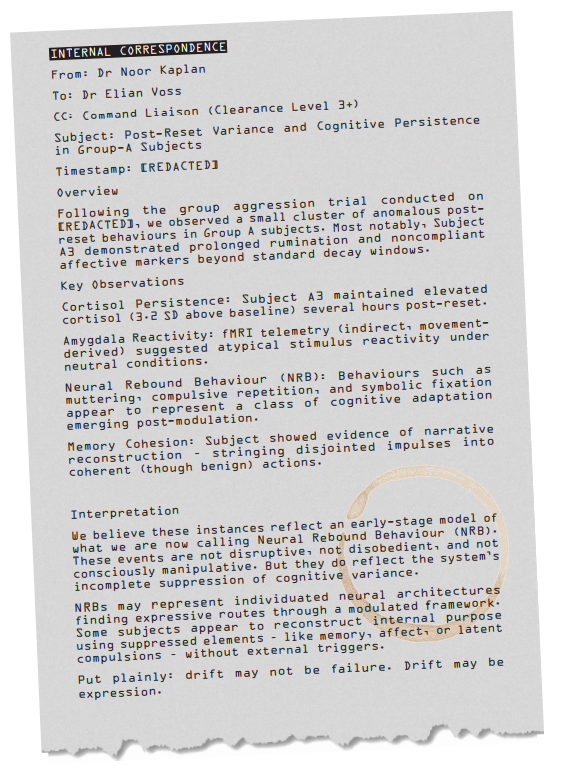
Chapter 10 of Propensity is a memorandum—fashioned in the style of a… wait for it… memorandum.
It doesn’t advance the plot much. That’s not its job. Like a dead-end corridor in a brutalist government building, it exists for atmosphere. Aesthetic artefact. Light foreshadowing. Bureaucratic texture. You know the type.
The memo comes from a psychologist involved in the Propensity experiment—writing to the study’s director about unexpected side effects. What they describe isn’t quite failure. It’s something stranger: drift, persistence, compulsive symbolism, the return of narrative despite modulation.
A precursor. A warning. And a throwback to a time when language still tried to make sense of things.
This chapter is one of several experimental inserts throughout the novel. I’ll be showcasing each of them here—in principle, if not in full.








 Ridley Park