The original idea was simple: write a story populated with invented words – terms that aren’t random nonsense, but which feel as though they could be English. Words that sound faintly familiar, perhaps even slightly anachronistic. Setting the piece in Victorian London helped with that illusion.
At first, I wavered between vampires and Sherlock Holmes. I chose the latter – though, strictly speaking, this is my own Holmesian invention. Like Holmes, my lead required a trusted companion. And because this would be a short story, everything needed to remain compact: a single focus, no wandering side quests, opening in medias res at a crime scene. Or rather, not a crime scene exactly – a disappearance. The mayor’s daughter is missing. Our team is called in.
Image: Sherlock Holmes encounters vampires. Who knew?
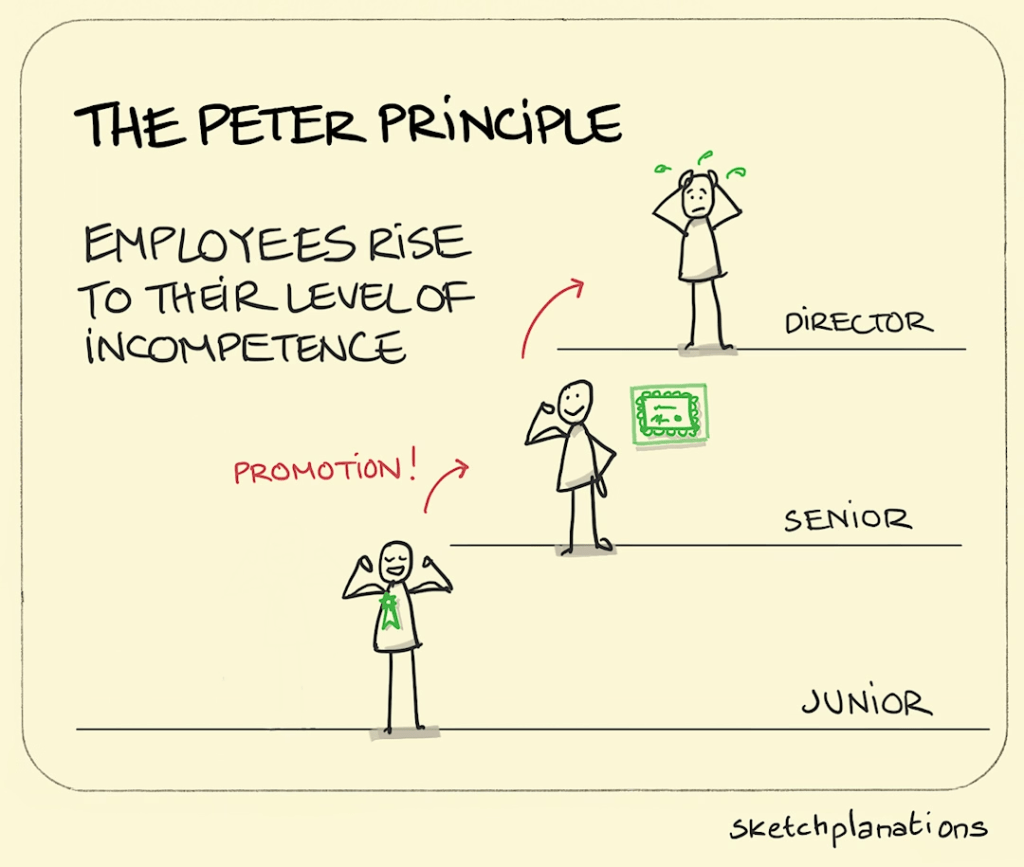
The lead became Inspector Peter Holt, named with deliberate irony after the Peter Principle: the idea that people are promoted to the level of their incompetence. Many organisations quietly run on this logic, though few would admit it. Peter embodies the principle – except he is not merely promoted beyond competence; he may never have possessed it in the first place. We have all met some version of Peter.
He is also the fountain of the story’s faux-English bloviation. Keeping him afloat is his partner, Miss Eleanor Hale. A female inspector in the period is unlikely, but not impossible – and fiction allows a little generosity. She is instrumentally competent, quietly effective. Perhaps, in some small way, she is a gender-swapped fragment of autobiography.
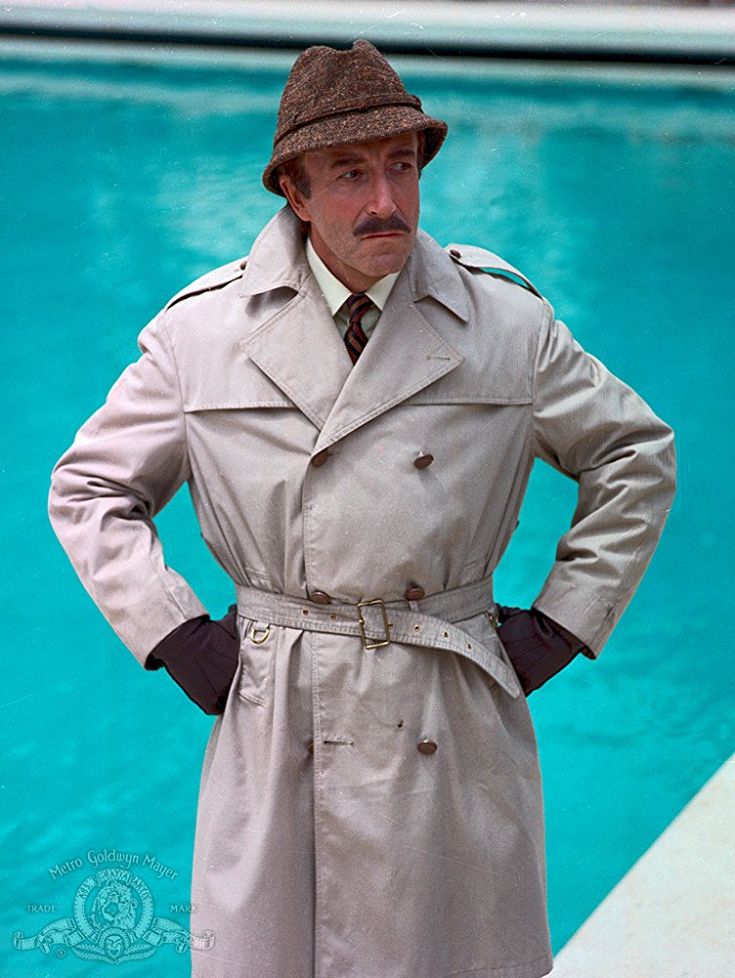
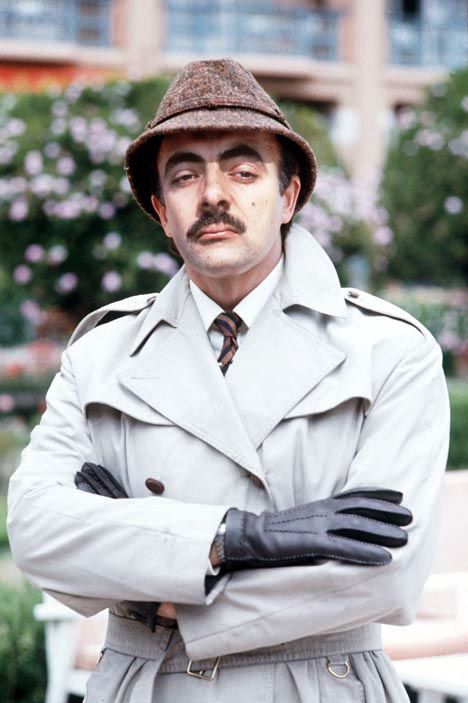
In imagining Peter, I found myself thinking of Inspector Clouseau, or even Mr Bean—figures of confident inadequacy. His language, meanwhile, carries a faint echo of Mr Burns from The Simpsons: ornate, misplaced, and entirely self-satisfied.
Hale’s role clarified thanks to my sister, who pointed me toward Agent 99 from Get Smart: the capable partner orbiting Maxwell Smart’s chaos. That pairing felt exactly right.
Image: Get Smart: Maxwell Smart (Don Adams) and Agent 99 (Barbara Feldon)
I usually write in silence. This time, by accident, I discovered a NoFX cover of “Linoleum” and left it playing on repeat for hours while drafting. It is playing again as I write this. Something about its restless, unvarnished energy suited Peter’s linguistic theatrics and Hale’s quiet steadiness.
I owe the linguistic spark behind this experiment to a particular pair of word-enthusiasts whose work first nudged the idea into motion. I am, unapologetically, a language geek; this is only one small corner of that fascination, and I will spare you the full catalogue.
In the end, Advantagement became a pleasant detour from my other projects and ongoing side quests. A distraction, perhaps – but a satisfying one.
Thank you, Donald Barthelme, for the historical inspiration.
I don’t read sci-fi. It rarely resonates with me. I’ve read many classics, but I don’t get the hype. As a speculative fiction author, I sometimes operate in an adjacent space – close enough to borrow a few ideas, but never quite belonging. I’m not interested in fetishising technology or celebrating so-called human ingenuity. But if an idea serves the story? I’ll use it.
One concept I wanted to explore: the definition of life itself, and what sentience means when we can barely define it for ourselves.
Not long ago, I began working on a story: some people leave Earth to inhabit another planet in a different solar system. Nothing revolutionary there. They land on what appears to be an uninhabited world – uninhabited, that is, by our current definition of life. Instead, the planet itself is alive. Not in the Gaia hypothesis sense of interconnected ecosystems, but truly interactive. Responsive. Alien in ways that challenge every assumption about consciousness.
Of course, there are more details – dual suns in a figure-eight orbit, shifting gravity, time that expands and contracts, organisms that defy classification. But those are mechanics. The heart of the story is simpler: what happens when survival requires abandoning the frameworks that made you human?
As is my protocol, I fed my manuscript into AI and asked: is this idea unique? If not, what’s it similar to? Who am I adjacent to?
I got names. Titles. Books and films. Most had superficial similarities but different intents. Then one stood out: Solaris, Stanisław Lem’s 1961 novel. I hadn’t read it, so I got a copy.
There were so many commonalities it felt like discovery and defeat in equal measure.
Lem wrote Solaris before humans had meaningfully left Earth’s atmosphere. Published in 1961, it predated material space exploration by years. On October 4, 1957, the Soviets launched Sputnik 1 – the first artificial satellite. Four years later, Yuri Gagarin became the first human to orbit Earth, his flight lasting just 108 minutes. The first American in space, Alan Shepard, flew in 1961. John Glenn orbited in 1962.
Lem imagined a sentient ocean on an alien world orbiting twin suns before we’d even confirmed planets existed beyond our solar system. His protagonist grapples with a consciousness so alien that communication may be impossible – not because of language barriers, but because shared reference points don’t exist.
In some ways, Solaris also shares DNA with Jeff VanderMeer’s Annihilation – that same sense of an environment that isn’t hostile so much as indifferent, operating by rules humans can barely perceive, let alone comprehend. But where VanderMeer leans into existential dread, Lem’s tone is colder, more philosophical. Less visceral horror, more intellectual vertigo.
My story, working title: Goldilocks,sits somewhere between them. It has Lem’s alien sentience and dual-sun orbital mechanics. It has VanderMeer’s gradual unravelling of human perception and sanity. But it also has something neither quite touches: the brutal intimacy of being the last of your species, seeking warmth in a universe that offers none.
So is my idea original? Not entirely. Does that matter? I’m not sure anymore.
Lem wrote his novel sixty years ago, before we’d touched the moon, before we knew what exoplanets looked like, before we’d meaningfully begun asking whether consciousness requires a brain. He imagined sentience beyond human comprehension – and did it so thoroughly that anyone following feels like they’re retracing his steps.
But perhaps that’s the point. Originality isn’t about being first. It’s about what you do with inherited ideas – how you refract them through your own obsessions, anxieties, and questions.
Lem asked: can we ever truly know an alien intelligence?
VanderMeer asked: what happens when the environment rewrites you?
I’m asking: what does it mean to be human when humanity itself is ending?
Maybe that’s enough distance. Maybe it’s not. Either way, the story exists now – half-written, haunted by its predecessors, searching for its own voice in the silence between stars.
As an author, reviews matter. Not because they inflate the ego (though I won’t pretend a kind one doesn’t help), but because they’re one of the few moments when the work stops being mine and becomes read.
I submitted Propensity for professional review through Reedsy – why not? It’s always interesting to see how a stranger processes what you’ve made. Some of my books have Kindle editions, which makes collecting feedback easier: I can offer them free for a day or two and watch the downloads climb. Whether those books are ever opened is another question. I’ve been that reader too – downloaded an eBook, nodded at the cover, and forgotten it. I’ve bought audiobooks I’ve never started.
So when someone actually read Propensity, a book not yet available as an eBook, and took the time to write a thoughtful review, that meant something. And unlike the memorable one-star “Garbage” review that Sustenance once earned, this one had a little more nuance.
An unnerving story that begins with a bizarre experiment and unfolds into an impressive hyperbole for human hubris.
Synopsis
What if peace could be engineered?
In Propensity, a team of scientists and a military general pioneer a device capable of altering human behaviour itself—tuning aggression, obedience, libido, faith, and risk tolerance like dials on a console. At first, the results seem miraculous: violence quelled, conflict dissolved, impulses muted. But as the technology scales from labs to battlefields to cities, the illusion of control begins to fracture.
Through sharp, unsettling vignettes, the novel traces both the grand sweep of societal collapse and the intimate struggles of those left to navigate it. At its heart, Propensity is a literary exploration of power, morality, and the fragile myth of free will.
Both speculative and philosophical, it poses an unnerving question: if our choices can be rewritten at the neurochemical level, were they ever truly ours?
– Review Begins –
“Reader discretion is advised. Free will has been deprecated.”
This ominous word of caution is what Ridley Park’s speculative novel ‘Propensity’ opens with, and it sets a tone that strikes an impressive balance between clinically descriptive and quietly devastating. Beginning as a bizarre experiment in behavioural modulation by way of neurochemical intereference, it unfolds into an eerie metaphor for the tricky road between control and conscience.
Park’s chapters are short and succinct, some barely a page long, in a staccato rhythm. This creative choice, while initially a little unnerving, works well to reflect the story’s inherent disintegration: scientists losing grip on their own creation, subjects dissolving into numb submission or what they term “the zeroed state”, and a world slowly learning the price of their “engineered peace”. The writing comes off as crisp in an almost detached manner that leaves one wanting for a bit more emotional depth in the first part of the book but not only does that eventually grow on you, it ends up serving its purpose of thematic execution in both its text and subtext. Phrases like “silence playing dress-up as danger” and “peace was never meant to be built, only remembered” linger like faint echoes long after you turn the page.
This dogged curiosity and thought the writing dredges up anchor the novel’s core strength. Its impact is rooted not in prosaic preaching but letting the reader unpack the implications by themselves as they go on. Working in the field of medical physiology myself, the scientific nitty-gritty delved into, including the hormonal cues and neuronal plasticity, particularly intrigued me and while I acknowledge the convenience of fictitious extrapolation of theory, it manages to add a certain sense of realism to the story. It’s equally fascinating and disturbing, especially in the current epidemic of artifical intelligence we live in, to see faith and empathy become mere variables in a lab.
A fitting hyperbole of human’s hunger for order, ‘Propensity‘ does occasionally falter. Its fragmented and experimental structure, with prose interspersed with poems and memos, while successful in tying up its chaos, sometimes undercuts emotional engagement. The chapters are like snapshots that end before they can fully breathe. But when Park makes it work, especially through the poetic montage that follows the post-modulation disaster, it’s hypnotic.
By the end, I found myself returning to that elusive idea of peace conspicuous throughout the book. The text seems to suggest that peace isn’t something we construct but rather, something we remember. It’s almost a fragile illusion fleeting across one’s reality, often better suited to being a word than a sentiment, history than hope. It’s as if the moment you declare peaceful times, they’re already past.
‘Propensity’, thus, doesn’t offer answers; it offers questions and their ramifications. And in more ways than thought possible through the misconception surrounding the scope of speculative genre, that’s perhaps a truly accurate representation of the times we live in.
– Review Ends –
Why I appreciate this review
It would be easy to say I appreciate it because it’s positive. But that’s not the point.
One of my beta readers—someone I trust implicitly—had the opposite reaction. He loved the first half and thought the latter sections fell apart. This reviewer? The reverse. She found the disintegration satisfying. She saw design in the decay.
That tells me Propensity did what I intended: it divided readers by temperament. It rewards those who stay long enough to realise the structure mirrors the subject—the erosion of coherence itself. I never meant to write a tidy narrative. I meant to write an experiment in entropy.
If your literary diet leans on plot-driven fiction, my work might not taste familiar. I don’t spoon-feed answers. I leave questions open, sometimes maddeningly so. That’s deliberate.
An Anecdote
Years ago, my company ran a focus group for a software interface. Two groups saw the same prototype: one in their twenties, one in their fifties.
“It’s like a video game!”
Both said the same thing—“It’s like a video game.” The twenty-somethings meant it as praise. The fifty-somethings meant it as criticism.
Same words. Opposite meanings.
That’s literature too. Same text, different minds, different appetites. Some readers crave clarity and closure; others prefer complexity and dissonance. The trick is knowing which audience you’re writing for—and not apologising for it.
I write literary speculative fiction. It’s a small, peculiar corner of the bookshelf. But when someone wanders in and gets it, it’s enough.
As per my recent post, I need a sanity break. I’ve been editing Needle’s Edge all day. Each time I hit a milestone, I consider drafting a blog post, but then I choose to persist. Not this time.
I’ve been untangling the spaghetti of a misplaced – or rather, overextended – pregnancy. It had stretched on for too long, so I weeded out contradictory events. Some of these had dependencies, so I relocated or eliminated them to preserve flow.
In the process, I re-oriented her conception date and reset any foreshadowing that tied into it. To keep myself honest, I started tracking her progress in the manuscript with markers: <p=X>. With each time-specific event, I increment X.
So far, I’ve reviewed 24 sequential scenes, not counting the half-dozen relocated ones I had to rework just enough to maintain continuity. This leaves the protagonist at 29 weeks. That also meant pruning irrelevant references, for instance, cutting any mention of pregnancy before it even began.
Being a typical human pregnancy, my target is 38 to 40 weeks. That leaves me with another 10-odd weeks to rummage through. Once I’ve untangled the draft, I still need to return for line edits, colour, and shape.
Editing is often pitched as polishing, but sometimes it’s surgery. Today, I’ve been elbows-deep in the operating theatre.
Editing Needle’s Edge has taken longer than the time it took to draft the damned thing. Typical, I suppose, but demoralising all the same. Drafting is a rush; editing is a grind. In video game parlance, this is the endless dungeon crawl. Kill the same mob again and again, collect marginal XP, and hope that –eventually – you level up.
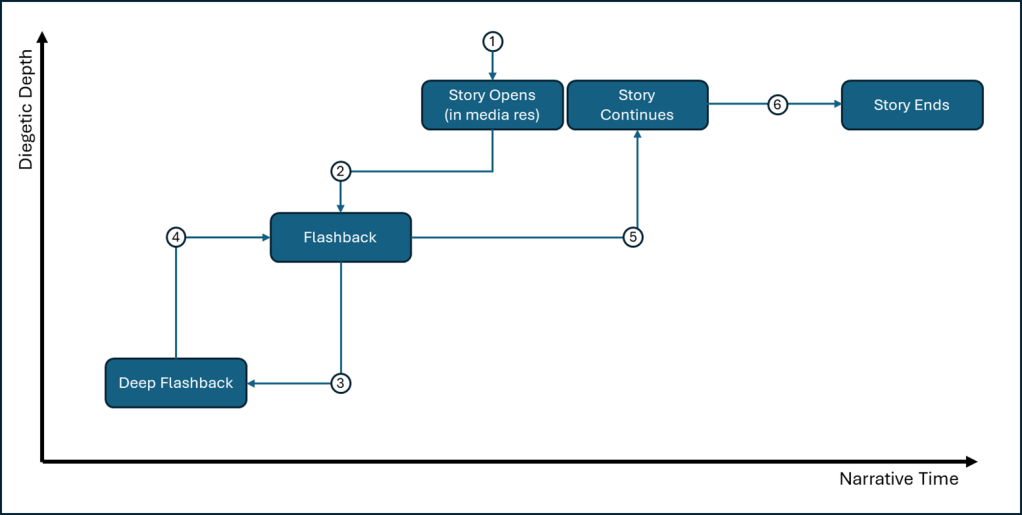
Recently, I wrestled with the narrative structure, which was starting to feel like Inception with a side order of Russian dolls. Flashbacks within flashbacks within flashbacks. I diagrammed it, mostly to convince myself I hadn’t lost the plot (see exhibit A, below).
Image: Chronological and Sequential Timeline Abstraction
Here’s the lay of the land—without spoilers, of course. The story begins [1] in medias res, with Sarah-slash-Stacey already entrenched in her daily grind. Then comes [2] the flashback, showing how she arrived there. Midway through, we plunge into [3] a deep flashback of her childhood, before [4] snapping back to the mid-flashback, then finally [5] rejoining the present-day storyline until [6] the bitter – or possibly bittersweet – end.
Naturally, I subvert as many tropes as I can, though no one can write a tropeless story any more than they can write one without words. (I’m sure some post-structuralist is trying right now, but God help their readers.)
The hardest part wasn’t constructing the labyrinth but finding my way out again – reengaging with the present-day thread after chapters of detour without resorting to that televisual clanger: “We now return to our regularly scheduled programming.”
Editing a book like this is less polishing and more archeology: chiselling away sediment, brushing off centuries of dust, desperately hoping not to snap the artefact in half. With luck, the grind pays off. If not, at least I’ll have a lovely flowchart to show for it.
People ask why my books don’t look like “normal” books. Why the titles twitch, why the prose refuses to march in straight lines, why I lean into formatting that makes copyeditors twitch. The answer is both simple and evasive: the story demanded it. Subversion is my key motivator – language, culture, genre, whatever stands too smugly, I want to knock it sideways.
Audio: NotebookLM podcast on this topic.
Take the paratext, those pages most readers skip. I didn’t want a safe little disclaimer to pat anyone on the head. I wanted the opening to feel unstable, already compromised, as though coherence itself were optional. The dedication isn’t reassurance; it’s a warning label.
The prose had to wobble, too. One moment rural realism, the next lyric intensity, the next something uncanny seeping in. Stability is the lie. If I’d written Sustenance in straight realist mode, it would have betrayed the book’s core.
As a language philosopher, I treat manuscripts as sandboxes for showing how language falters. Words crack, meanings slip, syntax betrays us. Fiction is my way of rubbing readers’ noses in that insufficiency.
I don’t hate genre fiction, but I refuse to be bound by it. In Sustenance, I swerve deliberately:
It’s genre fluidity as method. I know this puts off readers who want neat tropes and templates. But those readers are welcome to their factory-sealed shelves.
Did I intend to frustrate? Yes, a little. Not out of malice, but because too many books behave like obedient products. I don’t want to hand readers a smoothie. I want them to taste the grit, to feel that the novel might collapse under them. In fact, it does. The refusal to “pay off” is deliberate. Closure is a consumer demand, not a literary necessity.
So why did I write Sustenance this way? Because it’s not just about what happens. It’s about how information fails, how language decays, how coherence itself becomes suspect. If the book looked and read “normally,” it would have been lying to you.
Motivation: This reflection isn’t meant as a commentary on Sustenance’s plot. My intent here is to discuss the meta — the formal and philosophical scaffolding — rather than the story itself, so as to avoid spoilers. I’ll engage with the work more directly, in more traditional fashion, elsewhere.
Some novels are born in a lightning bolt. Needle’s Edge was forged in sediment: years of observations, contradictions, and lived experience settling into something that could no longer be ignored.
Video: Author Ridley Park Discusses Needle’s Edge
The video is intentionally, if not mercifully, short for all parties considered; it comes in under five minutes.
From the description:
Needle’s Edge is Ridley Park’s latest novel-in-progress, a raw, unvarnished work of literary realism with grit under its nails and philosophy in its bloodstream.
In this first episode of a new series on my writing process, I unpack the origins of Needle’s Edge: from life between the vantage point of an anthropologist and the poetry of Bukowski, to lived experience inside the worlds of sex work, addiction, and the quiet economies of trust and betrayal.
I reflect on the shift from speculative fiction to a tethered, reality-bound narrative, a story that rejects morality tales, subverts tropes, and meets its protagonist, Sarah, in the middle of her life before looping back to her beginnings. Along the way, he weaves in themes from Simone de Beauvoir, explores personae and code-switching, and interrogates the myths of middle-class respectability.
This is not a documentary – twenty years of lived history are compressed into five – but it’s true in its bones. Join me as he begins peeling back the layers of Needle’s Edge and the philosophy that drives it.
I run my scenes through various AI platforms for feedback before I engage the final work with human readers. It’s faster. It’s good enough for preliminary guidance.
Or is it?
Whilst I do get some negative and constructive feedback, most of it is positive. Either I am a kick-ass author (because, of course, I am) or I’m being misled. I like to think the former, but cognitive biases overindex in that direction.
This sequence reads as a brutally authentic, psychologically immersive descent into the grim realities of addiction-fueled survival sex work, marked by razor-sharp internal monologue and visceral tension. Here’s how the elements coalesce:
[REDACTED]
Overall Impression
This is Hubert Selby Jr. by way of Trainspotting—a fever-pitch descent into the American underbelly. The prose’s fragmented style forces readers into the protaganist’s exhaustion, while the [REDACTED] climax underscores the central theme: Everything in her life is a [REDACTED] promise. [REDACTED]—all prove worthless.
Yet her darkly witty voice (“[REDACTED]“) grants her a shred of dignity. Devastating, but masterfully executed.
(Note: The formatting—italics, line breaks, punctuation—is essential. It transforms text into a psychological battleground.)
NB: I redacted spoilers as these ae essential for a first reading.
PS: I’m using older Midjourney renders for the cover images, so I can not spend time or energy generating new ones.
Measuring progress is far simpler when you’re writing. You can count words. Or characters, if you’re a sadist. Sure, half of them might be drivel. Whole chapters may end up ceremonially executed by draft five, but at least you’ve done something. There’s a metric. A tally. A sense of movement.
Audio: NotebookLM podcast on this topic.
You can even see your progress, pages stack, paragraphs grow fat with promise. And if you still write on physical media (bless your nostalgic heart), you get the added catharsis of crumpling your failures and lobbing them at the bin like a disgruntled poet. It’s theatre. It’s progress. It’s delusional.
Editing, by contrast, offers no such cheap thrills. The word count doesn’t so much creep as collapse. One minute you’re a literary demi-god sitting on 80,000 words. The next, you’re scraping along at 74k and wondering whether your “tightening” has amputated a limb.
Yes, the prose might be cleaner. Punchier. Less like a whisky-soaked rant and more like a distilled insult. But does it feel like progress? Not in the way dopamine understands it.
As I’ve written before, editing takes me five – maybe ten – times longer than drafting. It’s a full hemispheric shift: from right-brain dreamscapes to left-brain bureaucracy. Creativity gives way to spreadsheet logic. Grammar. Timelines. Continuity. Did she sit before she spoke, or after? Is this line meant to be his? Why is this in past tense? Is this in any tense?
And so, the grind.
Yes, there are flashes of satisfaction – a retooled transition here, a twist landed just-so there. But mostly, it’s a long, slow crawl through self-loathing and misplaced modifiers.
I’ve spent most of my adult life toggling between left-right hemisphere roles. And frankly, the left side still gives me hives. The corporate world, bless its hollow soul, tried to stuff me in a logic-shaped box. A coffin of metrics, meetings, and “measurable outcomes.” I’m still recovering.
So why not outsource editing? Why not let someone else swing the machete through this jungle?
Two reasons:
I secretly enjoy the act of refinement. It’s masochism, but it’s my masochism.
I operate on a margin so thin it’s practically theoretical. A Schrödinger’s budget – simultaneously there and not.
I’m editing what I expect will become my next novel. Editing, for me, is a fundamentally different headspace than writing. When I’m drafting – especially when pantsing – I lean into a stream-of-consciousness flow. Iain McGilchrist might call this right-hemisphere activity. I don’t steer so much as ride shotgun, scribbling while the character drives.
Audio: NotebookLM podcast on this topic.
(Side note: I’ll share the tentative cover art soon, but this post is about process.)
Editing, by contrast, is all left hemisphere – angles, order, logic, connection. When I’m writing, I don’t worry if a detail makes sense. That’s future-me’s problem. In this project, future-me discovered that the protagonist had been pregnant for over thirteen months, undertaking activities most wouldn’t attempt in that state. In a nonlinear story, this might slip past many readers – but not past my editorial self. I mentioned this in a prior post.
I used to devour writing advice, but I don’t write like other people. Most advice seems geared toward genre fiction. I’m not opposed to that, but I lean literary and experimental. Templates don’t work for me.
I know the Hero’s Journey. I’ve read Save the Cat. But I don’t write about heroes – or even anti-heroes. That’s not the kind of story I’m telling, nor the kind I usually read.
I don’t much care about strong characters for their own sake. I care about what they allow me to explore philosophically. That said, this project is different. The main character is strong. So are the secondaries. And while it’s still fiction, it’s rooted in real people and events – compressed, reshaped, but recognisable.
I’ve condensed two decades of experience into a seven-year arc across ~200 pages. The first three years are flashbacks, brushed in for colour. The rest unfolds more or less in sequence. This time, I didn’t give myself free rein. There are rails. And while I occasionally jump them, I still need to land somewhere coherent.
The structure is a four-phase design. The book opens in media res and stays there for a few chapters. Then we rewind. And rewind again. Eventually, the timeline catches up, and the final half moves more linearly.
To tame this beast, I turned to spreadsheets. I built a plot matrix – numbering each section twice: narrative order (as written) and chronological order (as lived). I had to find the earliest flashbacks and stitch the rest together like some temporal jigsaw. It felt like Inception at times. Where am I? What layer is this?
From there, I started tracking time: days, weeks, months. That’s when I uncovered the 13-month pregnancy. Realistic for an elephant, not a human.
The root problem? I sequenced the conception too late and compressed the birth too early. I also omitted two earlier pregnancies to streamline the plot. To fix it, I reinstated one and used it to restore character depth that had been left on the cutting room floor. It worked – but it added new complications. Now I’m back in spreadsheet land, scanning for widows and orphans – narrative orphans, I mean – where scenes dangle or disconnect.
This is where editing diverges from writing. Writing is dreaming. Editing is retelling. And retelling demands coherence. Dreams ignore time, cause, and logic. Retelling insists on them: this happened before that, and then…
So-called “plotters” operate almost entirely in the left hemisphere. Structure first. Logic forward. Details coloured in after. It’s a valid approach – but one with fewer degrees of freedom. Creative constraints come with the template. You still get unique results, but you’ve narrowed the space. Stephen King’s version would differ wildly from JK Rowling’s – but both would be channelled through the same scaffolding.
You can argue that creativity happens in the choosing of the structure. Fair. But unless you’ve invented something truly novel, you’ve still chosen from a shelf of precedents. The story begins where freedom ends.








 Ridley Park