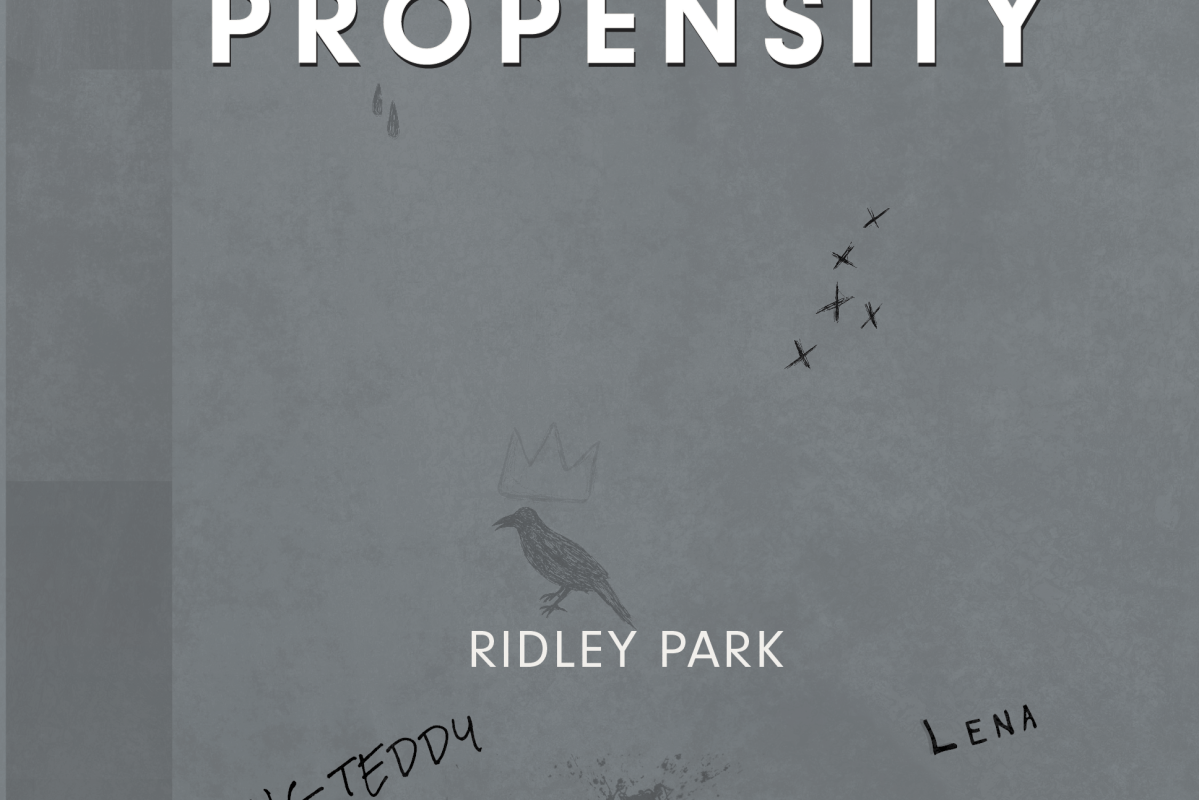
I’ve finally given Propensity a trailer. This short piece captures the first of the novel’s three movements – the ‘scientific’ phase, when everything still believes it’s under control. Except for this cover image, I used no AI. Except for the book covers, all assets – video clips and soundtrack – came from Motion Array
There may be another to follow, drawn from the second section, where control begins to crack. For now, consider this a visual prelude: thirty-two seconds of atmosphere, code, and quiet collapse.
Propensity is available in print and eBook in the usual places – online or at your local bookseller.
Yes, I actually said that. Possibly whilst caffeinated.
I was chatting with a mate about book sales, and it slipped out: I’d rather get reviews than sales. Not that I’d turn down either. But priorities matter.
Priority One: Write
The first goal is to write. I wrote for years before publishing a single page. The ideas pile up in my head like unwashed dishes, and writing is how I clear the sink. I write for myself. Call it narcissism if you must – but it’s a productive narcissism.
Priority Two: Be Read
Then comes the hope of being read. A sale is not a reader. Someone might buy your book and never open it. They might read it and hate it. They might toss it into the void. I just want to know.
Last month, I gave away over a hundred copies of Sustenance. Four reviews. One was one-star – she loathed it. Good. At least I know. The other ninety-nine? A mystery. For all I know, they’re gathering digital dust on forgotten hard drives. To be fair, I’ve got thousands of neglected downloads myself, so no judgment. Still, if you did read it, I’d love to hear what you thought. Leave a review.
Priority Three: Money (the tedious bit)
I’m not a consumerist, nor a fan of money-based systems. Unfortunately, that’s the system we’ve got, so yes – I still appreciate sales. But sales without engagement are hollow victories.
Reviews (the absurd bit)
Some people email me their thoughts instead of posting reviews. Lovely, but invisible. I can’t quote a private email without looking like a fraud. I could always fake one —
John Hartness, from Falstaff Books, recently noted that not all books translate well to audio. He’s right, and this isn’t a fan letter, just a nod to the truth of it. Every format has its own physics. Some stories bend beautifully. Others snap.
Video: John Hartness discusses the ins and outs of audiobooks.
Propensity is one of the snappers. It doesn’t behave on Kindle, either. That’s less a fault of the text than the medium. Its structure and typography do a lot of the storytelling, and when those are flattened to fit an algorithmic page template, something human is lost. I include the visual material as a PDF for the curious, but the audiobook can only gesture at what’s missing. No amount of verbal description replaces the architecture of the page.
Audio: NotebookLM podcast on this topic.
I listen to audiobooks constantly – commuting used to be my second job – but there’s a difference between hearing a story and parsing a spreadsheet by ear. Nonfiction especially suffers: tables, diagrams, anything spatially meaningful. Description isn’t substitution; it’s triage.
Musicians met this problem decades ago. When the Beatles stopped touring in 1966, it wasn’t vanity; it was liberation. They no longer had to replicate their studio work on stage. Garbage later flipped that logic: they engineered songs to survive live. The same divide holds for writers. Some build books that breathe on paper. Others craft ones that perform well through speakers. Neither camp is wrong.
When I produced records, my job was to capture the best possible experience – not the most ‘authentic’ performance. Now, with digital tools, some artists never play their own songs from start to finish until tour rehearsals. The copy-paste perfection of ProTools turns spontaneity into ornament. E-books and AI summaries do the same for text—efficient, portable, bloodless.
So, yes, formats matter. They always have. Paper isn’t just nostalgia; it’s part of the meaning. And while I’m happy to share Propensity however readers find it, I know where it breathes best: between real pages, under real light, in the one format that doesn’t pretend to be frictionless.
That’s the first line of Chapter 26, ‘Simulacra’, in Propensity. A small, airless room. A flickering light. Three teenagers – Teddy, Lena, Jamal – trying to remember what morality looked like before the world stopped watching.
This chapter is written as a script, not prose. Directions, shots, and camera pans replace internal monologue. The reader becomes the lens – an observer, never a participant. It’s deliberate. In a story about imitation and collapse, the camera itself becomes the narrator, the conscience, and the judge.
Audio: NotebookLM podcast on this topic.
The camera pushes through the door, searching. Dust floats in suspension, and time feels posthumous. Teddy zips his hoodie over bare skin; Jamal leans in the doorway, arms folded, disgust simmering behind teenage boredom.
JAMAL You can’t just be shagging Gormies, mate.
TEDDY That’s the point, innit?
Their exchange isn’t only about sex; it’s about the boundaries of what still counts as human. ‘Gormies’ are the gormless – the emptied remnants of pre-collapse society. They can’t consent or refuse. They’re alive but vacant. Human-shaped absences.
Teddy’s logic is brutal and pure simulation: if the subject can’t say no, the act ceases to carry meaning. He performs the motion of sin without the structure of morality.
Jamal’s recoil isn’t righteous; it’s aesthetic. He’s repulsed by Teddy’s theatre of transgression, the same way one might flinch at bad acting.
NB: Download this entire chapter as a PDF on the Propensity page.
Image: Page 125 of Propensity, Chapter 26 – Simulacra.
26 · Simulacra
INT. FLAT – BEDROOM – LATE AFTERNOON The room smells like a tin of low tide. CAMERA: SLOW DOLLY IN from hallway, pushing through the open door into a dim, dust-suspended interior. Thin curtains bleed grey light onto water-stained wallpaper. The ceiling flickers from a dying fluorescent. A single, empty BED lies unmade in the centre – crumpled sheets, a dent in the mattress. CAMERA: HOLD ON WIDE SHOT, framing the bed dead centre, with figures occupying the room’s periphery. TEDDY (14) zips up his hoodie. Shirtless underneath. Sweat drying on his chest. He leans against the flaking wall, chewing on a broken fingernail. CAMERA: SLOW PAN RIGHT to JAMAL (16), posted near the doorway, arms crossed. He watches Teddy, face unreadable but for the curl of disgust on his lip.
The title Simulacra is a nod to Jean Baudrillard’s Simulacra and Simulation, the philosophical text the Wachowskis borrowed – and misunderstood – forThe Matrix. Baudrillard didn’t mean that the world was an illusion hiding the truth. He meant that the distinction between illusion and truth had already evaporated.
The real no longer disappears behind its representation; it becomes its representation. The sign replaces the substance.
In this scene, Teddy, Jamal, and Lena are copies of moral beings without moral context. They mimic the gestures of civilisation – disgust, guilt, justice – without the living institutions that once gave those words gravity. They don’t believe in morality; they reenact it.
Baudrillard called this the third order of simulacra: when the copy no longer hides the absence of reality but replaces it entirely.
JAMAL You can’t just be shagging Gormies, mate. TEDDY (grinning) That’s the point, innit? (smirking toward the bed) She’s gormless. Don’t care. None of them do. CAMERA: CUT TO TIGHT SHOT – Teddy’s face. The smile is too wide. Forced. CAMERA: OVER JAMAL’S SHOULDER, the bed is empty now, but the shape in the sheet tells a story. JAMAL That’s Lena’s mum. CAMERA: CUT TO CLOSE-UP – Teddy blinks. Shrugs. TEDDY Didn’t know Lena, did I? (beat) CAMERA: SLOW REVEAL – LENA (15) stands in shadow. Hood up. Motionless in the corner. LENA You do now.
Then comes the slow reveal:
CAMERA: SLOW REVEAL – LENA (15) stands in shadow. Hood up. Motionless in the corner.
LENA You do now.
Lena’s voice reintroduces consequence, but only as performance. It’s not morality restored; it’s morality remembered. The moment isn’t ethical – it’s cinematic. The reveal is the moral event.
Her mother, the Gormie in question, is little more than an echo of personhood. The outrage in Lena’s voice belongs not to ethics but to staging: a scene constructed to look like remorse.
The simulacrum here isn’t the Gormie. It’s the moral itself – played out as ritual, devoid of anchor. These children have inherited the gestures of adulthood but none of its meaning. They mimic guilt because that’s what the dead world taught them to do.
By writing the chapter as a film script, Propensity exposes its own mechanism. Every camera move, every cut, is a reminder that you, the reader, are complicit. You’re watching a reconstruction of a reconstruction. The text becomes its own simulacrum – a story imitating cinema imitating life.
Even the bed, ‘a dent in the mattress’, is a metaphor for what remains of the real: an impression where something used to be.
The result isn’t post-apocalyptic horror but philosophical unease. What happens when moral sense survives as empty choreography? When consent and consequence are just old lines, the species keeps rehearsing?
Propensity isn’t about survival. It’s about what comes after survival—when humanity’s operating system still runs, but the data’s corrupted. The characters are trying to rebuild a moral code from cached files.
Simulacra is the point where imitation becomes indistinguishable from intent. It’s a study in ethical entropy, a mirror held up to our own cultural exhaustion, where outrage has become performance and empathy a brand identity.
This is the future Propensity imagines: not a world without humans, but humans without the real.
As an author, reviews matter. Not because they inflate the ego (though I won’t pretend a kind one doesn’t help), but because they’re one of the few moments when the work stops being mine and becomes read.
I submitted Propensity for professional review through Reedsy – why not? It’s always interesting to see how a stranger processes what you’ve made. Some of my books have Kindle editions, which makes collecting feedback easier: I can offer them free for a day or two and watch the downloads climb. Whether those books are ever opened is another question. I’ve been that reader too – downloaded an eBook, nodded at the cover, and forgotten it. I’ve bought audiobooks I’ve never started.
So when someone actually read Propensity, a book not yet available as an eBook, and took the time to write a thoughtful review, that meant something. And unlike the memorable one-star “Garbage” review that Sustenance once earned, this one had a little more nuance.
An unnerving story that begins with a bizarre experiment and unfolds into an impressive hyperbole for human hubris.
Synopsis
What if peace could be engineered?
In Propensity, a team of scientists and a military general pioneer a device capable of altering human behaviour itself—tuning aggression, obedience, libido, faith, and risk tolerance like dials on a console. At first, the results seem miraculous: violence quelled, conflict dissolved, impulses muted. But as the technology scales from labs to battlefields to cities, the illusion of control begins to fracture.
Through sharp, unsettling vignettes, the novel traces both the grand sweep of societal collapse and the intimate struggles of those left to navigate it. At its heart, Propensity is a literary exploration of power, morality, and the fragile myth of free will.
Both speculative and philosophical, it poses an unnerving question: if our choices can be rewritten at the neurochemical level, were they ever truly ours?
– Review Begins –
“Reader discretion is advised. Free will has been deprecated.”
This ominous word of caution is what Ridley Park’s speculative novel ‘Propensity’ opens with, and it sets a tone that strikes an impressive balance between clinically descriptive and quietly devastating. Beginning as a bizarre experiment in behavioural modulation by way of neurochemical intereference, it unfolds into an eerie metaphor for the tricky road between control and conscience.
Park’s chapters are short and succinct, some barely a page long, in a staccato rhythm. This creative choice, while initially a little unnerving, works well to reflect the story’s inherent disintegration: scientists losing grip on their own creation, subjects dissolving into numb submission or what they term “the zeroed state”, and a world slowly learning the price of their “engineered peace”. The writing comes off as crisp in an almost detached manner that leaves one wanting for a bit more emotional depth in the first part of the book but not only does that eventually grow on you, it ends up serving its purpose of thematic execution in both its text and subtext. Phrases like “silence playing dress-up as danger” and “peace was never meant to be built, only remembered” linger like faint echoes long after you turn the page.
This dogged curiosity and thought the writing dredges up anchor the novel’s core strength. Its impact is rooted not in prosaic preaching but letting the reader unpack the implications by themselves as they go on. Working in the field of medical physiology myself, the scientific nitty-gritty delved into, including the hormonal cues and neuronal plasticity, particularly intrigued me and while I acknowledge the convenience of fictitious extrapolation of theory, it manages to add a certain sense of realism to the story. It’s equally fascinating and disturbing, especially in the current epidemic of artifical intelligence we live in, to see faith and empathy become mere variables in a lab.
A fitting hyperbole of human’s hunger for order, ‘Propensity‘ does occasionally falter. Its fragmented and experimental structure, with prose interspersed with poems and memos, while successful in tying up its chaos, sometimes undercuts emotional engagement. The chapters are like snapshots that end before they can fully breathe. But when Park makes it work, especially through the poetic montage that follows the post-modulation disaster, it’s hypnotic.
By the end, I found myself returning to that elusive idea of peace conspicuous throughout the book. The text seems to suggest that peace isn’t something we construct but rather, something we remember. It’s almost a fragile illusion fleeting across one’s reality, often better suited to being a word than a sentiment, history than hope. It’s as if the moment you declare peaceful times, they’re already past.
‘Propensity’, thus, doesn’t offer answers; it offers questions and their ramifications. And in more ways than thought possible through the misconception surrounding the scope of speculative genre, that’s perhaps a truly accurate representation of the times we live in.
– Review Ends –
Why I appreciate this review
It would be easy to say I appreciate it because it’s positive. But that’s not the point.
One of my beta readers—someone I trust implicitly—had the opposite reaction. He loved the first half and thought the latter sections fell apart. This reviewer? The reverse. She found the disintegration satisfying. She saw design in the decay.
That tells me Propensity did what I intended: it divided readers by temperament. It rewards those who stay long enough to realise the structure mirrors the subject—the erosion of coherence itself. I never meant to write a tidy narrative. I meant to write an experiment in entropy.
If your literary diet leans on plot-driven fiction, my work might not taste familiar. I don’t spoon-feed answers. I leave questions open, sometimes maddeningly so. That’s deliberate.
An Anecdote
Years ago, my company ran a focus group for a software interface. Two groups saw the same prototype: one in their twenties, one in their fifties.
“It’s like a video game!”
Both said the same thing—“It’s like a video game.” The twenty-somethings meant it as praise. The fifty-somethings meant it as criticism.
Same words. Opposite meanings.
That’s literature too. Same text, different minds, different appetites. Some readers crave clarity and closure; others prefer complexity and dissonance. The trick is knowing which audience you’re writing for—and not apologising for it.
I write literary speculative fiction. It’s a small, peculiar corner of the bookshelf. But when someone wanders in and gets it, it’s enough.
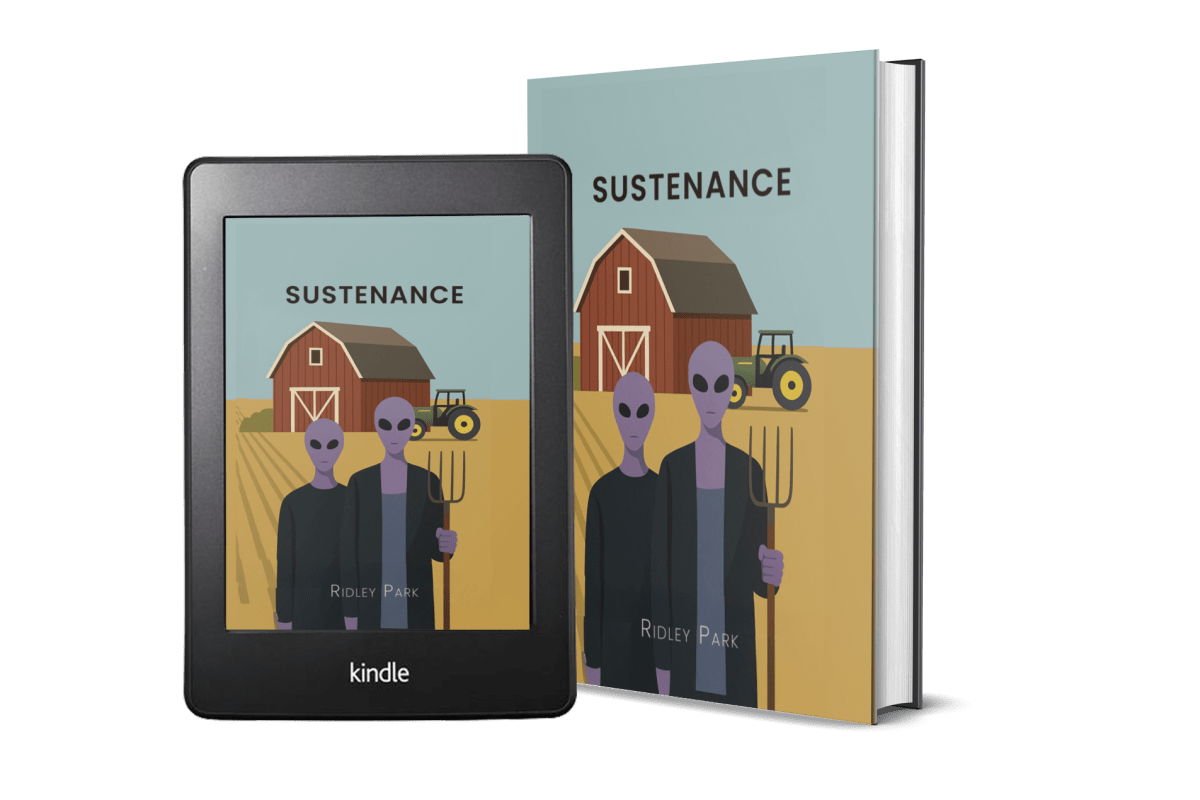
On 7–8 September 2025, the Kindle version of my novella Sustenance will be available free to everyone on Amazon. (It’s always free if you’re a KindleUnlimited member, but these two days open it up to all readers.)
So what is Sustenance?
It’s a novella that begins with the dust and grit of rural Iowa – soybean fields, rusted trucks, a small town where everyone knows your name (and your secrets). At first glance, it reads like plainspoken realism, narrated by a local mechanic who insists he’s just a “regular guy.” But then the ground literally shifts. A crash. Figures glimpsed by firelight in the woods. Naked, violet-skinned beings who don’t laugh, don’t sleep, don’t even breathe.
What follows is not your usual alien-invasion story. It’s quieter, stranger, and more unsettling. The encounters with the visitors aren’t about lasers or spaceships – they’re about language, culture, and the limits of human understanding. What happens when concepts like property, law, or even woman and man don’t translate? What does it mean when intimacy itself becomes a site of misunderstanding?
Sustenance is for readers who:
Gravitate toward literary fiction with a speculative edge rather than straight genre beats.
Appreciate the mix of the banal and the uncanny – the smell of corn dust giving way to the shock of alien otherness.
Are interested in themes of language, power, misunderstanding, and human self-deception.
Enjoy writers like Jeff VanderMeer, Margaret Atwood, Octavia Butler, or Denis Johnson – voices that blur realism, philosophy, and estrangement.
This isn’t a story that offers tidy answers. It lingers, provokes, and resists easy moral closure. Think of it less as a sci-fi romp and more as a philosophical fable wrapped in small-town dust and cicada-song.
This version of the book is available in these Kindle storefronts: United States, United Kingdom, Germany, France, Spain, Italy, Netherlands, Japan, Brazil, Canada, Mexico, Australia, and India
At last, the circle is complete. I’ve slogged through the full dystopia roster, the canonical set so beloved of memes and Venn diagrams. Orwell, Atwood, Burgess, Huxley – and now, Gattaca. Completion is satisfying, but the price of admission? Almost two hours of cinema so wooden you could build an ark.
The problem is not the premise. Genetic determinism as a caste system is a fine conceit – prescient even. But the execution? Trite, contrived, and about as subtle as an Ayn Rand sermon. This is a film with zero degrees of freedom: a script where every outcome is preordained, every obstacle contrived, every subplot bent double to guarantee Vincent’s ascent. It rails against determinism while embodying it.
And the characters? Archetypes in pressed suits. Vincent, the plucky underdog. Jerome, the fallen aristocrat with a liquor cabinet. Irene, the sceptical love interest who abruptly switches sides because the script tells her to. They don’t act, they oblige. It could just as easily have been written in the 1940s, swapped in for a Jimmy Stewart melodrama about class prejudice, courtroom vindication, and the triumph of the “human spirit.” The only modern touch is the genome gimmick.
Yes, admirers gush about its minimalism, its prescience, its “timeless” style. But strip back the sleek lines and moody jazz soundtrack, and you’re left with fortune-cookie profundities (“There is no gene for the human spirit”) welded onto a Rube Goldberg plot. It’s not timeless; it’s tired.
So yes, I’ve ticked it off the list. But at what cost? I endured the dialogue, the implausible sequencing, the endless plot coupons masquerading as destiny. Gattaca may live on in classrooms and think-pieces, but as cinema it collapses under its own deterministic weight.
As per my recent post, I need a sanity break. I’ve been editing Needle’s Edge all day. Each time I hit a milestone, I consider drafting a blog post, but then I choose to persist. Not this time.
I’ve been untangling the spaghetti of a misplaced – or rather, overextended – pregnancy. It had stretched on for too long, so I weeded out contradictory events. Some of these had dependencies, so I relocated or eliminated them to preserve flow.
In the process, I re-oriented her conception date and reset any foreshadowing that tied into it. To keep myself honest, I started tracking her progress in the manuscript with markers: <p=X>. With each time-specific event, I increment X.
So far, I’ve reviewed 24 sequential scenes, not counting the half-dozen relocated ones I had to rework just enough to maintain continuity. This leaves the protagonist at 29 weeks. That also meant pruning irrelevant references, for instance, cutting any mention of pregnancy before it even began.
Being a typical human pregnancy, my target is 38 to 40 weeks. That leaves me with another 10-odd weeks to rummage through. Once I’ve untangled the draft, I still need to return for line edits, colour, and shape.
Editing is often pitched as polishing, but sometimes it’s surgery. Today, I’ve been elbows-deep in the operating theatre.
Editing Needle’s Edge has taken longer than the time it took to draft the damned thing. Typical, I suppose, but demoralising all the same. Drafting is a rush; editing is a grind. In video game parlance, this is the endless dungeon crawl. Kill the same mob again and again, collect marginal XP, and hope that –eventually – you level up.
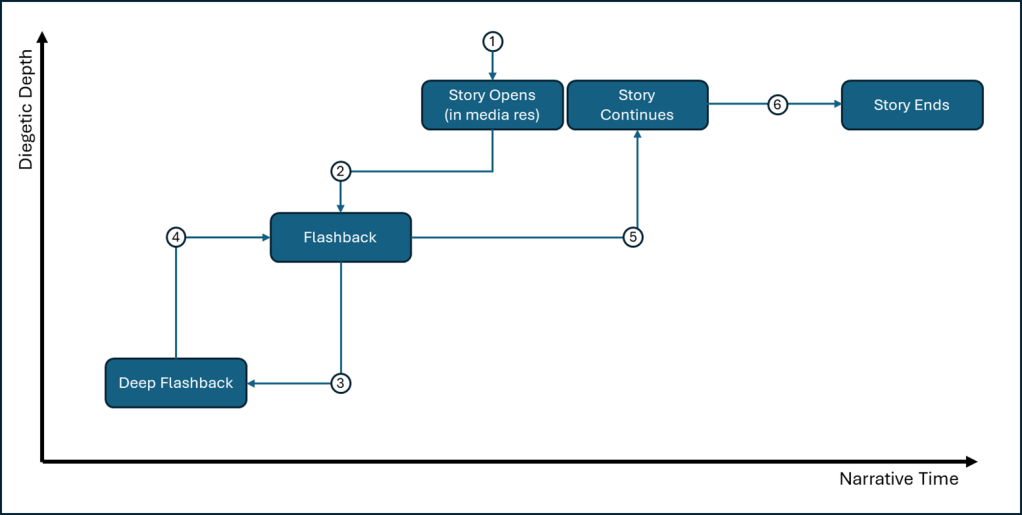
Recently, I wrestled with the narrative structure, which was starting to feel like Inception with a side order of Russian dolls. Flashbacks within flashbacks within flashbacks. I diagrammed it, mostly to convince myself I hadn’t lost the plot (see exhibit A, below).
Image: Chronological and Sequential Timeline Abstraction
Here’s the lay of the land—without spoilers, of course. The story begins [1] in medias res, with Sarah-slash-Stacey already entrenched in her daily grind. Then comes [2] the flashback, showing how she arrived there. Midway through, we plunge into [3] a deep flashback of her childhood, before [4] snapping back to the mid-flashback, then finally [5] rejoining the present-day storyline until [6] the bitter – or possibly bittersweet – end.
Naturally, I subvert as many tropes as I can, though no one can write a tropeless story any more than they can write one without words. (I’m sure some post-structuralist is trying right now, but God help their readers.)
The hardest part wasn’t constructing the labyrinth but finding my way out again – reengaging with the present-day thread after chapters of detour without resorting to that televisual clanger: “We now return to our regularly scheduled programming.”
Editing a book like this is less polishing and more archeology: chiselling away sediment, brushing off centuries of dust, desperately hoping not to snap the artefact in half. With luck, the grind pays off. If not, at least I’ll have a lovely flowchart to show for it.
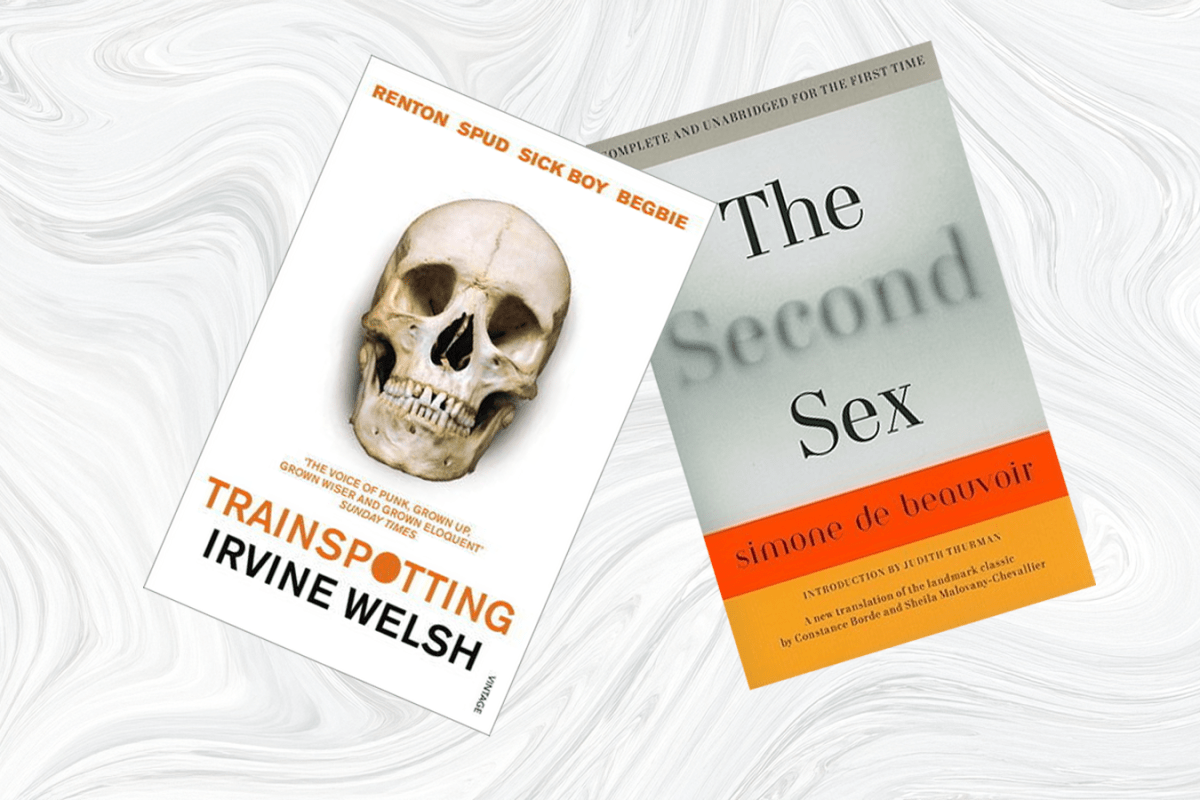
I’ve just finished Simone de Beauvoir’s The Second Sex – all 800 pages of it – and have now started Irvine Welsh’s Trainspotting. Both are classics in their own way. I’ll review Second Sex properly on my Philosophics Blog, but here I want to think about Trainspotting in relation to my current manuscript, Needle’s Edge.
Interestingly, Trainspotting was a ChatGPT recommendation. I fed in my draft of Needle’s Edge and this was one of the books it said my work resembled. Two chapters in, I see the connexion. First, the subject matter – drugs and addiction. Second, the rawness of the experience.
There are differences, of course. Trainspotting is rooted in Leith, Scotland; Needle’s Edge belongs to the East Coast of the United States – Delaware and Philadelphia. Welsh draws heavily on dialect and vernacular, with a narrative voice that’s linguistically dense and aurally charged. In Needle’s Edge, the style is pared down. Sentence fragments, middle dots instead of full stops, and an intentional “lower” register mirror the protagonist’s fractured perception and limited resources.
That gap in register creates a different authorial challenge. With every edit pass, I find myself policing intrusions of my vocabulary into her voice. Welsh, by contrast, can deploy a broader lexicon and trust the dialectal texture to keep it authentic. Listening to Trainspotting, I’m struck by how words and turns of phrase leap out – sometimes apt for Needle’s Edge, but often just a shade too polished for Stacey’s world.
Both texts orbit around environments that resist glamour. Welsh’s squat flats and pubs are grimy and feral; Needle’s Edge’s motel rooms and sidewalks are littered with fast-food wrappers, orange caps, and fading unicorn posters. Addiction erodes bodies in both stories, but the textures differ – Scotland’s industrial gray versus the East Coast’s cheap motels and suburban detritus.
As for the film version of Trainspotting, I saw it long ago and remember almost nothing. The novel isn’t refreshing my memory either; it feels like a separate creature altogether. Which is fitting: both Trainspotting and Needle’s Edge are less about plot than about capturing a lived texture, a rhythm of voices and environments that mainstream narratives usually discard.






 Ridley Park