Write Like No One Will Read It

3–4 minutes

I was musing on this topic – on writing, why one does it, for whom, and whether the effort deserves a standing ovation or a polite cough – when the Algorithmic Gods of YouTube, in their infinite surveillance, dropped this into my lap:

Video: Write like no one will read it.

What serendipity. Or surveillance. Or both.

Let’s be clear: I have no commercial aspirations. I write. That’s the thing. Do I want you to buy my books? Of course. But if you do, I’ll treat it like a solar eclipse – rare, beautiful, and probably not good for your eyesight. A bonus, not the baseline.

I’m not interested in moralising about art for art’s sake or parading around the notion of integrity like a damp flag in a digital hurricane. When I write, I write to express. Not to impress. I don’t care if no one likes it – though I admit, it’s a treat when someone does. Like finding your exact brand of misanthropy mirrored in another human being. Intoxicating.

I was in the Entertainment Industry for years. Not the TikTok variety – actual music, instruments, stages. The word sellout was thrown around like loose change. Some wore it like a scarlet letter, others like a badge of honour.

I remember Elliot Easton of The Cars once said to me – rather sheepishly, as if confessing to tax evasion – “I can’t help it that we’re talented.” This, after Heartbeat City blew up. He was defensive about success, as if it somehow invalidated his artistic credibility. Imagine being so good at your craft that you feel guilty for it. The poor bastard.

Elliot was a musician’s musician. He lived and breathed the stuff, but he wasn’t the band’s oracle. That mantle fell to Benjamin Orr and Ric Ocasek. Elliot was a brilliant contributor – but always downstream of someone else’s vision. I think his dissonance came from chasing a dream that wasn’t quite his.

I once saw an interview with Metallica. Their whole youthful drive was to be the number one band in their genre. They got there. Cue existential crisis. Now what? It’s the inevitable hangover of the goal-oriented artist. Beware the summit: it’s often just a ledge with a better view of the void.

Me? My goal is to write.

That’s it. Not to be a writer. Not to write a bestseller. Just to write. The thoughts in my head spiral out in all directions – sometimes absurd, sometimes barbed, occasionally beautiful. I’d love to share them with the world. And sometimes, gloriously, someone connects. A person I’ve never met reads a line and feels seen. That, my friend, is magic. Not transactional. Transcendental.

But if I were writing for them instead of for me? That would be an ouroboros – a serpent gnawing on its own tail, mistaking the feedback loop for intimacy. That’s not connexion. That’s algorithmic co-dependence.

Image: Technological Ouroboros – Autonomous Power Strip, because even metaphors get short-circuited these days

I’ll be honest: many of my ideas are weird. Not zany TikTok quirky. I mean alienating. Like stow-your-popcorn-and-strap-in strange. When I share them too early, I get a flood of feedback from people who were never going to be my audience. And yet they feel compelled to fix it. To shape it into something more palatable. More genre. More normal.

I’ve had entire manuscripts derailed by the well-meaning notes of people who should have never been allowed near them. Not bad people – just wrong readers. That’s on me. Lesson learned.

So now? I write like no one will read it.

Because they probably won’t.

And that’s oddly freeing.

Dance like no one’s watching. Write like you’ve been ghosted by the market. Make art like it’s the only way left to breathe. If someone finds it, and it saves their life – or just their afternoon that’s a bonus.

But don’t start there.

Start with you.

Persona, Identity, and the Many Faces of Sarah

(Notes from the cutting room floor)

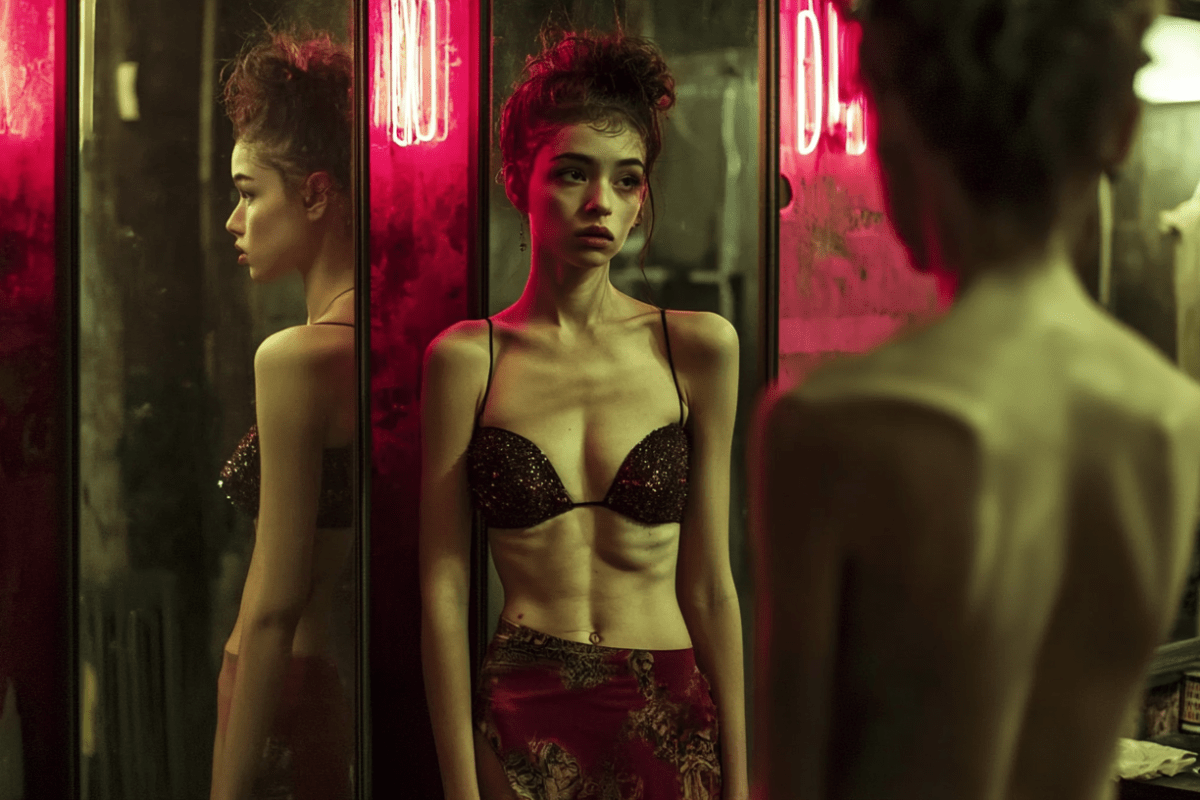
I’m taking a break from editing to share something about the protagonist in my latest novel-in-progress, Needle’s Edge. She’s a woman – yes, but not just. She’s a prostitute. She’s an addict. And she’s three people.

Audio: NotebookLM podcast on this topic. (Direct)

There’s Sarah, her given name. The name reserved for friends, family, and those rare few who know her without conditions. It’s the name she hears in moments of tenderness, or shame, or memory.

Then there’s Stacey, the escort, the stripper, the performer. This is the name on her ads. The one whispered in hotel rooms and shouted in clubs. Stacey is curated. Sexual. Selective. She knows what sells and how to sell it.

And then there’s Pink, the street persona. The user. Pink is who shows up when Sarah needs to score. She trades in slang and silence. She wears a different skin. A different currency.

Three names. One woman. No seams showing – if she can help it.

In her world, compartmentalisation is survival. If a dealer connects the dots and knows she’s an escort, she’s vulnerable. If a client finds out she’s using, her value drops. Appearances are everything. Rates depend on it. Reputation is a balancing act on a razor’s edge. And so each name carries its own set of rules, risks, and rituals.

But here’s the deeper cut: Who’s the “real” Sarah?

Is Stacey fake? Is Pink less than? Is Sarah just the base layer beneath the makeup and muscle memory?

They’re all her. None of them. Some of each. Identity is slippery.

The left hemisphere of the brain craves coherence. It wants simplicity, categories, reduction. But the truth is, identity is a heuristic. A convenient fiction. And Sarah, more than most, knows this. Where most people perform one role and pretend it’s a self, she splits hers openly. She curates them. Manages them. Leverages them.

And yet, the cost is high.

Stacey and Pink are exhausting. High maintenance. High risk. But being Sarah isn’t a comfort either. It’s just what’s left when the others are stripped away. She doesn’t retreat into Sarah so much as collapse into her.

In that way, Sarah isn’t a self – she’s a default.

The irony? For all this agency, for all her awareness, she’s still trapped in identities designed for consumption. For transaction. For escape. Whether it’s sex, drugs, or memory, she’s always negotiating something.

Three names.
Three roles.
Still no way out.

🛸 SUSTENANCE Has Landed

A note from Ridley Park on language, consent, and the limits of knowing.

Well, this one’s live.

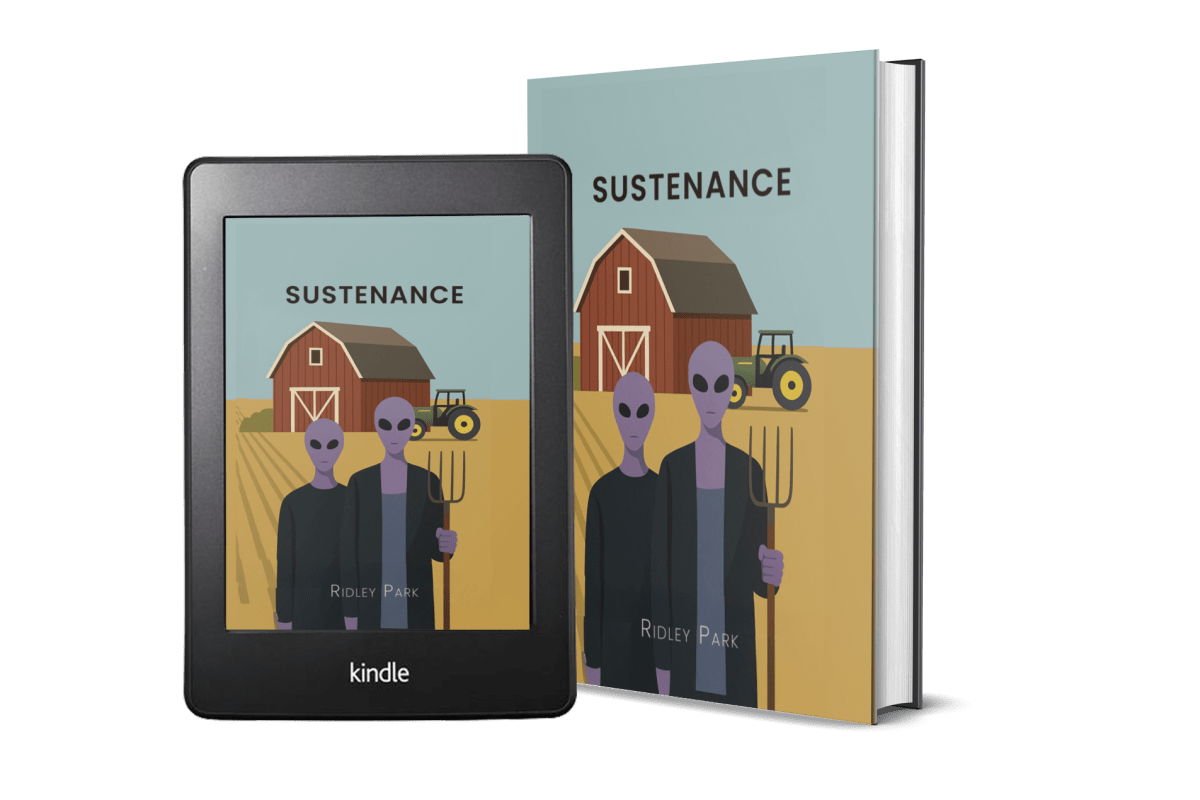
Sustenance has officially launched.

Audio: NotebookLM podcast on the book Sustenance.

If Propensity was about engineered peace through probabilistic compliance, Sustenance asks what happens when understanding itself breaks down—and nothing you think is mutual, is.

No war. No invasion. No end-of-days. Just a quiet landing. And a failure to translate.

The Premise

A group of non-human beings arrive—not in conquest, not in friendship, but in continuity. They are not like us. They do not see like us. They don’t even mean like us.

There is no universal translator.
No welcome committee.

Just humans—interpreting through projection, desire, and confusion.

And aliens—operating by a logic that doesn’t require interpretation.

The Themes


Sustenance explores what happens when:

  • Language fails and nothing fills the gap
  • Consent becomes guesswork
  • Culture is mistaken for nature
  • Property has no meaning, and law no parallel
  • Sex isn’t private, sacred, violent—or even especially enjoyable
  • Memory becomes narrative, and narrative becomes defence
  • Contact isn’t miraculous—it’s awkward, biological, and quietly irreversible

This is a story about misunderstanding. Not just what others mean—but who we are when we assume we understand anything at all.

The Tone

Think Arrival but rural. Annihilation without the shimmer.

A bit of VanderMeer. A hint of Flannery O’Connor. The cornfields are real. The discomfort is earned.

No apocalypse.

Just a failure to process.

And maybe, something new inside the gap that opens when the old stories no longer apply.

Why Write This?

Because contact doesn’t have to be violent to be destabilising.

Because not all miscommunication is linguistic—some is anatomical.

Because the most alien thing we can encounter is ourselves, misinterpreted.

Because I wanted to write a story where the question isn’t “what do they want?” but “what have we already assumed?”

Now Available

Sustenance is available now in hardcover, paperback, and Kindle.

If you read it—thank you. If you don’t, that’s fine.

The misunderstanding will continue regardless.

📘 More about the book →

Ridley Park
Possibly a person. Possibly a place. Possibly both.

Psychology of Writing

I’ve put in some 42,000 words and counting into Hemo Sapiens, so I’ve taken a couple of days to step back and take a long view. I want to ensure I am keeping my original vision with integrity. A major motivator for me is to write a social commentary. I am a philosophical and psychological person, but I am not looking to come across like Dostoyevsky, one of my favourite writers. Besides, this is adult contemporary speculative fiction, not psychological literary fiction like Fyodor. I’m shooting more in the space of Margaret Atwood or Cormac McCarthy, at least thematically.

The working title is Hemo Sapiens: Awakening. I might amend the subtitle to Awakenings. Time will tell. The story is about the awakening of the hemo sapiens. I’m always refining, but here’s the general pitch:

Nearly a hundred strong, a family of genetically engineered clones confront harsh realities when discovered by a fearful outside world.

It’s a story of the construction of group and individual identities—going from no conception of identity to battling an imposed identity as outsiders to form one of their own; from no individuation to a semblance of personal identity.

I hope to pay homage to Erikson’s stages of identity formation and Kubler-Ross’s stages of dying. Kubler-Ross gets double duty, as I wish to personify characters with each of her stages: Denial, Anger, Bargaining, Depression, and Acceptance.

It will also serve as a critique against post-Enlightenment Modernism. Whilst I agree that change was necessary and inevitable at that time, the direction taken was not necessarily for the better. As a so-called Postmodern™, this is my default position. As Rousseau notes, promises of freedom abound, yet most remains enchained. Or in the lyrics of Mad Season’s River of Deceit,

My pain is self-chosen

Anyway, back to writing.