Ridley Park has not been dead, merely sleeping like a hungover deity ignoring its worshippers. As has become my regrettable habit, most of my creative energy has been siphoned into non-fiction projects, leaving the poor world deprived of my fictional offerings and my blog gathering dust like an abandoned cathedral.
But fate – or more accurately, an algorithm – shoved a book into my face with all the subtlety of a street preacher: There Is No Antimemetics Division. Hard science fiction, horror, and something about antimemes. Naturally, I pressed Play Sample instead of behaving like a responsible adult and reading the summary. Antimemetic sounded deliciously unwholesome. Straight down the hatch.
Image: Advert with an author pic for this book.
I’m only into Chapter Two, so don’t expect a full exegesis yet. This is merely a field report from the early trenches.
I bought the Audible version, because audiobooks are the only thing keeping me sane through workouts, where otherwise, one contemplates mortality and the price of groceries. As the sample ran, I learned two things:
Parts of the narrative are redacted.
They did not redact to protect state secrets or Jeffrey Epstein’s ghost.
No – it’s a stylistic device. A textual blackout. Beeps, static, corrupted passages like intercepted voicemail from a doomed expedition. Being partial to experimental prose, I took it as a dare. My brain applauded.
The effect reminded me of Irvine Welsh’s Filth – not in theme, but in the editorial scars, the moth-eaten structure. Welsh, more widely known for Trainspotting, does chaos like astrophysicists do numbers. Obfuscation as aesthetic. Disorder as design. The connection may be superficial, but it’s one worth pocketing.
The title earns its relevance quickly: certain ideas spread like plague; others erase themselves on contact. Antimemes – cognitive black holes. Information that cannot be held without dissolving. A story that fights the mind that reads it.
Hard sci-fi rarely offers such structural mischief. I’m morbidly delighted to see where the horror emerges, when the narrative begins to eat its own memory like a recursive ouroboros.
More to come, once I descend deeper into the antimemetic labyrinth.
And yes – lest anyone call the coroner – I am still writing.
Working with an editor shouldn’t be scary. Unless, of course, you frighten easily.
Let’s begin with the great paranoia of writers everywhere: They’ll steal my idea! Relax. No one’s skulking through the shadows waiting to pinch your half-finished manuscript about a misunderstood vampire who paints feelings. Ideas are cheap. They rain down like confetti. The reason every other book or film feels vaguely familiar isn’t because everyone’s plagiarising everyone else; it’s because there are only so many ways to dress the same skeleton. Your story’s clothing — the style, the voice, the rhythm — that’s what matters.
And honestly, ask yourself if your idea is really so revolutionary. Probably not. I sometimes test mine on an AI just to see if the collective hive mind has already beaten me to it. Usually it has. I just tilt it differently. Star Wars? A Western in space. Lucas literally invited Joseph Campbell over to discuss myth templates, then sprinkled some lasers on top. Nothing wrong with that — unless you start believing it’s unique.
Now, what does an editor actually do? They read your work and offer feedback. When that happens, you’ve basically got three choices:
I. Ignore it. Maybe the suggestion feels wrong. Good. Trust that feeling. Nothing’s worse than bowing to authority and regretting it later. Imagine the post-publication chorus: Why on earth did you do that? — and your only defence is, Well, my editor said so. Pathetic. Give twelve editors the same chapter, you’ll get twelve different answers. Writing has rules, yes — but most are decorative.
II. Accept it. Hit ‘Accept all revisions’. Voilà — you’re suddenly brilliant. It’s tidy, efficient, and possibly catastrophic.
III. Consider it. The middle ground. Let the note spark something else entirely. Maybe they’re wrong about what to fix but right that something’s off.
Some advice will be structural, some grammatical. Both are optional. I, for one, commit grammatical heresy whenever my characters open their mouths. People don’t speak like Oxford dons; they stumble, repeat, and misuse words spectacularly. Editors sometimes flag this as ‘awkward’. I call it ‘human’. Grammar is for dissertations. Dialogue is for life.
Yes, I actually said that. Possibly whilst caffeinated.
I was chatting with a mate about book sales, and it slipped out: I’d rather get reviews than sales. Not that I’d turn down either. But priorities matter.
Priority One: Write
The first goal is to write. I wrote for years before publishing a single page. The ideas pile up in my head like unwashed dishes, and writing is how I clear the sink. I write for myself. Call it narcissism if you must – but it’s a productive narcissism.
Priority Two: Be Read
Then comes the hope of being read. A sale is not a reader. Someone might buy your book and never open it. They might read it and hate it. They might toss it into the void. I just want to know.
Last month, I gave away over a hundred copies of Sustenance. Four reviews. One was one-star – she loathed it. Good. At least I know. The other ninety-nine? A mystery. For all I know, they’re gathering digital dust on forgotten hard drives. To be fair, I’ve got thousands of neglected downloads myself, so no judgment. Still, if you did read it, I’d love to hear what you thought. Leave a review.
Priority Three: Money (the tedious bit)
I’m not a consumerist, nor a fan of money-based systems. Unfortunately, that’s the system we’ve got, so yes – I still appreciate sales. But sales without engagement are hollow victories.
Reviews (the absurd bit)
Some people email me their thoughts instead of posting reviews. Lovely, but invisible. I can’t quote a private email without looking like a fraud. I could always fake one —
John Hartness, from Falstaff Books, recently noted that not all books translate well to audio. He’s right, and this isn’t a fan letter, just a nod to the truth of it. Every format has its own physics. Some stories bend beautifully. Others snap.
Video: John Hartness discusses the ins and outs of audiobooks.
Propensity is one of the snappers. It doesn’t behave on Kindle, either. That’s less a fault of the text than the medium. Its structure and typography do a lot of the storytelling, and when those are flattened to fit an algorithmic page template, something human is lost. I include the visual material as a PDF for the curious, but the audiobook can only gesture at what’s missing. No amount of verbal description replaces the architecture of the page.
Audio: NotebookLM podcast on this topic.
I listen to audiobooks constantly – commuting used to be my second job – but there’s a difference between hearing a story and parsing a spreadsheet by ear. Nonfiction especially suffers: tables, diagrams, anything spatially meaningful. Description isn’t substitution; it’s triage.
Musicians met this problem decades ago. When the Beatles stopped touring in 1966, it wasn’t vanity; it was liberation. They no longer had to replicate their studio work on stage. Garbage later flipped that logic: they engineered songs to survive live. The same divide holds for writers. Some build books that breathe on paper. Others craft ones that perform well through speakers. Neither camp is wrong.
When I produced records, my job was to capture the best possible experience – not the most ‘authentic’ performance. Now, with digital tools, some artists never play their own songs from start to finish until tour rehearsals. The copy-paste perfection of ProTools turns spontaneity into ornament. E-books and AI summaries do the same for text—efficient, portable, bloodless.
So, yes, formats matter. They always have. Paper isn’t just nostalgia; it’s part of the meaning. And while I’m happy to share Propensity however readers find it, I know where it breathes best: between real pages, under real light, in the one format that doesn’t pretend to be frictionless.
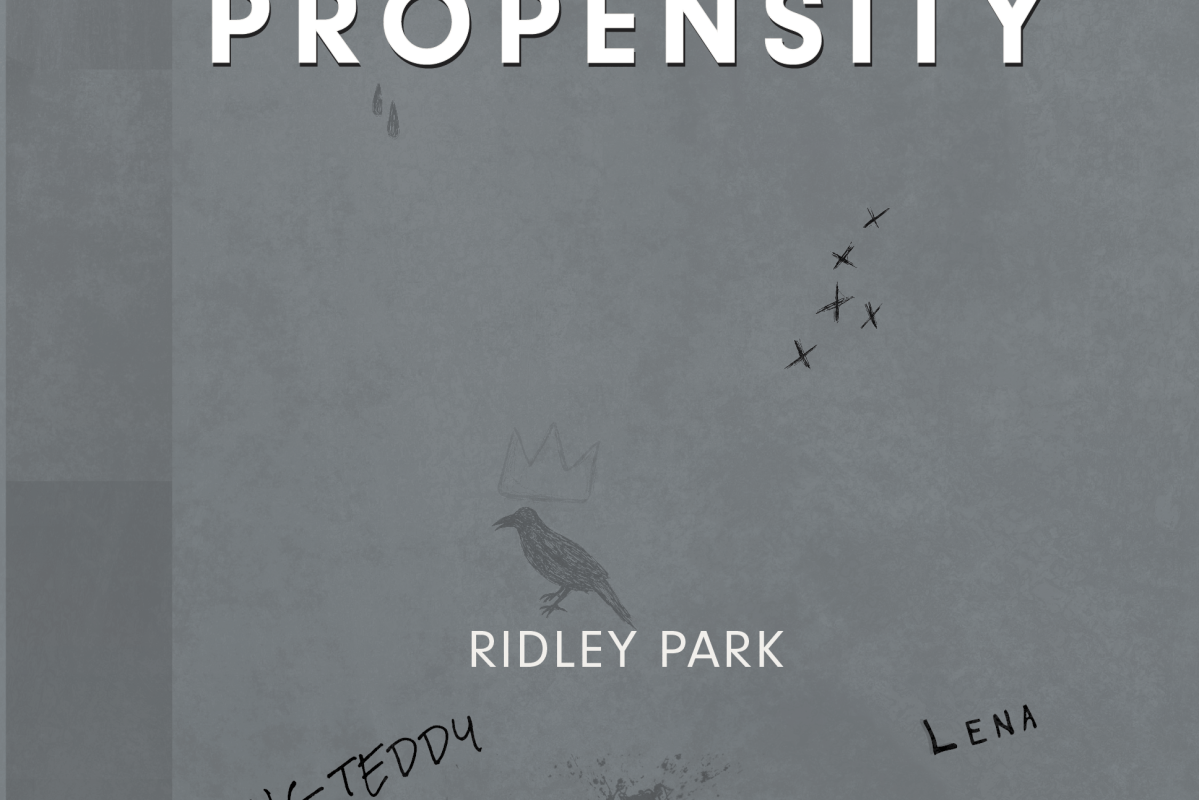
That’s the first line of Chapter 26, ‘Simulacra’, in Propensity. A small, airless room. A flickering light. Three teenagers – Teddy, Lena, Jamal – trying to remember what morality looked like before the world stopped watching.
This chapter is written as a script, not prose. Directions, shots, and camera pans replace internal monologue. The reader becomes the lens – an observer, never a participant. It’s deliberate. In a story about imitation and collapse, the camera itself becomes the narrator, the conscience, and the judge.
Audio: NotebookLM podcast on this topic.
The camera pushes through the door, searching. Dust floats in suspension, and time feels posthumous. Teddy zips his hoodie over bare skin; Jamal leans in the doorway, arms folded, disgust simmering behind teenage boredom.
JAMAL You can’t just be shagging Gormies, mate.
TEDDY That’s the point, innit?
Their exchange isn’t only about sex; it’s about the boundaries of what still counts as human. ‘Gormies’ are the gormless – the emptied remnants of pre-collapse society. They can’t consent or refuse. They’re alive but vacant. Human-shaped absences.
Teddy’s logic is brutal and pure simulation: if the subject can’t say no, the act ceases to carry meaning. He performs the motion of sin without the structure of morality.
Jamal’s recoil isn’t righteous; it’s aesthetic. He’s repulsed by Teddy’s theatre of transgression, the same way one might flinch at bad acting.
NB: Download this entire chapter as a PDF on the Propensity page.
Image: Page 125 of Propensity, Chapter 26 – Simulacra.
26 · Simulacra
INT. FLAT – BEDROOM – LATE AFTERNOON The room smells like a tin of low tide. CAMERA: SLOW DOLLY IN from hallway, pushing through the open door into a dim, dust-suspended interior. Thin curtains bleed grey light onto water-stained wallpaper. The ceiling flickers from a dying fluorescent. A single, empty BED lies unmade in the centre – crumpled sheets, a dent in the mattress. CAMERA: HOLD ON WIDE SHOT, framing the bed dead centre, with figures occupying the room’s periphery. TEDDY (14) zips up his hoodie. Shirtless underneath. Sweat drying on his chest. He leans against the flaking wall, chewing on a broken fingernail. CAMERA: SLOW PAN RIGHT to JAMAL (16), posted near the doorway, arms crossed. He watches Teddy, face unreadable but for the curl of disgust on his lip.
The title Simulacra is a nod to Jean Baudrillard’s Simulacra and Simulation, the philosophical text the Wachowskis borrowed – and misunderstood – forThe Matrix. Baudrillard didn’t mean that the world was an illusion hiding the truth. He meant that the distinction between illusion and truth had already evaporated.
The real no longer disappears behind its representation; it becomes its representation. The sign replaces the substance.
In this scene, Teddy, Jamal, and Lena are copies of moral beings without moral context. They mimic the gestures of civilisation – disgust, guilt, justice – without the living institutions that once gave those words gravity. They don’t believe in morality; they reenact it.
Baudrillard called this the third order of simulacra: when the copy no longer hides the absence of reality but replaces it entirely.
JAMAL You can’t just be shagging Gormies, mate. TEDDY (grinning) That’s the point, innit? (smirking toward the bed) She’s gormless. Don’t care. None of them do. CAMERA: CUT TO TIGHT SHOT – Teddy’s face. The smile is too wide. Forced. CAMERA: OVER JAMAL’S SHOULDER, the bed is empty now, but the shape in the sheet tells a story. JAMAL That’s Lena’s mum. CAMERA: CUT TO CLOSE-UP – Teddy blinks. Shrugs. TEDDY Didn’t know Lena, did I? (beat) CAMERA: SLOW REVEAL – LENA (15) stands in shadow. Hood up. Motionless in the corner. LENA You do now.
Then comes the slow reveal:
CAMERA: SLOW REVEAL – LENA (15) stands in shadow. Hood up. Motionless in the corner.
LENA You do now.
Lena’s voice reintroduces consequence, but only as performance. It’s not morality restored; it’s morality remembered. The moment isn’t ethical – it’s cinematic. The reveal is the moral event.
Her mother, the Gormie in question, is little more than an echo of personhood. The outrage in Lena’s voice belongs not to ethics but to staging: a scene constructed to look like remorse.
The simulacrum here isn’t the Gormie. It’s the moral itself – played out as ritual, devoid of anchor. These children have inherited the gestures of adulthood but none of its meaning. They mimic guilt because that’s what the dead world taught them to do.
By writing the chapter as a film script, Propensity exposes its own mechanism. Every camera move, every cut, is a reminder that you, the reader, are complicit. You’re watching a reconstruction of a reconstruction. The text becomes its own simulacrum – a story imitating cinema imitating life.
Even the bed, ‘a dent in the mattress’, is a metaphor for what remains of the real: an impression where something used to be.
The result isn’t post-apocalyptic horror but philosophical unease. What happens when moral sense survives as empty choreography? When consent and consequence are just old lines, the species keeps rehearsing?
Propensity isn’t about survival. It’s about what comes after survival—when humanity’s operating system still runs, but the data’s corrupted. The characters are trying to rebuild a moral code from cached files.
Simulacra is the point where imitation becomes indistinguishable from intent. It’s a study in ethical entropy, a mirror held up to our own cultural exhaustion, where outrage has become performance and empathy a brand identity.
This is the future Propensity imagines: not a world without humans, but humans without the real.
I finished reading Lem’s Solaris and then was notified of a discussion about the book and the film adaptations.
I intended to draft a book review, but I may defer.
For now, I’ll note that the similarities between this and my own work are superficial. Both have philosophical perspectives, but Lem’s is much more psychological. This is nice, but it’s not where I tend to take things, and not so overtly.
I don’t read sci-fi. It rarely resonates with me. I’ve read many classics, but I don’t get the hype. As a speculative fiction author, I sometimes operate in an adjacent space – close enough to borrow a few ideas, but never quite belonging. I’m not interested in fetishising technology or celebrating so-called human ingenuity. But if an idea serves the story? I’ll use it.
One concept I wanted to explore: the definition of life itself, and what sentience means when we can barely define it for ourselves.
Not long ago, I began working on a story: some people leave Earth to inhabit another planet in a different solar system. Nothing revolutionary there. They land on what appears to be an uninhabited world – uninhabited, that is, by our current definition of life. Instead, the planet itself is alive. Not in the Gaia hypothesis sense of interconnected ecosystems, but truly interactive. Responsive. Alien in ways that challenge every assumption about consciousness.
Of course, there are more details – dual suns in a figure-eight orbit, shifting gravity, time that expands and contracts, organisms that defy classification. But those are mechanics. The heart of the story is simpler: what happens when survival requires abandoning the frameworks that made you human?
As is my protocol, I fed my manuscript into AI and asked: is this idea unique? If not, what’s it similar to? Who am I adjacent to?
I got names. Titles. Books and films. Most had superficial similarities but different intents. Then one stood out: Solaris, Stanisław Lem’s 1961 novel. I hadn’t read it, so I got a copy.
There were so many commonalities it felt like discovery and defeat in equal measure.
Lem wrote Solaris before humans had meaningfully left Earth’s atmosphere. Published in 1961, it predated material space exploration by years. On October 4, 1957, the Soviets launched Sputnik 1 – the first artificial satellite. Four years later, Yuri Gagarin became the first human to orbit Earth, his flight lasting just 108 minutes. The first American in space, Alan Shepard, flew in 1961. John Glenn orbited in 1962.
Lem imagined a sentient ocean on an alien world orbiting twin suns before we’d even confirmed planets existed beyond our solar system. His protagonist grapples with a consciousness so alien that communication may be impossible – not because of language barriers, but because shared reference points don’t exist.
In some ways, Solaris also shares DNA with Jeff VanderMeer’s Annihilation – that same sense of an environment that isn’t hostile so much as indifferent, operating by rules humans can barely perceive, let alone comprehend. But where VanderMeer leans into existential dread, Lem’s tone is colder, more philosophical. Less visceral horror, more intellectual vertigo.
My story, working title: Goldilocks,sits somewhere between them. It has Lem’s alien sentience and dual-sun orbital mechanics. It has VanderMeer’s gradual unravelling of human perception and sanity. But it also has something neither quite touches: the brutal intimacy of being the last of your species, seeking warmth in a universe that offers none.
So is my idea original? Not entirely. Does that matter? I’m not sure anymore.
Lem wrote his novel sixty years ago, before we’d touched the moon, before we knew what exoplanets looked like, before we’d meaningfully begun asking whether consciousness requires a brain. He imagined sentience beyond human comprehension – and did it so thoroughly that anyone following feels like they’re retracing his steps.
But perhaps that’s the point. Originality isn’t about being first. It’s about what you do with inherited ideas – how you refract them through your own obsessions, anxieties, and questions.
Lem asked: can we ever truly know an alien intelligence?
VanderMeer asked: what happens when the environment rewrites you?
I’m asking: what does it mean to be human when humanity itself is ending?
Maybe that’s enough distance. Maybe it’s not. Either way, the story exists now – half-written, haunted by its predecessors, searching for its own voice in the silence between stars.
As an author, reviews matter. Not because they inflate the ego (though I won’t pretend a kind one doesn’t help), but because they’re one of the few moments when the work stops being mine and becomes read.
I submitted Propensity for professional review through Reedsy – why not? It’s always interesting to see how a stranger processes what you’ve made. Some of my books have Kindle editions, which makes collecting feedback easier: I can offer them free for a day or two and watch the downloads climb. Whether those books are ever opened is another question. I’ve been that reader too – downloaded an eBook, nodded at the cover, and forgotten it. I’ve bought audiobooks I’ve never started.
So when someone actually read Propensity, a book not yet available as an eBook, and took the time to write a thoughtful review, that meant something. And unlike the memorable one-star “Garbage” review that Sustenance once earned, this one had a little more nuance.
An unnerving story that begins with a bizarre experiment and unfolds into an impressive hyperbole for human hubris.
Synopsis
What if peace could be engineered?
In Propensity, a team of scientists and a military general pioneer a device capable of altering human behaviour itself—tuning aggression, obedience, libido, faith, and risk tolerance like dials on a console. At first, the results seem miraculous: violence quelled, conflict dissolved, impulses muted. But as the technology scales from labs to battlefields to cities, the illusion of control begins to fracture.
Through sharp, unsettling vignettes, the novel traces both the grand sweep of societal collapse and the intimate struggles of those left to navigate it. At its heart, Propensity is a literary exploration of power, morality, and the fragile myth of free will.
Both speculative and philosophical, it poses an unnerving question: if our choices can be rewritten at the neurochemical level, were they ever truly ours?
– Review Begins –
“Reader discretion is advised. Free will has been deprecated.”
This ominous word of caution is what Ridley Park’s speculative novel ‘Propensity’ opens with, and it sets a tone that strikes an impressive balance between clinically descriptive and quietly devastating. Beginning as a bizarre experiment in behavioural modulation by way of neurochemical intereference, it unfolds into an eerie metaphor for the tricky road between control and conscience.
Park’s chapters are short and succinct, some barely a page long, in a staccato rhythm. This creative choice, while initially a little unnerving, works well to reflect the story’s inherent disintegration: scientists losing grip on their own creation, subjects dissolving into numb submission or what they term “the zeroed state”, and a world slowly learning the price of their “engineered peace”. The writing comes off as crisp in an almost detached manner that leaves one wanting for a bit more emotional depth in the first part of the book but not only does that eventually grow on you, it ends up serving its purpose of thematic execution in both its text and subtext. Phrases like “silence playing dress-up as danger” and “peace was never meant to be built, only remembered” linger like faint echoes long after you turn the page.
This dogged curiosity and thought the writing dredges up anchor the novel’s core strength. Its impact is rooted not in prosaic preaching but letting the reader unpack the implications by themselves as they go on. Working in the field of medical physiology myself, the scientific nitty-gritty delved into, including the hormonal cues and neuronal plasticity, particularly intrigued me and while I acknowledge the convenience of fictitious extrapolation of theory, it manages to add a certain sense of realism to the story. It’s equally fascinating and disturbing, especially in the current epidemic of artifical intelligence we live in, to see faith and empathy become mere variables in a lab.
A fitting hyperbole of human’s hunger for order, ‘Propensity‘ does occasionally falter. Its fragmented and experimental structure, with prose interspersed with poems and memos, while successful in tying up its chaos, sometimes undercuts emotional engagement. The chapters are like snapshots that end before they can fully breathe. But when Park makes it work, especially through the poetic montage that follows the post-modulation disaster, it’s hypnotic.
By the end, I found myself returning to that elusive idea of peace conspicuous throughout the book. The text seems to suggest that peace isn’t something we construct but rather, something we remember. It’s almost a fragile illusion fleeting across one’s reality, often better suited to being a word than a sentiment, history than hope. It’s as if the moment you declare peaceful times, they’re already past.
‘Propensity’, thus, doesn’t offer answers; it offers questions and their ramifications. And in more ways than thought possible through the misconception surrounding the scope of speculative genre, that’s perhaps a truly accurate representation of the times we live in.
– Review Ends –
Why I appreciate this review
It would be easy to say I appreciate it because it’s positive. But that’s not the point.
One of my beta readers—someone I trust implicitly—had the opposite reaction. He loved the first half and thought the latter sections fell apart. This reviewer? The reverse. She found the disintegration satisfying. She saw design in the decay.
That tells me Propensity did what I intended: it divided readers by temperament. It rewards those who stay long enough to realise the structure mirrors the subject—the erosion of coherence itself. I never meant to write a tidy narrative. I meant to write an experiment in entropy.
If your literary diet leans on plot-driven fiction, my work might not taste familiar. I don’t spoon-feed answers. I leave questions open, sometimes maddeningly so. That’s deliberate.
An Anecdote
Years ago, my company ran a focus group for a software interface. Two groups saw the same prototype: one in their twenties, one in their fifties.
“It’s like a video game!”
Both said the same thing—“It’s like a video game.” The twenty-somethings meant it as praise. The fifty-somethings meant it as criticism.
Same words. Opposite meanings.
That’s literature too. Same text, different minds, different appetites. Some readers crave clarity and closure; others prefer complexity and dissonance. The trick is knowing which audience you’re writing for—and not apologising for it.
I write literary speculative fiction. It’s a small, peculiar corner of the bookshelf. But when someone wanders in and gets it, it’s enough.
The book ends, as these things always do, with a sigh and a stack of annotated pages. I’ve just closed the cover on Zamyatin’s We, and, like a cigarette slipped into the afterword, there sat Ursula K. Le Guin’s essay “The Stalin in the Soul“. She wrote it decades later in 1979, but it might as well have been stitched into the same binding. I may write about it in more detail elsewhere.
Zamyatin built the totalitarian city of glass; Le Guin peered into the reflective surfaces. Her “Stalin” isn’t a political leader but the minor tyrant most of us cultivate internally — the censor who edits desire into silence, who rewards obedience with the narcotic of safety. She understood what Foucault would later codify as biopower: that power’s finest trick is to outsource itself. You don’t need Rousseau’s chains when you can teach people to manage their own submission.
Reading it now feels almost indecently prescient. The State of We had surveillance towers; ours has dashboards. Zamyatin imagined a future where citizens surrendered privacy for perfection. We call it good UX. Le Guin warned that the artist’s real jailer was the fear of making art that doesn’t please the market. Foucault, if he were still here, would simply nod and mark it as another case study in voluntary servitude.
We‘s protagonist, D-503, had shades of Dostoyevsky’s in Notes from Underground – only a bit more reliable of a narrator.
As I close this run of readings — We and its prophetic essay appendage — I can’t shake the feeling that finishing the book is part of the ritual it describes: the quiet filing of experience, the discipline of comprehension. Yet finishing also matters. There’s a line between vigilance and paralysis, between watching the gears of power and daring to write anyway.
So yes, the project reaches its line — not a triumphant banner, more a hand-painted sign reading enough for now. Zamyatin showed me the machine. Le Guin showed me the human who keeps it running. Foucault, the analyst of our beautiful cages, taught me not to pretend there’s an outside.
All that remains is to write, while the internal commissar mutters and the cursor blinks like a surveillance light. That, apparently, is freedom.






 Ridley Park