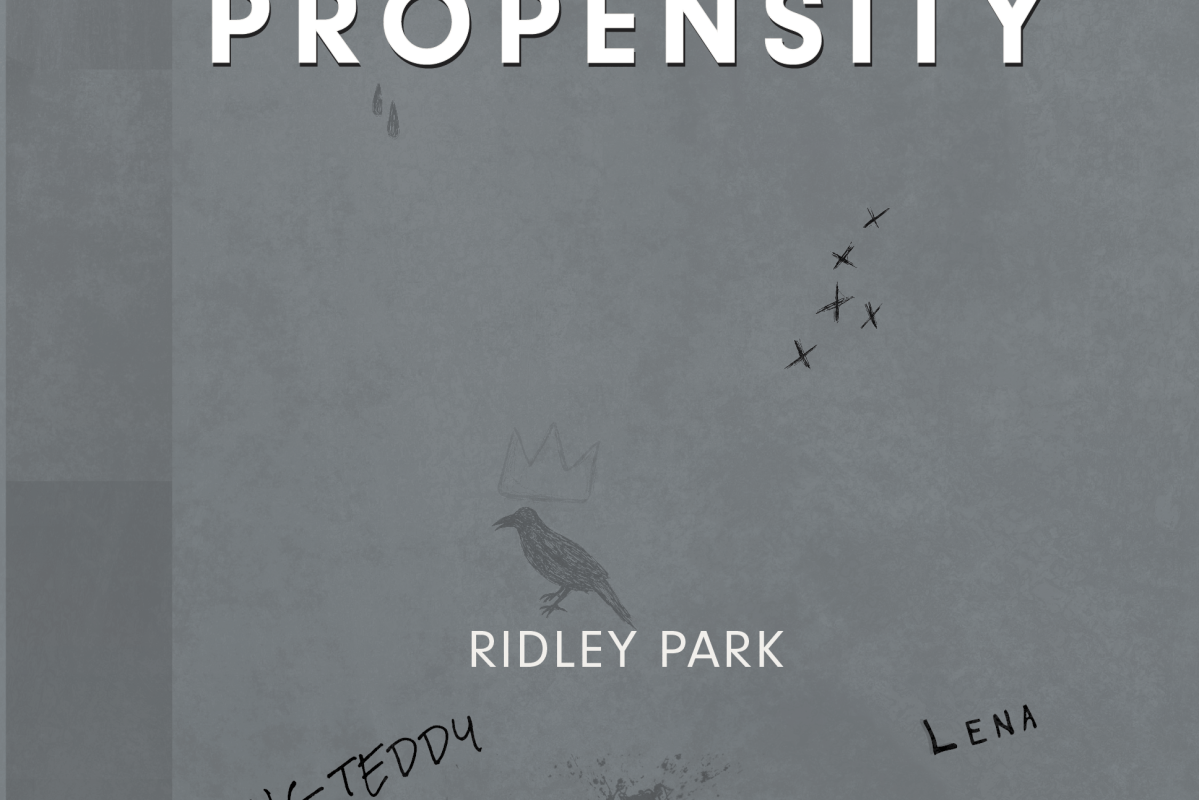
As I’ve been working through Octavia Butler’s Dawn, I’ve realised why science fiction as a genre rarely resonates with me. It isn’t the aliens or the starships; it’s the scaffolding. Sci-Fi carries the weight of the Modernist project – questions posed and quickly answered, problems rationally explained, the reader guided toward the “lesson.” It feels like indoctrination: tidy, didactic, instructional.
Fantasy, strangely enough, I tolerate even less. Where science fiction pushes forward, fantasy looks backward. Sci-Fi imagines the future of the Modern experiment: technology, politics, survival scenarios, all with a rationalist bent. Fantasy imagines the past of the same experiment: kings, bloodlines, prophecies, destiny. One proclaims progress, the other tradition, but both insist on role conformity.
This struck me as almost political: science fiction reads like fodder for Liberals and Progressives, those who believe we can build better systems if only we’re clever enough. Fantasy, meanwhile, often aligns with a Conservative ethos – a return to order, hierarchy, and providence, just with dragons and spells thrown in. Both are catechisms of Modernity, just oriented in opposite directions.
It may just be me. I don’t identify with the Modern project, and so the genres that proselytise it – looking forward or looking back – leave me cold. I prefer literature that unsettles, that leaves silence where there might have been certainty, that lets ambiguity breathe. But for many, Sci-Fi and Fantasy provide something else entirely: reassurance.
Sustenance (available here) was free for everyone on Kindle on 8 and 9 September. My goal was to provide access to the book for exposure with the hope of getting ratings and reviews. It’s still early, but I’d like to report that over 100 people downloaded the Kindle version. Now, I’ll share some details.
The Kindle version was downloaded 106 times in the past two days.
Some read it from their KindleUnlimited accounts
Some bought physical copies
Some people rated the book; some even left reviews on Amazon or Goodreads
The ratings and reviews are mixed, but all are welcome. Few people rate books; even fewer review them, so I appreciate the effort.
I got 3 ratings and 2 reviews on Amazon: ⭐⭐⭐⭐⭐, ⭐⭐⭐⭐, and ⭐. A one-star review. Thanks for that, too.
The ⭐rating didn’t leave a review, so I don’t know why they didn’t like it. I don’t know what types of books they read or this is exatcly what they prefer – they just didn’t like this. Still, at least they took the time to do it.
As a former statistician who has worked with survey data, I find this to be similar – most people don’t respond to surveys. Most people don’t engage in call-in shows. Most often, the people who respond either love or hate the topic so much that they feel compelled to broadcast their opinions. The people who say “meh” won’t even bother.
KindleUnlimited notwithstanding, I have no idea how people engage with a book. I have purchased and downloaded more books than I can read in a lifetime – probably multiple lifetimes. Sometimes, I just want to have access to a classic in case the mood strikes me; sometimes a book comes into view, and I convince myself that when I have the time, I might read it. I have no way of knowing.
Image: Sustenance Trope Board
I’m guilty of some single-star ratings without leaving a review, so I am in no position to point fingers. Sometimes a book seems bad that you want to warn the world, but you don’t want to expend more time on the endeavour that you already have.
I took this screengrab of 1-star ratings from Goodreads – some have reviewers, others don’t.
Image: 1-Star Reviews
Only one of these books is non-fiction, though I might argue that point, hence the single star.
One Ayn Rand was a class assignment. The other was someone telling me that I hadn’t judged her best work. In this case, her best work is one star, so I can skip anything else. Ditto for the Bible – complete dreck.
Authority, I only recently read. it was part of a trilogy. The other two books got 4 and 3 stars, so I’ll consider this one a dud. I’m not in good company, as it rated worse than the other two on average, yet still managed a 3.55. Some people liked it.
The last one was a class assignment for my son that I read with him. His rating matched mine. How it became an assignment is just testimony that there is no accounting for taste.
Also, as a public service, I’d be willing to bet that if you liked these books, you won’t like mine.
Octavia Butler’s Dawn
On the topic of rating— I am midway through Dawn. It’s mid. I was asked why I hadn’t read it as part of the dystopian Venn, so I picked it up. To be fair, I thought several of the stories on the Venn were mid themselves, classics or otherwise. Perhaps I’ll write a separate post on that someday.
Honestly, I’d give Dawn 2 stars. However, I also know that Sci-Fi is not a genre that resonates with me, so I’ll be generous and give it a star because it may just be my personal bias of not relating to Sci-Fi that’s the problem, and the book might be better received by fans of that genre. Offhand, the only fiction genres I dislike worse than Sci-Fi are Fantasy and Romance.
Aside from being Sci-Fi, it reads like YA fiction. There’s nothing inherently wrong with YA, but I am clearly not its target demographic. Other than that, it’s serviceable, but I prefer to read content that’s more complex and layered, not spoonfed to me.
Conclusion
Anyway, I’ve derailed this thread, but I wanted to clarify how I approach rating books and want to thank those of you who have taken the time on Sustenance. If you haven’t yet, I’d appreciate any rating from 1 to 5. Reviews earn extra karma points.
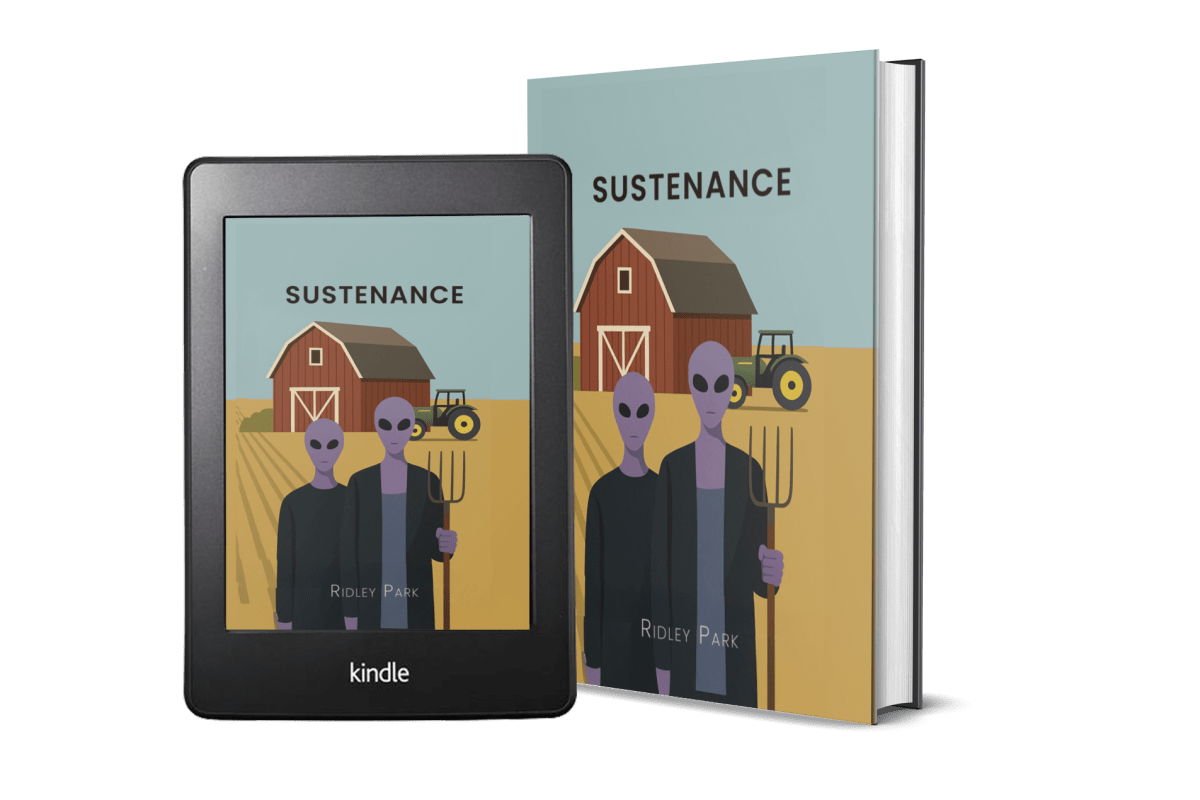
👽 People ask me: What’s with the aliens on the front cover of Sustenance? Fair enough. Let’s talk about it.
Sustenance is set in Iowa – real, dusty, soybean-and-corn Iowa. I’ve spent months there. I’ve lived in the Midwest (including Chicago) for over a decade. The farms, the tractors, the gravel roads… they aren’t just set dressing. They’re part of the book’s DNA.
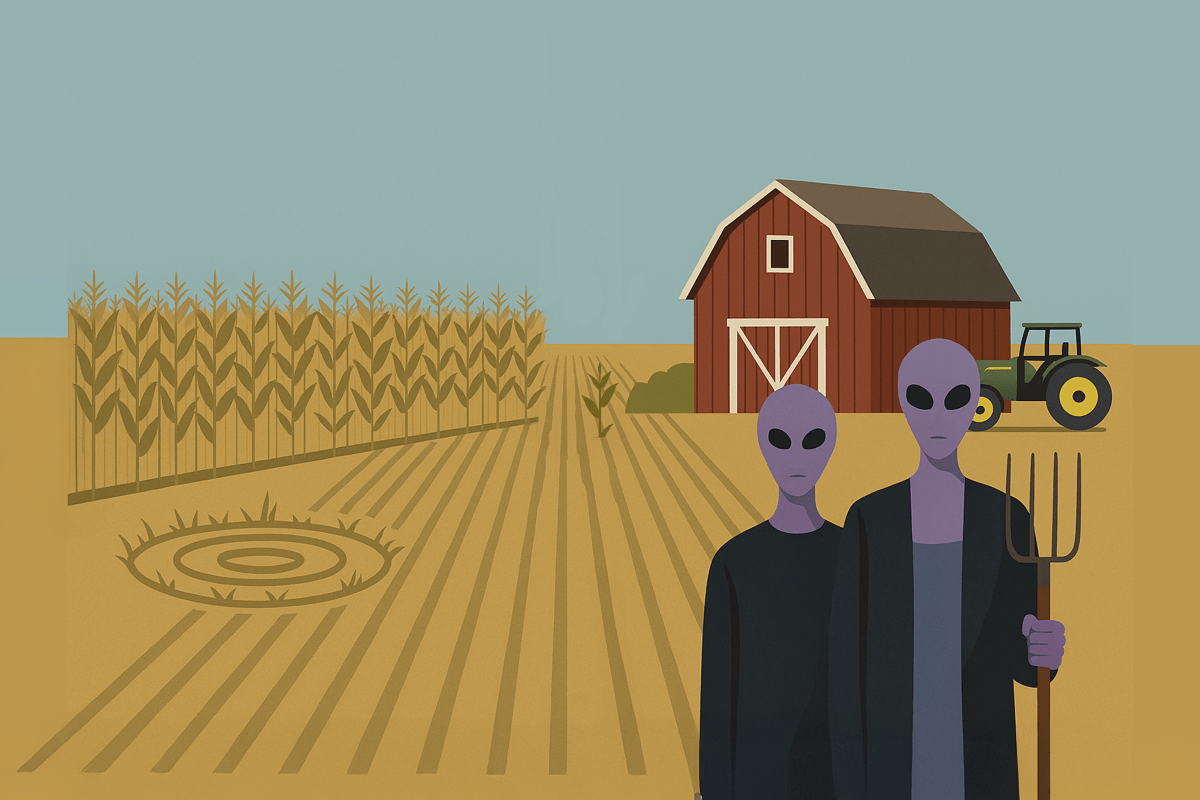
So, yes: we’ve got the requisite red barn, green tractor with yellow wheels (hi, John Deere 🚜), and a crop circle or two. The audiobook cover even features an alien peeking out of the barn – though logistics are holding that version back for now.
Please note that the Kindle version is available for free for the rest of today (8 Sep 25). Download your copy while you still can without paying through the nose. Leave a review for👍 better or for👎 worse.
But those aliens…
If the composition feels familiar, it should.
The cover is a quiet parody of Grant Wood’s “American Gothic” – a pitchfork-wielding farmer and his companion, stoic before their rural home. It’s one of the most recognisable paintings in American art, and I couldn’t resist twisting it just slightly. Grant was an Iowa boy.
I designed this cover using a flat vector art style, almost like cut paper or stylised children’s book illustrations. The sky is cyan, the land is beige, and everything is built in clean layers: barn, tractor, field, crop circle, and of course… two violet, large-eyed aliens striking a pose.
But no, this isn’t a literal scene from the book. You might encounter violet aliens in Sustenance, but you won’t find them standing around with pitchforks like interstellar Grant Wood impersonators. The image is meant to evoke the tone, not transcribe the events.
Why this style?
Because the story itself is quiet. Subtle. Set in the kind of place often overlooked or written off. The aliens aren’t invading with lasers. They’re… complicated. And the humans, well, aren’t always the best ambassadors of Earth.
The cover reflects that blend of satire, stillness, and unease.
Oh, and one last note: 🛑 No aliens were harmed in the writing of this book.
I began reading Octavia Butler’s Dawn, and it raised some interesting* philosophical questions.
In the early chapters of Dawn, an alien declares that humanity has “committed mass suicide.” Sartre insists, “Inaction is still a choice.” Howard Zinn reminds us, “You can’t be neutral on a moving train.” Each collapses complexity into the fiction of agency, a story that props up Modernist notions of responsibility and blame. But what if agency itself is an unnecessary fiction? I’ve explored this tension in a new essay on my Philosophics blog:
On 7–8 September 2025, the Kindle version of my novella Sustenance will be available free to everyone on Amazon. (It’s always free if you’re a KindleUnlimited member, but these two days open it up to all readers.)
So what is Sustenance?
It’s a novella that begins with the dust and grit of rural Iowa – soybean fields, rusted trucks, a small town where everyone knows your name (and your secrets). At first glance, it reads like plainspoken realism, narrated by a local mechanic who insists he’s just a “regular guy.” But then the ground literally shifts. A crash. Figures glimpsed by firelight in the woods. Naked, violet-skinned beings who don’t laugh, don’t sleep, don’t even breathe.
What follows is not your usual alien-invasion story. It’s quieter, stranger, and more unsettling. The encounters with the visitors aren’t about lasers or spaceships – they’re about language, culture, and the limits of human understanding. What happens when concepts like property, law, or even woman and man don’t translate? What does it mean when intimacy itself becomes a site of misunderstanding?
Sustenance is for readers who:
Gravitate toward literary fiction with a speculative edge rather than straight genre beats.
Appreciate the mix of the banal and the uncanny – the smell of corn dust giving way to the shock of alien otherness.
Are interested in themes of language, power, misunderstanding, and human self-deception.
Enjoy writers like Jeff VanderMeer, Margaret Atwood, Octavia Butler, or Denis Johnson – voices that blur realism, philosophy, and estrangement.
This isn’t a story that offers tidy answers. It lingers, provokes, and resists easy moral closure. Think of it less as a sci-fi romp and more as a philosophical fable wrapped in small-town dust and cicada-song.
This version of the book is available in these Kindle storefronts: United States, United Kingdom, Germany, France, Spain, Italy, Netherlands, Japan, Brazil, Canada, Mexico, Australia, and India
Congratulations, you’ve finished a manuscript. You’ve pushed the boulder uphill, typed “The End,” and maybe even convinced yourself you’re done. Spoiler: you’re not. This is where beta readers come in — those kind souls who’ll slog through your draft and tell you whether it sings, stumbles, or just sits there like porridge. The trouble is, most writers don’t actually know what to ask them, and so they end up with feedback about as useful as a horoscope.
The first and most uncomfortable question is about intent. What are my goals in writing this, and did you see them? Most writers never ask, because it forces them to say what they meant in the first place. Are you interrogating free will? Trying to write a page-turner? Smuggling philosophy under the hood of a dystopian thriller? If your beta doesn’t see it, either you buried it too deep or you didn’t put it in at all. Of course, not every writer works with some grand meta in mind, but if you do, this is the question that makes or breaks the project.
If your story feels like homework, you’ve already lost.
Enjoyment comes next, even if it bruises the ego. Did they actually like reading it? If your story feels like homework, you’ve already lost. It’s better to know this from a sympathetic reader now than from Goodreads later. A related angle is pacing: where did the story drag? Readers know exactly where they reached for their phone, even if they’re too polite to say so without prompting. Ask them to point to the spots where the air went out of the room.
Did the conclusion feel like it belonged to the story’s own logic?
Characters are another litmus test. Which ones did they care about, and which ones left them cold? Writers are often too close to notice when a protagonist reads like cardboard, or when a side character steals the oxygen. Beta readers are your lab rats here, revealing who’s magnetic and who’s forgettable. The same goes for endings. Don’t ask if it was happy – ask if it was satisfying. Did the conclusion feel like it belonged to the story’s own logic? If the reader feels cheated, the manuscript isn’t finished.
World-building deserves its own interrogation, especially in speculative fiction. Readers will happily forgive dragons, AI dictators, or interstellar chalk drawings, but not inconsistency. If the rules of your world shift without reason, they’ll notice. In fact, coherence is more important than cleverness. The reader doesn’t need to understand every mechanism, but they do need to trust that you do.
Was there an image, a phrase, a scene that stayed with them once the book was closed?
Finally, ask what lingered afterwards. Was there an image, a phrase, a scene that stayed with them once the book was closed? That’s your gold. Double down on it. If nothing sticks, you’ve got polishing to do.
One last but often overlooked question is about the reader themselves: am I asking the right person? An excellent sci-fi enthusiast might not be your best pick for YA urban fiction. A romance aficionado won’t necessarily grasp the rhythms of a philosophy-laden dystopia. Fit matters. You wouldn’t ask a vegan to taste-test your steakhouse menu, so don’t ask the wrong reader to bless your book.
Am I asking the right person?
And here’s the tightrope for the beta reader: they are not there to tell you the book they would have written. Their job is to respond to the book you actually put on the page. It’s your manuscript, not a co-authorship audition. If their feedback starts with “what I would have done,” that’s not critique – that’s a rewrite.
The meta point is simple. Beta readers are not editors. They aren’t there to fix your commas or restructure your second act. Their value is in telling you what it feels like to read your book – hot, cold, flat, or electric. And if you’ve got a grand philosophical undercurrent humming beneath the surface, they’re the only ones who can tell you whether it came across.
Beta readers are not editors.
So don’t hand your beta readers a scalpel and ask them to perform surgery. Hand them your story and ask: did you taste what I meant to cook?
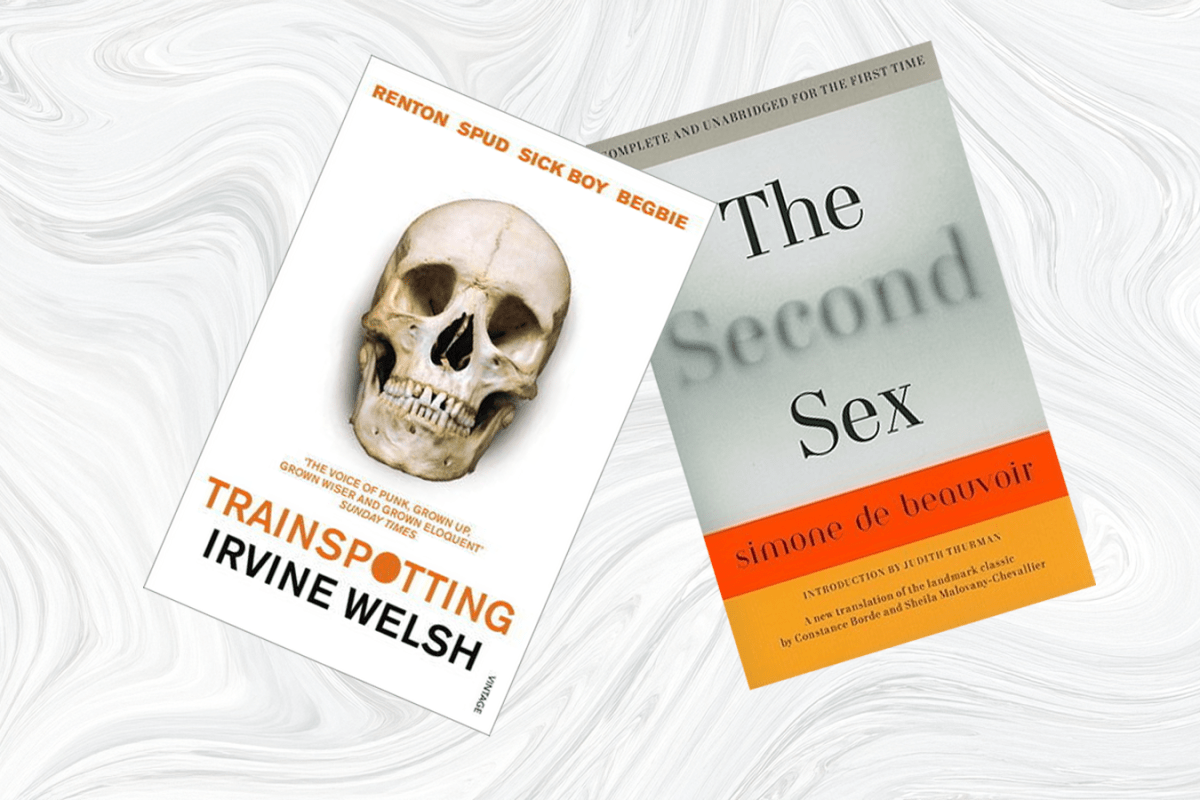
I’ve just finished Simone de Beauvoir’s The Second Sex – all 800 pages of it – and have now started Irvine Welsh’s Trainspotting. Both are classics in their own way. I’ll review Second Sex properly on my Philosophics Blog, but here I want to think about Trainspotting in relation to my current manuscript, Needle’s Edge.
Interestingly, Trainspotting was a ChatGPT recommendation. I fed in my draft of Needle’s Edge and this was one of the books it said my work resembled. Two chapters in, I see the connexion. First, the subject matter – drugs and addiction. Second, the rawness of the experience.
There are differences, of course. Trainspotting is rooted in Leith, Scotland; Needle’s Edge belongs to the East Coast of the United States – Delaware and Philadelphia. Welsh draws heavily on dialect and vernacular, with a narrative voice that’s linguistically dense and aurally charged. In Needle’s Edge, the style is pared down. Sentence fragments, middle dots instead of full stops, and an intentional “lower” register mirror the protagonist’s fractured perception and limited resources.
That gap in register creates a different authorial challenge. With every edit pass, I find myself policing intrusions of my vocabulary into her voice. Welsh, by contrast, can deploy a broader lexicon and trust the dialectal texture to keep it authentic. Listening to Trainspotting, I’m struck by how words and turns of phrase leap out – sometimes apt for Needle’s Edge, but often just a shade too polished for Stacey’s world.
Both texts orbit around environments that resist glamour. Welsh’s squat flats and pubs are grimy and feral; Needle’s Edge’s motel rooms and sidewalks are littered with fast-food wrappers, orange caps, and fading unicorn posters. Addiction erodes bodies in both stories, but the textures differ – Scotland’s industrial gray versus the East Coast’s cheap motels and suburban detritus.
As for the film version of Trainspotting, I saw it long ago and remember almost nothing. The novel isn’t refreshing my memory either; it feels like a separate creature altogether. Which is fitting: both Trainspotting and Needle’s Edge are less about plot than about capturing a lived texture, a rhythm of voices and environments that mainstream narratives usually discard.
Some bloke on social media posted to celebrate hitting his 10-book milestone for the year. It made me reflect on my own. I don’t keep a running tally, but I do use Goodreads, so I reviewed my list. I share it here. Evidently, I’ve read 22 so far. In all honesty, I cheated, because I won’t finish The Second Sex until later this evening or tomorrow morning. Sue me.
The Second Sex —Simone de Beauvoir In its day, I may be given this 4 stars. NONFICTION. Today, perhaps 3, but it’s a seminal work, so I’ll give it 3½.
Notes from Underground —Fyodor Dostoevsky 5 stars. FICTION. Perhaps 4½, rounded up. This came with Apropos of the Wet Snow, where it all falls apart (in a satisfying way).
Crash —J.G. Ballard 3 stars. FICTION. This was a ChatGPT suggestion*. Generous 3. Probably a 2½ if I’m being honest.
Acceptance —Jeff VanderMeer 3 stars. FICTION. This was not as good as Annihilation, but it got the bad taste of Authority out of my mouth. It closed the loop in the Southern Reach universe.
Authority —Jeff VanderMeer 1 star. FICTION. This was horrible. I wanted to read more about the Southern Reach universe. This prequel should have been an email.
Annihilation —Jeff VanderMeer 4 stars. NONFICTION. This was a ChatGPT suggestion*. I liked it. Much better than the movie with Natalie Portman.
Never Let Me Go —Kazuo Ishiguro 4 stars. NONFICTION. This was a ChatGPT suggestion*. It took a few chapters to see where this was going, but it was worth the wait.
The Left Hand of Darkness —Ursula K. Le Guin 3 stars. FICTION. This was a ChatGPT suggestion*. Read 8 or 9 chapters. Didn’t realise it was #7 in a series. Was OK. Not a Sci-Fi fan. Love her short stories.
English after RP —Geoff Lindsey 3 stars. NONFICTION. I liked this book and the author, but I can’t justify completing a linguistics reference book at this time. Maybe later.
* ChatGPT recommendations stem from my feeding draft manuscripts and prompting who it reads like.
Some novels are born in a lightning bolt. Needle’s Edge was forged in sediment: years of observations, contradictions, and lived experience settling into something that could no longer be ignored.
Video: Author Ridley Park Discusses Needle’s Edge
The video is intentionally, if not mercifully, short for all parties considered; it comes in under five minutes.
From the description:
Needle’s Edge is Ridley Park’s latest novel-in-progress, a raw, unvarnished work of literary realism with grit under its nails and philosophy in its bloodstream.
In this first episode of a new series on my writing process, I unpack the origins of Needle’s Edge: from life between the vantage point of an anthropologist and the poetry of Bukowski, to lived experience inside the worlds of sex work, addiction, and the quiet economies of trust and betrayal.
I reflect on the shift from speculative fiction to a tethered, reality-bound narrative, a story that rejects morality tales, subverts tropes, and meets its protagonist, Sarah, in the middle of her life before looping back to her beginnings. Along the way, he weaves in themes from Simone de Beauvoir, explores personae and code-switching, and interrogates the myths of middle-class respectability.
This is not a documentary – twenty years of lived history are compressed into five – but it’s true in its bones. Join me as he begins peeling back the layers of Needle’s Edge and the philosophy that drives it.
Many people have misgivings about AI, especially the generative flavour. It’s not really intelligent, they say. It has no feelings. Fine. I’ll cede those points without so much as a flinch.
But here’s the thing: some use cases don’t require intelligence, and feelings would only get in the way.
Take one of mine. I feed my manuscripts into various AIs – is that the accepted plural? – and ask them, “What does this read like? Who does it read like?” I want to know about content, flavour, format, cadence, posture, and gait.
A human could answer that too – if that human had read my manuscript, had read a million others, and could make the connexions without confusing me with their personal taste, petty grievances, or wine intake. AI just spits out patterns. It doesn’t need a soul. It needs data and a difference engine.
Cue the ecologists, stage left, to witter on about climate change and saving the whales. Worthy topics, granted, but that’s a different issue. This is where the conversation slides from “AI is bad because…” to “Let’s move the goalposts so far they’re in another sport entirely.”
I’m not asking my AI to feel, or to virtue-signal, or to single-handedly fix the carbon cycle. I’m asking it to tell me whether my chapter reads like Woolf, Vonnegut, or the back of a cereal box. And for that, it’s already doing just fine.