Book Review: The Emotional Craft of Fiction

Not Charlotte’s Web.

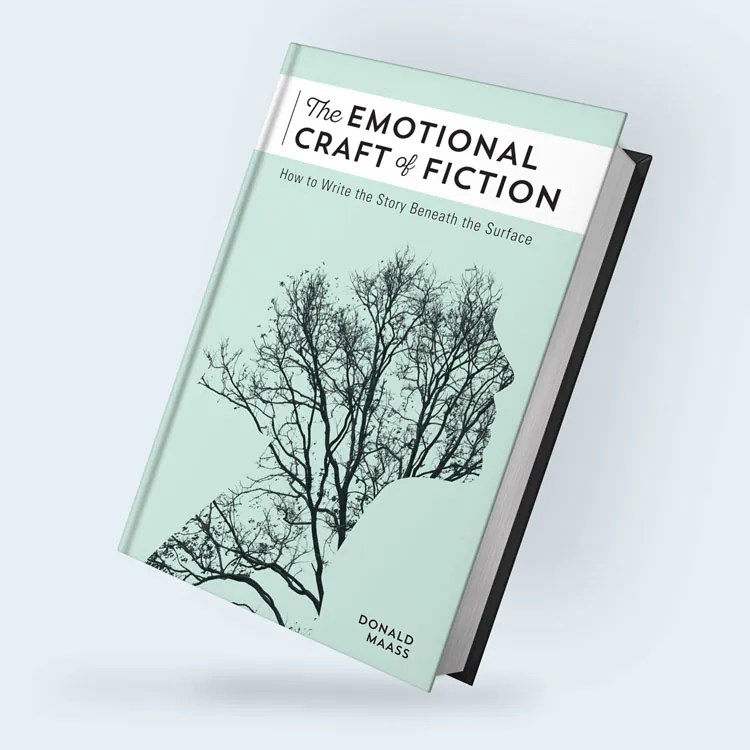
Instead, The Emotional Craft of Fiction: How to Write the Story Beneath the Surface by Donald Maass.

I just finished this book. I’ll say it’s good and even recommend it, but it’s not really for me. I wrote a blurb recently before I was even halfway through, and my opinion hasn’t changed.

Audio: NotebookLM podcast on this topic.

If you like to write in typical, character-driven stories, this should be right up your street. Besides character depth, the author also pushes moral righteousness. Thanks, but no thanks.

All of this said, I did gain some benefits from it, because although my writing is not heavily centred on characters, it does contain them, and I want them to feel alive. I want the world to feel lived in.

Personally, I think in schemes and threads – big ideas, deep ideas. Once all of this is roughly in place, I take a second pass for details. This is where Maass can help.

Full disclosure: Some people adopt a plotting approach to writing, whilst others adopt a pantser approach. I fall somewhere in between. Moreover, I might write something from one perspective and the next from the other – and I might flip-flop back and forth.

As a plotter, I might have waypoints that I want to hit, ideas I want to explore. Sometimes, I write these down on paper, in a spreadsheet, or somewhere to keep myself honest. Other times, I have these plot points in mind, but I take a stream-of-consciousness approach, simply discovering the story as it unfolds under my fingertips. I may even plot half a story and “pants” the rest of it. No telling.

As a pantser, I might have a kernel of an idea, and I just want to ideate on the page. So, I write. I lock myself in my room, throw up a “Do Not Disturb” sign, and head down to write until the well of ideas runs dry. At this point, I might put the idea aside or step back and consider plot points.

Looking back on this post, it’s not so much a book review at all. Apologies. That said, if you write characters and enjoy mainstream writing approaches, I think you’ll find the ideas in this book helpful. Many of the better ideas are presented early on, but it’s a short read. He offers some authors, titles, and excerpts you might find interesting. I found them to be a mixed bag.

Ballard’s High-Rise: When Brutalism Meets Behavioural Collapse


I’ve been reading J.G. Ballard’s High-Rise (1975), a brutalist fever dream dressed in concrete and ennui. It’s a story that doesn’t so much depict a descent into chaos as suggest that chaos is the natural state, politely waiting in the wings until the lift stops working and someone pees in the pool.

Audio: NotebookLM podcast on this topic.

This isn’t horror in the Stephen King sense—there’s no room 1408 here, no haunted sheets or malevolent chandeliers. The building isn’t animated; it’s engineered. But like all great systems, it doesn’t need a soul to kill you. The real haunting, as ever, is society itself. Ballard simply does away with the need for ghosts and lets architecture and aspiration do the dirty work.

Compared to Crash—where characters make love to car crashes and each other with equal mechanical indifference—High-Rise has something resembling a cast. I say “resembling” because these aren’t people so much as archetypes on a descent escalator. There’s Laing, a kind of blank-eyed anthropologist; Wilder, who mistakes brute force for authenticity; and Royal, the man literally living in a penthouse and metaphorically in a delusion.

Do I care about them? Not in the slightest. But that might be Ballard’s point. Their motivations are as shallow as a puddle in the car park after the water’s been shut off. Much of the action feels contrived, like a staged rehearsal for an apocalypse that already happened.

And yet—isn’t that precisely what society is? A tepid soup of extrinsic motivators dressed up in motivational posters and mission statements. Nobody in the high-rise acts out of depth or conviction. They act because someone else did it first, because no one told them not to, or because the lift only goes so far down and what else is there to do?

If Crash explored the eroticism of the machine, High-Rise explores the nihilism of comfort. Ballard’s thesis seems to be that civilisation is little more than a thin laminate over our baser instincts—and once it peels, there’s nothing underneath but turf wars and brand loyalty to floor numbers.

The modern reader might recognise the high-rise in everything from gated communities to Meta’s metaverse: sanitised, stratified, severed from consequence. A self-cleaning coffin of convenience.

And, as in the United States today, it all comes heavily medicated and prettily lit—with lipstick, meet pig.

Book Review: Crash

Crash by J.G. Ballard

My rating: 3 of 5 stars

Neither did I like nor dislike Crash. It just was. It is different, though I can help feeling that it’s gratuitous and contrived. Perhaps it seemed edgy and read differently in the 1970s.

It appears to operate on repeated vignettes – a lot of repetition. I want to see a word cloud. As an author myself, ChatGPT suggested some of my work reads like Ballard. I started with The Atrocity Exhibition, but quickly set it aside due to a lack of continuity. I settled for Crash.

Perhaps I should try something else by Ballard before writing him off, but for now, he doesn’t make my recommended author list.

View all my reviews

Book Review: The Blind Owl

What, again? Didn’t you alredy post this review?

So, I decided that the review was at too high of a level, so I did a new one. Let me know if this one is better.

It turns out the new was got a bit long, so I broke it into three parts. This is the first part—a summary but with more context. The other two parts shall follow.

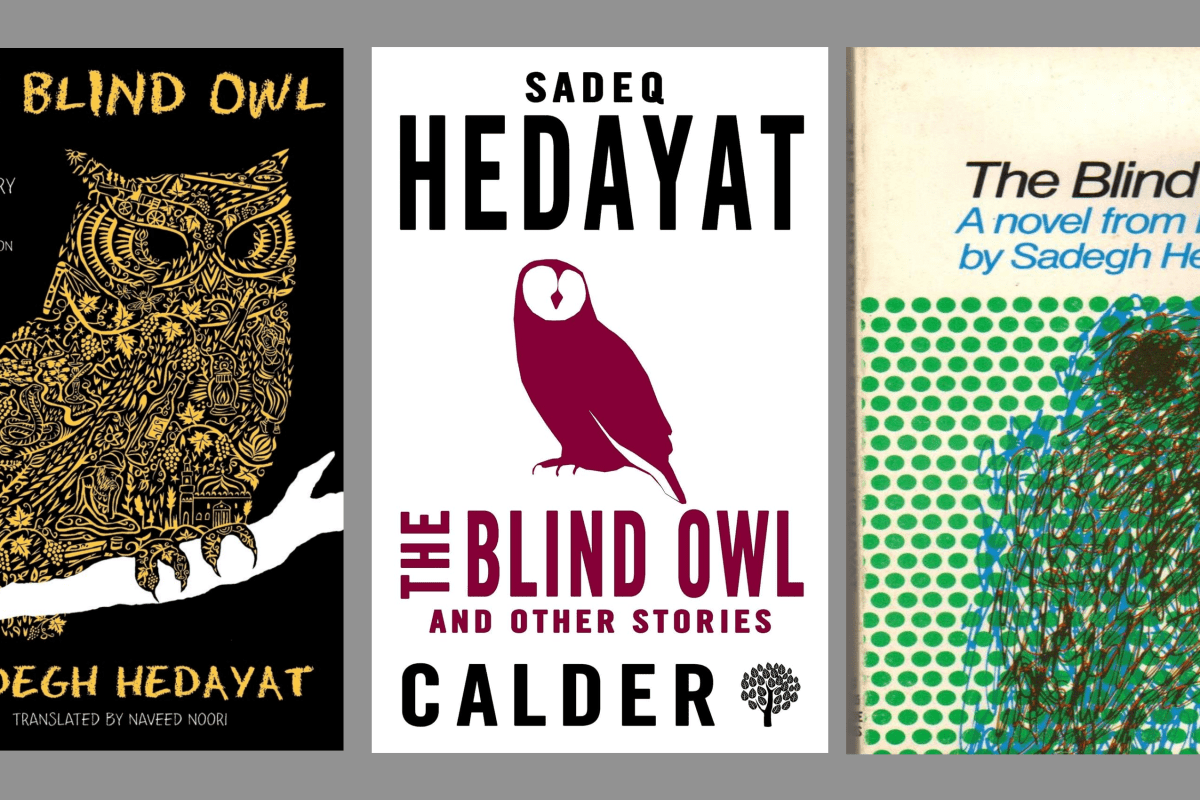
Translations of The Blind Owl

I was less than happy with my review of The Blind Owl. It’s an OK summary, but it’s at too high of a level—fifty-thousand feet as some say.

I problem is that I need to make notes as I read rather than recollect at the end. As it happens, I’ve got three English translations of the book, I don’t read Persian, and reading in French still gives me translation differences. I decided to read a different translation, and they’re a bit askew. So I picked up the third. Different, still. I’ll illustrate my point.

The book opens with a sort of prologue before the narrative begins. Each of the translations read as follows:


Each of these establishes the tone but in differing ways. The narrator’s world is bleak. It’s a mean world, full of wretchedness and misery; a base world, full of destitution and want; a debased and wretched world, full of destitution and want.

As the chapters progress, I can’t help but wonder what the translators have interjected and what is faithful. I’ve written about the challenge in translations is that sometimes an exact word doesn’t exist in the target language.

For example, in Camus’ L’étranger, the novel opens:

Aujourd’hui, maman est morte. Ou peut-être hier, je ne sais pas.”

This translates to “Today, mother died. Or maybe yesterday, I don’t know.” Rather, it doesn’t.

In English, we have the word ‘mother’, which is relatively formal when referring to one’s own parent. We also have the children’s term ‘mummy’ or perhaps ‘mom’, but maman falls between them. ‘Mother’ makes him feel overly rigid or formal than his character unfolds to be; ‘mummy’ would make him seem feeble or infantile, so we are left with ‘mother’.

In The Blind Owl, I have no such reference to parse the language. I am at the mercy of the translator. In the sample passages, not much meaning is lost, if any, but stylistically it reads differently. The pace feels different. I don’t know which I prefer. Anchoring has likely led me to favour the first.

Is the world bad, or does it contain bad, or both, and in what composition?

I’ll keep reading, and I hope to improve it with a more personal accounting.

Write, Review, Revision

I lost my faith in the English language and trust in people in grade school where I was taught the 3 Rs – reading, writing, and arithmetic. On balance, these each have the R consonant sound on the stressed syllable, but it is otherwise misrepresented. Game over.

In this tradition, I’ve got my own 3 dodgy Rs: Write, Review, and Revision. This sums up my approach to writing.

Write

Duh, right? You’ve got to write to write. In fact, to be a better writer, you’ve got to be a reader, a leading-candidate for as fourth R – but I’ll call it a necessary precondition. Being exposed to reading allows you to absorb different styles and genres. It remind you that pedantic constraints of grammar need not apply. My grammar-checker reminds me often.

I took this route as a musician as well. Exposure to genres, styles, and approaches fortifies your craft. Some of the best groups contain members of diverse backgrounds. Sure, there are some groups where members are cut from the same cloth, but they are usually stuck in a particular niche. Nothing wrong with this mind you, if you don’t mind being painted into a corner. I’m too claustrophobic for this.

Review

Once you’ve written, review your work. In fact, this should be more than one representative R. Perhaps it should instead be read, write, review, review, review, review… or an alternative, read, write, review, write, review, write, review… To be honest, when I write blogs, I just write – stream of consciousness. No net, no review. Submit. Done. But this is not how I approach longer works. The longer the work, the more read-review cycles.

Revision

After you’ve dumped all of your thoughts onto the page, write, review, rinse, and repeat, you have to opportunity to revise your work before you release it into the wild – transplant it from your private greenhouse to watch in flourish or perish.

A revision is more than a review. It’s the opportunity to re-view, re-vision, re-imagine the work that arrived in the first pass with sequential editorial hining and rework.

Maybe you now imagine a new character or story line, a new twist, two characters can be consolidated. Perhaps even a different ending or beginning. It’s all clay. Sentences are malleable.

As a professional musician, I learned not to become married to your work. And just as your parents may not appreciate your choice in partners, your readers may not appreciate your art. And this is not important as an artist. This is only important in the commercial realm. I don’t find this realm interesting. It the reason I don’t enjoy pop music – disposable commerce. We don’t so much categorise books into pop, but we should. At least we can.

Now I’ve gone off on a rant. In a novel, I would likely delete this during an editing cleanse, but here, there is only forward.

In the end, you can just write with none of the ancillary activities – as I do here. Or you can take a different approach to harden your final output. I don’t prefer to call it a product.

You may not even opt for revisioning because you had it all in your head. You just needed to rush to capture it all on the page – 700 pages times 7 volumes. You’re the lucky type. That’s not my style, so I’ve not much to say on the matter.

My parting words – just write.

First Review of Awakening

Woohoo. Hemo Sapiens: Awakening has it’s first review, and it wasn’t even me. The question remains, should an author review their own book?

Evidently, this question does not remain very long because it’s against Amazon’s terms and conditions to do so. And so it goes…

“They fear for their future, for their freedom, for their sanity.”

“Hemo Sapiens” is a fantastic, very original mystery thriller, I had never read anything like it, which manages to perfectly combine suspense, action, and futuristic elements, and adds a layer of complexity to the plot.

The writing style is addictive, the pages fly by, and it strikes a balance between dialogue and descriptive passages that immerse us in the story process. The author deftly navigates between moments of peace and chaos, generating suspense through a tense chase and revealing interrogations and plot twists.

The book expertly delves into the protagonists’ internal conflict as they grapple with the rise of Hemo sapiens, presenting a delicate balance between two worlds.

The characters face a web of criminal, social and ethical issues. Something I liked is how they are portrayed with depth and authenticity, and each one plays a unique role in the mystery that unfolds, you want to get to know more about them. The exploration of ethical, political, and emotional topics adds depth to the story, addressing themes of discrimination, violence, and the fight for justice.

It is a book that I highly recommend, without a doubt reading it is like watching a movie, it is an incredible experience. It stands out a lot in its genre.

— Izzy Vega

Ref: https://www.amazon.com/review/R3MQRPA5C94URX/

It look like it was posted on Goodreads and ported across. I’ll take it.