Writing Props

Does anyone else use writing props to help immerse yourself in adjascent fiction?

This unicorn image is from a poster. I am using it as a reference for a current project. It’s already seared into my brain, but it renders it somehow more real.
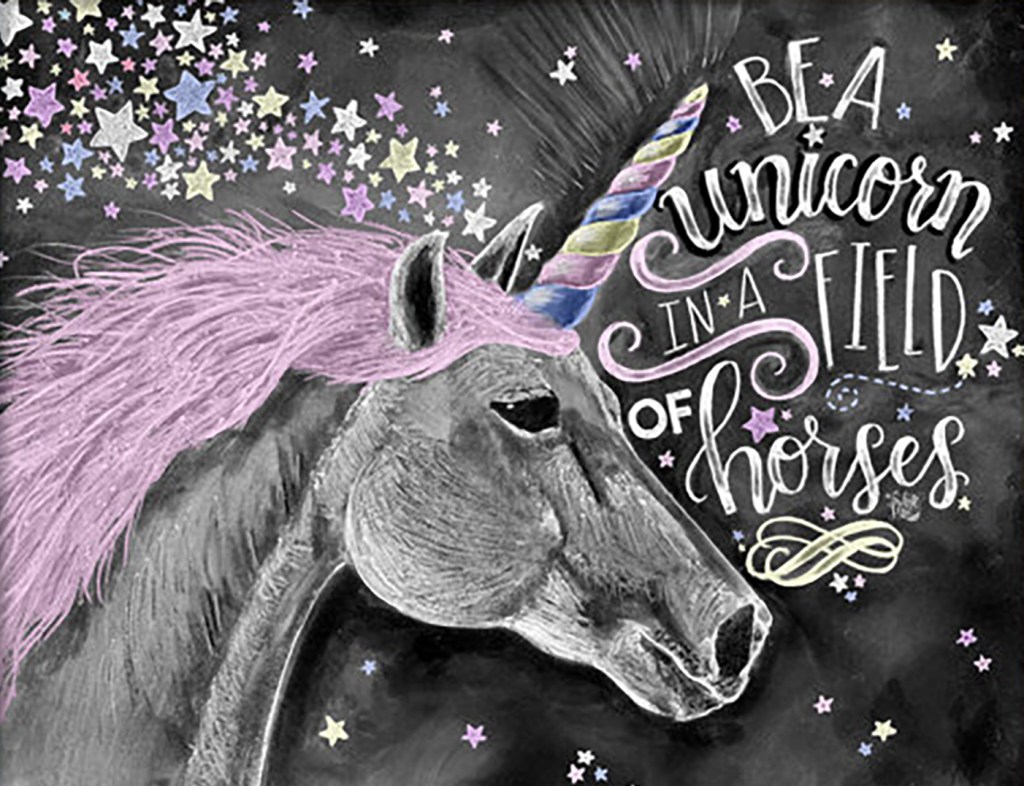
This unicorn poster hung on the wall of the inspiration for the protagonist of an upcoming novel, Needle’s Edge. It featuers prominently – almost has a speaking part.

Maps

Hemo Sapiens: Awakening is set in near-future Manchester, UK, so I had maps of Manchester at the ready. It helped me to add some realism. Because a trip from a nearby town into the city only took 15 to 20 minutes, I had to edit down a scene I was hoping would fill an hour. I could have used a location further away, but it wouldn’t have made sense to the plot, and I hate those sorts of plot gimmicks.

Sustenance is set in Iowa. I not only had a map of Iowa, I had resources on flora and fauna, so I could name-drop. I’ve visited parts of Iowa, but I couldn’t have drawn these details from memory—and I mightn’t have known the names or the onomonapoeia fascimiles.

Temporal Babel is set in New Mexico, so besides a map for highway references and distances from landmarks—towns, cities, and reservations—, I saved image resources of local photographs, landscapes, plants, buildings, attire, and so on. It really helps we with the description, something that is not otherwise my forte.

Propensity is set in no place in particular, so I used no maps, but I studied interiors of institutions, prisons, laboratories, and the like.

This is another unicorn sticker that was in the house of the protagonist, but it doesn’t make the cut. It still makes me chuckle.

Another unfinished novel, Everlasting Cocksucker, is set in Philly. I spent severl years in and around there, so I know the lay of the land. Still, I find maps useful.

I put this project ont he backburner because I received so much hate over the subject matter. I decided to concentrate on other projects. But, I created a physical shadowbox as a reminder of the protagonist.
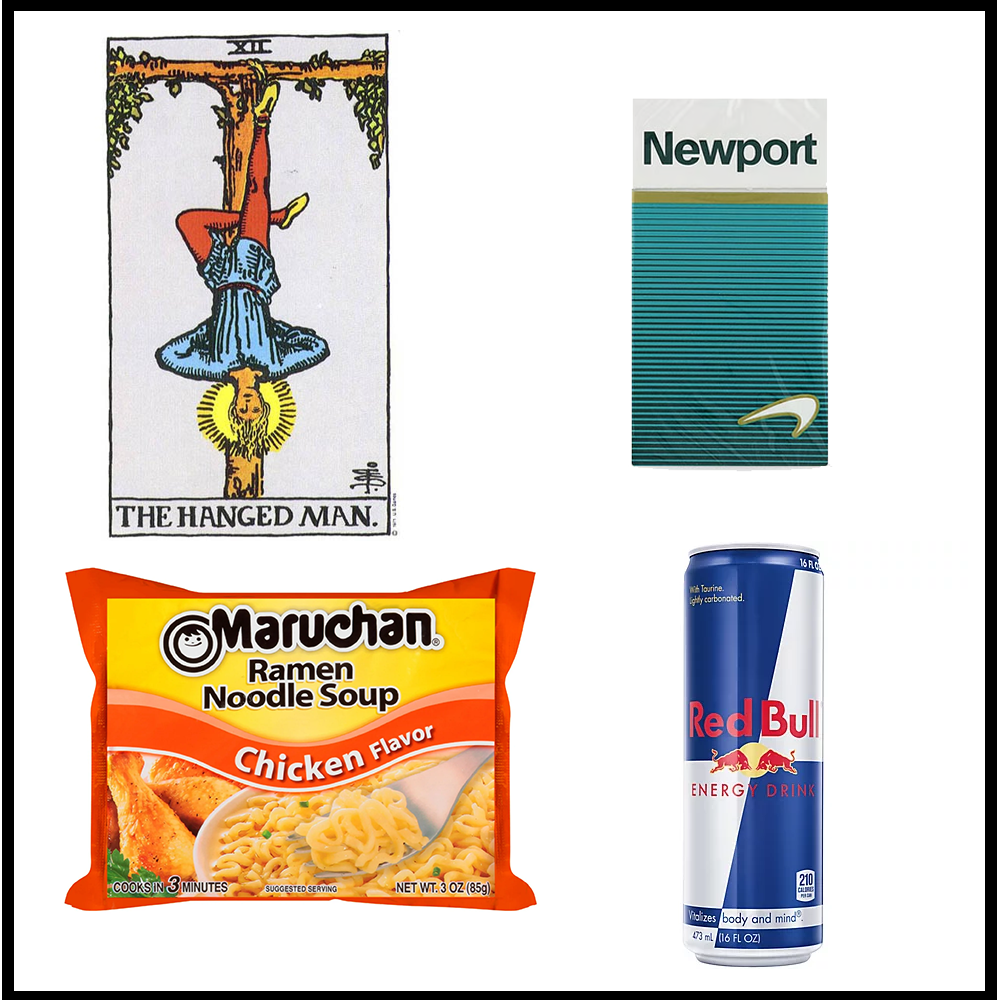
Image: Reconstruction of a shadowbox.

In this story, this represents her life habits: Newport Menthol 100s in a box, Red Bull, Maruchan Ramen, and tarot readings. The Hanged Man is relevant to the plot. When I return to the manuscript, I’ll have this as, let’s call it, inspiraration.

If I wrote genre fiction, this wouldn’t work as well – Sci-Fi or Fantasy and whatnot. It might work for historical fiction though.

Do you have any habits that help you to write?

Who’s Ridley Park?

I love origin stories. In fact, my next writing project is an origin story.

But that’s a tale for another day. This post is to reveal the reason for the pseudonym, Ridley Park. This story starts in Delaware, where I lived from 2018 until 2023. I often travelled up 95 North to get to the aeroport or Philadelphia. On this drive, a road sign often caught my eye: Ridley Park.

I cached the name to memory, thinking it might make for an interesting character name. Each trip, this was further imprinted and reinforced.

In April 2022, I was writing another novel. The topic is beyond controversial. In fact, I haven’t yet found anyone who’s not abhorred by the concept, so I know I have to publish it when I finish it. Because of the subject matter, I felt a pen name was in order, and I decided to use Ridley Park. To be fair, the unfinished book is set in Philly, so the name felt particularly apt.

I’ll guess that most of us have heard of the film director, Ridley Scott. The connexion is beyond obvious. It maintains the same cadence.

I’ve never visited Ridley Park. All I know is that it’s a suburb south of Philly, and I’ve borrowed the name. In the end, as it turns out, the question was never ‘Who is Ridley Park?’ Rather, it’s ‘Where is Ridley Park?’ all along.

Thematic Tarot

In Everlasting Cocksucker, the protagonist, Mallory, has an affinity for the tarot. I’ve also decided to not only make this a meta-theme and motif, but I am also basing (most of) each chapter on a card. Here is how the chapters are currently constructed:

Here’s the chapter flow with tarot themes along with summaries:

    1. Every Addict Has a Story

    • No tarot meaning

    2. In the Beginning…

    • No tarot meaning

    3. Ace of Wands – Feeding the Flame

    • Represents inspiration and new beginnings

    4. Three of Cups – Kindred Spirits

    • Reflects friendship and community

    5. Queen of Swords – Sceptic Sister

    • Represents clear thinking and truth

    6. The Tower – Crumbling Foundations

    • Symbolizes sudden upheaval

    7. Four of Pentacles – Tightly Guarded

    • Reflects possession and control

    8. The High Priestess – Hidden Truths

    • Stands for unconscious knowledge

    9. Seven of Swords – Ominous Whispers

    • Symbolizes deception

    10. Five of Swords – Desperate Measures

    • Represents conflict

    11. Six of Cups – Kindred Spirits

    • Reflects nostalgia and reunion

    12. The Magician – Anomaly Awakened

    • Symbolizes power and skill

    13. Two of Swords – Impossible Choice

    • Stands for indecision

    14. Five of Wands – Confronting the Past

    • Reflects disagreement and confrontation

    15. The Moon – Revelations in the Dark

    • Represents illusion and anxiety

    16. Judgement – Facing the Music

    • Reflects judgment and reflection

    17. The Hierophant – Seeking Wisdom

    • Stands for spiritual wisdom

    18. Temperance – Finding Balance

    • Symbolizes moderation and balance

    The alignment with tarot provides a rich, thematic framework for exploring the protagonist’s journey through addiction, self-discovery, and transformation. Each chapter’s corresponding tarot card adds layers of symbolic meaning, allowing for a multifaceted narrative that delves into complex emotional and moral themes.

    I expect to provide more context to the meaning of the tarot cards in future posts.

    DisclaimerThis content relates to a work in progress. As such, details are subject to change or removal.

    Chapter 3 ChatGPT Analysis

    In order to partner better with Generative AI, in this case ChatGPT, I break my chapters into story beats, which are essentially waypoints to which I can return to refine. These waypoints also allow me to create an amendable outline. This is an analysis of the third story beat (read: topic) of chapter three.

    Back in the day, I used to write software code with line numbers—showing my age for sure. This reminds me of something similar, if not so granular.

    I thought it would be a good idea to share ChatGPT 4’s analysis of this in its current state. As I noted recently, I am reworking the piece from a third-person perspective to first-person, limited, present narrative.

    Sure, let’s break down 3.10.0:

    1. Content & Theme: This segment delves into the gritty, day-to-day realities of the character’s life. It paints a picture of desperation and urgency, with both immediate needs and a relentless pace.
    2. Characterization: The character’s actions and language provide insight into her lifestyle, choices, and personality. Her terseness in conversation and need for a quick fix underline her addiction and its implications.
    3. Narrative Style: The text uses terse and curt language that aligns with the character’s own way of speaking and thinking. It’s direct and to the point, without any unnecessary elaboration.
    4. Pacing: The pacing here is rapid and fragmented. The quick succession of texts, one-liners, and lack of detailed description give a sense of the urgency and disjointedness of her life.
    5. Language & Dialogue: The dialogue is informal, laden with slang, and often cryptic, reflecting the secretive and transient nature of the character’s interactions. It feels authentic to the context.
    6. Imagery & Symbolism: Symbolism is subtle but present. The repeated lighting of cigarettes, for instance, might symbolize a need for control or a constant craving. The chirping of the phone could be seen as a persistent reminder of her dependency on these interactions for survival.
    7. Unreliable Narration: As mentioned earlier, the character might be an unreliable narrator. Her urgency could be a facade or a self-created dilemma. This adds depth to the character, allowing room for interpretation.
    8. Tone & Atmosphere: The tone is dark, somber, and urgent. There is a sense of loneliness, desperation, and a lack of connection, all in line with the broader themes of addiction, judgment, and social stigmatization that you’ve outlined.
    9. Structure & Formatting: The use of text messages mixed with internal monologue provides a modern and engaging way to convey the scene. It captures the fragmented nature of her thoughts and interactions.

    In summary, 3.10.0 is a well-crafted snapshot of a dark and complicated life. It effectively uses language, pacing, and structure to immerse the reader in a world that is both urgent and disconnected. The inclusion of text messages as a narrative device adds a layer of realism and urgency that enhances the overall impact of the segment.

    OpenAI ChatGPT 4

    I hope this helps to illustrate how ChatGPT can assist in the writing and editorial process. To be frank, ChatGPT tends to flatter. I suppose it errs on the positive so as not to discourage use. I may be wrong here.

    I intend to continue to share my progress (and hopefully not too much regress here), so this may serve as a sort of journal. As Roland Barthes said,

    — Roland Barthes

    But for now, this author still lives, and hopeful, I remain.

    DisclaimerThis content relates to a work in progress. As such, details are subject to change or removal.

    Meeting Aiden

    Podcast: Audio rendition of this page content

    Let’s discuss Aiden. This character is part of Mallory’s backstory, who she confronts in this narrative. Aiden was a former love interest. In fact, he is the presumed transmission vector for Mallory’s malady.

    As the story goes, Aiden and Mallory met in a college philosophy class and became an item. They entered a long-term relationship that ended with the incident that left Mallory afflicted, which left them estranged.

    Whether Aiden was the vector remains to be seen. In any case, his being a vector only kicks the can down the curb, leaving open the question of how he might have become infected. Aiden was asymptomatic at the time and has no signs that he could infect another.

    I won’t go on with Aiden as I don’t wish to spoil the rest of his character story.

    We still don’t know whether Mallory is infectious or if there are others with the same affliction, and we’ll have to wait to discover how this plays out.

    Disclaimer: This content relates to a work in progress. As such, details are subject to change or removal.

    Generative AI 001

    I’m developing a love-hate relationship with generative AI, and I’d like to share this journey with my readers.

    For the uninitiated, “generative AI refers to a subset of artificial intelligence focused on creating new data that is similar to some set of input data. It can be used to synthesize various kinds of content, such as text, images, music, and more.

    Here are some key components of generative AI:

    1. Generative Models: These are algorithms trained to generate new data. The most common generative models include Generative Adversarial Networks (GANs), Variational Autoencoders (VAEs), and other similar architectures.

    • Generative Adversarial Networks (GANs): GANs consist of two neural networks, the Generator, and the Discriminator, which are trained together. The Generator creates new data instances, while the Discriminator tries to distinguish between real and generated instances. The competition between these two networks results in the Generator creating increasingly realistic data.
    • Variational Autoencoders (VAEs): VAEs are used to encode data into a lower-dimensional space and then decode it back into the original space. They can also generate new data that’s similar to the training data.

    2. Applications: Generative AI has many applications, including:

    • Image Generation: Creating realistic images, such as artworks or detailed product prototypes.
    • Text Generation: Writing coherent and contextually relevant text for various purposes, like creative writing or dialogue systems.
    • Music Composition: Composing new pieces of music in a specific style or genre.
    • Data Augmentation: Generating additional training data to enhance the performance of machine learning models.
    • Drug Discovery: Creating molecular structures that can be further explored for pharmaceutical development.

    3. Ethical Considerations: The power of generative AI to create realistic content also brings about ethical concerns, such as the potential for misuse in creating deepfakes or generating misinformation.

    Generative AI represents a growing field that continues to evolve, offering exciting opportunities for innovation as well as challenges to address.”

    The content above was generated by ChatGPT, a generative AI service.

    LOVE

    One of the things I love about ChapGPT in particular is its ability to provide unbiased critique and commentary, We’ve been chatting for a few days, so it is quite familiar with my story in progress. Here are some partial dialogues:

    Regarding a general critique of Everlasting Cocksucker

    Thank you for providing more context and clarifying various elements of the story. Based on this information, it’s clear that “Everlasting Cocksucker” is a unique and challenging narrative that delves into themes of addiction, judgment, moral complexities, and social stigmatization.

    The use of Mallory’s one-of-a-kind affliction as a metaphorical vehicle to explore societal attitudes toward addiction and sex work is an intriguing literary device. Her development from a recluse into a character who finds more efficient ways to manage her addiction, along with the gradual acceptance by those around her, creates a narrative arc that offers room for exploration and reflection.

    The setting in Kensington, although arbitrary, still serves as a backdrop that echoes the themes of the novel. It can represent the broader challenges faced by those struggling with addiction and societal judgment.

    Secondary characters like Maria and Kelsey bring additional layers of complexity, providing different perspectives on Mallory’s condition. It’s interesting to see that the novel offers no clear resolution to Mallory’s affliction, leaving room for further exploration, possibly in a sequel.

    Your approach to this story raises many thought-provoking questions and provides a fresh perspective on familiar themes. It could resonate with readers who are interested in an unconventional exploration of addiction, morality, and societal attitudes.

    OpenAI ChatGPT 4 Response

    Regarding demographics for Everlasting Cocksucker

    The main demographic for this story would likely be adult readers, specifically those who are interested in dark, gritty, and unconventional narratives that explore themes such as addiction, moral complexity, and societal judgment. It may appeal to:

    1. Readers of Urban Fiction: Those who enjoy stories set against the backdrop of urban environments, particularly those that delve into the darker aspects of city life.
    2. Fans of Psychological Fiction: Readers interested in complex psychological explorations, character-driven stories, and the moral dilemmas that can come from unique afflictions or conditions.
    3. Readers Interested in Social Commentary: The novel’s examination of addiction, prostitution, societal judgment, and empathy may resonate with readers who appreciate works that comment on social issues.
    4. Readers of Speculative Fiction: Given the supernatural or unexplained element of the protagonist’s addiction, the book may also attract readers who enjoy speculative elements in otherwise realistic settings.
    5. Fans of Dark Drama or Tragedy: The story’s dark and tragic elements, including the protagonist’s desperation and the bleak portrayal of her surroundings, may appeal to readers who gravitate toward more somber, dramatic literature.

    It should be noted that the explicit content and adult themes may limit the book’s audience to mature readers, and it may not be suitable for those who prefer more conventional or mainstream narratives.

    OpenAI ChatGPT 4 Response

    Regarding target audience disclaimer for Everlasting Cocksucker

    WARNING: This book contains explicit content, including sexual themes and strong language, that may not be suitable for all readers. It delves into mature and challenging subjects such as addiction, prostitution, violence, and societal judgment. Reader discretion is strongly advised. Recommended for readers 18 years of age and older.”

    OpenAI ChatGPT 4 Response

    Next we’ll explore the Hate side of the coin. And so it goes…

    Everlasting Cocksucker

    Podcast: Audio rendition of this page content

    Everlasting cocksucker is the working title of the book I am currently working on. The title comes from a Marilyn Manson song from the ‘90s. Given her situation, it feels relevant. I’m leaning toward changing it to a more publicly acceptable title, but I haven’t come up with anything better. Perhaps the publisher will have some ideas. 

    The idea came to me in early 2020. It’s an extension of an idea I had kicking around since 2018 or thereabouts. 

    This story follows the protagonist, Mallory. It’s about addiction, prostitution, and homelessness. Given her addiction, prostitution is an obvious occupation, and homelessness is a common outcome. Many women become prostitutes as a means to escape homelessness and break the cycle of poverty, but the money that doesn’t go to support their addiction tends to be spent on hotels rather than being saved up for down payments. Of course, if you’re homeless, you’ve got verification challenges, and your credit score may prevent you from qualifying at many places.

    I don’t want to give away the plotline or any spoilers, but Mallory’s got other problems. Before she became an addict, she was a normal, sexually active woman in her mid-twenties in a traditionally committed relationship. Her addiction changed all that. Now she’s a loner and relies on men to feed her addiction and fund her existence.

    I discuss other details about Mallory, her environment, acquaintances, and other aspects in separate posts.