New Book Release: Temporal Babel

An unsolved literary mystery where language fails first.

I’m thrilled to announce the release of my latest novella, Temporal Babel, now available in paperback and hardcover. It’s a story about a man who arrives with no language the world can understand—and the woman who tries to name him anyway.

Audio: NotebookLM podcast on this topic.

Set in small-town New Mexico, Temporal Babel is not a thriller. It’s not about saving the future or rewriting the past. It’s about the weird middle ground where things don’t quite translate—linguistically, temporally, emotionally.

If you’ve ever wondered what it would feel like to encounter someone truly out of place—where even the word where doesn’t land—you’ll find something resonant in these pages.

What’s it about?

A young woman discovers a man on the roadside.
He’s naked. Marked with strange blue scars.
And the words coming out of his mouth aren’t quite English.
Or anything else.

No memory. No ID. No history that the town of Anika can decipher. But as he begins to recover, the sound of his voice becomes its own riddle.

Some readers may call this speculative fiction. Others might shelve it under linguistic noir. I just call it a contact story—minus the aliens, or is it?

Why read it?

  • 🔹 If you enjoy novels that refuse to explain themselves, this one’s for you.
  • 🔹 If you like language play, phonetic drift, and dialect as plot, this one delivers.
  • 🔹 If you like stories where the weirdness builds slowly, quietly, without fireworks—you’ll feel right at home.

“Dis kē?” he asks.
What is this?
No one knows. Not even the narrator.

📖 Temporal Babel is available now in paperback and hardcover.

Read it for free with KindleUnlimited.

You can explore the book page here or head straight to your favourite indie or online retailer.

Thank you for reading, for puzzling, and for letting mystery have the final word.

—Ridley

Geworfenheit: Not Born, Just Here: What Drives My Fiction

A common question I get about my writing—my fiction, anyway—is: what motivates you?

It sounds like a harmless question. Like asking a plumber what motivates them to fix pipes. But fiction is not plumbing. And motivation, for a writer, is often post-rationalised. Still, I have answers. Or at least fragments of them.

Audio: NotebookLM podcast on this topic.

A primary driver is to convey philosophical concepts that I feel apply to life in general, but don’t tend to get the airtime they deserve. A good example is Heidegger’s Geworfenheit.

In English, that’s usually translated as “thrownness.” It refers to the feeling—no, the condition—of having been thrown into existence without consent, without context, without recourse. It’s the anti-heroic beginning. You wake up on a raft. No map, no memory. Just current.

Now, Heidegger gets a bad rap. And some of it is earned. He joined the Nazi party. There’s no excusing that. But if we’re going to disqualify thinkers based on political affiliation, we’ll need to scrap about half of the Enlightenment and most of the 20th century. The point is: Geworfenheit is useful. It names something modern life often glosses over: the fact that you didn’t choose to be here, and now you have to swim.

This theme shows up across my work. In Temporal Babel, Jef is stranded in a temporally dislocated world. In Sustenance, the visitors are alien in both senses of the word. And in Hemo Sapiens, the title species are cloned into personhood with no legal or cultural footing.

None of us choose how, where, or when we are born. But I like to amplify that truth until it becomes impossible to ignore. Take the Hemo Sapiens case: they aren’t born; they’re instantiated. But what is birth if not a legally sanctioned instantiation? Once you remove the ritual scaffolding of parentage, nationhood, and paperwork, what remains is the raw fact of being.

Another key motivator for me is philosophical provocation—questions I don’t intend to answer, only pose. Like this one: imagine you’re shipwrecked and wash up on a tiny island. A single inhabitant lives there and claims ownership. He tells you to leave or die. You have no weapon. He has a spear. The sea is vast and lethal.

Do you have the right to stay?

Do you take the spear?

Does ownership matter when survival is at stake?

Sustenance explores that tension. Property, sovereignty, mercy, survival—these are themes we pretend to understand until the scaffolding is removed. My aim isn’t to preach about what’s fair. My aim is to show what happens when fairness loses its footing.

Related to this is the theme of otherness. Us versus them. But I’m less interested in dramatising hostility and more interested in the quiet bewilderment that comes when categories fail. What do you call someone who isn’t man or woman, isn’t alive or dead in the way we recognise, doesn’t speak our language or obey our metaphysics? What happens when you meet something you can’t assimilate?

Another layer is cultural construction—the way our societies retrofit meaning onto reality. We build scaffolds. Gender, law, ownership, grief. Then we forget we built them. My fiction likes to peel back the drywall. Not to show the truth, but to reveal the studs. The story behind the story.

And finally, I write because I suspect something important is always missing. That language is never quite enough. So I keep trying. Not to solve the insufficiency, but to dwell inside it.

That’s what motivates me.

Or maybe I’m just trying to answer questions I never knew how to ask.

That too.

It’s a Matter of Time

After an extended hiatus, I’m back in writing mode. I’ve got an unfinished prequesl to Hemo Sapiens and several unfinished short stories.

Currently, I am focusing with themes of language morphology and mundanity of history.

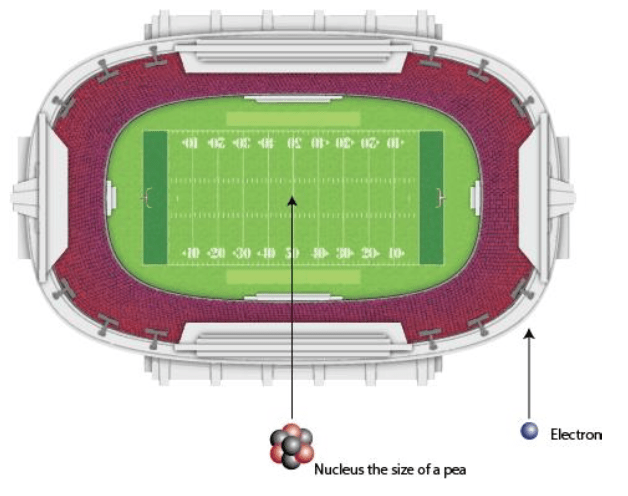
History is like an atom – more space than substance — yet it feels somehow significant to us in the moment. The substance-to-space ration is that of a pea in a football stadium, and yet we perceive these things as solids, liquids, gasses, and plasmas.

History is hitting the only car in an otherwise empty car park. Of course, you and your insurer give it extra significance, but history is more often than not self-absorbed narcisism and filling in the blanks with somewhat cohesive storylines.

As for language, people understand the notion that contemporary language is “living”, but they don’t realise as much that over time tiny perturbations result in huge shifts. Consider Middle English from the days of Chaucer, some 650 years ago, versus Shakespeare, only 450 years ago. The latter, is relatively readable; the former, nosomuch.

In the short term, some complain about incorrect usage, “Save cursive writing”, and “kids forget how to write” with their texts and social media shortcuts. What’s the world coming to?

I ‘ve always questioned time-travel stories where people visit places in the far-future or -past and everyone happens to be perfectly understood, save perhaps for a British accent for good measure – perhaps Germanic for ill measure. lol

I’ve been writing some future-forward stories involving artificial intelligence and more on the nature of time and space, but I’ll save these for another day. Now, I need to focus on Temporal Babel.