Notes from the Underground

★★★★★ – “I Am a Sick Man. I Am a Spiteful Man. I Am, Apparently, Hilarious.”

Dostoevsky’s Notes from Underground is a masterclass in misanthropic soliloquy — part philosophical treatise, part psychological farce, and altogether one of the most darkly entertaining monologues I’ve ever had the guilty pleasure of eavesdropping upon. It’s a screaming match between Enlightenment rationality and the petty, pulsing irrationality of actual human life — and guess who wins? (Hint: not the utopians.)

Audio: NotebookLM podcast on this topic.

The first part, a searing, feverish diatribe, reads like the diary of a man who’s been locked in a room with too much Hegel and not enough human contact. It’s Dostoevsky’s pre-emptive strike against every social engineer who’s ever said, “Well, surely man will behave if we just fix the plumbing.” The Underground Man begs to differ — loudly, neurotically, and with an almost Shakespearean flourish of self-abuse.

But it’s the second part — Apropos of the Wet Snow — where things truly fall gloriously apart. Here the theoretical gives way to the tragically tangible. Our narrator, more unhinged by the page, lurches into society like a moth into a bonfire — vengeful, humiliated, self-aware to the point of paralysis. His disastrous encounter with Liza is almost unbearable in its sincerity and cruelty, a pas de deux of hope and destruction that left me squirming and spellbound.

What surprised me most was the humour. Not the cheap slapstick of caricature, but the agonising, close-to-the-bone absurdity that arises when a man is too clever to be functional and too self-aware to change. The Underground Man doesn’t just dig his hole — he drafts blueprints, writes footnotes, and criticises the soil quality.

As a companion read, Tolstoy’s The Death of Ivan Ilych provides a poignant counterpoint. Where Tolstoy charts the steady, ghastly march of bourgeois conformity towards a deathbed revelation, Dostoevsky gives us a man already buried in his psyche, clawing at the dirt and calling it philosophy. Ivan Ilych dies trying to make sense of his life; the Underground Man lives trying to make death of sense itself.

Together, they are a fine Russian reminder that being alive is no guarantee of being well — or even remotely rational.

The Loneliest Table in the Room

What if you scheduled a book signing… and no one showed?

I’ve had that thought more than once. The kind of creeping doubt that slinks in just after you order the bookmarks and rehearse your elevator pitch in the mirror.

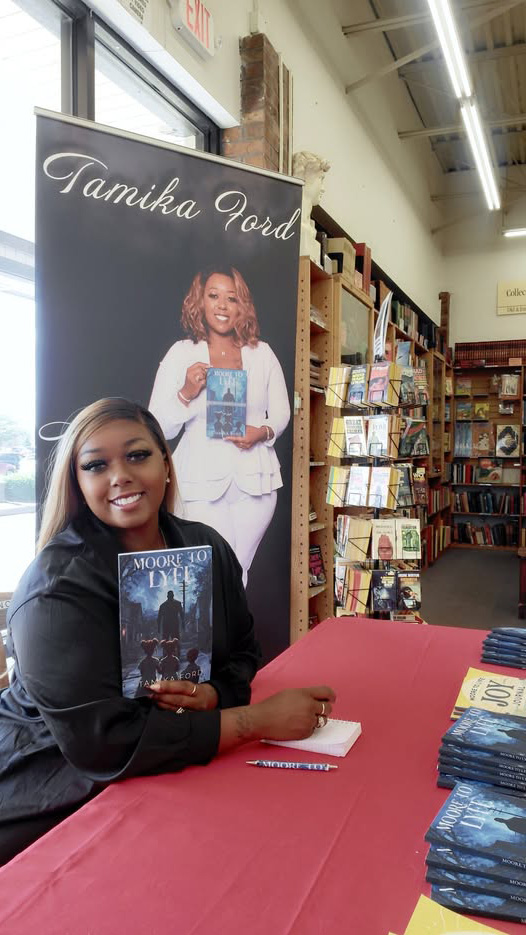
It happened to Tamika Ford.

Image: Tamika Ford – Moore to Lyfe

https://www.facebook.com/share/p/18niMMYv3C

I don’t know this woman, but this post appeared in my feed:

First book signing ⚠️📢🚨

I showed up. I sat at the table. Books neatly stacked, pen ready, heart open — and no one came.

At first, it stung. But then I realized… I’m still proud. Proud that I created something from my story. Proud that I had the courage to show up, even when the seats were empty.

Every table won’t be full. Every event won’t be packed. But every moment is a seed. And I’m still planting. 🌱📚

I don’t know Tamika personally. This post just floated into my feed. But her candour caught me off guard—because I’ve imagined the same thing.

Audio: NotebookLM Podcast on this topic.

A book signing. It sounds like the natural next step. A rite of passage. Something authors do. I’m an introvert, but I’ve taught lecture halls full of glazed-over undergrads and stood before execs who paid me not to bore them. Public speaking doesn’t rattle me.

But the idea of speaking to an empty room? That’s different.

As a professor, the audience is compulsory. As a consultant, the client paid to listen. But a signing? That’s a gamble. No RSVP, no guaranteed bodies. Just hope in paperback.

I’ve published three books, with two more on the way. There are still a few manuscripts in editorial purgatory and some non-fiction titles pacing impatiently backstage. No wonder people hire publicists. It’s a circus, and some days, you don’t even get the monkey.

Tamika said, “At first, it stung.” And how could it not?

She’d already written the book. That’s the real accomplishment. She could have been proud before the signing, without the signing. But she showed up. That’s the part that wrecks me a bit.

She probably rehearsed the scene in her head. Smiling, shaking hands. Someone saying, “I loved this part.” A moment of affirmation.

Instead: silence. Stale air and the slow tick of a wall clock.

And yet there she is in the photo—beaming. She shared the moment not to seek pity but to offer calibration for anyone planting seeds of their own.

May her next event be packed. May strangers pick up her book and find something that speaks to them. Failing that, may they at least buy the damn thing.

Either way, she’s already won.

Geworfenheit: Not Born, Just Here: What Drives My Fiction

A common question I get about my writing—my fiction, anyway—is: what motivates you?

It sounds like a harmless question. Like asking a plumber what motivates them to fix pipes. But fiction is not plumbing. And motivation, for a writer, is often post-rationalised. Still, I have answers. Or at least fragments of them.

Audio: NotebookLM podcast on this topic.

A primary driver is to convey philosophical concepts that I feel apply to life in general, but don’t tend to get the airtime they deserve. A good example is Heidegger’s Geworfenheit.

In English, that’s usually translated as “thrownness.” It refers to the feeling—no, the condition—of having been thrown into existence without consent, without context, without recourse. It’s the anti-heroic beginning. You wake up on a raft. No map, no memory. Just current.

Now, Heidegger gets a bad rap. And some of it is earned. He joined the Nazi party. There’s no excusing that. But if we’re going to disqualify thinkers based on political affiliation, we’ll need to scrap about half of the Enlightenment and most of the 20th century. The point is: Geworfenheit is useful. It names something modern life often glosses over: the fact that you didn’t choose to be here, and now you have to swim.

This theme shows up across my work. In Temporal Babel, Jef is stranded in a temporally dislocated world. In Sustenance, the visitors are alien in both senses of the word. And in Hemo Sapiens, the title species are cloned into personhood with no legal or cultural footing.

None of us choose how, where, or when we are born. But I like to amplify that truth until it becomes impossible to ignore. Take the Hemo Sapiens case: they aren’t born; they’re instantiated. But what is birth if not a legally sanctioned instantiation? Once you remove the ritual scaffolding of parentage, nationhood, and paperwork, what remains is the raw fact of being.

Another key motivator for me is philosophical provocation—questions I don’t intend to answer, only pose. Like this one: imagine you’re shipwrecked and wash up on a tiny island. A single inhabitant lives there and claims ownership. He tells you to leave or die. You have no weapon. He has a spear. The sea is vast and lethal.

Do you have the right to stay?

Do you take the spear?

Does ownership matter when survival is at stake?

Sustenance explores that tension. Property, sovereignty, mercy, survival—these are themes we pretend to understand until the scaffolding is removed. My aim isn’t to preach about what’s fair. My aim is to show what happens when fairness loses its footing.

Related to this is the theme of otherness. Us versus them. But I’m less interested in dramatising hostility and more interested in the quiet bewilderment that comes when categories fail. What do you call someone who isn’t man or woman, isn’t alive or dead in the way we recognise, doesn’t speak our language or obey our metaphysics? What happens when you meet something you can’t assimilate?

Another layer is cultural construction—the way our societies retrofit meaning onto reality. We build scaffolds. Gender, law, ownership, grief. Then we forget we built them. My fiction likes to peel back the drywall. Not to show the truth, but to reveal the studs. The story behind the story.

And finally, I write because I suspect something important is always missing. That language is never quite enough. So I keep trying. Not to solve the insufficiency, but to dwell inside it.

That’s what motivates me.

Or maybe I’m just trying to answer questions I never knew how to ask.

That too.

AI Editor Issues

I employ AI editors for copyediting and alpha-reading. They are useful but have limitations.

Some of my writing is ordinary – Acts I, II, and III; Beginning, Middle, and End. This is AI’s sweet spot: assess a piece and compare it to a million similar pieces, sharing plot structures, story and character arcs, heroes’ journeys, and saving cats.

Other stories are experimental. They don’t follow the Western tradition of tidy storylines and neat little bows, evey aspect strongly telegraphed, so as not to lose any readers along the journey.

Mary approaches a doorway. Mary opens the door. She walks through the doorway — the doorway she had approached.

Obviously, this is silly and exaggerated, but the point remains. AI presumes that readers need to be spoonfed, especially American audiences. (No offence.)

But life doesn’t work like this. We often witness events where we have no idea what happens after we experience them. We pass strangers on the street, not knowing anything about their past or future. We overhear something interesting, never to get a resolution. We get passed by for a promotion but never know the reason why.

In science, there are lots of dead ends. Do we want to know the answers? Yes. Is one likely? Maybe; maybe not. Will we make up answers just to satisfy our need for closure? It happens all the time.

In writing, we seem to not accept these loose ends. How many times have you read a review or critique where the complaint is, “What happened to this character?” or “Why didn’t Harry Potter use his invisibility cloak more than once despite it being an obvious solution to many prior and future challenges he faced?”

Sure. I agree that it feels like a plot hole, but the author doesn’t have to tell you that Harry lost it in a poker match, it got lost in the wash, or Ron snatched it.

I’m finishing a story, and various AIs provide similar commentary. Even more humorous are the times it can’t follow a thread, but when a human reviewer reads it, they have no difficulty. In the end, there may be unanswered questions. Some of these leave the universe open for further exploration, but not all questions have answers. AI has difficulty grasping this perspective.

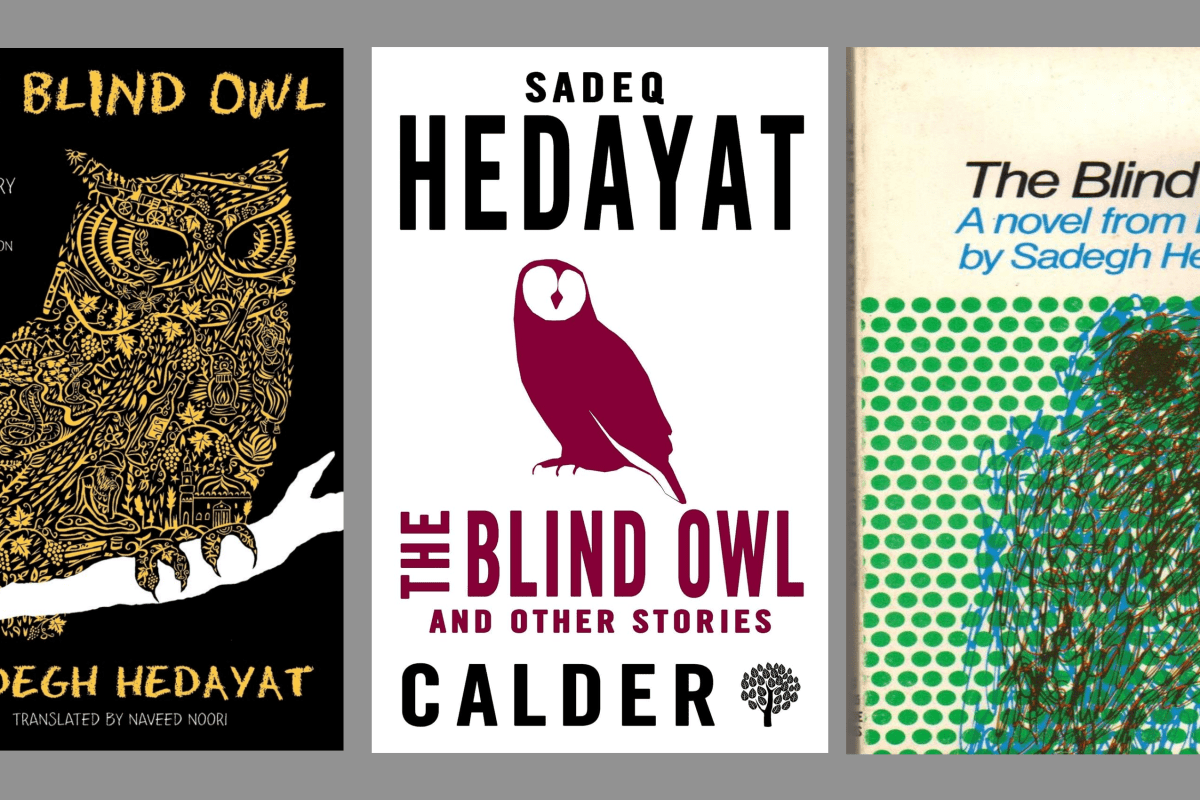
Translations of The Blind Owl

I was less than happy with my review of The Blind Owl. It’s an OK summary, but it’s at too high of a level—fifty-thousand feet as some say.

I problem is that I need to make notes as I read rather than recollect at the end. As it happens, I’ve got three English translations of the book, I don’t read Persian, and reading in French still gives me translation differences. I decided to read a different translation, and they’re a bit askew. So I picked up the third. Different, still. I’ll illustrate my point.

The book opens with a sort of prologue before the narrative begins. Each of the translations read as follows:


Each of these establishes the tone but in differing ways. The narrator’s world is bleak. It’s a mean world, full of wretchedness and misery; a base world, full of destitution and want; a debased and wretched world, full of destitution and want.

As the chapters progress, I can’t help but wonder what the translators have interjected and what is faithful. I’ve written about the challenge in translations is that sometimes an exact word doesn’t exist in the target language.

For example, in Camus’ L’étranger, the novel opens:

Aujourd’hui, maman est morte. Ou peut-être hier, je ne sais pas.”

This translates to “Today, mother died. Or maybe yesterday, I don’t know.” Rather, it doesn’t.

In English, we have the word ‘mother’, which is relatively formal when referring to one’s own parent. We also have the children’s term ‘mummy’ or perhaps ‘mom’, but maman falls between them. ‘Mother’ makes him feel overly rigid or formal than his character unfolds to be; ‘mummy’ would make him seem feeble or infantile, so we are left with ‘mother’.

In The Blind Owl, I have no such reference to parse the language. I am at the mercy of the translator. In the sample passages, not much meaning is lost, if any, but stylistically it reads differently. The pace feels different. I don’t know which I prefer. Anchoring has likely led me to favour the first.

Is the world bad, or does it contain bad, or both, and in what composition?

I’ll keep reading, and I hope to improve it with a more personal accounting.