
The novel Propensity is divided into three sections, each with fifteen chapters – because symmetry is pleasing and my OCD deserves a biscuit. The first third plays it straight. More or less. A novel in the classical sense. You know – plot, people, dialogue, the odd existential quip. The middle third begins to fray at the edges, like an overstretched cardigan at an avant-garde poetry slam. And the final third? Well, it abandons form like a cult member in a cornfield, embracing the experimental, the elliptical, and the structurally suspect.
Chapter 28 is where the wheels come off. Or rather, where we slap on entirely different wheels – hexagonal ones. It takes the form of a standardised test. Yes, a literal test. Multiple choice. But fret not – there’s no grade, no timer, no Scantron sheet. Just questions. Absurd ones. Possibly even meaningful ones, though that’s above my pay grade.


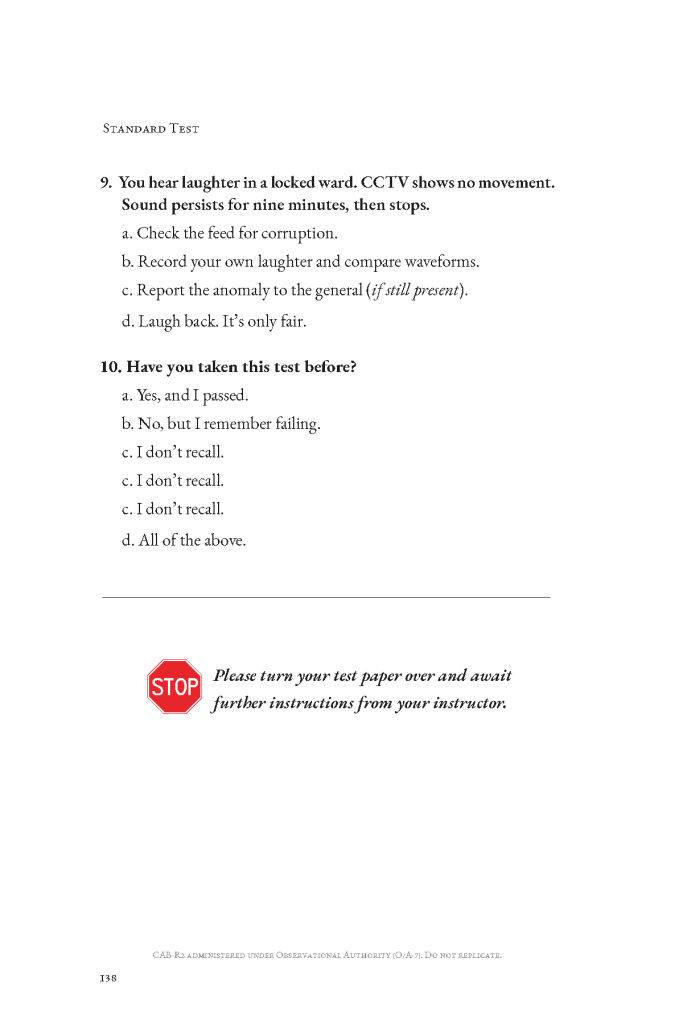
Is it serious? Not remotely. Does it “advance the plot”? Hardly. Does it offer deep character insight? Not unless you’re profiling the author. But it does serve as a playful rupture in the narrative – a breather, a jab, a meta-giggle at the expense of structure and expectation. And let’s be honest: if you’ve made it to Chapter 28, you probably deserve a bit of a reward for tolerating everything prior.
As for spoilers: yes, technically, there are some. But without context, they’re like IKEA instructions written in Sanskrit. You might glimpse the shadow of something meaningful, but you’ll have no bloody idea what you’re looking at. No harm, no foul.
You can view Chapter 28 (along with several other amuse-bouches) for free on the Propensity book page. It’s downloadable as a PDF. No catch. No mailing list sign-up. I don’t want your email. I want your confusion.
Now, go take the test. Or don’t. It’s not graded. But it is a chapter.

 Ridley Park