Ridley at Uni

student writing
2–3 minutes

I never took creative writing courses at university. I wanted to, but I was shackled to a double major in economics and finance, worlds far removed from literature. With only four free electives to spend, I squandered them on philosophy (which, in retrospect, I should have pursued outright). That’s a story for another day. I did manage to complete a couple of critical writing courses and a couple of literature courses, and those linger in my memory.

My critical writing professor was a lesbian feminist. She assigned us nothing but female authors – save one strange detour, when I was made to compare Gloria Steinem with Thorstein Veblen on economics. In our very first class, she asked for a handwritten sample, pen on paper, no dictionaries, no spellcheck. This was the late ’80s; such tools barely existed. My handwriting was atrocious then – as now –, so I resorted to all-caps block letters. She commented on the novelty. She was a marvellous teacher.

My first literature professor adored poetry, though I did not. He made the best of it. He also had a curious fixation on penguins and mocked the way I pronounced finance (short “i,” the way I still say it). He was equally amused when I once asked to “interject” – apparently not the word he thought I should have chosen.

My last literature professor was enthralled by all things American. Our reading list was composed entirely of American writers, perhaps some women among them, though I don’t recall. Before his class, their works didn’t quite resonate with me. Still, it was enjoyable. He also insisted that one must understand an author’s history to grasp the text, an idea Barthes would have scoffed at. He, in turn, scoffed at Barthes.

My favourite moment came at the end. After the term ended, he posted back our final essays. On mine, he scribbled two lines alongside the grade:

I’ll miss your sardonic humour.
My name is not David Grace.

I had typed the wrong name on the title page – borrowing one from a maths professor whose name stuck, while my literature professor’s did not. I still can’t recall his name. But I remember him fondly all the same.

Trainspotting Takes Over

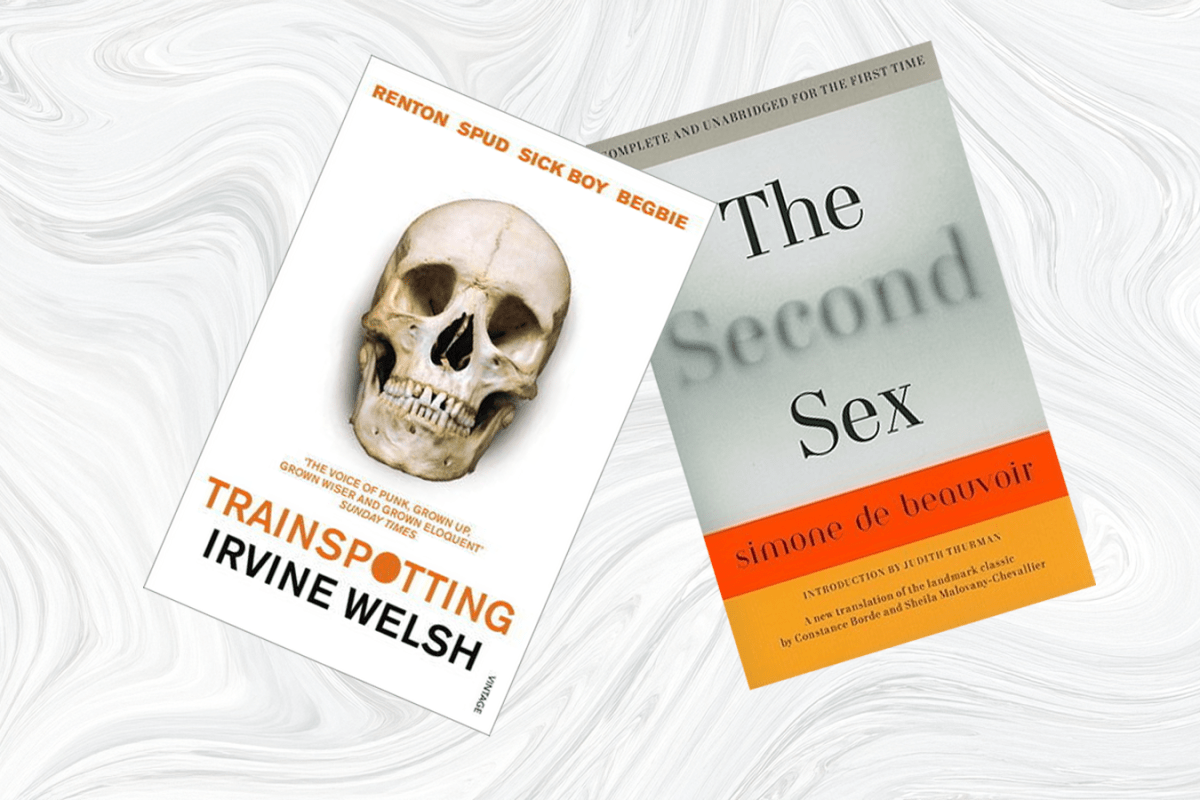
I’ve just finished Simone de Beauvoir’s The Second Sex – all 800 pages of it – and have now started Irvine Welsh’s Trainspotting. Both are classics in their own way. I’ll review Second Sex properly on my Philosophics Blog, but here I want to think about Trainspotting in relation to my current manuscript, Needle’s Edge.

Interestingly, Trainspotting was a ChatGPT recommendation. I fed in my draft of Needle’s Edge and this was one of the books it said my work resembled. Two chapters in, I see the connexion. First, the subject matter – drugs and addiction. Second, the rawness of the experience.

There are differences, of course. Trainspotting is rooted in Leith, Scotland; Needle’s Edge belongs to the East Coast of the United States – Delaware and Philadelphia. Welsh draws heavily on dialect and vernacular, with a narrative voice that’s linguistically dense and aurally charged. In Needle’s Edge, the style is pared down. Sentence fragments, middle dots instead of full stops, and an intentional “lower” register mirror the protagonist’s fractured perception and limited resources.

That gap in register creates a different authorial challenge. With every edit pass, I find myself policing intrusions of my vocabulary into her voice. Welsh, by contrast, can deploy a broader lexicon and trust the dialectal texture to keep it authentic. Listening to Trainspotting, I’m struck by how words and turns of phrase leap out – sometimes apt for Needle’s Edge, but often just a shade too polished for Stacey’s world.

Both texts orbit around environments that resist glamour. Welsh’s squat flats and pubs are grimy and feral; Needle’s Edge’s motel rooms and sidewalks are littered with fast-food wrappers, orange caps, and fading unicorn posters. Addiction erodes bodies in both stories, but the textures differ – Scotland’s industrial gray versus the East Coast’s cheap motels and suburban detritus.

As for the film version of Trainspotting, I saw it long ago and remember almost nothing. The novel isn’t refreshing my memory either; it feels like a separate creature altogether. Which is fitting: both Trainspotting and Needle’s Edge are less about plot than about capturing a lived texture, a rhythm of voices and environments that mainstream narratives usually discard.

High Horses and Low Bars: AI, Literature, and the Pretence of Purity

The hand-wringing over AI-assisted writing has become the new parlour game for those with literary pretensions. You’ve heard the refrain: It’s not real art. It’s cheating. It’s not proper literature. The pearl-clutchers imagine themselves defending the sanctity of the novel against an onslaught of silicon scribblers, as though Wordsworth himself might be weeping in a Lake District grave at the indignity of a chatbot helping you outline Chapter Three.

Audio: NotebookLM podcast about this topic

Here’s the problem: most art isn’t high art, and most writing isn’t literature. Perhaps yours, possibly mine, but most books sold today don’t even aspire to qualify as literature except in the broadest of terms – having been read. The majority of books on the shelf, those stacked to the rafters in airport WHSmiths and sprawled across the Kindle top-sellers list, are to literature what chicken nuggets are to fine dining. Perfectly enjoyable, but you don’t see Heston Blumenthal demanding they be served in a Michelin-starred tasting menu.

And that’s fine. Truly. Because the vast majority of readers aren’t combing through your prose for transcendence or stylistic innovation. They’re not here to wrestle with postmodern irony or wrest meaning from a fragmented narrative. They’re here to escape the tedium of their commute, to zone out after a long day, to gobble up familiar tropes like comfort food. Sometimes they want plot, sometimes they want romance, sometimes they want dragons and space marines and improbably muscular men named Rafe. What they don’t want is a lecture on the ontological integrity of the creative process.

The AI panic brigade, however, would have you believe that unless your novel was forged through the arduous labour of pen and paper, or at least a keyboard, with the requisite quota of caffeine and self-loathing, it cannot possibly be authentic. To which I say: nonsense. We’ve been “cheating” for centuries. Typewriters. Word processors. Spellcheck. Thesauruses. Collaborative editing. Ghostwriting. For heaven’s sake, most of your favourite “high art” authors had assistants, editors, or outright amanuenses polishing their sentences into the very state of grace you now venerate.

There’s also the small matter of motive. Very few writers are chasing pure artistic expression, many are chasing rent money, Amazon rankings, or a book deal that might finally cover their overdraft. That’s not cynicism, that’s survival. And survival has never given a toss about whether the means of production are sufficiently Romantic for the sensibilities of the literati.

If anything, AI merely exposes the uncomfortable truth: most writing is a craft, not a sacrament. It’s a process of assembling words into a functional, sometimes moving, occasionally transcendent arrangement. And like all crafts, it has tools. Some tools are chisels, some are typewriters, and now some happen to be algorithms with more patience than your average beta reader.

So, if someone wants to use AI to crank out the next mass-market thriller, let them. It’s not threatening literature because it was never in literature to begin with. And if they want to use it to experiment, to push boundaries, to hybridise forms, that’s art too. High or low, it all ends up in the same place: on a page, waiting for someone to care enough to read it.

Writing Props

Does anyone else use writing props to help immerse yourself in adjascent fiction?

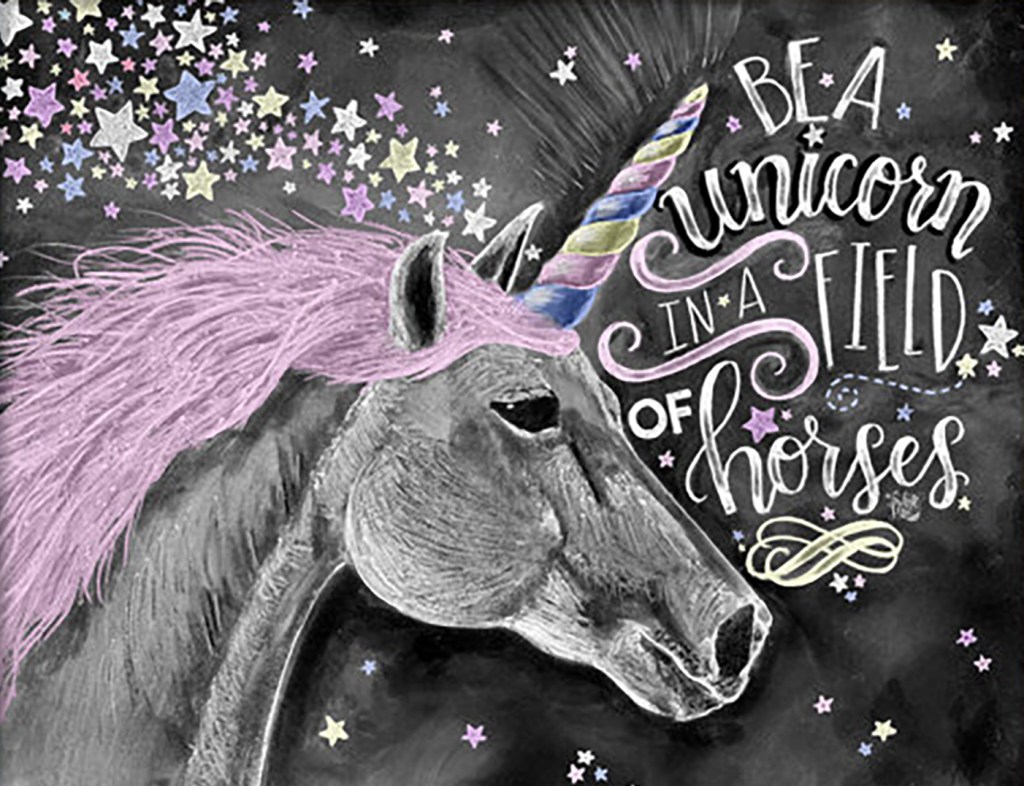
This unicorn image is from a poster. I am using it as a reference for a current project. It’s already seared into my brain, but it renders it somehow more real.

This unicorn poster hung on the wall of the inspiration for the protagonist of an upcoming novel, Needle’s Edge. It featuers prominently – almost has a speaking part.

Maps

Hemo Sapiens: Awakening is set in near-future Manchester, UK, so I had maps of Manchester at the ready. It helped me to add some realism. Because a trip from a nearby town into the city only took 15 to 20 minutes, I had to edit down a scene I was hoping would fill an hour. I could have used a location further away, but it wouldn’t have made sense to the plot, and I hate those sorts of plot gimmicks.

Sustenance is set in Iowa. I not only had a map of Iowa, I had resources on flora and fauna, so I could name-drop. I’ve visited parts of Iowa, but I couldn’t have drawn these details from memory—and I mightn’t have known the names or the onomonapoeia fascimiles.

Temporal Babel is set in New Mexico, so besides a map for highway references and distances from landmarks—towns, cities, and reservations—, I saved image resources of local photographs, landscapes, plants, buildings, attire, and so on. It really helps we with the description, something that is not otherwise my forte.

Propensity is set in no place in particular, so I used no maps, but I studied interiors of institutions, prisons, laboratories, and the like.

This is another unicorn sticker that was in the house of the protagonist, but it doesn’t make the cut. It still makes me chuckle.

Another unfinished novel, Everlasting Cocksucker, is set in Philly. I spent severl years in and around there, so I know the lay of the land. Still, I find maps useful.

I put this project ont he backburner because I received so much hate over the subject matter. I decided to concentrate on other projects. But, I created a physical shadowbox as a reminder of the protagonist.

Image: Reconstruction of a shadowbox.

In this story, this represents her life habits: Newport Menthol 100s in a box, Red Bull, Maruchan Ramen, and tarot readings. The Hanged Man is relevant to the plot. When I return to the manuscript, I’ll have this as, let’s call it, inspiraration.

If I wrote genre fiction, this wouldn’t work as well – Sci-Fi or Fantasy and whatnot. It might work for historical fiction though.

Do you have any habits that help you to write?

Notes from the Underground

★★★★★ – “I Am a Sick Man. I Am a Spiteful Man. I Am, Apparently, Hilarious.”

Dostoevsky’s Notes from Underground is a masterclass in misanthropic soliloquy — part philosophical treatise, part psychological farce, and altogether one of the most darkly entertaining monologues I’ve ever had the guilty pleasure of eavesdropping upon. It’s a screaming match between Enlightenment rationality and the petty, pulsing irrationality of actual human life — and guess who wins? (Hint: not the utopians.)

Audio: NotebookLM podcast on this topic.

The first part, a searing, feverish diatribe, reads like the diary of a man who’s been locked in a room with too much Hegel and not enough human contact. It’s Dostoevsky’s pre-emptive strike against every social engineer who’s ever said, “Well, surely man will behave if we just fix the plumbing.” The Underground Man begs to differ — loudly, neurotically, and with an almost Shakespearean flourish of self-abuse.

But it’s the second part — Apropos of the Wet Snow — where things truly fall gloriously apart. Here the theoretical gives way to the tragically tangible. Our narrator, more unhinged by the page, lurches into society like a moth into a bonfire — vengeful, humiliated, self-aware to the point of paralysis. His disastrous encounter with Liza is almost unbearable in its sincerity and cruelty, a pas de deux of hope and destruction that left me squirming and spellbound.

What surprised me most was the humour. Not the cheap slapstick of caricature, but the agonising, close-to-the-bone absurdity that arises when a man is too clever to be functional and too self-aware to change. The Underground Man doesn’t just dig his hole — he drafts blueprints, writes footnotes, and criticises the soil quality.

As a companion read, Tolstoy’s The Death of Ivan Ilych provides a poignant counterpoint. Where Tolstoy charts the steady, ghastly march of bourgeois conformity towards a deathbed revelation, Dostoevsky gives us a man already buried in his psyche, clawing at the dirt and calling it philosophy. Ivan Ilych dies trying to make sense of his life; the Underground Man lives trying to make death of sense itself.

Together, they are a fine Russian reminder that being alive is no guarantee of being well — or even remotely rational.