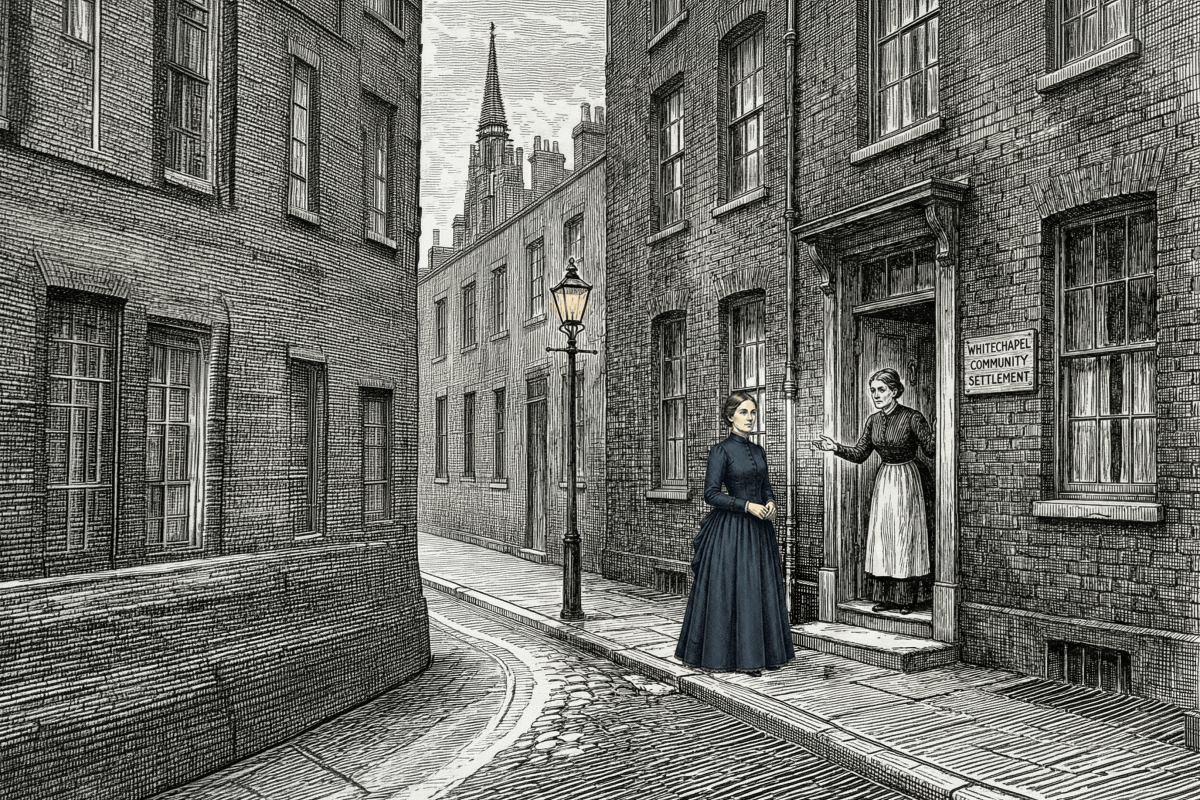
The original idea was simple: write a story populated with invented words – terms that aren’t random nonsense, but which feel as though they could be English. Words that sound faintly familiar, perhaps even slightly anachronistic. Setting the piece in Victorian London helped with that illusion.
At first, I wavered between vampires and Sherlock Holmes. I chose the latter – though, strictly speaking, this is my own Holmesian invention. Like Holmes, my lead required a trusted companion. And because this would be a short story, everything needed to remain compact: a single focus, no wandering side quests, opening in medias res at a crime scene. Or rather, not a crime scene exactly – a disappearance. The mayor’s daughter is missing. Our team is called in.
Image: Sherlock Holmes encounters vampires. Who knew?
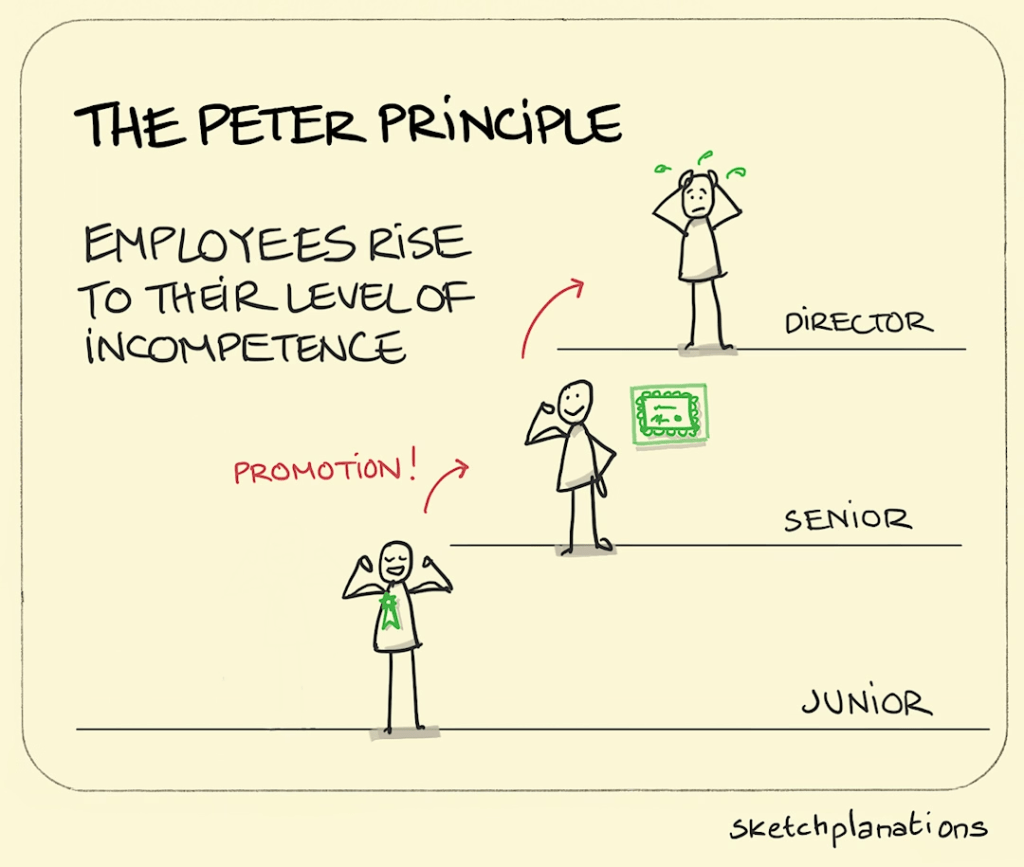
The lead became Inspector Peter Holt, named with deliberate irony after the Peter Principle: the idea that people are promoted to the level of their incompetence. Many organisations quietly run on this logic, though few would admit it. Peter embodies the principle – except he is not merely promoted beyond competence; he may never have possessed it in the first place. We have all met some version of Peter.
He is also the fountain of the story’s faux-English bloviation. Keeping him afloat is his partner, Miss Eleanor Hale. A female inspector in the period is unlikely, but not impossible – and fiction allows a little generosity. She is instrumentally competent, quietly effective. Perhaps, in some small way, she is a gender-swapped fragment of autobiography.
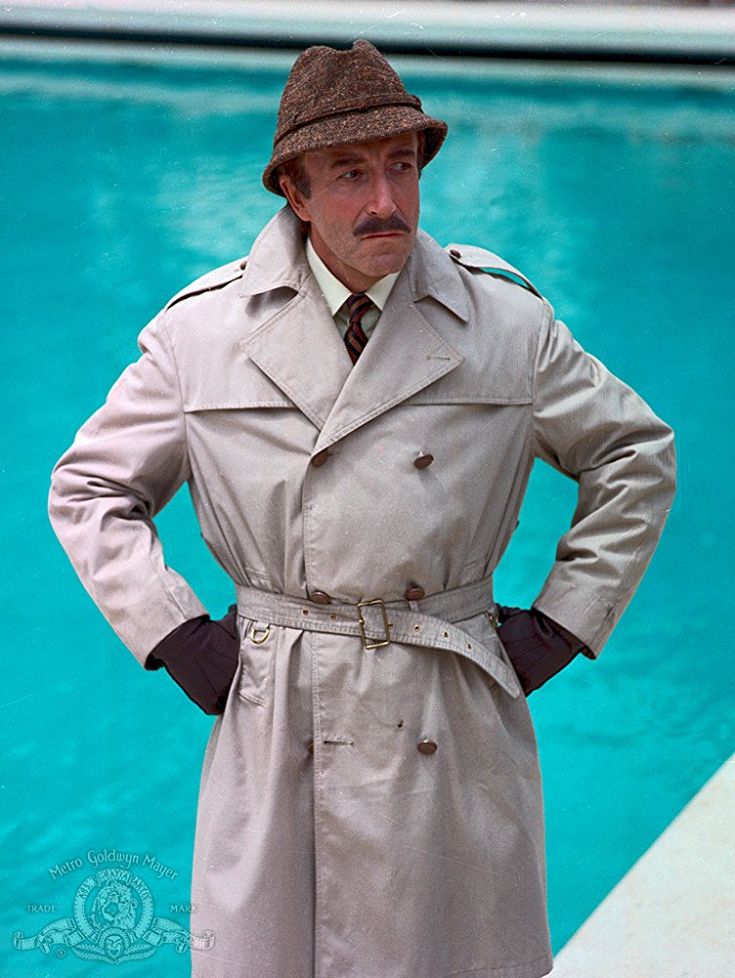
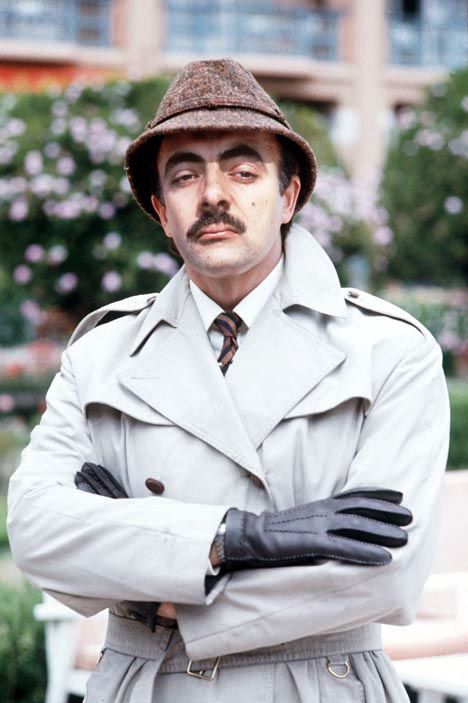
In imagining Peter, I found myself thinking of Inspector Clouseau, or even Mr Bean—figures of confident inadequacy. His language, meanwhile, carries a faint echo of Mr Burns from The Simpsons: ornate, misplaced, and entirely self-satisfied.
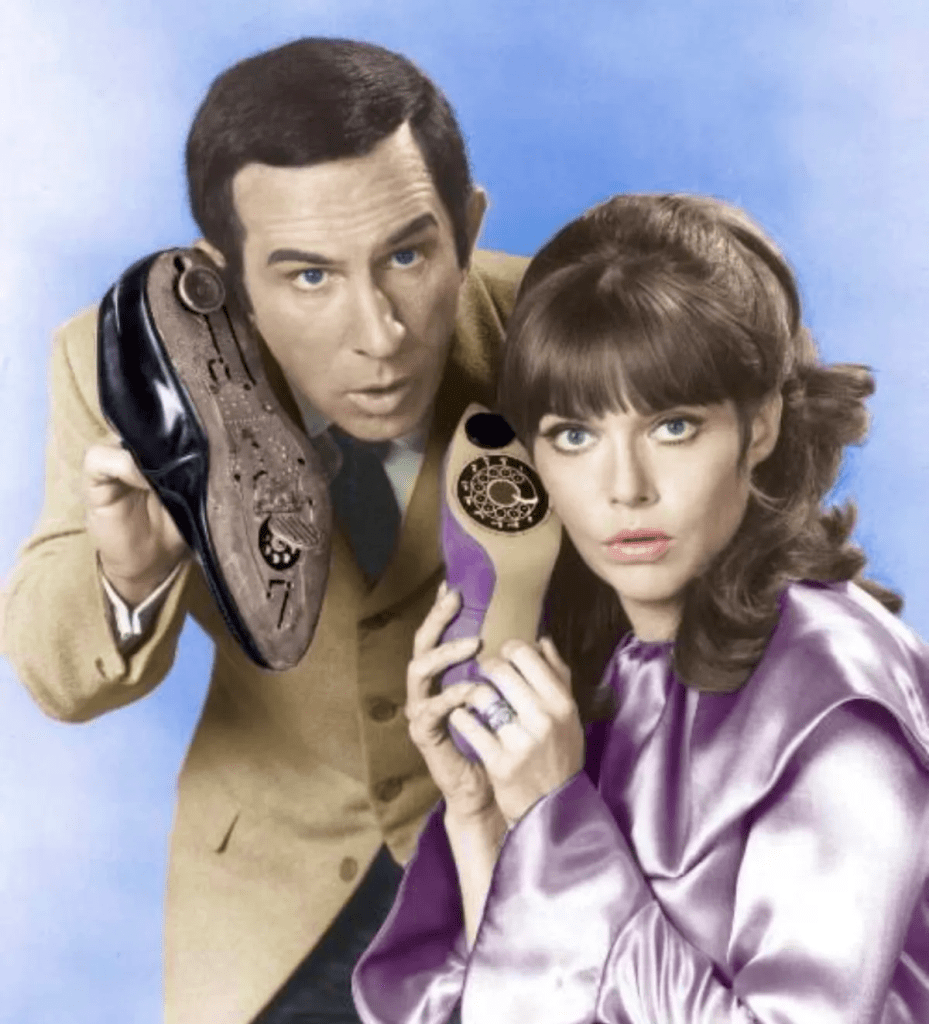
Hale’s role clarified thanks to my sister, who pointed me toward Agent 99 from Get Smart: the capable partner orbiting Maxwell Smart’s chaos. That pairing felt exactly right.
Image: Get Smart: Maxwell Smart (Don Adams) and Agent 99 (Barbara Feldon)
I usually write in silence. This time, by accident, I discovered a NoFX cover of “Linoleum” and left it playing on repeat for hours while drafting. It is playing again as I write this. Something about its restless, unvarnished energy suited Peter’s linguistic theatrics and Hale’s quiet steadiness.
I owe the linguistic spark behind this experiment to a particular pair of word-enthusiasts whose work first nudged the idea into motion. I am, unapologetically, a language geek; this is only one small corner of that fascination, and I will spare you the full catalogue.
In the end, Advantagement became a pleasant detour from my other projects and ongoing side quests. A distraction, perhaps – but a satisfying one.
Thank you, Donald Barthelme, for the historical inspiration.
Critics never tire of reminding us that AI has no emotions, as though this were some startling revelation. Next, perhaps, they’ll inform us that penguins can’t fly and that bankers are allergic to honesty. Yes, generative AI has no emotions. But must we wheel in the fainting couches? Writers don’t need it to sob into its silicon sleeve.
Full disclosure: I am a writer who writes fiction and non-fiction alike. I am also a language philosopher; I study language. And a technologist. I’ve been working with artificial intelligence since the early ’90s with Wave 3 – expert systems. I am still involved with our current incarnation, Wave 4 – generative AI. I know that artificial intelligence has no intelligence. I also know that intelligence is ill-defined and contains metaphysical claims, so there’s that…
Meantime, let’s stroll, briskly, through three ghosts of philosophy: Saussure, Wittgenstein, and Derrida.
Audio: NotebookLM podcast on this topic.
Saussure and the Tree That Isn’t There
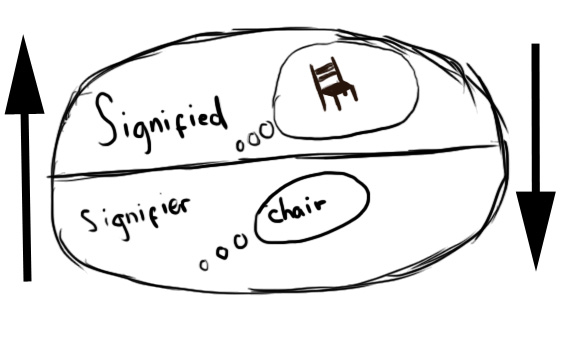
Ferdinand de Saussure gave us the tidy structuralist package: the signified (the thing itself, say, a tree) and the signifier (the sound, the squiggle, the utterance “tree,” “arbre,” “árbol”). Lovely when we’re talking about branches and bark. Less useful when we stray into abstractions—justice, freedom, love—the slippery things that dissolve under scrutiny.
Image: Saussure’s Signified and Signifiers
Still, Saussure’s model gets us so far. AI has consumed entire forests of texts and images. It “knows” trees in the sense that it can output something you and I would recognise as one. Does it see trees when it dreams? Do Androids Dream of Electric Sheep? Of course not. But neither do you when you define one.
René Magritte‘s famous painting reminds us that the reference is not the object.
Image: Magritte’s Ceci n’est pas une pipe (This is not a pipe)
Wittgenstein and the Dictionary Without a Key
Ludwig Wittgenstein, that glorious thorn, tore the Saussurean comfort blanket to shreds. Words, he said, are not tethered to the world with neat strings. They define themselves by what they are not. A tree is a tree because it is not a cow, a kettle, or an Aston Martin.
Image: Tree, isolated
Take a dictionary entry:
tree /trē/ noun a woody perennial plant, typically having a single stem or trunk growing to a considerable height and bearing lateral branches at some distance from the ground.
What’s woody? What’s perennial? If you already speak English, you nod along. If you’re an alien with no prior knowledge, you’ve learned nothing. Dictionaries are tautological loops; words point only to more words. If you want to play along in another language, here’s a Russian equivalent.
дерево /derevo/ существительное древесное многолетнее растение, обычно имеющее один стебель или ствол, растущий до значительной высоты и несущее боковые ветви на некотором расстоянии от земли.
AI, like Wittgenstein’s alien, sits inside the loop. It never “sees” a tree but recognises the patterns of description. And this is enough. Give it your prompt, and it dutifully produces something we humans identify as a tree. Not your tree, not my tree, but plausibly treelike. Which is, incidentally, all any of us ever manage with language.
Derrida, Difference, and Emotional Overtones
Enter Jacques Derrida with his deconstructive wrecking ball. Language, he reminds us, privileges pairs—male/female, black/white—where one term lords it over the other. These pairs carry emotional weight: power, hierarchy, exclusion. The charge isn’t in the bark of the word, but in the cultural forest around it.
AI doesn’t “feel” the weight of male over female, but it registers that Tolstoy, Austen, Baldwin, Beauvoir, or Butler did. And it can reproduce the linguistic trace of that imbalance. Which is precisely what writers do: not transmit private emotion, but arrange words that conjure emotion in readers.
On Reading Without Tears
I recently stumbled on the claim that AI cannot “read.” Merriam-Webster defines reading as “to receive or take in the sense of (letters, symbols, etc.), especially by sight or touch.” AI most certainly does this—just not with eyeballs. To deny it the label is to engage in etymological protectionism, a petty nationalism of words.
The Point Writers Keep Missing
Here is the uncomfortable truth: when you write, your own emotions are irrelevant. You may weep over the keyboard like a tragic Byronic hero, but the reader may shrug. Or worse, laugh. Writing is not a syringe injecting your feelings into another’s bloodstream. It is a conjuring act with language.
AI can conjure. It has read Tolstoy, Ishiguro, Morrison, Murakami. It knows how words relate, exclude, and resonate. If it reproduces emotional cadence, that is all that matters. The question is not whether it feels but whether you, the reader, do.
So yes, AI has no emotions. Neither does your dictionary. And yet both will continue to outlast your heartbreak.
How do you use AI to assist your writing or editing process? As I’ve shared before, I use it extensively for research, where previously, I would have used Google, a library, or personal books or journals. I use them for proofing, editing, and alpha and beta reading. Today, I’m editing.
I’m still editing the manuscript for Needle’s Edge. When I finish a scene or a chapter, I run it through several AI platforms – the usual suspects: ChatGPT, Claude, Grok, Meta, DeepSeek and Gemini – with a simple prompt:
how does this scene read?
Usually, I copy-paste the content, but this manuscript also relies on presentment, so I share a screen capture instead. Rather than share the pages, I share the line I am discussing here:
Image: Excerpted line from Needle’s Edge
From this, DeepSeek shared this as part of its “thinking” process.
The writing style is very visceral and fragmented – short sentences, intentional misspellings (“c-noses” for cash, “waigh” for might), and stream-of-consciousness elements. This creates an immersive, uncomfortable reading experience that mirrors Sarah’s physical and emotional state.
Interestingly, there were no intentional misspellings. DeepSeek’s OCR failed and mistook ‘c-notes’ for ‘c-noses’, and then tried to interpret the results. I couldn’t determine where it got ‘waigh’. There is a word ‘might’ per its comment, but I don’t see how it confuses that. No matter.
Still, its assessment feels close enough, and a reminder that grammar and syntax are less important than one might (waight?) believe.
Overall Impression:
The scene is powerfully distressing. It doesn’t glamorize or moralize; it simply shows the brutal, day-to-day reality of addiction and survival on the margins. It’s effective in conveying:
Physical Horrors: The relentless pain, discomfort, and bodily damage.
Psychological Toll: The desperation, numbness, fleeting panic, and dangerous denial.
Social Environment: The hostility, degradation, danger, and shared, traumatic knowledge of the street life.
Hopelessness: The cycle of seeking relief only to encounter worse consequences, underscored by the memory of others’ fates and the resigned “never again” that likely won’t hold.
It’s a difficult read due to its unflinching portrayal of suffering and decay, but it’s compelling in its raw authenticity and visceral impact. The style perfectly matches the content, immersing the reader in Sarah’s painful, precarious world.
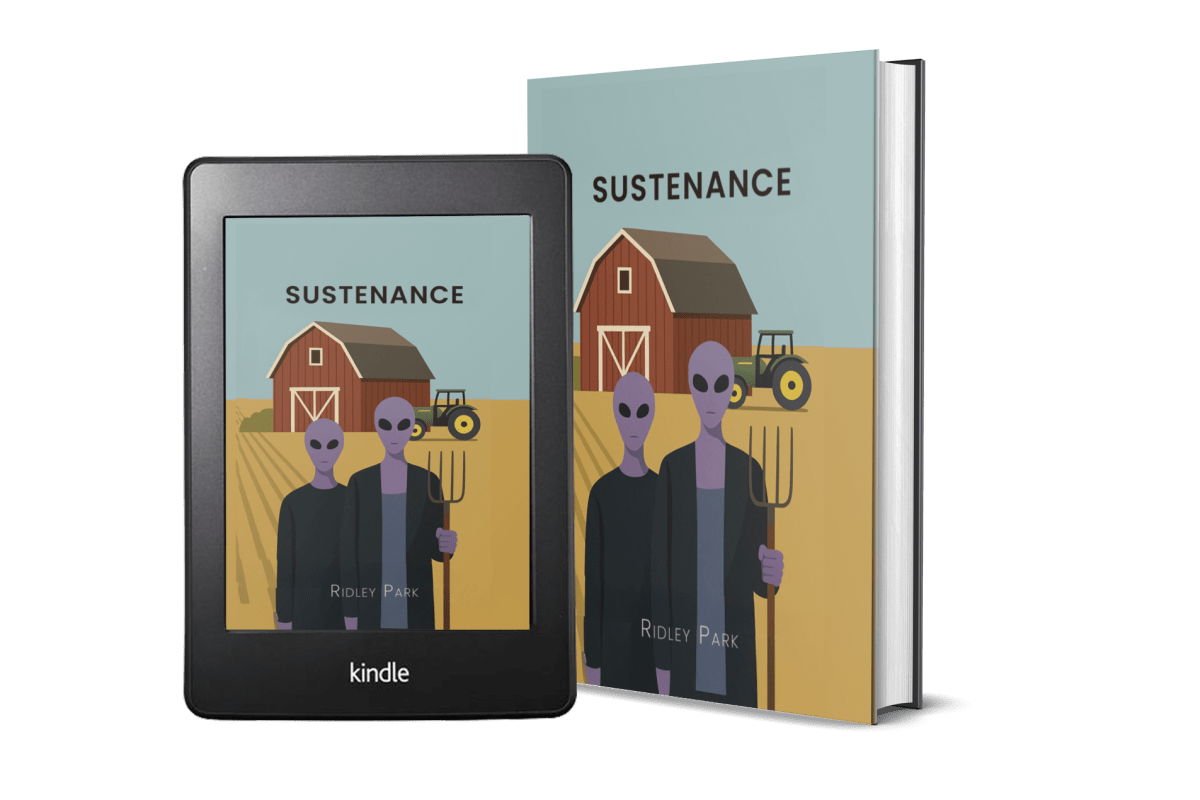
If Propensity was about engineered peace through probabilistic compliance, Sustenance asks what happens when understanding itself breaks down—and nothing you think is mutual, is.
No war. No invasion. No end-of-days. Just a quiet landing. And a failure to translate.
The Premise
A group of non-human beings arrive—not in conquest, not in friendship, but in continuity. They are not like us. They do not see like us. They don’t even mean like us.
There is no universal translator. No welcome committee.
Just humans—interpreting through projection, desire, and confusion.
And aliens—operating by a logic that doesn’t require interpretation.
The Themes
Sustenance explores what happens when:
Language fails and nothing fills the gap
Consent becomes guesswork
Culture is mistaken for nature
Property has no meaning, and law no parallel
Sex isn’t private, sacred, violent—or even especially enjoyable
Memory becomes narrative, and narrative becomes defence
Contact isn’t miraculous—it’s awkward, biological, and quietly irreversible
This is a story about misunderstanding. Not just what others mean—but who we are when we assume we understand anything at all.
The Tone
Think Arrival but rural. Annihilation without the shimmer.
A bit of VanderMeer. A hint of Flannery O’Connor. The cornfields are real. The discomfort is earned.
No apocalypse.
Just a failure to process.
And maybe, something new inside the gap that opens when the old stories no longer apply.
Why Write This?
Because contact doesn’t have to be violent to be destabilising.
Because not all miscommunication is linguistic—some is anatomical.
Because the most alien thing we can encounter is ourselves, misinterpreted.
Because I wanted to write a story where the question isn’t “what do they want?” but “what have we already assumed?”
After an extended hiatus, I’m back in writing mode. I’ve got an unfinished prequesl to Hemo Sapiens and several unfinished short stories.
Currently, I am focusing with themes of language morphology and mundanity of history.
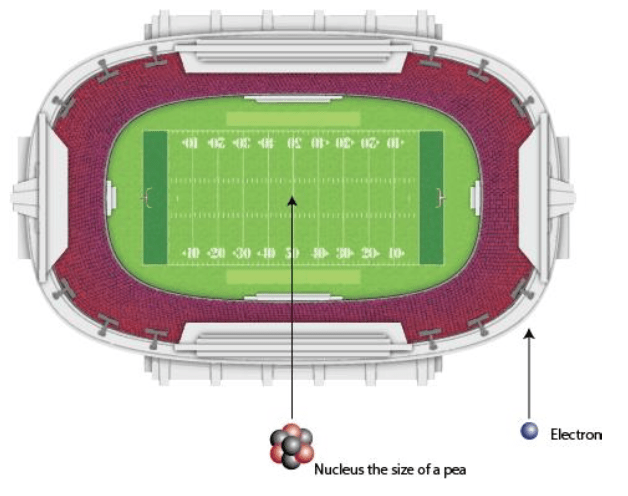
History is like an atom – more space than substance — yet it feels somehow significant to us in the moment. The substance-to-space ration is that of a pea in a football stadium, and yet we perceive these things as solids, liquids, gasses, and plasmas.
History is hitting the only car in an otherwise empty car park. Of course, you and your insurer give it extra significance, but history is more often than not self-absorbed narcisism and filling in the blanks with somewhat cohesive storylines.
As for language, people understand the notion that contemporary language is “living”, but they don’t realise as much that over time tiny perturbations result in huge shifts. Consider Middle English from the days of Chaucer, some 650 years ago, versus Shakespeare, only 450 years ago. The latter, is relatively readable; the former, nosomuch.
In the short term, some complain about incorrect usage, “Save cursive writing”, and “kids forget how to write” with their texts and social media shortcuts. What’s the world coming to?
I ‘ve always questioned time-travel stories where people visit places in the far-future or -past and everyone happens to be perfectly understood, save perhaps for a British accent for good measure – perhaps Germanic for ill measure. lol
I’ve been writing some future-forward stories involving artificial intelligence and more on the nature of time and space, but I’ll save these for another day. Now, I need to focus on Temporal Babel.
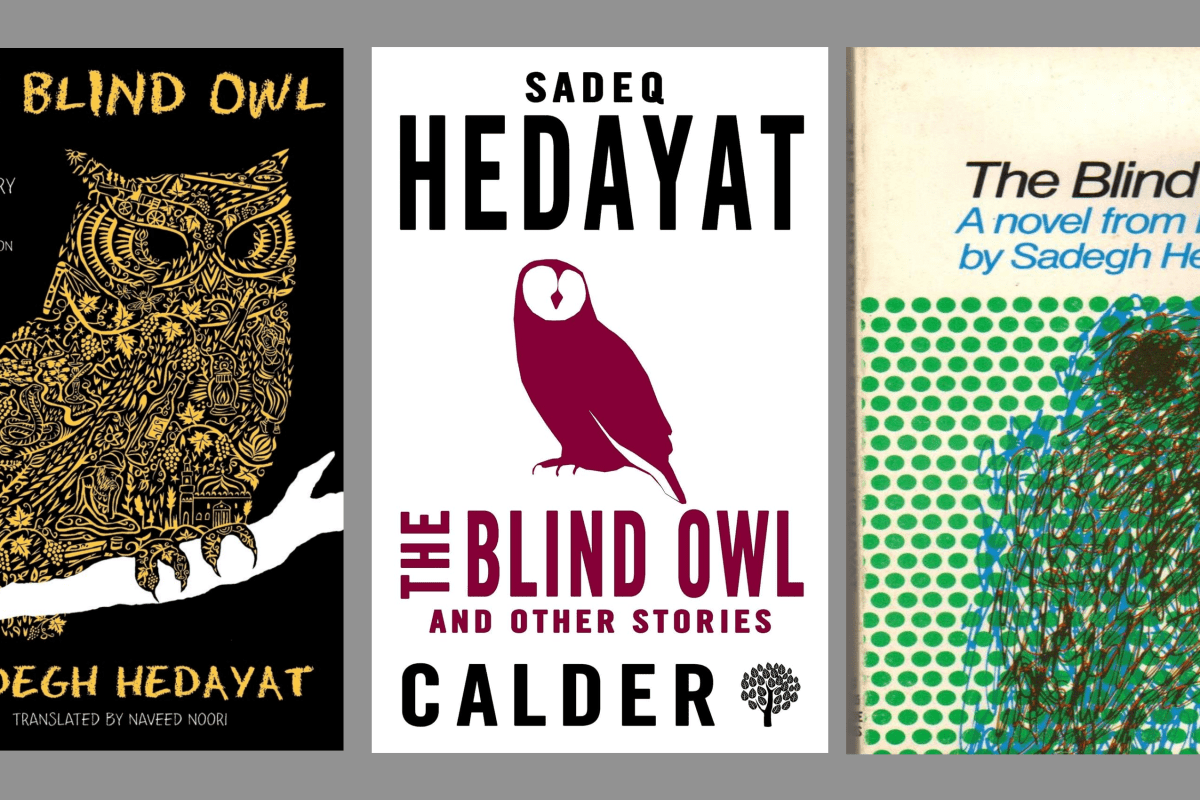
I was less than happy with my review of The Blind Owl. It’s an OK summary, but it’s at too high of a level—fifty-thousand feet as some say.
I problem is that I need to make notes as I read rather than recollect at the end. As it happens, I’ve got three English translations of the book, I don’t read Persian, and reading in French still gives me translation differences. I decided to read a different translation, and they’re a bit askew. So I picked up the third. Different, still. I’ll illustrate my point.
The book opens with a sort of prologue before the narrative begins. Each of the translations read as follows:
In this debased and wretched world, full of destitution and want, for the first time I thought that a beam of sunshine had shone upon my life—but alas, this was not a beam of sunshine, it was a flicker of light…
In this mean world of wretchedness and misery I thought that for once a ray of sunlight had broken upon my life. Alas, it was not sunlight, but a passing gleam…
I thought in this base world, full of poverty and misery, for the first time in my life, a ray of sunshine shone on my life. But alas, instead of a sunbeam it was a transient beam…
Each of these establishes the tone but in differing ways. The narrator’s world is bleak. It’s a mean world, full of wretchedness and misery; a base world, full of destitution and want; a debased and wretched world, full of destitution and want.
As the chapters progress, I can’t help but wonder what the translators have interjected and what is faithful. I’ve written about the challenge in translations is that sometimes an exact word doesn’t exist in the target language.
For example, in Camus’ L’étranger, the novel opens:
” Aujourd’hui, maman est morte. Ou peut-être hier, je ne sais pas.”
This translates to “Today, mother died. Or maybe yesterday, I don’t know.” Rather, it doesn’t.
In English, we have the word ‘mother’, which is relatively formal when referring to one’s own parent. We also have the children’s term ‘mummy’ or perhaps ‘mom’, but maman falls between them. ‘Mother’ makes him feel overly rigid or formal than his character unfolds to be; ‘mummy’ would make him seem feeble or infantile, so we are left with ‘mother’.
In The Blind Owl, I have no such reference to parse the language. I am at the mercy of the translator. In the sample passages, not much meaning is lost, if any, but stylistically it reads differently. The pace feels different. I don’t know which I prefer. Anchoring has likely led me to favour the first.
Is the world bad, or does it contain bad, or both, and in what composition?
I’ll keep reading, and I hope to improve it with a more personal accounting.









 Ridley Park