Literary Fiction vs Commercial Fiction

Welcome, dear reader, to the eternal skirmish between Art and Entertainment, or as the marketing departments like to call it, Literary Fiction vs Commercial Fiction. This is not just a genre squabble; it is the ideological showdown between truth-seeking masochists and market-savvy optimists.

Literary Fiction: Starving Artist Chic

Literary Fiction is what happens when someone spends ten years writing a novel that doesn’t sell but gets shortlisted for an award no one outside The Guardian has heard of. It is the sanctum of character studies, of prose polished until it cuts glass, of metaphors so dense they require footnotes and a whisky.

It doesn’t have to be inaccessible, of course—it just often chooses to be, on principle. Plot is optional, punctuation negotiable. The point is to mean something. To explore the human condition. To examine alienation in a post-industrial neoliberal hellscape, not to entertain your aunt with a beach read.

It’s not that Literary Fiction hates readers. It just isn’t convinced they’re entirely necessary.

Commercial Fiction: Mass Appeal on Tap

Enter Commercial Fiction: the cheerfully formulaic cousin who makes six figures ghostwriting romance under three pseudonyms while sipping cocktails on a cruise. It values clarity, pace, and payoff. There is a beginning, a middle, and—brace yourself—a satisfying end.

It’s written with the audience in mind. The actual audience, not the imagined one you conjure during your third espresso in a North London café while reworking the opening line for the sixth time.

Commercial Fiction exists to be read. Literary Fiction exists to be discussed. Possibly in a room full of mirrors. Possibly after death.

The High-Low Culture Divide

If this were the Renaissance, Literary Fiction would be frescoes in a cathedral—revered, roped-off, and best viewed with your neck craned in discomfort. Commercial Fiction would be the travelling puppet show outside: rowdy, raucous, full of cheap laughs and bawdy jokes. Guess which one brings joy to the masses and which one gets preserved by UNESCO.

There is still this Victorian hangover about high art and low art, as if prose needs a monocle and a trust fund to be taken seriously. Literary Fiction clings to its moral high ground, publishing monographs on the death of the novel, while Commercial Fiction’s out here resurrecting it one bestseller at a time.

Intention Matters

Let’s be honest: some literary writers stumble into the bestseller lists. It’s not beneath them—it just wasn’t the point. Conversely, when a commercially-minded author attempts “Art,” the results are often embarrassing—like a stand-up comic trying Shakespeare in clown shoes.

Approaching from a commercial angle and achieving something artistically resonant? That’s the alchemy. That’s the rare bird. But the reverse—starting with art and accidentally making money—is a tale as old as Joyce (who, let’s remember, died broke and banned).

Can’t We All Just Get Along?

No.
Just kidding. Sort of.

Yes, there is crossover. Yes, The Road is both. But let’s not pretend that Twilight and To the Lighthouse are playing the same game. One is trying to build a fanbase; the other is trying to dissect perception itself. And while both may involve vampires, only one is metaphorical.

In Conclusion

Commercial Fiction is a warm bath. Literary Fiction is a cold shower that leaves you questioning your life choices. One sells. The other sulks. One entertains. The other enlightens (maybe). You can love both, loathe both, or—if you’re cursed with a literary soul—you can write one while envying the other.

Either way, don’t pretend they’re the same. One is art. The other is commerce. Sometimes they shake hands. Occasionally they snog. But more often, they glare at each other from opposite ends of the bookstore, muttering into their blurbs.

Writing Props

Does anyone else use writing props to help immerse yourself in adjascent fiction?

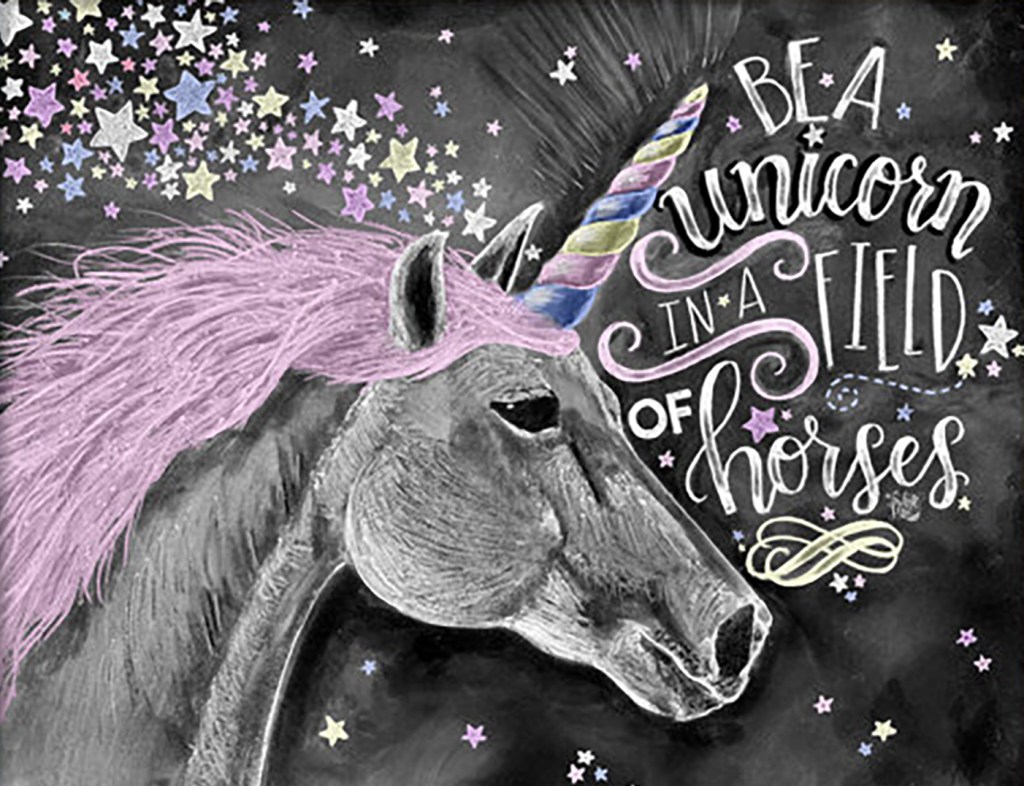
This unicorn image is from a poster. I am using it as a reference for a current project. It’s already seared into my brain, but it renders it somehow more real.

This unicorn poster hung on the wall of the inspiration for the protagonist of an upcoming novel, Needle’s Edge. It featuers prominently – almost has a speaking part.

Maps

Hemo Sapiens: Awakening is set in near-future Manchester, UK, so I had maps of Manchester at the ready. It helped me to add some realism. Because a trip from a nearby town into the city only took 15 to 20 minutes, I had to edit down a scene I was hoping would fill an hour. I could have used a location further away, but it wouldn’t have made sense to the plot, and I hate those sorts of plot gimmicks.

Sustenance is set in Iowa. I not only had a map of Iowa, I had resources on flora and fauna, so I could name-drop. I’ve visited parts of Iowa, but I couldn’t have drawn these details from memory—and I mightn’t have known the names or the onomonapoeia fascimiles.

Temporal Babel is set in New Mexico, so besides a map for highway references and distances from landmarks—towns, cities, and reservations—, I saved image resources of local photographs, landscapes, plants, buildings, attire, and so on. It really helps we with the description, something that is not otherwise my forte.

Propensity is set in no place in particular, so I used no maps, but I studied interiors of institutions, prisons, laboratories, and the like.

This is another unicorn sticker that was in the house of the protagonist, but it doesn’t make the cut. It still makes me chuckle.

Another unfinished novel, Everlasting Cocksucker, is set in Philly. I spent severl years in and around there, so I know the lay of the land. Still, I find maps useful.

I put this project ont he backburner because I received so much hate over the subject matter. I decided to concentrate on other projects. But, I created a physical shadowbox as a reminder of the protagonist.

Image: Reconstruction of a shadowbox.

In this story, this represents her life habits: Newport Menthol 100s in a box, Red Bull, Maruchan Ramen, and tarot readings. The Hanged Man is relevant to the plot. When I return to the manuscript, I’ll have this as, let’s call it, inspiraration.

If I wrote genre fiction, this wouldn’t work as well – Sci-Fi or Fantasy and whatnot. It might work for historical fiction though.

Do you have any habits that help you to write?

Spreadsheet Says No

I was feeling smug. Fourth revision pass. Plot matrix built. Columns for chapter, scene, POV, date, time, location, word count, and emotional arc – because I’m that kind of monster. I even added colour-coding.

And it worked. Mostly.

After pruning and polishing, it finally felt ready to ship. Just a couple cosmetic tweaks. A trim here, a varnish there. Run a lint roller over the dialogue. Call it done.

Except.

The matrix – traitorous little bastard – exposed a structural fault so elegant I’d almost admired it. The problem? Pregnancy. Not mine, the protagonist’s. (Let’s not get ahead of ourselves.)

Turns out, I’d compressed over a decade of real-life events into two years of narrative space. Bold. Efficient. Reckless. I’d wrung out the filler, reshuffled a few puzzle pieces, and declared the thing plausible.

Only it wasn’t.

When I sorted the scenes chronologically, the matrix coughed. The story broke like a cheap lawn chair. There she was: visibly pregnant while also, somehow, gallivanting about in scenes that would’ve required a different physiology entirely. Not an Olympian, but the metaphor holds.

And that’s when it hit me: time may be a flat circle, but gestation is not. No amount of POV tricks or narrative backflips can make a third-trimester body do first-trimester things. Biology, the ultimate killjoy.

So now I’m doing surgery. Not delicate surgery, either. I’m sawing out whole sections, rebuilding connective tissue, and laying down scar tissue where the timeline used to be. I’ll need new plot scaffolding to support the pregnancy and its repercussions. It’s fine. It’s good. It’s hell.

This is revision. We go in thinking we’re buffing up the finish, only to discover we paved over a sinkhole.

Lesson of the week: spreadsheets don’t lie.

They just lie in wait.

New Book Release: Temporal Babel

An unsolved literary mystery where language fails first.

I’m thrilled to announce the release of my latest novella, Temporal Babel, now available in paperback and hardcover. It’s a story about a man who arrives with no language the world can understand—and the woman who tries to name him anyway.

Audio: NotebookLM podcast on this topic.

Set in small-town New Mexico, Temporal Babel is not a thriller. It’s not about saving the future or rewriting the past. It’s about the weird middle ground where things don’t quite translate—linguistically, temporally, emotionally.

If you’ve ever wondered what it would feel like to encounter someone truly out of place—where even the word where doesn’t land—you’ll find something resonant in these pages.

What’s it about?

A young woman discovers a man on the roadside.
He’s naked. Marked with strange blue scars.
And the words coming out of his mouth aren’t quite English.
Or anything else.

No memory. No ID. No history that the town of Anika can decipher. But as he begins to recover, the sound of his voice becomes its own riddle.

Some readers may call this speculative fiction. Others might shelve it under linguistic noir. I just call it a contact story—minus the aliens, or is it?

Why read it?

  • 🔹 If you enjoy novels that refuse to explain themselves, this one’s for you.
  • 🔹 If you like language play, phonetic drift, and dialect as plot, this one delivers.
  • 🔹 If you like stories where the weirdness builds slowly, quietly, without fireworks—you’ll feel right at home.

“Dis kē?” he asks.
What is this?
No one knows. Not even the narrator.

📖 Temporal Babel is available now in paperback and hardcover.

Read it for free with KindleUnlimited.

You can explore the book page here or head straight to your favourite indie or online retailer.

Thank you for reading, for puzzling, and for letting mystery have the final word.

—Ridley

Le deuxième sexe – What Rises After the Fall

I’m reading The Second Sex. It’s a story of women, about women, for women, and by a woman—but it’s also a story of otherness.

This post isn’t about that book.

It’s a reflection on a premise within it: that woman is a cultural construction.

Written in 1949, before the language of gender identity emerged, Beauvoir’s work distinguishes “female” as biological sex and “woman” as imposed gender.
But this post isn’t about that either.

Audio: NotebookLM podcast on this topic.

A Novel Possibility

This is about a seed of an idea—one that took root while reading—and the novel it might become.

A near-future world.
Shaped not by vengeance, utopia, or techno-salvation.
But by a quiet unravelling of power itself.

It is not a story of triumph.
Nor of ruin.
It is the aftermath of both.

After Collapse, Reconstitution

When extractive systems—ecological, economic, ideological—collapse, society does not revert, rebuild, or resist.
It reconstitutes.

Not as hierarchy repainted in pastel.
Not as hive-mind in harmony drag.

But as a resonant ecology:
A decentralised, cooperative, post-Enlightenment culture in which traditional male-coded traits—dominance, control, instrumental reason—have become maladaptive relics.

What Rises

The values that rise—attunement, memory, restraint, emotional literacy—are neither glorified nor enforced.
They are simply what works now.

This is not a matriarchy.
Not a revenge fantasy.
Not feminism cast in steel and slogans.

It’s a structural inversion:
A world in which those trained for dominance find themselves culturally disarmed—
While the formerly subordinate, at last, inhabit a society scaled to their sensibilities.

No Brain, No Throne

There is no single ideology.
No central brain.
No throne.

Power does not pool.
It diffuses—like mycelium beneath a forest.

Language shifts.
Leadership evaporates.
Progress, once a sacred cow, is now met with suspicion.

Not out of fear of change,
But for love of equilibrium.

Still, Tensions Remain

A generation raised in scarcity seeks to anchor stillness.
A younger one, born amid calm, yearns for momentum.

Outside the collective, remnants of the old world stir—
Confused. Indignant. Armed.

And within, a few still long to lead.

These tensions are not resolved by war.
Nor suppressed by force.

This is not a tale of rebellion or revolution.
But of repatterning.
And its cost.


   Tone: Literary. Spare. Sensory realism.
   Influences: Atwood, Le Guin, Ishiguro, Butler.
   Conflict: Emotional. Ideological. Structural.
   Message: A level playing field was always a myth. The tilt now favours something new.

What Comes After

The question isn’t how to stop the old world from returning.
The question is whether it ever really left—
and if so,
what takes its place.

Notes from the Underground

★★★★★ – “I Am a Sick Man. I Am a Spiteful Man. I Am, Apparently, Hilarious.”

Dostoevsky’s Notes from Underground is a masterclass in misanthropic soliloquy — part philosophical treatise, part psychological farce, and altogether one of the most darkly entertaining monologues I’ve ever had the guilty pleasure of eavesdropping upon. It’s a screaming match between Enlightenment rationality and the petty, pulsing irrationality of actual human life — and guess who wins? (Hint: not the utopians.)

Audio: NotebookLM podcast on this topic.

The first part, a searing, feverish diatribe, reads like the diary of a man who’s been locked in a room with too much Hegel and not enough human contact. It’s Dostoevsky’s pre-emptive strike against every social engineer who’s ever said, “Well, surely man will behave if we just fix the plumbing.” The Underground Man begs to differ — loudly, neurotically, and with an almost Shakespearean flourish of self-abuse.

But it’s the second part — Apropos of the Wet Snow — where things truly fall gloriously apart. Here the theoretical gives way to the tragically tangible. Our narrator, more unhinged by the page, lurches into society like a moth into a bonfire — vengeful, humiliated, self-aware to the point of paralysis. His disastrous encounter with Liza is almost unbearable in its sincerity and cruelty, a pas de deux of hope and destruction that left me squirming and spellbound.

What surprised me most was the humour. Not the cheap slapstick of caricature, but the agonising, close-to-the-bone absurdity that arises when a man is too clever to be functional and too self-aware to change. The Underground Man doesn’t just dig his hole — he drafts blueprints, writes footnotes, and criticises the soil quality.

As a companion read, Tolstoy’s The Death of Ivan Ilych provides a poignant counterpoint. Where Tolstoy charts the steady, ghastly march of bourgeois conformity towards a deathbed revelation, Dostoevsky gives us a man already buried in his psyche, clawing at the dirt and calling it philosophy. Ivan Ilych dies trying to make sense of his life; the Underground Man lives trying to make death of sense itself.

Together, they are a fine Russian reminder that being alive is no guarantee of being well — or even remotely rational.

Book Review: The Emotional Craft of Fiction

Not Charlotte’s Web.

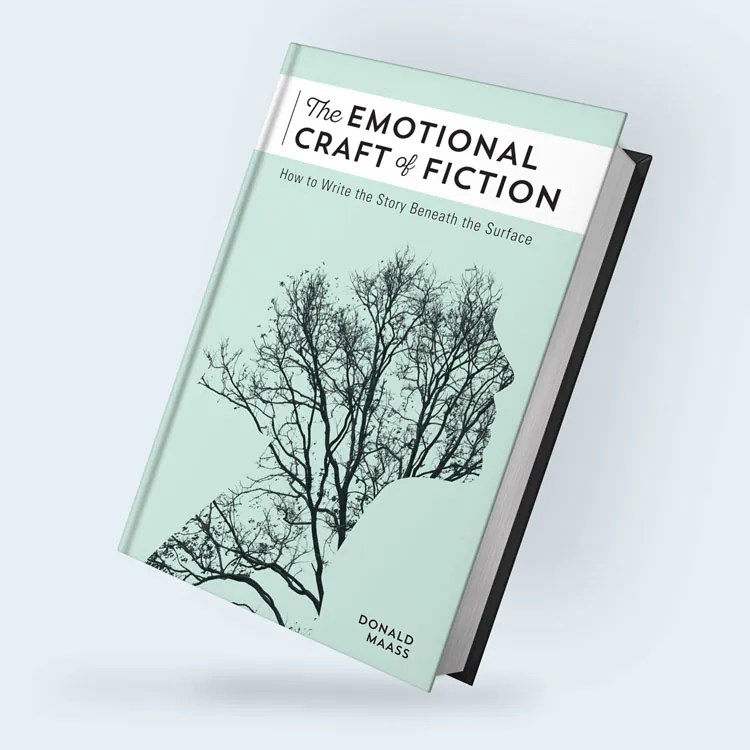
Instead, The Emotional Craft of Fiction: How to Write the Story Beneath the Surface by Donald Maass.

I just finished this book. I’ll say it’s good and even recommend it, but it’s not really for me. I wrote a blurb recently before I was even halfway through, and my opinion hasn’t changed.

Audio: NotebookLM podcast on this topic.

If you like to write in typical, character-driven stories, this should be right up your street. Besides character depth, the author also pushes moral righteousness. Thanks, but no thanks.

All of this said, I did gain some benefits from it, because although my writing is not heavily centred on characters, it does contain them, and I want them to feel alive. I want the world to feel lived in.

Personally, I think in schemes and threads – big ideas, deep ideas. Once all of this is roughly in place, I take a second pass for details. This is where Maass can help.

Full disclosure: Some people adopt a plotting approach to writing, whilst others adopt a pantser approach. I fall somewhere in between. Moreover, I might write something from one perspective and the next from the other – and I might flip-flop back and forth.

As a plotter, I might have waypoints that I want to hit, ideas I want to explore. Sometimes, I write these down on paper, in a spreadsheet, or somewhere to keep myself honest. Other times, I have these plot points in mind, but I take a stream-of-consciousness approach, simply discovering the story as it unfolds under my fingertips. I may even plot half a story and “pants” the rest of it. No telling.

As a pantser, I might have a kernel of an idea, and I just want to ideate on the page. So, I write. I lock myself in my room, throw up a “Do Not Disturb” sign, and head down to write until the well of ideas runs dry. At this point, I might put the idea aside or step back and consider plot points.

Looking back on this post, it’s not so much a book review at all. Apologies. That said, if you write characters and enjoy mainstream writing approaches, I think you’ll find the ideas in this book helpful. Many of the better ideas are presented early on, but it’s a short read. He offers some authors, titles, and excerpts you might find interesting. I found them to be a mixed bag.

Not a People Person

Person writing at a desh, on the wall behind him, scales of justice, drama masks, and a red heart

I Don’t Do People

I don’t write character-based fiction. I’m not a “people person” – not in the lived world, and certainly not on the page. I prefer people at arm’s length, ideally shrink-wrapped and on mute, where I can manage the terms of engagement.

Yes, my work features characters. I flesh them out just enough to spare readers the Ayn Rand experience, those one-dimensional ideological mannequins masquerading as protagonists. But character isn’t the centrepiece. I write to explore worldviews, metanarratives, and environmental interactions. I’m less interested in what a person feels and more in what their presence means within a broader system.

Audio: NotebookLM podcast of this topic.

Audible Irony

At the fitness centre (the irony isn’t lost on me), I listen to audiobooks. Today’s pick: The Emotional Craft of Fiction by Donald Maass. I’ve just cracked Chapter Four, and already I’ve panned a few glittering nuggets for future consideration.

That said, I found myself wondering: why am I even listening to a book so obsessed with the deep inner life of characters?

Simple. Because it’s still useful – even if I only dose it homeopathically. Just because I don’t write bleeding-heart confessions doesn’t mean I can’t exploit emotional undercurrents when it serves a structural or rhetorical purpose.

Character, Morality, and My Problem with Haidt

One section rubbed me the wrong way: the bit about character morality. Maass references Jonathan Haidt’s work on moral psychology—yes, that Jonathan Haidt, patron saint of middlebrow centrism and moral-sentiment handwaving.

I’m familiar with Haidt. Not a fan. His notion of “moral elevation”—the idea that stories with virtuous themes inspire moral behaviour—strikes me as both quaint and quaintly manipulative. In a sense, I agree with him: morality is curated. But that’s where our Venn diagram becomes a shrug.

I’m a moral non-cognitivist. I won’t bore you here (though feel free to tumble down that rabbit hole over on my philosophical blog). In short, I don’t believe morals are objective truths handed down from Olympus or Enlightenment think-tanks. They’re socio-emotional artefacts – human constructs born from gut feelings, tempered by culture, and ossified into norms. Different contexts yield different values. That’s why I delight in yanking characters out of time and place, disorienting them – and you – to expose just how contingent it all is.

So yes, I understand moral tropes. I even deploy them. But I do so to subvert them – not to reinforce a collective bedtime story about “goodness” or “redemption.” Those are the myths we tell ourselves to stay sane. I’m here to loosen your grip.

Ballard’s High-Rise: When Brutalism Meets Behavioural Collapse


I’ve been reading J.G. Ballard’s High-Rise (1975), a brutalist fever dream dressed in concrete and ennui. It’s a story that doesn’t so much depict a descent into chaos as suggest that chaos is the natural state, politely waiting in the wings until the lift stops working and someone pees in the pool.

Audio: NotebookLM podcast on this topic.

This isn’t horror in the Stephen King sense—there’s no room 1408 here, no haunted sheets or malevolent chandeliers. The building isn’t animated; it’s engineered. But like all great systems, it doesn’t need a soul to kill you. The real haunting, as ever, is society itself. Ballard simply does away with the need for ghosts and lets architecture and aspiration do the dirty work.

Compared to Crash—where characters make love to car crashes and each other with equal mechanical indifference—High-Rise has something resembling a cast. I say “resembling” because these aren’t people so much as archetypes on a descent escalator. There’s Laing, a kind of blank-eyed anthropologist; Wilder, who mistakes brute force for authenticity; and Royal, the man literally living in a penthouse and metaphorically in a delusion.

Do I care about them? Not in the slightest. But that might be Ballard’s point. Their motivations are as shallow as a puddle in the car park after the water’s been shut off. Much of the action feels contrived, like a staged rehearsal for an apocalypse that already happened.

And yet—isn’t that precisely what society is? A tepid soup of extrinsic motivators dressed up in motivational posters and mission statements. Nobody in the high-rise acts out of depth or conviction. They act because someone else did it first, because no one told them not to, or because the lift only goes so far down and what else is there to do?

If Crash explored the eroticism of the machine, High-Rise explores the nihilism of comfort. Ballard’s thesis seems to be that civilisation is little more than a thin laminate over our baser instincts—and once it peels, there’s nothing underneath but turf wars and brand loyalty to floor numbers.

The modern reader might recognise the high-rise in everything from gated communities to Meta’s metaverse: sanitised, stratified, severed from consequence. A self-cleaning coffin of convenience.

And, as in the United States today, it all comes heavily medicated and prettily lit—with lipstick, meet pig.

Book Review: Crash

Crash by J.G. Ballard

My rating: 3 of 5 stars

Neither did I like nor dislike Crash. It just was. It is different, though I can help feeling that it’s gratuitous and contrived. Perhaps it seemed edgy and read differently in the 1970s.

It appears to operate on repeated vignettes – a lot of repetition. I want to see a word cloud. As an author myself, ChatGPT suggested some of my work reads like Ballard. I started with The Atrocity Exhibition, but quickly set it aside due to a lack of continuity. I settled for Crash.

Perhaps I should try something else by Ballard before writing him off, but for now, he doesn’t make my recommended author list.

View all my reviews