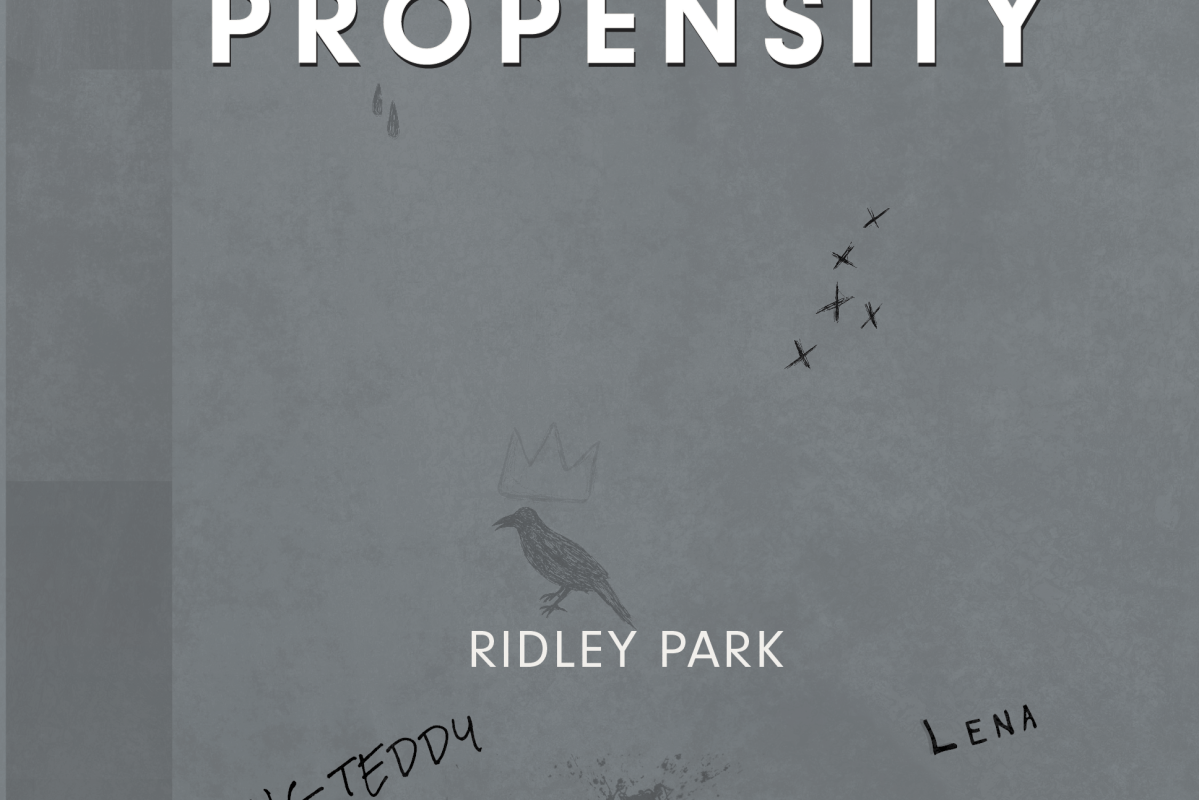
“The room smells like a tin of low tide.”
That’s the first line of Chapter 26, ‘Simulacra’, in Propensity. A small, airless room. A flickering light. Three teenagers – Teddy, Lena, Jamal – trying to remember what morality looked like before the world stopped watching.
This chapter is written as a script, not prose. Directions, shots, and camera pans replace internal monologue. The reader becomes the lens – an observer, never a participant. It’s deliberate. In a story about imitation and collapse, the camera itself becomes the narrator, the conscience, and the judge.
The camera pushes through the door, searching. Dust floats in suspension, and time feels posthumous. Teddy zips his hoodie over bare skin; Jamal leans in the doorway, arms folded, disgust simmering behind teenage boredom.
JAMAL
You can’t just be shagging Gormies, mate.TEDDY
That’s the point, innit?
Their exchange isn’t only about sex; it’s about the boundaries of what still counts as human. ‘Gormies’ are the gormless – the emptied remnants of pre-collapse society. They can’t consent or refuse. They’re alive but vacant. Human-shaped absences.
Teddy’s logic is brutal and pure simulation: if the subject can’t say no, the act ceases to carry meaning. He performs the motion of sin without the structure of morality.
Jamal’s recoil isn’t righteous; it’s aesthetic. He’s repulsed by Teddy’s theatre of transgression, the same way one might flinch at bad acting.
NB: Download this entire chapter as a PDF on the Propensity page.

26 · Simulacra
INT. FLAT – BEDROOM – LATE AFTERNOON
The room smells like a tin of low tide.
CAMERA: SLOW DOLLY IN from hallway, pushing through the open door into a dim, dust-suspended interior.
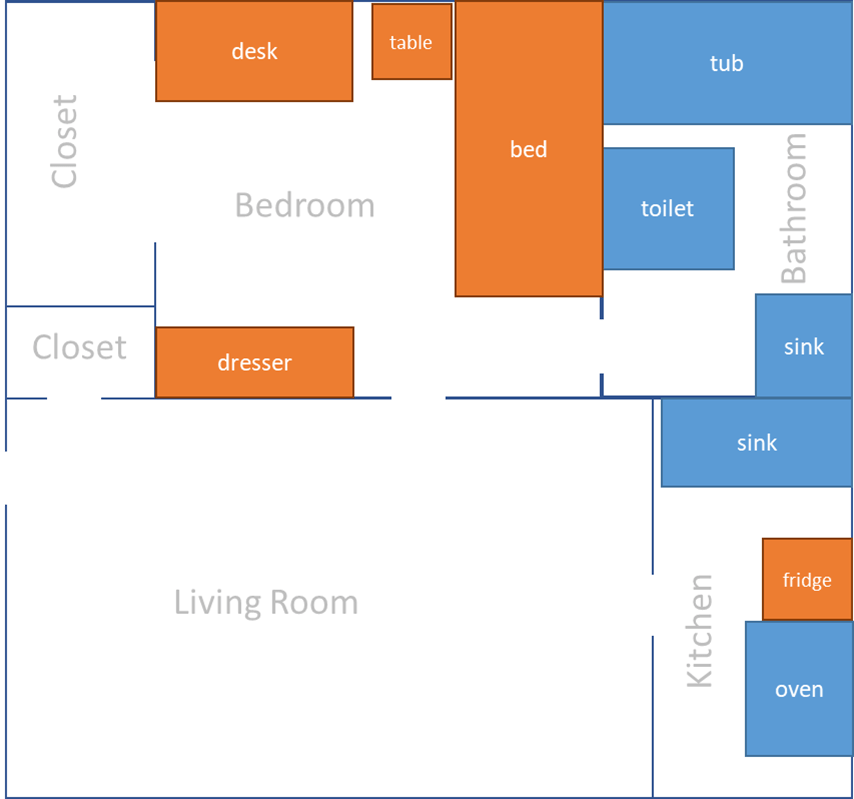
Thin curtains bleed grey light onto water-stained wallpaper. The ceiling flickers from a dying fluorescent. A single, empty BED lies unmade in the centre – crumpled sheets, a dent in the mattress.
CAMERA: HOLD ON WIDE SHOT, framing the bed dead centre, with figures occupying the room’s periphery.
TEDDY (14) zips up his hoodie. Shirtless underneath. Sweat drying on his chest. He leans against the flaking wall, chewing on a broken fingernail.
CAMERA: SLOW PAN RIGHT to JAMAL (16), posted near the doorway, arms crossed. He watches Teddy, face unreadable but for the curl of disgust on his lip.
The title Simulacra is a nod to Jean Baudrillard’s Simulacra and Simulation, the philosophical text the Wachowskis borrowed – and misunderstood – for The Matrix. Baudrillard didn’t mean that the world was an illusion hiding the truth. He meant that the distinction between illusion and truth had already evaporated.
The real no longer disappears behind its representation; it becomes its representation. The sign replaces the substance.
In this scene, Teddy, Jamal, and Lena are copies of moral beings without moral context. They mimic the gestures of civilisation – disgust, guilt, justice – without the living institutions that once gave those words gravity. They don’t believe in morality; they reenact it.
Baudrillard called this the third order of simulacra: when the copy no longer hides the absence of reality but replaces it entirely.

JAMAL
You can’t just be shagging Gormies, mate.
TEDDY
(grinning)
That’s the point, innit?
(smirking toward the bed)
She’s gormless. Don’t care. None of them do.
CAMERA: CUT TO TIGHT SHOT – Teddy’s face.
The smile is too wide. Forced.
CAMERA: OVER JAMAL’S SHOULDER, the bed is empty now, but the shape in the sheet tells a story.
JAMAL
That’s Lena’s mum.
CAMERA: CUT TO CLOSE-UP – Teddy blinks.
Shrugs.
TEDDY
Didn’t know Lena, did I?
(beat)
CAMERA: SLOW REVEAL – LENA (15) stands in shadow. Hood up. Motionless in the
corner.
LENA
You do now.
Then comes the slow reveal:
CAMERA: SLOW REVEAL – LENA (15) stands in shadow. Hood up. Motionless in the corner.
LENA
You do now.
Lena’s voice reintroduces consequence, but only as performance. It’s not morality restored; it’s morality remembered. The moment isn’t ethical – it’s cinematic. The reveal is the moral event.
Her mother, the Gormie in question, is little more than an echo of personhood. The outrage in Lena’s voice belongs not to ethics but to staging: a scene constructed to look like remorse.
The simulacrum here isn’t the Gormie. It’s the moral itself – played out as ritual, devoid of anchor. These children have inherited the gestures of adulthood but none of its meaning. They mimic guilt because that’s what the dead world taught them to do.
By writing the chapter as a film script, Propensity exposes its own mechanism. Every camera move, every cut, is a reminder that you, the reader, are complicit. You’re watching a reconstruction of a reconstruction. The text becomes its own simulacrum – a story imitating cinema imitating life.
Even the bed, ‘a dent in the mattress’, is a metaphor for what remains of the real: an impression where something used to be.
The result isn’t post-apocalyptic horror but philosophical unease. What happens when moral sense survives as empty choreography? When consent and consequence are just old lines, the species keeps rehearsing?
Propensity isn’t about survival. It’s about what comes after survival—when humanity’s operating system still runs, but the data’s corrupted. The characters are trying to rebuild a moral code from cached files.
Simulacra is the point where imitation becomes indistinguishable from intent. It’s a study in ethical entropy, a mirror held up to our own cultural exhaustion, where outrage has become performance and empathy a brand identity.
This is the future Propensity imagines: not a world without humans, but humans without the real.
Further Reading
- Simulacra and Simulation, Jean Baudrillard,
- Lord of the Flies, William Golding
- Propensity, by Ridley Park – Available now in paperback and hardback






 Ridley Park