New Book Release: Temporal Babel

An unsolved literary mystery where language fails first.

I’m thrilled to announce the release of my latest novella, Temporal Babel, now available in paperback and hardcover. It’s a story about a man who arrives with no language the world can understand—and the woman who tries to name him anyway.

Audio: NotebookLM podcast on this topic.

Set in small-town New Mexico, Temporal Babel is not a thriller. It’s not about saving the future or rewriting the past. It’s about the weird middle ground where things don’t quite translate—linguistically, temporally, emotionally.

If you’ve ever wondered what it would feel like to encounter someone truly out of place—where even the word where doesn’t land—you’ll find something resonant in these pages.

What’s it about?

A young woman discovers a man on the roadside.
He’s naked. Marked with strange blue scars.
And the words coming out of his mouth aren’t quite English.
Or anything else.

No memory. No ID. No history that the town of Anika can decipher. But as he begins to recover, the sound of his voice becomes its own riddle.

Some readers may call this speculative fiction. Others might shelve it under linguistic noir. I just call it a contact story—minus the aliens, or is it?

Why read it?

  • 🔹 If you enjoy novels that refuse to explain themselves, this one’s for you.
  • 🔹 If you like language play, phonetic drift, and dialect as plot, this one delivers.
  • 🔹 If you like stories where the weirdness builds slowly, quietly, without fireworks—you’ll feel right at home.

“Dis kē?” he asks.
What is this?
No one knows. Not even the narrator.

📖 Temporal Babel is available now in paperback and hardcover.

Read it for free with KindleUnlimited.

You can explore the book page here or head straight to your favourite indie or online retailer.

Thank you for reading, for puzzling, and for letting mystery have the final word.

—Ridley
Book Review: The Emotional Craft of Fiction

Not Charlotte’s Web.

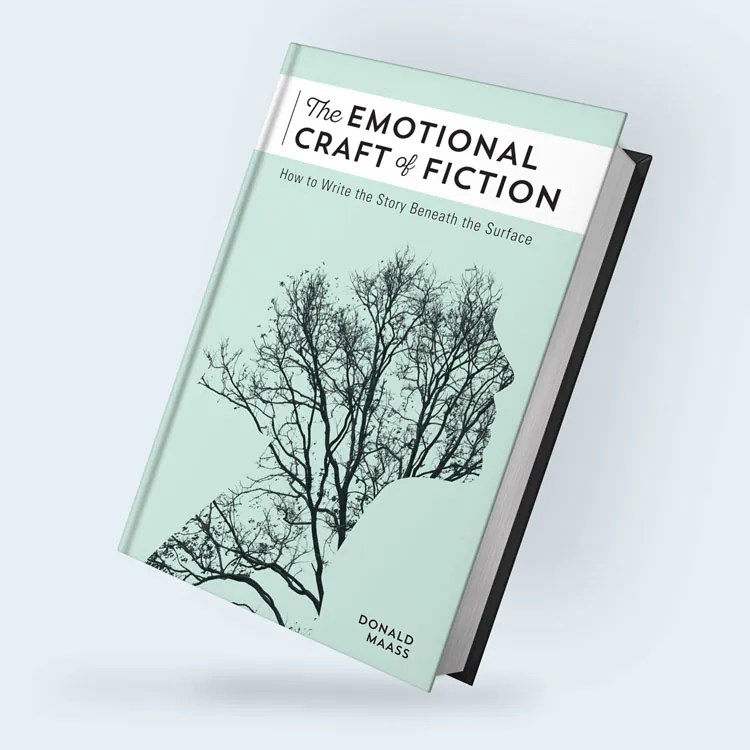
Instead, The Emotional Craft of Fiction: How to Write the Story Beneath the Surface by Donald Maass.

I just finished this book. I’ll say it’s good and even recommend it, but it’s not really for me. I wrote a blurb recently before I was even halfway through, and my opinion hasn’t changed.

Audio: NotebookLM podcast on this topic.

If you like to write in typical, character-driven stories, this should be right up your street. Besides character depth, the author also pushes moral righteousness. Thanks, but no thanks.

All of this said, I did gain some benefits from it, because although my writing is not heavily centred on characters, it does contain them, and I want them to feel alive. I want the world to feel lived in.

Personally, I think in schemes and threads – big ideas, deep ideas. Once all of this is roughly in place, I take a second pass for details. This is where Maass can help.

Full disclosure: Some people adopt a plotting approach to writing, whilst others adopt a pantser approach. I fall somewhere in between. Moreover, I might write something from one perspective and the next from the other – and I might flip-flop back and forth.

As a plotter, I might have waypoints that I want to hit, ideas I want to explore. Sometimes, I write these down on paper, in a spreadsheet, or somewhere to keep myself honest. Other times, I have these plot points in mind, but I take a stream-of-consciousness approach, simply discovering the story as it unfolds under my fingertips. I may even plot half a story and “pants” the rest of it. No telling.

As a pantser, I might have a kernel of an idea, and I just want to ideate on the page. So, I write. I lock myself in my room, throw up a “Do Not Disturb” sign, and head down to write until the well of ideas runs dry. At this point, I might put the idea aside or step back and consider plot points.

Looking back on this post, it’s not so much a book review at all. Apologies. That said, if you write characters and enjoy mainstream writing approaches, I think you’ll find the ideas in this book helpful. Many of the better ideas are presented early on, but it’s a short read. He offers some authors, titles, and excerpts you might find interesting. I found them to be a mixed bag.

Dispatches from the Publishing Trenches: A Field Report

I, Ridley Park, am an independent author and publisher. Before this literary turn, I did time as an economist, business analyst, and management consultant – none of which prepared me for the peculiar economics of modern publishing.

Much like traditional music in the Digital Age, traditional publishing has lost a bit of its lustre. Its gatekeeping function remains, but the gates are now rusted, and half the guards have been made redundant.

Audio: NotebookLM podcast on this topic.

From a business standpoint, the Independent™ must ask: Is the distribution reach of a traditional publisher or third-party distributor worth the revenue share they demand? It’s tempting to cast them as parasites feeding off your creative lifeblood—but statistically, the average indie author sells only 60 copies of their book. Yes, that includes the five you bought yourself and the ten your mum distributed among reluctant neighbours.

Could you sell more than average? Possibly. Less? Almost certainly. Better to sell 100 copies and earn a pittance than to earn 100% of nothing. But if the publisher can’t move your book either, and if they’re not investing in you as an author, you may well find yourself in the red. Especially if you’re the one paying them for the privilege of being published. That’s not publishing – that’s vanity cosplay.

Publishers also offer (read: upsell) services like editing, formatting, and cover design. As an Independent™, you either pay for these à la carte or do them yourself. Or, if you’re like me, you cobble together a mixed strategy of DIY, AI, and professional outsourcing – whatever the project demands.

For Hemo Sapiens, I did everything except the typography for the title and byline on the cover. That part I outsourced; I know my limits. The rest – cover composition, layout, typesetting – I handled. I also brought in beta readers, who offered some valuable copyedits and corrections.

With Sustenance, I went end-to-end solo, with AI in the wings for flow and proofing support.

Propensity followed a similar path – except I made the rare (some might say perverse) choice of hiring a beta reader after release. Heretical, I know. But the feedback was so incisive I’m now considering a mid-edition revision, particularly in the middle third, where things get a bit heady.

As for Temporal Babel – still unreleased – I’ve done everything myself thus far, but I’m leaning toward bringing that same beta reader back for another round of bruising clarity.

Beta readers, it turns out, are worth their weight in snark and red ink. I’ll save my ruminations on them for another post, which I promise will be full of revelations and at least one semi-poetic lament.

I could say more here, but there are other things demanding my time – and no publisher breathing down my neck.


Bless MidJourney for the cover art based on this prompt:

beautiful woman wearing glasses and a sheer top, holding a red pen, reading a book, office setting

Simulacra: A Screenplay Inside a Novel

Chapter 26 of Propensity shifts form once again.

Much like Chapter 10 (Memorandum), it functions less as narrative propulsion and more as an aperture, fleshing out character psychology and relational tension. But unlike the bureaucratic memo of Chapter 10, this one adopts the cinematic grammar of a screenplay.

Three teens. One post-collapse flat. No script but survival.

Teddy, Lena, and Jamal, three of the few who’ve retained volition after the global cognitive outage, attempt to negotiate the boundaries of self, sex, and something like ethics. The world has gone silent. Behavioural modulations have zeroed out the rest of humanity. What’s left is not exactly freedom, but the residue of agency.

Teddy wants to dominate; he flirts with tyranny and the post-moral indulgence of the moment.

Jamal wants to refuse the cycle; he recognises the scaffoldings that led to collapse and hopes not to rebuild them.
Lena wants… something else entirely. Survival, perhaps. Or at least integrity.

Their conversation, unfolding through stage direction and dialogu, wrestles with autonomy, desire, and disgust. What counts as a violation in a world where the victims cannot resist? What norms persist when no one is left to enforce them?

This chapter doesn’t tell the reader what to think. It lets the contradictions breathe. And for a few pages, the novel becomes a film that cannot be watched, only read.

New Video: Why I Write the Way I Do

Close-up of a human eye with digital glitch effects and overlaid text reading 'What if reality is wrong?'—a visual metaphor for distorted perception and unreliable truth.

Ever wondered why my characters are displaced, disillusioned, or linguistically marooned? Why my fiction leans philosophical, post-structural, and just a touch anti-humanist?

In this short video, I explain the underlying motivations behind my stories—from Heidegger’s Geworfenheit to Galen Strawson’s Causa Sui, with detours through identity, agency, and the lies we call language.

This isn’t about world-building. It’s about world-dismantling.

▶️ Watch now: Why I Write the Way I Do

Choosing Beta Readers

After my post yesterday on beta readers, I thought a short YouTube video might make a fine companion.


Here are the timestamps for the content:

  • 00:00 Intro – Why Beta Readers Matter
  • 00:24 What a Beta Reader *Is* (And Isn’t)
  • 01:04 Genre Mismatch: The Common Mistake
  • 01:25 How to Vet Your Beta Reader
  • 01:50 What Good Feedback Sounds Like
  • 02:05 What Bad Feedback Sounds Like
  • 02:18 Building the Relationship
  • 02:38 Final Thoughts (and a Warning)

I hope to create more content focused on writing, particularly my own writing.

Let me know in the comments if you like this and if you have any topics you’d like me to cover. Until then, it’s back to writing… ☼

Propensity Excerpts

I’ve recently released a new book, Propensity. In preparation for the audiobook version, I’ve assembled some material for PDF that doesn’t convey well in an audible format – this image, for example, from Chapter 43.

This image depicts a frantic ink sketch of a woman’s face, wide-eyed and stricken, as if caught in the instant her world unravels. Her features are carved from chaos—lines scribbled in anguish, as though the act of drawing itself were a desperate grasp for meaning.

The PDF is available for free on the dedicated Propensity page.

I’ll be posting content on Propensity as well as some of my other recent and upcoming releases presently.

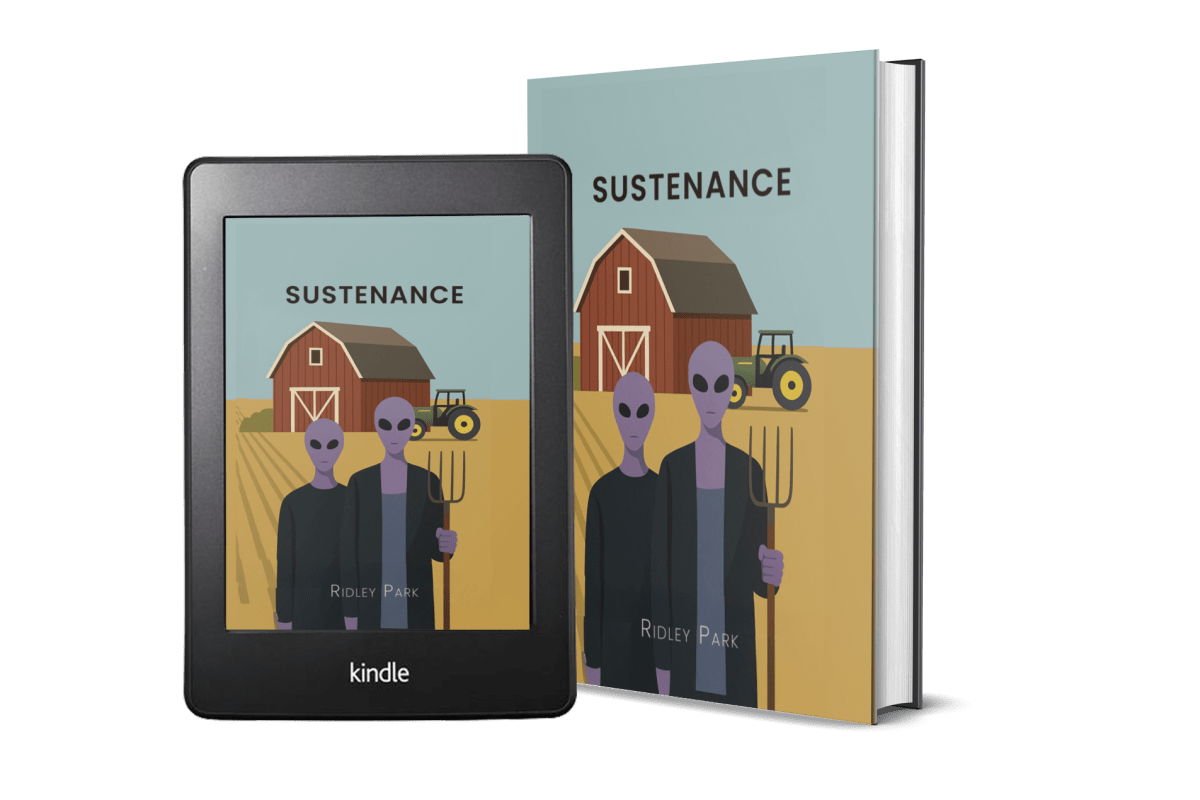
🛸 SUSTENANCE Has Landed

A note from Ridley Park on language, consent, and the limits of knowing.

Well, this one’s live.

Sustenance has officially launched.

Audio: NotebookLM podcast on the book Sustenance.

If Propensity was about engineered peace through probabilistic compliance, Sustenance asks what happens when understanding itself breaks down—and nothing you think is mutual, is.

No war. No invasion. No end-of-days. Just a quiet landing. And a failure to translate.

The Premise

A group of non-human beings arrive—not in conquest, not in friendship, but in continuity. They are not like us. They do not see like us. They don’t even mean like us.

There is no universal translator.
No welcome committee.

Just humans—interpreting through projection, desire, and confusion.

And aliens—operating by a logic that doesn’t require interpretation.

The Themes


Sustenance explores what happens when:

  • Language fails and nothing fills the gap
  • Consent becomes guesswork
  • Culture is mistaken for nature
  • Property has no meaning, and law no parallel
  • Sex isn’t private, sacred, violent—or even especially enjoyable
  • Memory becomes narrative, and narrative becomes defence
  • Contact isn’t miraculous—it’s awkward, biological, and quietly irreversible

This is a story about misunderstanding. Not just what others mean—but who we are when we assume we understand anything at all.

The Tone

Think Arrival but rural. Annihilation without the shimmer.

A bit of VanderMeer. A hint of Flannery O’Connor. The cornfields are real. The discomfort is earned.

No apocalypse.

Just a failure to process.

And maybe, something new inside the gap that opens when the old stories no longer apply.

Why Write This?

Because contact doesn’t have to be violent to be destabilising.

Because not all miscommunication is linguistic—some is anatomical.

Because the most alien thing we can encounter is ourselves, misinterpreted.

Because I wanted to write a story where the question isn’t “what do they want?” but “what have we already assumed?”

Now Available

Sustenance is available now in hardcover, paperback, and Kindle.

If you read it—thank you. If you don’t, that’s fine.

The misunderstanding will continue regardless.

📘 More about the book →

Ridley Park
Possibly a person. Possibly a place. Possibly both.

📡 PROPENSITY Has Launched

A note from Ridley Park on behaviour, control, and the illusion of peace.


Well, it’s out.
Propensity has officially launched.

This one’s been brewing for a while. If Sustenance asked what happens when we can’t understand each other, Propensity asks what happens when we stop needing to.

No invasion. No superintelligence. No overt dystopia. Just a device—quietly implemented—that modulates human behaviour through neurochemical cues. Less anger. Less risk. Less faith, libido, disobedience. More calm. More compliance. More… nothing.

And nobody notices.
Because the best control doesn’t look like control.


The Premise

Imagine a world where we solve violence—not through laws, treaties, or education—but by dampening the neurological signals that make people aggressive in the first place. You don’t choose peace. Peace is chosen for you, chemically. You just comply.

That’s the Propensity Device: a system designed not to control what you do, but to shift what you’re likely to do. Your odds of revolt drop. Your odds of submission rise. It’s not sedative. It’s statistical.

Free will doesn’t vanish. It just stops being statistically significant.


The Themes

The novel explores what happens when:

  • Free will is reframed as background noise
  • Consent is irrelevant because no one thinks to object
  • Violence becomes programmable—but only directionally
  • Peace is achieved without ideology, meaning, or narrative
  • Narrative itself becomes residue

There’s horror in here, but it’s not loud. It’s administrative. Institutional. Clean.

The horror of things working exactly as designed.


The Tone

Think Black Mirror but less sensational. Think Ballard after a lobotomy.

A dash of Ligotti. A flicker of DeLillo. A long stare from Atwood.
Propensity is soft dystopia—flattened, not broken.

And yes, there’s a fall. But it’s not a collapse. It’s an asymptote.
A tapering. A loss of signal fidelity. A kind of surrender.


Why Write This?

Because we’re already doing it.

Because behavioural nudge theory isn’t fiction.

Because control doesn’t need to be malicious—just implemented.

Because some of the worst horrors are quiet, polite, and empirically validated.

Because I wanted to ask: what if peace worked too well?


Now Available

You can get Propensity on Amazon and other booksellers.

If you do read it—thank you. If you don’t, that’s alright.
The system will keep humming either way.

📘 More about the book →

Ridley Park
Possibly a person. Possibly a place. Possibly both.

Geworfenheit: Not Born, Just Here: What Drives My Fiction

A common question I get about my writing—my fiction, anyway—is: what motivates you?

It sounds like a harmless question. Like asking a plumber what motivates them to fix pipes. But fiction is not plumbing. And motivation, for a writer, is often post-rationalised. Still, I have answers. Or at least fragments of them.

Audio: NotebookLM podcast on this topic.

A primary driver is to convey philosophical concepts that I feel apply to life in general, but don’t tend to get the airtime they deserve. A good example is Heidegger’s Geworfenheit.

In English, that’s usually translated as “thrownness.” It refers to the feeling—no, the condition—of having been thrown into existence without consent, without context, without recourse. It’s the anti-heroic beginning. You wake up on a raft. No map, no memory. Just current.

Now, Heidegger gets a bad rap. And some of it is earned. He joined the Nazi party. There’s no excusing that. But if we’re going to disqualify thinkers based on political affiliation, we’ll need to scrap about half of the Enlightenment and most of the 20th century. The point is: Geworfenheit is useful. It names something modern life often glosses over: the fact that you didn’t choose to be here, and now you have to swim.

This theme shows up across my work. In Temporal Babel, Jef is stranded in a temporally dislocated world. In Sustenance, the visitors are alien in both senses of the word. And in Hemo Sapiens, the title species are cloned into personhood with no legal or cultural footing.

None of us choose how, where, or when we are born. But I like to amplify that truth until it becomes impossible to ignore. Take the Hemo Sapiens case: they aren’t born; they’re instantiated. But what is birth if not a legally sanctioned instantiation? Once you remove the ritual scaffolding of parentage, nationhood, and paperwork, what remains is the raw fact of being.

Another key motivator for me is philosophical provocation—questions I don’t intend to answer, only pose. Like this one: imagine you’re shipwrecked and wash up on a tiny island. A single inhabitant lives there and claims ownership. He tells you to leave or die. You have no weapon. He has a spear. The sea is vast and lethal.

Do you have the right to stay?

Do you take the spear?

Does ownership matter when survival is at stake?

Sustenance explores that tension. Property, sovereignty, mercy, survival—these are themes we pretend to understand until the scaffolding is removed. My aim isn’t to preach about what’s fair. My aim is to show what happens when fairness loses its footing.

Related to this is the theme of otherness. Us versus them. But I’m less interested in dramatising hostility and more interested in the quiet bewilderment that comes when categories fail. What do you call someone who isn’t man or woman, isn’t alive or dead in the way we recognise, doesn’t speak our language or obey our metaphysics? What happens when you meet something you can’t assimilate?

Another layer is cultural construction—the way our societies retrofit meaning onto reality. We build scaffolds. Gender, law, ownership, grief. Then we forget we built them. My fiction likes to peel back the drywall. Not to show the truth, but to reveal the studs. The story behind the story.

And finally, I write because I suspect something important is always missing. That language is never quite enough. So I keep trying. Not to solve the insufficiency, but to dwell inside it.

That’s what motivates me.

Or maybe I’m just trying to answer questions I never knew how to ask.

That too.