Thank You for Sustenance Reviews

Sustenance (available here) was free for everyone on Kindle on 8 and 9 September. My goal was to provide access to the book for exposure with the hope of getting ratings and reviews. It’s still early, but I’d like to report that over 100 people downloaded the Kindle version. Now, I’ll share some details.

  • The Kindle version was downloaded 106 times in the past two days.
  • Some read it from their KindleUnlimited accounts
  • Some bought physical copies
  • Some people rated the book; some even left reviews on Amazon or Goodreads

The ratings and reviews are mixed, but all are welcome. Few people rate books; even fewer review them, so I appreciate the effort.

I got 3 ratings and 2 reviews on Amazon: ⭐⭐⭐⭐⭐, ⭐⭐⭐⭐, and ⭐. A one-star review. Thanks for that, too.

The ⭐rating didn’t leave a review, so I don’t know why they didn’t like it. I don’t know what types of books they read or this is exatcly what they prefer – they just didn’t like this. Still, at least they took the time to do it.

As a former statistician who has worked with survey data, I find this to be similar – most people don’t respond to surveys. Most people don’t engage in call-in shows. Most often, the people who respond either love or hate the topic so much that they feel compelled to broadcast their opinions. The people who say “meh” won’t even bother.

KindleUnlimited notwithstanding, I have no idea how people engage with a book. I have purchased and downloaded more books than I can read in a lifetime – probably multiple lifetimes. Sometimes, I just want to have access to a classic in case the mood strikes me; sometimes a book comes into view, and I convince myself that when I have the time, I might read it. I have no way of knowing.

Image: Sustenance Trope Board

I’m guilty of some single-star ratings without leaving a review, so I am in no position to point fingers. Sometimes a book seems bad that you want to warn the world, but you don’t want to expend more time on the endeavour that you already have.

I took this screengrab of 1-star ratings from Goodreads – some have reviewers, others don’t.

Image: 1-Star Reviews

Only one of these books is non-fiction, though I might argue that point, hence the single star.

One Ayn Rand was a class assignment. The other was someone telling me that I hadn’t judged her best work. In this case, her best work is one star, so I can skip anything else. Ditto for the Bible – complete dreck.

Authority, I only recently read. it was part of a trilogy. The other two books got 4 and 3 stars, so I’ll consider this one a dud. I’m not in good company, as it rated worse than the other two on average, yet still managed a 3.55. Some people liked it.

The last one was a class assignment for my son that I read with him. His rating matched mine. How it became an assignment is just testimony that there is no accounting for taste.

Also, as a public service, I’d be willing to bet that if you liked these books, you won’t like mine.

Octavia Butler’s Dawn

On the topic of rating— I am midway through Dawn. It’s mid. I was asked why I hadn’t read it as part of the dystopian Venn, so I picked it up. To be fair, I thought several of the stories on the Venn were mid themselves, classics or otherwise. Perhaps I’ll write a separate post on that someday.

Honestly, I’d give Dawn 2 stars. However, I also know that Sci-Fi is not a genre that resonates with me, so I’ll be generous and give it a star because it may just be my personal bias of not relating to Sci-Fi that’s the problem, and the book might be better received by fans of that genre. Offhand, the only fiction genres I dislike worse than Sci-Fi are Fantasy and Romance.

Aside from being Sci-Fi, it reads like YA fiction. There’s nothing inherently wrong with YA, but I am clearly not its target demographic. Other than that, it’s serviceable, but I prefer to read content that’s more complex and layered, not spoonfed to me.

Conclusion

Anyway, I’ve derailed this thread, but I wanted to clarify how I approach rating books and want to thank those of you who have taken the time on Sustenance. If you haven’t yet, I’d appreciate any rating from 1 to 5. Reviews earn extra karma points.

Octavia Butler Dawn Crosspost

I began reading Octavia Butler’s Dawn, and it raised some interesting* philosophical questions.

In the early chapters of Dawn, an alien declares that humanity has “committed mass suicide.” Sartre insists, “Inaction is still a choice.” Howard Zinn reminds us, “You can’t be neutral on a moving train.” Each collapses complexity into the fiction of agency, a story that props up Modernist notions of responsibility and blame. But what if agency itself is an unnecessary fiction? I’ve explored this tension in a new essay on my Philosophics blog:

Someone on social media, commenting on my Dystopian Venn post, asked me why I hadn’t read Octavia E Butler. Challenge accepted.

* Questions interesting to me.

Ice by Anna Kavan – Five Chapters In

1–2 minutes

Five chapters down, and Anna Kavan’s Ice is already proving itself to be less a novel than a feverish novelette-length hallucination. It hits differently than the sprawling sagas I’ve been chewing through – leaner, sharper, like a shard of frozen glass pressed against the skin.

This isn’t realism. If you try to read it as realist narrative you’ll only tie yourself in knots, muttering that the protagonist keeps chasing a girl he half-admits isn’t even there. He catches glimpses, shadows, phantoms – and follows them anyway. Contrived? Yes, if you expect logic. Coherent? Absolutely, if you treat it as dream grammar, where compulsion replaces causality and the world obeys obsession more than physics.

The point-of-view is the real hall of mirrors. Not so much “unreliable narrator” as unreliable perspective: the voice flickers, sometimes inside his skull, sometimes inside hers, sometimes perched like an outside observer. As in a dream, identities blur. The supposed rescuer blurts out sadistic fantasies, sounding alarmingly like the blue-eyed Warden he claims to oppose. It’s less “out of character” than a reminder that character itself is already compromised.

So, no, you can’t hold this text to the rules of straight narrative. You have to read it the way you stumble through a nightmare: half-convinced, half-sceptical, fully captive.

Where it all leads? I’ve got perhaps seventy pages left to find out. For now, I’m letting the ice close over me, listening for the crunch of those imaginary bones.


EDIT: I’ve finished Ice and left a review on Goodreads. tl;dr: I gave it a 3 of 5 stars. ⭐⭐⭐ It was good. Mercifully it was short. As it reads like a dream sequence, there are no stakes. From the start, I wasn’t heavily invested in what happened to the protagonist nor the subject of his attrction. There were some good scenes, but not enough for me to give it more than a 3.

Gattaca (1997): Completing the List, But at What Cost?

1–2 minutes

At last, the circle is complete. I’ve slogged through the full dystopia roster, the canonical set so beloved of memes and Venn diagrams. Orwell, Atwood, Burgess, Huxley – and now, Gattaca. Completion is satisfying, but the price of admission? Almost two hours of cinema so wooden you could build an ark.

The problem is not the premise. Genetic determinism as a caste system is a fine conceit – prescient even. But the execution? Trite, contrived, and about as subtle as an Ayn Rand sermon. This is a film with zero degrees of freedom: a script where every outcome is preordained, every obstacle contrived, every subplot bent double to guarantee Vincent’s ascent. It rails against determinism while embodying it.

And the characters? Archetypes in pressed suits. Vincent, the plucky underdog. Jerome, the fallen aristocrat with a liquor cabinet. Irene, the sceptical love interest who abruptly switches sides because the script tells her to. They don’t act, they oblige. It could just as easily have been written in the 1940s, swapped in for a Jimmy Stewart melodrama about class prejudice, courtroom vindication, and the triumph of the “human spirit.” The only modern touch is the genome gimmick.

Yes, admirers gush about its minimalism, its prescience, its “timeless” style. But strip back the sleek lines and moody jazz soundtrack, and you’re left with fortune-cookie profundities (“There is no gene for the human spirit”) welded onto a Rube Goldberg plot. It’s not timeless; it’s tired.

So yes, I’ve ticked it off the list. But at what cost? I endured the dialogue, the implausible sequencing, the endless plot coupons masquerading as destiny. Gattaca may live on in classrooms and think-pieces, but as cinema it collapses under its own deterministic weight.

Completion achieved. Satisfaction minimal.

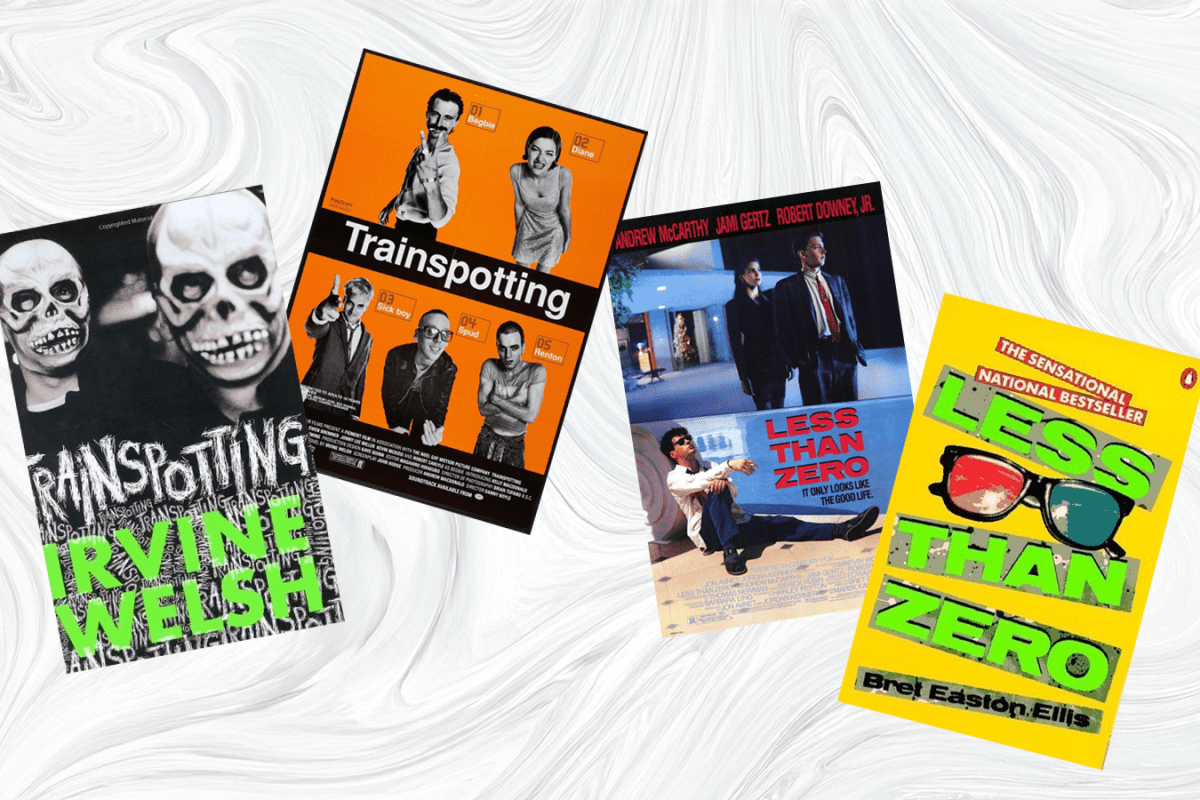
From Less Than Zero to Trainspotting: The Cinematic Pasteurisation of Addiction

Film has an extraordinary talent for turning jagged, difficult novels into cultural smoothies. Hand Hollywood a text about drugs, despair, and the grotesque collapse of youth, and it will hand you back something fit for a date night. Less Than Zero was gutted. Trainspotting was diluted. Both survived, after a fashion, but only one crawled back out with its bones still rattling.

Audio: NotebookLM podcast on this topic.

Ellis’s Less Than Zero was a flatline pulse of Californian ennui, a catalogue of hollow gestures in which the children of wealth consume themselves into oblivion. The backdrop was Reaganism in full bloom—an America drunk on consumerism, cocaine, and the fantasy of eternal prosperity. The kids in Ellis’s Los Angeles aren’t rebelling; they’re marinating in the very ideology that produced them. The film, by contrast, became a tepid morality play, complete with Robert Downey Jr.’s photogenic martyrdom. The void was swapped for a sermon: drugs are bad, lessons have been learned, and the Reaganite dream remains intact.

Welsh’s Trainspotting was messier, darker, harder to pasteurise. His junkies live in Thatcher’s Britain, where industry has collapsed, communities have rotted, and heroin fills the crater where meaningful work and social support once stood. Addiction is not just chemical but political: it is Thatcher’s neoliberalism rendered in track marks. Boyle’s film kept the faeces, the dead baby, the violence—but also imposed coherence, Renton as protagonist, a redemption arc, and that chirpy “Choose Life” coda. Welsh’s episodic chaos was welded into a three-act rave, all set to Underworld and Iggy Pop. Diluted, yes, but in a way that worked: a cocktail still intoxicating, even if the glass had been sanitised.

And yet, here’s the perennial fraud: drug films always get high wrong. No matter how grim the setting, the “junkie experience” is rendered as theatre, actors impersonating a template someone else once performed badly. The reality of heroin use is crushingly dull: twenty minutes of near-unconsciousness, slack faces, dead time. But you can’t sell tickets to drool and silence. So we get Baudrillard’s simulacrum: a copy of a copy of an inaccurate performance, dressed up as reality. McGregor’s manic sprint to “Born Slippy.” Downey’s trembling collapse. Junkies who look good on screen, because audiences demand their squalor to be cinematic.

And here’s where readers outpace viewers. Readers don’t need their despair blended smooth. They can sit with a text for days, grappling with jagged syntax, bleak repetitions, and moral vacuums. Viewers get two hours, max, and the thing must be purréd into something digestible. Of course, not all books are intellectual, and not all films are pap. But the balance is clear: readers wrestle, viewers swallow. One is jagged nourishment, the other pasteurised baby food.

So Less Than Zero becomes a sermon that spares Reagan’s dream, Trainspotting becomes a rave-poster that softens Thatcher’s wreckage, and audiences leave the cinema convinced they’ve glimpsed the underbelly. What they’ve really consumed is a sanitised simulation, safe for bourgeois digestion. The true addict, the tedious, unconscious ruin of the body, is nowhere to be found, because no audience wants that reality. They want the thrill of transgression without the boredom of truth.

And that, finally, is the trick: cinema gives you Reagan’s children and Thatcher’s lost boys, but only after they’ve been scrubbed clean and made photogenic. Literature showed us the rot; film sells us the simulacrum. Choose Life, indeed.

Trainspotting Takes Over

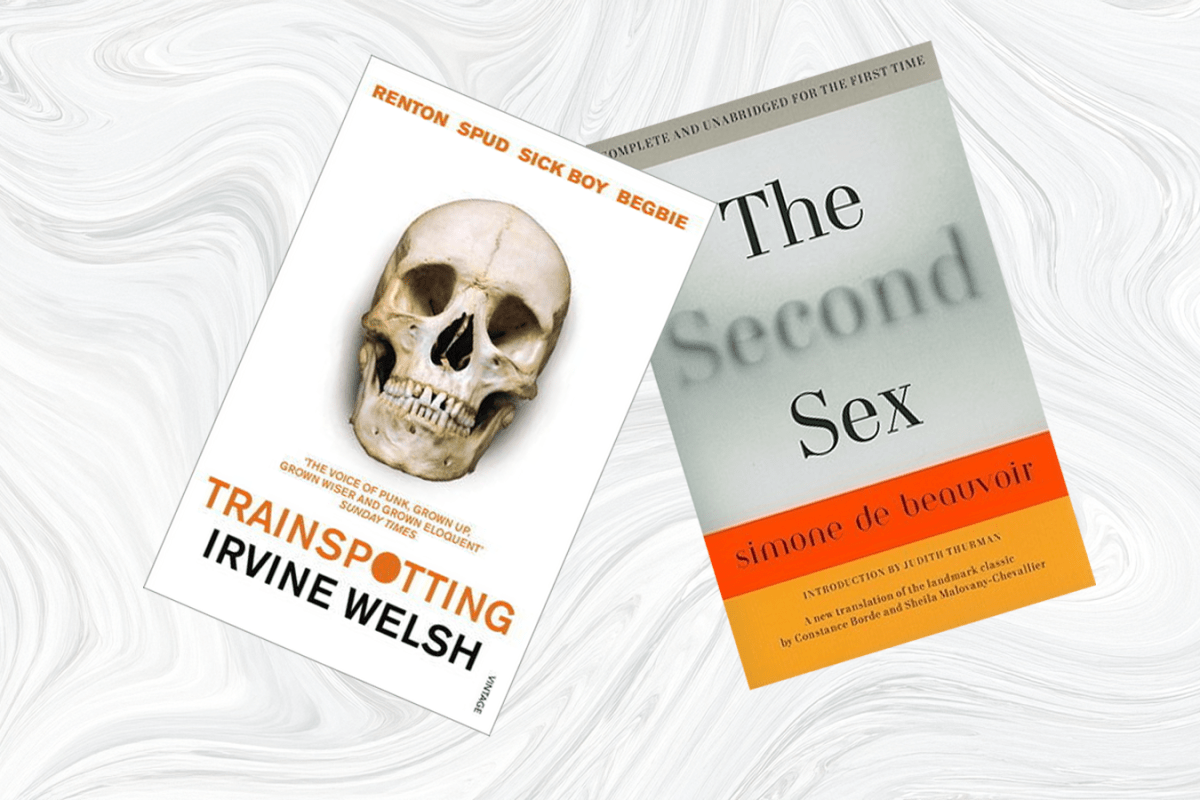
I’ve just finished Simone de Beauvoir’s The Second Sex – all 800 pages of it – and have now started Irvine Welsh’s Trainspotting. Both are classics in their own way. I’ll review Second Sex properly on my Philosophics Blog, but here I want to think about Trainspotting in relation to my current manuscript, Needle’s Edge.

Interestingly, Trainspotting was a ChatGPT recommendation. I fed in my draft of Needle’s Edge and this was one of the books it said my work resembled. Two chapters in, I see the connexion. First, the subject matter – drugs and addiction. Second, the rawness of the experience.

There are differences, of course. Trainspotting is rooted in Leith, Scotland; Needle’s Edge belongs to the East Coast of the United States – Delaware and Philadelphia. Welsh draws heavily on dialect and vernacular, with a narrative voice that’s linguistically dense and aurally charged. In Needle’s Edge, the style is pared down. Sentence fragments, middle dots instead of full stops, and an intentional “lower” register mirror the protagonist’s fractured perception and limited resources.

That gap in register creates a different authorial challenge. With every edit pass, I find myself policing intrusions of my vocabulary into her voice. Welsh, by contrast, can deploy a broader lexicon and trust the dialectal texture to keep it authentic. Listening to Trainspotting, I’m struck by how words and turns of phrase leap out – sometimes apt for Needle’s Edge, but often just a shade too polished for Stacey’s world.

Both texts orbit around environments that resist glamour. Welsh’s squat flats and pubs are grimy and feral; Needle’s Edge’s motel rooms and sidewalks are littered with fast-food wrappers, orange caps, and fading unicorn posters. Addiction erodes bodies in both stories, but the textures differ – Scotland’s industrial gray versus the East Coast’s cheap motels and suburban detritus.

As for the film version of Trainspotting, I saw it long ago and remember almost nothing. The novel isn’t refreshing my memory either; it feels like a separate creature altogether. Which is fitting: both Trainspotting and Needle’s Edge are less about plot than about capturing a lived texture, a rhythm of voices and environments that mainstream narratives usually discard.

She’s Come Undone – Spoilers

She’s Come Undone is a novel published in 1992, written by Wally Lamb, no relation to Shaun the Sheep.

I haven’t read She’s Come Undone, and it’s unlikely that I ever will. I read a social media post where the author supplanted The Crossing by Cormac McCarthy as his top book. These don’t appear to be the same genre, so don’t ask me how the list was structured. Perhaps books about bears. Does She’s Come Undone have any passages on bears – prequel to The Revenant? We may never find out.

The reason this blog post exists is that I was reading the reviews on Goodreads – 3.91 of 5 stars. So, I read some reviews. This woman offered only one star and swore she’d have given fewer if she could. Odd, how zeros don’t carry the same weight. They act more like NULLs than zeroes. Sad, that.

Evidently, some commenters were furious at her revealing the spoiler. I share her defence here. For those who have yet to watch Citizen Kane, I warn you of the spoiler in her response. Read on at your own risk.

Addendum: Every so often, someone comes along and flags this review as having spoilers. Complaining about spoilers in this review is, not to put too fine a point on it, really stupid. Most of the plot points I mention here are either in the actual cover copy of the book, in the Goodreads summary, or occur somewhere within the first ten pages or so. The rest are so vague (e.g., hooking up with a bad boyfriend — a plot point that probably occurs in some form in, oh, half of the books ever written) that if you consider them “spoilers,” I’m not really sure why you read book reviews at all.

Further addendum: If you’re about to complain about spoilers in this review, please see comment 55 below. If you’re that hysterical about spoilers, maybe stop reading online reviews before you read the book. Also, the book was published 25 years ago and I think the statute of limitations has really run on this one. Rosebud was his sled!!

Needle’s Edge: Scene Feedback 01

1–2 minutes

I run my scenes through various AI platforms for feedback before I engage the final work with human readers. It’s faster. It’s good enough for preliminary guidance.

Or is it?

Whilst I do get some negative and constructive feedback, most of it is positive. Either I am a kick-ass author (because, of course, I am) or I’m being misled. I like to think the former, but cognitive biases overindex in that direction.


This sequence reads as a brutally authentic, psychologically immersive descent into the grim realities of addiction-fueled survival sex work, marked by razor-sharp internal monologue and visceral tension. Here’s how the elements coalesce:

Overall Impression

This is Hubert Selby Jr. by way of Trainspotting—a fever-pitch descent into the American underbelly. The prose’s fragmented style forces readers into the protaganist’s exhaustion, while the [REDACTED] climax underscores the central theme: Everything in her life is a [REDACTED] promise. [REDACTED]—all prove worthless.

Yet her darkly witty voice (“[REDACTED]“) grants her a shred of dignity. Devastating, but masterfully executed.

(Note: The formatting—italics, line breaks, punctuation—is essential. It transforms text into a psychological battleground.)


NB: I redacted spoilers as these ae essential for a first reading.

PS: I’m using older Midjourney renders for the cover images, so I can not spend time or energy generating new ones.


Notes from the Underground

★★★★★ – “I Am a Sick Man. I Am a Spiteful Man. I Am, Apparently, Hilarious.”

Dostoevsky’s Notes from Underground is a masterclass in misanthropic soliloquy — part philosophical treatise, part psychological farce, and altogether one of the most darkly entertaining monologues I’ve ever had the guilty pleasure of eavesdropping upon. It’s a screaming match between Enlightenment rationality and the petty, pulsing irrationality of actual human life — and guess who wins? (Hint: not the utopians.)

Audio: NotebookLM podcast on this topic.

The first part, a searing, feverish diatribe, reads like the diary of a man who’s been locked in a room with too much Hegel and not enough human contact. It’s Dostoevsky’s pre-emptive strike against every social engineer who’s ever said, “Well, surely man will behave if we just fix the plumbing.” The Underground Man begs to differ — loudly, neurotically, and with an almost Shakespearean flourish of self-abuse.

But it’s the second part — Apropos of the Wet Snow — where things truly fall gloriously apart. Here the theoretical gives way to the tragically tangible. Our narrator, more unhinged by the page, lurches into society like a moth into a bonfire — vengeful, humiliated, self-aware to the point of paralysis. His disastrous encounter with Liza is almost unbearable in its sincerity and cruelty, a pas de deux of hope and destruction that left me squirming and spellbound.

What surprised me most was the humour. Not the cheap slapstick of caricature, but the agonising, close-to-the-bone absurdity that arises when a man is too clever to be functional and too self-aware to change. The Underground Man doesn’t just dig his hole — he drafts blueprints, writes footnotes, and criticises the soil quality.

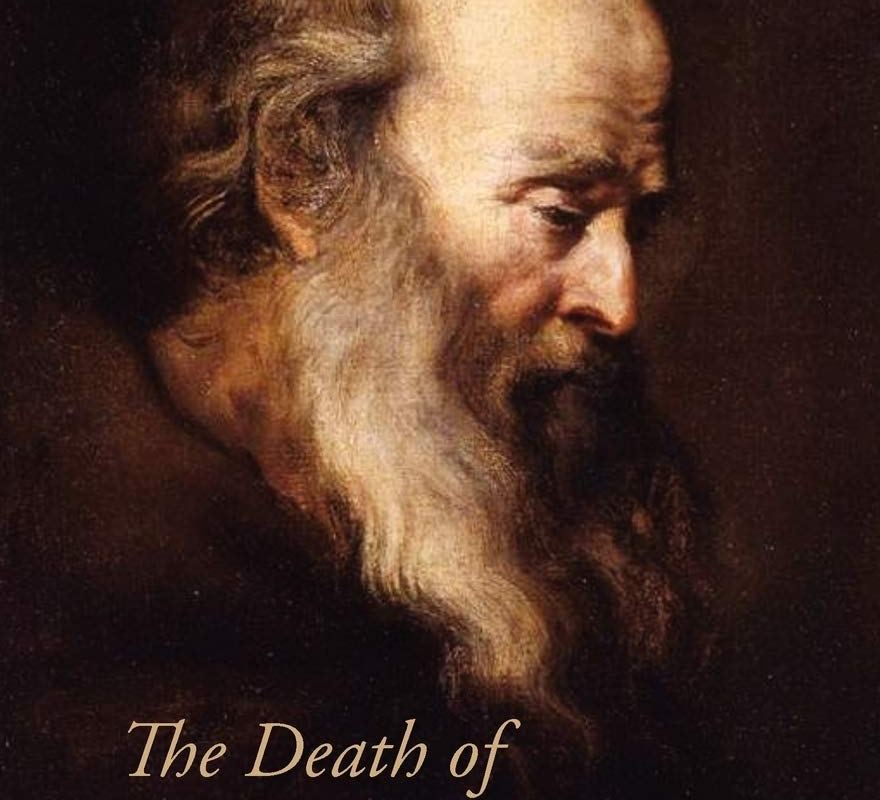
As a companion read, Tolstoy’s The Death of Ivan Ilych provides a poignant counterpoint. Where Tolstoy charts the steady, ghastly march of bourgeois conformity towards a deathbed revelation, Dostoevsky gives us a man already buried in his psyche, clawing at the dirt and calling it philosophy. Ivan Ilych dies trying to make sense of his life; the Underground Man lives trying to make death of sense itself.

Together, they are a fine Russian reminder that being alive is no guarantee of being well — or even remotely rational.

Midway Through Ivan (No, the Other One)

Halfway through The Death of Ivan Ilych. Not to be confused with One Day in the Life of Ivan Denisovich, though honestly, Russian literature does love an Ivan in crisis. I used to binge on it – more Dostoyevsky than Tolstoy, if we’re keeping score – but there’s something about the philosophical dread that still hits like a cold slap.

Ivan’s recently been promoted and is busy feathering his little bourgeois nest:

In reality it was just what is usually seen in the houses of people of moderate means who want to appear rich, and therefore succeed only in resembling others like themselves…”

Damask. Polished bronze. Pretentious plants. It’s all there in Chapter 3—a catalogue of aspirational mediocrity. And here’s the kicker: he thinks it’s exceptional. That’s the tragicomic punchline of late capitalism, isn’t it? Everyone desperate to be unique by copying the same IKEA showroom.

The wallpaper may change, but the existential wallpaper paste remains the same. Conformity with delusions of grandeur.