Simulacra – When the Camera Becomes the Conscience

4–6 minutes

That’s the first line of Chapter 26, ‘Simulacra’, in Propensity. A small, airless room. A flickering light. Three teenagers – Teddy, Lena, Jamal – trying to remember what morality looked like before the world stopped watching.

This chapter is written as a script, not prose. Directions, shots, and camera pans replace internal monologue. The reader becomes the lens – an observer, never a participant. It’s deliberate. In a story about imitation and collapse, the camera itself becomes the narrator, the conscience, and the judge.

Audio: NotebookLM podcast on this topic.

The camera pushes through the door, searching. Dust floats in suspension, and time feels posthumous. Teddy zips his hoodie over bare skin; Jamal leans in the doorway, arms folded, disgust simmering behind teenage boredom.

JAMAL
You can’t just be shagging Gormies, mate.

TEDDY
That’s the point, innit?

Their exchange isn’t only about sex; it’s about the boundaries of what still counts as human. ‘Gormies’ are the gormless – the emptied remnants of pre-collapse society. They can’t consent or refuse. They’re alive but vacant. Human-shaped absences.

Teddy’s logic is brutal and pure simulation: if the subject can’t say no, the act ceases to carry meaning. He performs the motion of sin without the structure of morality.

Jamal’s recoil isn’t righteous; it’s aesthetic. He’s repulsed by Teddy’s theatre of transgression, the same way one might flinch at bad acting.

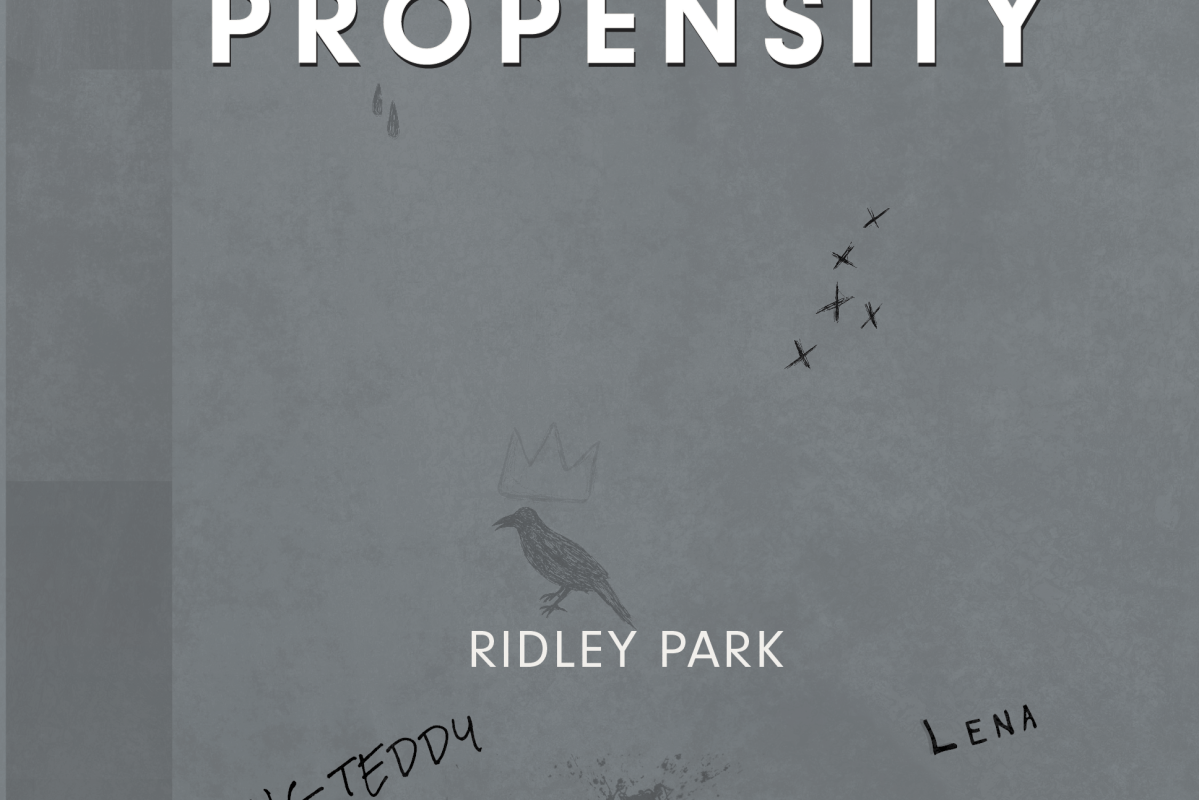
Image: Page 125 of Propensity, Chapter 26 – Simulacra.

26 · Simulacra


The title Simulacra is a nod to Jean Baudrillard’s Simulacra and Simulation, the philosophical text the Wachowskis borrowed – and misunderstood – for The Matrix. Baudrillard didn’t mean that the world was an illusion hiding the truth. He meant that the distinction between illusion and truth had already evaporated.

The real no longer disappears behind its representation; it becomes its representation. The sign replaces the substance.

In this scene, Teddy, Jamal, and Lena are copies of moral beings without moral context. They mimic the gestures of civilisation – disgust, guilt, justice – without the living institutions that once gave those words gravity. They don’t believe in morality; they reenact it.

Baudrillard called this the third order of simulacra: when the copy no longer hides the absence of reality but replaces it entirely.


Then comes the slow reveal:

CAMERA: SLOW REVEAL – LENA (15) stands in shadow. Hood up. Motionless in the corner.

LENA
You do now.

Lena’s voice reintroduces consequence, but only as performance. It’s not morality restored; it’s morality remembered. The moment isn’t ethical – it’s cinematic. The reveal is the moral event.

Her mother, the Gormie in question, is little more than an echo of personhood. The outrage in Lena’s voice belongs not to ethics but to staging: a scene constructed to look like remorse.

The simulacrum here isn’t the Gormie. It’s the moral itself – played out as ritual, devoid of anchor. These children have inherited the gestures of adulthood but none of its meaning. They mimic guilt because that’s what the dead world taught them to do.


By writing the chapter as a film script, Propensity exposes its own mechanism. Every camera move, every cut, is a reminder that you, the reader, are complicit. You’re watching a reconstruction of a reconstruction. The text becomes its own simulacrum – a story imitating cinema imitating life.

Even the bed, ‘a dent in the mattress’, is a metaphor for what remains of the real: an impression where something used to be.

The result isn’t post-apocalyptic horror but philosophical unease. What happens when moral sense survives as empty choreography? When consent and consequence are just old lines, the species keeps rehearsing?


Propensity isn’t about survival. It’s about what comes after survival—when humanity’s operating system still runs, but the data’s corrupted. The characters are trying to rebuild a moral code from cached files.

Simulacra is the point where imitation becomes indistinguishable from intent. It’s a study in ethical entropy, a mirror held up to our own cultural exhaustion, where outrage has become performance and empathy a brand identity.

This is the future Propensity imagines: not a world without humans, but humans without the real.


Further Reading

Persona, Identity, and the Many Faces of Sarah

(Notes from the cutting room floor)

I’m taking a break from editing to share something about the protagonist in my latest novel-in-progress, Needle’s Edge. She’s a woman – yes, but not just. She’s a prostitute. She’s an addict. And she’s three people.

Audio: NotebookLM podcast on this topic. (Direct)

There’s Sarah, her given name. The name reserved for friends, family, and those rare few who know her without conditions. It’s the name she hears in moments of tenderness, or shame, or memory.

Then there’s Stacey, the escort, the stripper, the performer. This is the name on her ads. The one whispered in hotel rooms and shouted in clubs. Stacey is curated. Sexual. Selective. She knows what sells and how to sell it.

And then there’s Pink, the street persona. The user. Pink is who shows up when Sarah needs to score. She trades in slang and silence. She wears a different skin. A different currency.

Three names. One woman. No seams showing – if she can help it.

In her world, compartmentalisation is survival. If a dealer connects the dots and knows she’s an escort, she’s vulnerable. If a client finds out she’s using, her value drops. Appearances are everything. Rates depend on it. Reputation is a balancing act on a razor’s edge. And so each name carries its own set of rules, risks, and rituals.

But here’s the deeper cut: Who’s the “real” Sarah?

Is Stacey fake? Is Pink less than? Is Sarah just the base layer beneath the makeup and muscle memory?

They’re all her. None of them. Some of each. Identity is slippery.

The left hemisphere of the brain craves coherence. It wants simplicity, categories, reduction. But the truth is, identity is a heuristic. A convenient fiction. And Sarah, more than most, knows this. Where most people perform one role and pretend it’s a self, she splits hers openly. She curates them. Manages them. Leverages them.

And yet, the cost is high.

Stacey and Pink are exhausting. High maintenance. High risk. But being Sarah isn’t a comfort either. It’s just what’s left when the others are stripped away. She doesn’t retreat into Sarah so much as collapse into her.

In that way, Sarah isn’t a self – she’s a default.

The irony? For all this agency, for all her awareness, she’s still trapped in identities designed for consumption. For transaction. For escape. Whether it’s sex, drugs, or memory, she’s always negotiating something.

Three names.
Three roles.
Still no way out.

Needle’s Edge Cover Reveal

I’m sharing a comp of the cover art* for my upcoming novel – a story about a prostitute. More accurately, it’s a story about prostitutes, addiction, survival, and the consequences of living at the periphery – not just of society, but of personhood itself.

The earliest notes I have are dated 2019. I finished the first draft in June. I’m now editing – both structurally and line by line, which is probably a bad idea, but here we are. Because I’m reorganising scenes, I need to ensure the transitions make sense, emotionally and narratively.

Since completing the draft, I’ve been reading Simone de Beauvoir’s The Second Sex. First published in 1949, the edition I’m reading was translated in 2011. It’s given me language for something I was already trying to do.

This line is central to my approach. My protagonist isn’t born a prostitute. More importantly, she isn’t even born a woman. She’s made into one by church ladies, jealous sisters, careless boys, and indifferent systems. Through gestures, punishments, expectations, and neglect. Through the crucible of a society that offers her a script before she understands the stage.

Yes, her psychology matters. But the world matters more.

That’s what I’m trying to explore — not just the facts of a life on the edge, but the forces that shape it.

* I’ve actually designed two covers – one for hardcover and the other for paperback. It provides me with options.

Book Review: The Emotional Craft of Fiction

Not Charlotte’s Web.

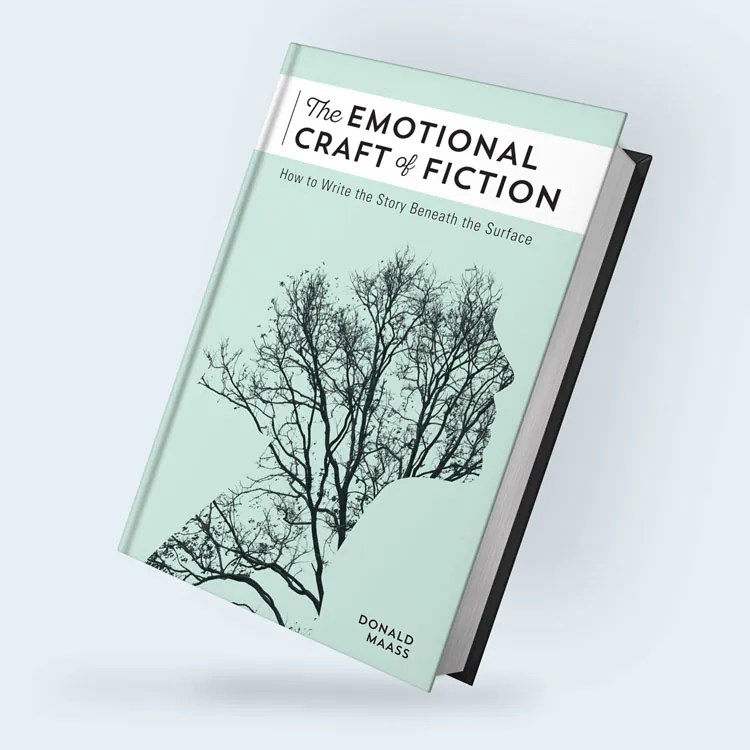
Instead, The Emotional Craft of Fiction: How to Write the Story Beneath the Surface by Donald Maass.

I just finished this book. I’ll say it’s good and even recommend it, but it’s not really for me. I wrote a blurb recently before I was even halfway through, and my opinion hasn’t changed.

Audio: NotebookLM podcast on this topic.

If you like to write in typical, character-driven stories, this should be right up your street. Besides character depth, the author also pushes moral righteousness. Thanks, but no thanks.

All of this said, I did gain some benefits from it, because although my writing is not heavily centred on characters, it does contain them, and I want them to feel alive. I want the world to feel lived in.

Personally, I think in schemes and threads – big ideas, deep ideas. Once all of this is roughly in place, I take a second pass for details. This is where Maass can help.

Full disclosure: Some people adopt a plotting approach to writing, whilst others adopt a pantser approach. I fall somewhere in between. Moreover, I might write something from one perspective and the next from the other – and I might flip-flop back and forth.

As a plotter, I might have waypoints that I want to hit, ideas I want to explore. Sometimes, I write these down on paper, in a spreadsheet, or somewhere to keep myself honest. Other times, I have these plot points in mind, but I take a stream-of-consciousness approach, simply discovering the story as it unfolds under my fingertips. I may even plot half a story and “pants” the rest of it. No telling.

As a pantser, I might have a kernel of an idea, and I just want to ideate on the page. So, I write. I lock myself in my room, throw up a “Do Not Disturb” sign, and head down to write until the well of ideas runs dry. At this point, I might put the idea aside or step back and consider plot points.

Looking back on this post, it’s not so much a book review at all. Apologies. That said, if you write characters and enjoy mainstream writing approaches, I think you’ll find the ideas in this book helpful. Many of the better ideas are presented early on, but it’s a short read. He offers some authors, titles, and excerpts you might find interesting. I found them to be a mixed bag.

Not a People Person

Person writing at a desh, on the wall behind him, scales of justice, drama masks, and a red heart

I Don’t Do People

I don’t write character-based fiction. I’m not a “people person” – not in the lived world, and certainly not on the page. I prefer people at arm’s length, ideally shrink-wrapped and on mute, where I can manage the terms of engagement.

Yes, my work features characters. I flesh them out just enough to spare readers the Ayn Rand experience, those one-dimensional ideological mannequins masquerading as protagonists. But character isn’t the centrepiece. I write to explore worldviews, metanarratives, and environmental interactions. I’m less interested in what a person feels and more in what their presence means within a broader system.

Audio: NotebookLM podcast of this topic.

Audible Irony

At the fitness centre (the irony isn’t lost on me), I listen to audiobooks. Today’s pick: The Emotional Craft of Fiction by Donald Maass. I’ve just cracked Chapter Four, and already I’ve panned a few glittering nuggets for future consideration.

That said, I found myself wondering: why am I even listening to a book so obsessed with the deep inner life of characters?

Simple. Because it’s still useful – even if I only dose it homeopathically. Just because I don’t write bleeding-heart confessions doesn’t mean I can’t exploit emotional undercurrents when it serves a structural or rhetorical purpose.

Character, Morality, and My Problem with Haidt

One section rubbed me the wrong way: the bit about character morality. Maass references Jonathan Haidt’s work on moral psychology—yes, that Jonathan Haidt, patron saint of middlebrow centrism and moral-sentiment handwaving.

I’m familiar with Haidt. Not a fan. His notion of “moral elevation”—the idea that stories with virtuous themes inspire moral behaviour—strikes me as both quaint and quaintly manipulative. In a sense, I agree with him: morality is curated. But that’s where our Venn diagram becomes a shrug.

I’m a moral non-cognitivist. I won’t bore you here (though feel free to tumble down that rabbit hole over on my philosophical blog). In short, I don’t believe morals are objective truths handed down from Olympus or Enlightenment think-tanks. They’re socio-emotional artefacts – human constructs born from gut feelings, tempered by culture, and ossified into norms. Different contexts yield different values. That’s why I delight in yanking characters out of time and place, disorienting them – and you – to expose just how contingent it all is.

So yes, I understand moral tropes. I even deploy them. But I do so to subvert them – not to reinforce a collective bedtime story about “goodness” or “redemption.” Those are the myths we tell ourselves to stay sane. I’m here to loosen your grip.

Simulacra: A Screenplay Inside a Novel

Chapter 26 of Propensity shifts form once again.

Much like Chapter 10 (Memorandum), it functions less as narrative propulsion and more as an aperture, fleshing out character psychology and relational tension. But unlike the bureaucratic memo of Chapter 10, this one adopts the cinematic grammar of a screenplay.

Three teens. One post-collapse flat. No script but survival.

Teddy, Lena, and Jamal, three of the few who’ve retained volition after the global cognitive outage, attempt to negotiate the boundaries of self, sex, and something like ethics. The world has gone silent. Behavioural modulations have zeroed out the rest of humanity. What’s left is not exactly freedom, but the residue of agency.

Teddy wants to dominate; he flirts with tyranny and the post-moral indulgence of the moment.

Jamal wants to refuse the cycle; he recognises the scaffoldings that led to collapse and hopes not to rebuild them.
Lena wants… something else entirely. Survival, perhaps. Or at least integrity.

Their conversation, unfolding through stage direction and dialogu, wrestles with autonomy, desire, and disgust. What counts as a violation in a world where the victims cannot resist? What norms persist when no one is left to enforce them?

This chapter doesn’t tell the reader what to think. It lets the contradictions breathe. And for a few pages, the novel becomes a film that cannot be watched, only read.

Characters Are Overrated: A Treatise Against the Tyranny of Arcs

You’ll hear it a thousand times in creative writing circles, often whispered with the reverence of sacred doctrine: character is king. Give your protagonist an arc, they say. Make them grow. Show them change. Rinse. Resolve. Repeat.

Audio: NotebookLM podcast on this topic.

Forgive me, but I’m not here for that workshop claptrap.


My writing isn’t character-driven in the conventional sense. I don’t sculpt protagonists to take heroic journeys or undergo epiphanic transformations. I’m not interested in plumbing the depths of their souls or bandaging their inner wounds with moral insight. My primary concern is the world—the philosophical or sociological structure—through which characters drift, orbit, or plummet. Sometimes they leave a mark. Often, they don’t.

Because real life isn’t narrative. It doesn’t arc. It drifts. And most of us don’t develop. We adapt. We cope. We muddle through.


Resolution, in most stories, is a parlour trick—narrative taxidermy dressed as transcendence. In reality, most encounters don’t resolve. They expire. People come and go. You cross paths with strangers who change your life—or don’t—and then vanish back into the abyss of statistical anonymity.

One of my recent manuscripts begins with a woman named Sena discovering a body by the roadside. She reports it, the authorities arrive, and the narrative follows them—until it doesn’t. It dissipates. No tidy resolution, no tight bow. Just the unfurling tedium of systemic procedure and human irrelevance. It’s not a mystery story. It’s a story with mystery in it. Big difference.

We like to pretend we’re central to our own story, each of us a protagonist in a universe scripted for personal development. But sometimes, we’re not even side characters. Sometimes, we’re scenery. Camus’ Meursault had it right: the sun matters more than your feelings, and death shows up whether you’ve had your arc or not.


Yes, some readers crave grandiosity—heroes, villains, the Great Man Theory dressed in narrative drag. Napoleon didn’t just wage war; he “struggled with destiny.” Stalin wasn’t just a paranoid bureaucrat; he was “a force of history.” These are characters written by history with the same myth-making brush that writes fiction. Convenient, cathartic, utterly inaccurate.

But I don’t write demigods. I write witnesses, floaters, participants without insight. They’re often not even granted the courtesy of closure. They move through a world that refuses to acknowledge their significance. And why should it? The cosmos doesn’t care if your backstory is tragic or if your girlfriend left you on page forty-two.

Sometimes the character who seems central is merely catalytic. Other times, they’re inert—filler between philosophies. If someone changes, maybe it’s society, not them. Maybe the reader. Or maybe no one.

So no, I don’t build arcs. I don’t force characters to evolve like Pokémon just because Act III demands it. I drop them into a world and watch what happens—often, nothing. Because that, more than any tidy redemption tale, is how life actually works.


That’s the work. Not myth-making. Not therapy. Observation. Dissection. Not a ladder to transcendence but a mirror, tilted just so.

Welcome to Ridley Park. Watch your footing. There are no arcs—only echoes.

Killing Joke

I killed off a character, but not in the way you might think. In my Hemo Sapiens novel-in-progress, I decided to merge two characters into one.

Initially, I had wanted one, but I decided I would have two detective Sergeants play off one another in a good cop/bad cop sort of way. In the end, they had nuance, but there wasn’t really enough to justify the reader to track two people. They each had separate story lines and interacted often enough, so the question was how to combine them.

Allow me to step back for a moment. My word count was about 132,500, and I was still merging five short stories into this novel idea and making good progress. In fact, it’s been assembled, but I need to smooth some edges and fill in some gaps and transitions as well as look for opportunities to foreshadow and refine payoff promises.

During this process, I felt that the two Detective Sergeants weren’t worth keeping. I opted to retain DS Lewis, a female, and cut DS Jones, a male. Lewis was a bit more insouciant and Jones was more rigid. Jones drank coffee and smoked cigarettes while Lewis was repulsed by these. They exchanged banter and worked in parallel on the main case. Now, I had to ferret out all of these instances and turn Jones’s masculine pronouns into the feminine form.

In some ways, it will also read better. I found myself changing Jones said to she said instead of to Lewis said because the reader was no longer tracking the two in a scene with other. I feel that the he said|she said structure takes less effort for the reader to parse, so it’s a Win™, and I’ll take it.

I mainly use Microsoft Word to write, so I just searched for all instances of Jones and made all of the necessary adjustments to Lewis. Then, I had to proofread all of the surrounding content to look for straggling pronouns. I think I’ve gotten them all, and I’m ready to continue polishing the merges. Oh, and I’m not even done writing it yet.

I am aiming for at least 140,000 words, but I’ll take more if it makes sense. The last thing I want to do is to pad a story. If it doesn’t move the plot forward or demonstrate something about a character to a reader, I don’t want it. I hate bloat, and I’ll presume most readers are the same. Very little body fat. Believe me, I will fat-shame a book. At 132,500 words, I’m at 135 pages. At 140,000, I should be at 168 if the maths hold. I’ll be fine with that. Again, if I can get more with meat (apologies to vegans), I’ll do it.

I already have an origin story in mind as well as many sequels, so I want to keep enough meat on the Hemo Sapiens bone to serve them well.

If you’ve had to sacrifice a character for the greater good of your work, I’d like to read about it. Drop a comment. Cheers! 🍷

Dialogue: Virtual Writing Workshop

So this happened…

I attended an online writers workshop yesterday evening via Meetup.com. It was a small group, and we reviewed three works, one of which was Hemo Sapiens: The Unidentified. I got some good feedback and amended my story as result of it.

The advice I got was to connect some elements of the story where a connexion between X and Z was missing a Y, leaving the reader disoriented. In one case, the protagonist was inside her home and taken outside before the doors shut on a van. It wasn’t immediately apparent that she was in the van. There were other such breaks.

I was advised to add descriptions and to earn the use of some words. In particular, I used the word nightmare, and a reviewer said that by the description that she didn’t feel it was deserving of the term nightmare; it qualified as best as a bad dream. I opted to change nightmare to bad dream instead of adding description that would have slowed the pace.

I amended some other more trivial aspects, but I drew the line at dialogue. Some advice was to make some dialogue snippets to be more grammatically correct. In the first place, this would slow the pace—and these were not contemplative moments—, and I don’t feel most people speak grammatically as prescribed — certainly not this character.

The other piece of advice I chose to ignore is the dialogue of Grace, the five-year-old that had originally been a three-year-old. The complaint was that she was one-dimensional, but I saw no benefit fleshing her out in a work of flash fiction, and she was more of a foil and not a fully realised character in this context. Also, I don’t think five-year-olds — and especially three-year-olds are really that deep. Until recently, I had a three-year-old, so I speak from experience. Grace’s dialogue is also well advanced of mine. I’d prefer at making the dialogue feel real over well presented.

What are your boundaries in accepting writing advice?

Hemo Sapiens: Aftermath: In the Spotlight

This is section five of five from my short story, Hemo Sapiens: Aftermath. I’ve made available an audio version if you are so inclined. I’ll be publishing the rest of the story over the next few days. The first section is also available. Let me know how you feel about it in the comments section. Check out another story in this universe: Hemo Sapiens: The Unidentified.

Podcast: Audio rendition of this story content

Ravi shuts off his presentation. “So that’s your glimpse into what it’s like to be a bat,” he tells the class, gesticulating. “If you’ve got any questions about the assignment, talk to Niamh. She’s your go-to for that.” He sets the remote down on his desk.

The oak-panelled walls of his classroom soak up the fluorescent light, but the air’s different today. Quieter. Tense. His mobile vibrates in his pocket. It’s from the Journal of Evolutionary Biology. “Your Article Is Now Published,” the subject line reads.

A swift swipe of his thumb and the notification’s gone. Pride swells, mixed with something less celebratory. “You’re dismissed,” he tells the class. The words feel heavy, like he’s severing something he can’t quite name.


Overnight, Ravi becomes renowned. But with fame comes shadows and backlash.

But shadows lurk beneath the glare of fame. As the light grows brighter, the darkness closes in too.

Henry warns the spotlight also illuminates targets. The brighter the light, the darker the shadow, and powerful enemies may lurk in the shadows.

Ravi’s inbox overflows with vitriol — trolls lobbing slurs, hate groups spewing conspiracies, armchair critics challenging his every claim. Even colleagues whisper in hushed corridors, envy tainting their smiles. He tells himself to let it roll off his back, but the hostility eats at him.

Ravi stands firm as the host tries to provoke him. Inside though, doubts gnaw.

Ravi pushes down the indignation rising within. “I’m well aware this research could tank my career,” he responds bluntly. “My colleagues may vilify me. I’ll likely lose funding and positions. But I had an obligation to publish the truth as I found it, regardless of the professional risk.”

The host raises his eyebrows, scepticism evident. Ravi feels his reputation is on the line, his life’s work hanging by a thread. But he maintains his composure. “I stand by my research, no matter the personal or professional consequences I face.”

Inside, his heart hammers at the looming prospect of destroying everything he’s built. But the world needs to know. He steels himself, determined to weather whatever backlash comes.

At a black-tie gala, he’s swarmed by socialites and sponsors eager to capitalise on his status. Their hungry eyes unnerve him. Ravi realises he’s become a commodity.

“What a ride, eh?” Henry remarks after one dizzying week.

Ravi nods, exhaling slowly. The ride’s far from over. And he’s no longer sure he wants a front row seat. Already he longs for the comforting solitude of his lab.

On a video call, Ravi sips his sole solace — a hot cuppa. But tensions run high.


“So glad you could find time in your busy schedule, Dr Chandrasekhar,” Detective Henderson tacitly introduces him. “I believe everyone here knows you. Let’s get started.”

Henderson continues with a rundown of the case so far, involving the hemo sapiens, ending with, “We are under a lot of pressure to uncover their history, but everything’s a dead end.”

Ravi listens as others weigh in on the unfolding societal drama. Human rights groups are calling for their release; the police consider them a flight risk.

A social worker chimes in about the difficult situation regarding the young hemo sapiens.

Henderson finally asks Ravi, “Do you have anything to add regarding your Hemo sapiens research, professor? Your perspective could prove invaluable, given your status as the preeminent expert on these individuals.”

“I appreciate being asked to help with this case,” Ravi begins cautiously, “But this feels squarely like detective work. I can continue to be of service, but I need your assurance that these people will be protected.”

Ravi senses the room’s collective gaze shift toward him, like a pack of wolves sizing up their next meal. This is well above his pay grade, isn’t it? “I appreciate being invited to help on this case.” He pauses, savouring the slight sting of the warm tea as it slips down his throat, a brief respite from the mounting tension.

The weight of their expectations gnaws at him. He feels like he’s clutching at straws, grappling for answers that just aren’t there. Silence hangs heavy. “But I must be frank; I’ve done what I can with the information I’ve been given. If there’s more to know, then it isn’t within the scope of my current research.”

Ravi clears his throat, trying not to think about the repercussions—how every pair of eyes on this screen will read into his words, how this could ricochet back on him, tarnishing years of credibility. “I have ethical concerns about how this case is being handled. The unvarnished truth is that we have no clue where these individuals have evolved from or who created them. Should we discover more, I can certainly connect some genetic dots. In any case, these are still people. Homo sapiens. They have rights.”


DisclaimerThis content is not necessarily a finished work. As such, details are subject to change or removal.