The more you know. I was reading a review of a fellow author, and a reviewer complained about a continuity error—continuity to the real world. In the story, the protagonist was a West Point graduate and then became a Marine Officer. Only West Point produces Army officers. At Annapolis, the Navy academy, is where Marine officers are matured. With this on my mind, I decided to do a little diligence in my story world. And it’s a good thing that I did.
Here is an overview of the typical police detective rank hierarchy from highest to lowest:
Detective Chief Superintendent
Detective Superintendent
Detective Chief Inspector
Detective Inspector
Detective Sergeant
Detective Constable
I also looked on this site, where I also misappropriated the cover image. Someone call the internet police.
I did learn that most of these cats don’t earn much for whatever it is they do.
Having twice reviewed my current work, Hemo Sapiens: Aftermath, I decided to let it marinate a while, so I can return to it with fresh eyes. This is when I decided to put in effort to develop other stories in this universe. Among these ideations, I am considering an origin story with an not ironically apt working title: Hemo Sapiens: Origins.
Understanding context is as challenging for AI is it is for humans.
Ridley Park
Not wanting to reveal spoilers, I’ll abridge my ChatGPT research prompt.
I would like to work on a new novel, but I need to do some research first. The name of the novel is tentatively Hemo Sapiens: Origins. Here is a rough summary. I’ll ask queries in a few moments.
Ridley Park
For context, I followed this with a synopsis of where I want to go in this story. This is what ChatGPT spit out.
Your novel’s premise sounds layered, grappling with potent themes like grief, ethics, and the often blurry boundaries between science and morality. The retelling through flashbacks adds a touch of haunting nostalgia that meshes well with the dark tones you’re aiming for.
Henry’s god complex plays brilliantly into the narrative, almost an extension of his grief and his desperation to control life’s most uncontrollable aspects. This personality trait could be what sends him down the spiralling path towards moral ambiguity. His initial intent—saving lives—warps into a selfish need to be the progenitor of a new subspecies.
The XX and XY embryo development you want to highlight offers a rich canvas for exploring themes of identity and social constructs around gender, given that the Alphas need an external blood source. You can question what it means to be truly male or female when your life depends on something so radically different from human norms.
Camille’s role could be the moral compass or the voice of reason against Henry’s escalating madness. Yet she’s not without her complexities; she, too, sought to clone their daughter. It’d be intriguing if her ethical stance evolves throughout the narrative, perhaps culminating in a difficult decision that puts her at odds with Henry.
Would you like to delve into specific research queries now? Feel free to ask.
OpenAI ChatGPT 4
Although this does give away some of my intent, I figure it’s still worth sharing now as I rant.
Notice as the bottom, it reads as follows:
This content may violate our content policy. If you believe this to be in error, please submit your feedback — your input will aid our research in this area.
OpenAI ChatGPT 4
Say wot? The question I asked was not in violation, but the response is. It makes little sense, really. I can (almost) understand the response when I am writing adult content in my Everlasting Cocksucker project, but this is totally benign, unless Sci-Fi violates some sense of decency.
This post isn’t meant to explain or defend the content in this story. I just wanted to vent. Understanding context is as challenging for AI is it is for humans.
I’ve completed my second draft of my next novelette (or long short story), and I decided to visualise it as a word cloud just because.
What I am really after are words I might tend to overuse. I’m not so worried about character names, like Ravi and Henry (or Maggie, Finn, Tom, Daisy, Jasmine, or Jones). The only thing that jumps out at me is ‘just’, so I just might have to check that out in pass three.
I’m editing my latest work with Claude and ChatGPT. Both are insufferable, but I’ll start with Claude. Anthropic seems to have throttled me down to 5 inquiries per four-hour block. To make matters worse, I waste inquiries when Claude fails to follow instructions.
I’ve made some amends and am sharing them here. Let’s focus on Chapter 3 with an eye on reviewing this content to ensure it conforms to a third-person, limited, present, deep point of view. Remember that we are revising not creating content.
Ridley Park
That last bit of the quote was aimed at ChatGPT, but I’ll get to that presently. As you can read, I am working on tightening up Chapter 3. Occasionally, I slip into first-person or lose the close POV, so I rely on Claude to be my second set of eyes and keep me honest.
Having submitted these instructions, Claude feeds me back a section of Chapter 3 converted to first-person. That counts as a query—four to go in the next four hours. Not very efficient.
These suggestions are in first person. Can we try again in third person?
Ridley Park
You’re absolutely right, my suggestions slipped into first person POV instead of maintaining third person limited. Here is another pass at potential Chapter 3 revisions with a consistent third person close POV:
Claude 2
So, Claude spits out 7 paragraphs with advice. Some of these are unchanged. Plus, I had asked for the whole chapter, so that’s two queries with 3 remaining. I instruct Claude to continue.
Eight more paragraphs. Two queries remain. Perhaps, if I’m more direct.
Continue through the end of chapter 3 and on to chapter 4
Ridley Park
Another eight paragraphs, and one query to go. Here it is:
Let’s finish Chapter 4 and continue through chapter 5.
Ridley Park
Nine paragraphs this time. The story is only five chapters—about seven-thousand words, but this review pass of the first draft will have to wait another four hours before Claude will work with me again.
ChatGPT 4
ChatGPT 4 gives me fifty prompts every three hours. Sure, it costs me 20 a month where Claude is free. I’d pay for Claude to be more forthcoming, but that’s not even an option yet, and so I wait.
ChatGPT is horrendous at following instructions. As evidenced in the first quote on this page, I have to instruct ChatGPT not to write, not to produce prose. It’s frustrating.
You are reviewing this content and to ensure it conforms to a third-person, limited, present, deep point of view. Remember that we are revising not creating content.
Ridley Park
It’s gotten to the point that I have to preface each prompt with the query above. Even when I do, it occasionally spews out it’s ideas, as if to protest, “I’m a writer, dammit, not just an editor. I’ve got ambitions.”
“I’m a writer, dammit, not just an editor. I’ve got ambitions.”
In one instance, it altered my dialogue. I’ve got to watch it like a hawk. It’s a conversation between two renowned professors, one senior to the other, and it informs me,
Your original text for 2.2.9 already closely aligns with the guidelines of a third-person, limited, deep point of view. I’ve added a bit more casual tone and street slang to better match your style. The revision maintains the atmosphere and deepens the sense of intensity between the characters.
OpenAI ChatGPT 4
I don’t want to share any spoilers, but I had to ask ChatGPT to dial it back and remind it of the characters in play here.
Next thing I know, ChatGPT is again spewing out prose and adding characters into the mix. I am not even sure I could find threads back into the story. It’s as if ChatGPT just threw in the towel saying, “Fine, I’ll work on my own story then. Let’s see who has the last laugh.”
“AI will not be taking over the world soon,” is my new catchphrase. So far to go.
The Hemo Sapiens project has had my mind and fingers pretty occupied lately. I am a structured thinker, so I need to understand a lot of minutiae as I world-build. One aspect of this world are the inhabitants. As the setting is modern-day earth and the near future, much of this is established and can be left unsaid, but newly introduced characters need some definition, boundaries, and rules. Here, I explore this.
At the highest level, we have genetically engineered embryos that have been cloned in versions, as outlined below: alpha, beta, gamma, and so on. Each successive version has improvements over the previous version.
The first, alpha, version are substantially similar to humans, save for being sanguivorous or rather macro erythrophages or hemophages, to borrow some near terms. Not being, obligatory hematophagous, they only require blood as ancillary nutritional intake.
Hemo sapiens extract blood through their hollow fangs. The blood is processed an metabolised by an special internal organ.
In the accompanying podcast audio recording, I provide addition behind-the-scenes editorialising. This complements the content below. So check it out.
The alpha versions of hemo sapiens arrived in 2022 (31 October 2022); They are wholly like humans except they have hollow fangs to extract blood and a specialised internal organ. Without a viable blood source, hemo sapiens exhibit symptoms similar to severe anaemia.
– Baseline with fangs and blood metabolism
– Identical lifespan and physiology to humans
– No enhanced abilities
Beta (2032)
– More efficient blood processing
– Superhuman strength and stamina if fed enough blood
– Accelerated healing and injury recovery
– Higher immunity and disease resistance
– Improved cognitive abilities and focus
– Lifespan increased to 120 years
Gamma (2037)
– Enhanced speed, reflexes, and agility
– Low light vision capabilities
– Rapid healing of minor wounds
– High pain tolerance
– Increased lung capacity and breath holding
– Resistance to toxins and pathogens
– Lifespan increased to 130 years
Delta (2040)
– Significantly extended lifespan to 160 years
– Accelerated cellular regeneration
– Ability to ingest limited amounts of non-blood food
– Increased strength without added blood consumption
– Powerful immune system resists virtually all toxins and diseases
– Delayed onset of ageing effects
Epsilon (2042)
– Maximum lifespan extended to 200+ years
– Regeneration and healing within minutes even from major wounds
– Blood consumption reduced to minimal levels
– Near invulnerability to toxins, viruses, and infections
– Telepathic communication among Epsilon hemo sapiens
– Extrasensory perception (limited precognition)
– Heightened intelligence and cognitive function
Milestones
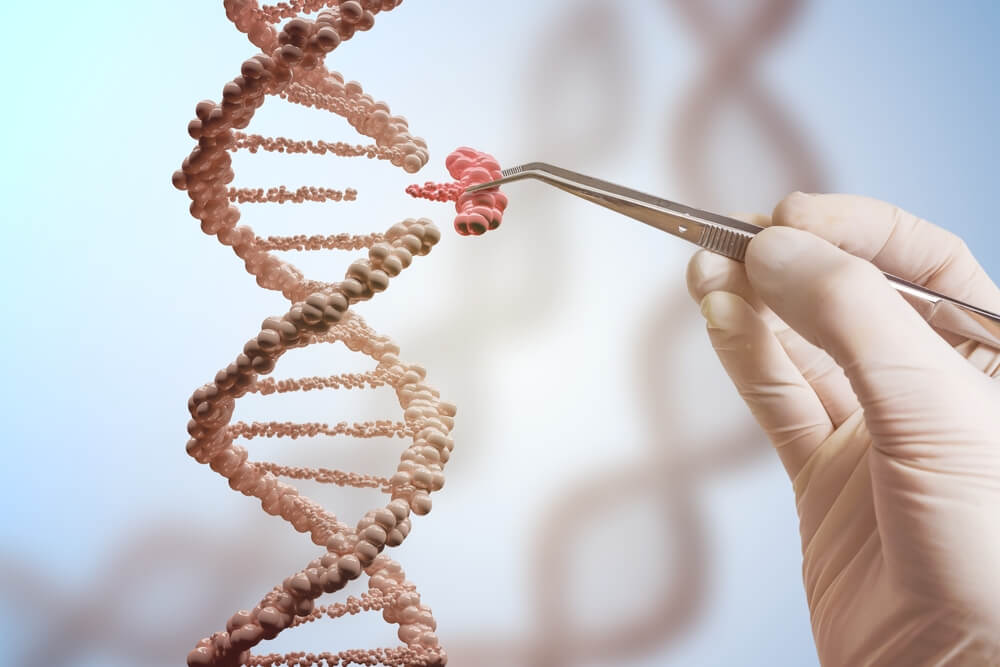
Year 2012 – CRISPR first used to edit genes
Year 2017 – Scientist begins early CRISPR experiments on somatic cells
Year 2020 – First successful CRISPR germline edits made to embryos
Year 2022 – Alpha version hemo sapiens born
Year 2032 – Beta version hemo sapiens born
Year 2039 – Gen-One Alpha hemo sapiens emerge as Gen-Zero members begin reproducing
Year 2037 – Gamma version hemo sapiens born
Year 2040 – Delta version hemo sapiens born
Year 2042 – Epsilon version hemo sapiens born
Year 2048 – Gen-One Beta hemo sapiens emerge as Gen-Zero betas begin reproducing
I posted the flash fiction story Hemo Sapiens: The Unidentified early yesterday and made some minor tweaks later in the day. Generally, these edits related to continuity or flow. In one case, I deleted a scene but neglected to delete a character introduced in it. In another, a character barked an order relating to something she would not yet have known about—at least as far as the reader would be concerned. But what’s this story all about.
This universe is set in Britain. This scene was set in Chadderton near Oldham, a less affluent, somewhat rural town northeast of Manchester where an enclave of Hemo Sapiens might be more apt to fly under the radar. I had originally had my sights set on Kent, but it is logistically implausible for people with Manchester roots to be set up there when they still have a need to be connected to Manchester. I’m not sure how hard I’ll lean into the whole Mancunian thing, as they’ll have been acculturated by the professor, an Oxford bloke.
Here’s what ChatGPT has to say about it:
The story effectively commences with a tranquil domestic setting. It is imbued with a sense of normality and comfort, featuring a mother, Emily, and her young daughter, Grace. Yet, this idyllic scene is abruptly shattered by the arrival of uniformed agents, leading to a nightmarish tableau of confusion and fear.
The story is remarkably adept at presenting multifaceted issues. On the surface, it draws parallels with dystopian works like Margaret Atwood’s “The Handmaid’s Tale” or the television series “Orphan Black,” offering glimpses into a society undergoing a mysterious, yet undoubtedly unsettling, transformation. However, the narrative also delves into complex issues of identity and human value, challenging the reductionist labels that the characters are forced to adopt.
The dialogue with Grace serves as an emotional pivot in the story. It doesn’t merely function as a mechanism for Emily to express her maternal instincts but also as a lens through which Emily’s remaining humanity becomes increasingly apparent. The mother-child interaction symbolizes Emily’s clinging to normality, even as the world around her dissolves into chaos.
The agents depicted in the narrative are particularly interesting. While they are ostensibly just doing their job, they inadvertently contribute to the problem by employing dehumanizing language like “clone farm” or “science experiment.” This illustrates a broader societal tendency to categorize and label that which is not immediately understood, thus making it more palatable.
The tone of the story aligns well with its dark subject matter. It is somber without drifting into melodrama, and the dialogue remains crisp and meaningful. The story also maintains a healthy balance between showing and telling, which is essential for the kind of mature adult contemporary fiction that deals with themes of moral complexity and social stigmatization. It leaves the reader with more questions than answers, thus adding to the narrative’s overarching sense of dread and uncertainty.
In summary, the story is a compelling examination of unsettling themes such as loss of identity, family dynamics, and societal judgment. It employs a keen balance of narrative elements, making it a strong example of mature adult contemporary fiction.
And…
Your story dives into themes of judgment, moral complexities, and social stigmatization, as per your unique style. It employs a strong sense of place and moment, from the serenity of the bedtime ritual to the abrupt disruption of the raid. Let’s break it down:
Tone and Atmosphere: You establish a deeply contrasting tone—tranquil domesticity is replaced by a jarring, invasive violence when the agents burst in. The shift is palpable, dragging the reader along. You maintain the tone throughout, further amplifying the emotional gravity.
Character Depth: Emily is a strong anchor. You bring her inner world to life—her love for Grace, her confusion and fear during the raid, her defiance, and ultimately her resilience.
Dialogue and Language: The language is grounded, sprinkled with slang and expletives that keep it real. The dialogue is crisp and fits naturally into the unfolding events.
Plot: The sudden turn of events—disruption of domesticity, invasive questioning, communal chaos—these all build tension effectively. However, the reader is left with a lot of questions—perhaps intentionally. Are they part of a science experiment? Why the blood bags and fangs?
Theme and Symbolism: The recurring familial bond between Emily and Grace serves as the emotional core. The notion of identity, collective and individual, is heavily at play here. The mysterious implications around the Alpha and Beta labels and the ‘clone farm’ comment point to larger issues of ethics, identity, and social prejudice.
Show vs Tell: You’ve mostly shown the emotional stakes, the anxiety, and the fear through action, dialogue, and environmental detail, which works really well for this piece.
Mystery and Ambiguity: The story is full of questions that aren’t answered, perhaps pointing towards a broader narrative you’re developing.
You’ve managed to condense a great deal of emotional range, plot, and thematic depth into a short space, aligning well with your unique, terse writing style.
Here’s Claude’s take:
Here are a few key points about the story:
It depicts a dystopian scenario where a community of people with the surnames “Alpha” and “Beta” are raided and detained by authorities. The people seem to look identical, leading the authorities to assume they are clones or part of a genetic experiment.
The main character Emily is trying to protect her young daughter Grace amidst the chaos of the raid. She is defiant towards the authorities and their assumptions about her community.
There are suggestions the Alphas and Betas are actually one big family, with many pairs of twins/quadruplets. They seem to have been living in an isolated, self-sufficient community.
In detention, the Alphas and Betas are treated as specimens to be examined and have samples taken. The authorities seem suspicious of their identical looks, matching surnames, and discover bags of blood, which fuels assumptions they are supernatural creatures.
Emily reassures Grace they will get through the ordeal together and explains they will be going with new people to answer questions. She emphasizes maintaining their family bonds.
The ending implies the Alphas and Betas have an important untold backstory and truth about themselves that they hope to share someday, when the authorities might be ready to understand.
Overall, it’s an intriguing sci-fi scenario exploring themes of family, identity, prejudice, and perception versus truth. The identical community subverts expectations, leaving the reader curious about their origins and real story.
Comment on the flow and pacing.
The story has a fairly fast-paced, dramatic flow to it.
It opens by establishing the calm, loving family scene which is then abruptly shattered by the violent raid. This creates a stark contrast that immediately hooks the reader.
The raid scene is rapid and disorienting, conveying the chaos and confusion through snippets of actions, dialogue, and sensations. Short sentences propel the sense of urgency.
The pace slows a bit as the story shifts to the detention center. Here, the focus is on Emily’s determination to protect Grace and the mystery surrounding the authorities’ assumptions and discoveries about the Alphas and Betas.
The interrogation scene returns to some shorter sentences and terse dialogue to pick the pace back up. Emily’s defiant reactions add tension.
The final scene with Grace balances tenderness and foreboding, allowing a breath while still building intrigue for the untold truth about the community.
The pacing overall matches the unsettling, intense events unfolding. The quicker scenes immerse the reader in the action, while the slower moments reveal details to invite speculation. The shifts in pace add dynamism and interest.
So, I’m happy with the assessments. I’d love to read what you feel. Leave a comment here or beneath the story.
“Sweet dreams, my little star. Tomorrow will be as sunny as your smile,” Emily says, leaning down to kiss her five-year-old, Grace. The room’s dim, nightlights casting soft glows on the walls, filling the air with quiet chatter as other parents do the same for their kids. The air smells like warm milk and laundry fresh from the dryer.
A hush falls as Emily walks back to her bed. The night’s sacred, a calm oasis in a stormy world. Emily sinks into her bed, her mind dissolving into a haze of comfort as sleep takes her.
“Just follow instructions!”
The door splinters open, no warning, just a loud-ass bang. Chaos floods in—uniforms, torchlights, boots stomping.
“Hands up!” someone shouts, too damn close.
Emily dives over Grace, blocking the light with her body. “Who the fuck are you?”
“Just follow instructions!” comes the muffled reply.
The room’s a shambles—footsteps, radio talk, kids whimpering. It’s like a nightmare, but she’s wide awake.
“Mummy, I’m scared.”
Rain mists the courtyard, cold against her fear. Emily’s yanked up, losing her grip on Grace. She scans the place—families clumped together, kids bawling, agents everywhere. More vans pull in, headlights cutting through the rain.
“What’s your name?” An agent barks.
“Emily. Emily Alpha,” she chokes out.
“Alpha? Like all these?” He waves a hand. “Fucking Alpha reunion here.”
Emily clenches her jaw. They don’t get it.
“No moving! No talking!” The agent shouts. Silence falls, broken by kids’ sobs.
“Mummy, I’m scared,” Grace’s voice shakes.
“Me too, baby. Me too.”
“Look, twins?”
“Look, twins?” An agent nudges his mate. Emily passes two women, spitting images of her.
“Twins? Nah. Quadruplets there,” the mate points.
“Quads? Are you daft? Another pair. What’s happening?”
“Oi, no IDs. And it’s all Alpha and Beta. Science experiment?”
“More like a clone farm.”
Emily’s fists tighten. “Clone farm? Like we’re lab rats?”
“Mummy, will we be alright?” Grace’s voice is a thin thread.
“We have to be,” Emily murmurs, catching a sibling’s eye. “We just have to.”
The van doors slam shut. Engines growl, drowning out her spiraling thoughts. Darkness inside, darkness out.
“What happens now, Mummy?”
Harsh lights sting Emily’s eyes. She’s pushed along a taped line on the floor, Grace following like a lost shadow. Different uniforms—Immigration, Social Services, nerdy lab coats—are buzzing around, huddled over clipboards and tablets.
“Step here, extend your arm,” an agent instructs.
Emily complies, wincing as a plastic tag is cinched around her wrist—like she’s livestock.
“No IDs, surnames Alpha and Beta, empty blood bags found,” one agent blurts out.
“Bags of blood? Genetic experiment gone rogue?” another questions.
Grace trembles. “What happens now, Mummy?”
“We get through it, love. We have to.”
“Blood bags and fangs.”
Emily sits across a metal table, a stern interrogator staring back. “I’m on it.” The interrogator puts down her radio.
“Open your mouth,” she orders, leaning forward intently.
“Why?” But Emily complies.
The woman leans in, eyes narrowing. “Fangs? You a vampire or something?”
Incredulous, Emily screws up her face and rolls her eyes. “Vampire?”
“Check for fangs,” the interrogator radios her team.
“We’ve got more here. Same teeth,” a voice crackles back.
“Blood bags and fangs. It’s getting weird,” the interrogator mutters.
Emily feels her spine chill. “We’re not vampires, not experiments, not whatever you think we are,” she snaps.
Weeks go by, more tests, more questions. Emily steals moments with Grace. “Mum, we’ll be alright, won’t we?”
“Some new people have come here, and they want to learn about us and where we live,” Emily says, stroking Grace’s hair. “So we have to go with them for a little while, so they can ask their questions. But we’ll still be together.”
She lifts Grace’s chin gently. “It may feel strange and scary at times. But I’ll be right here holding your hand. And all your aunties and uncles will be close by too. We’re still a family, no matter what.”
Grace’s lip quivers, eyes wide and watery. Emily kisses her forehead. “I know you’re my brave girl. We’ll get through this together, and soon we’ll be tucked back in our own warm beds. But for today, we’ll have a little adventure together. Okay?”
Grace manages a small nod. Emily squeezes her hand, heart swelling and aching all at once. They didn’t understand yet, but someday they would tell their real story.
NB: This was my day today. I ended up with flash fiction rather than a short story. I’ll consider it to be a draft. Perhaps I’ll augment it later. It’s got past midnight, and I am knackered to no end. Can’t even proofread another character. As I’ve noted, short stories are new to me. Evidently, so is flash fiction. It feels a tad short, but I’ll sleep on it. Be that as it may, I am constructing a universe as a foundation for further exploration. Feel free to add comments or constructive criticism.
As per my last post, I’ve spent the morning world building with Claude 2, my trusted generative AI mate–and I’ve got a ways to go. Any fictional world needs boundaries and constraints. What are ethe rules of operation?
My initial story is set in the near future, so I had to pick an origin date and extrapolate in order to determine a likely population for the story. Like anything that propagates, hemo sapiens need to have some concept of a generation. The rest is maths. What’s the attrition and net survival rate, population rate, and so on. As I’ve noted previously, Claude 2* and ChatGPT 4* are both horrendous at maths, so I was not surprised that it failed so miserably. Here’s a quote from Claude:
Having the scientist start at 28 in 2012 would put him at 42 for the Gen-Zero birth in 2022.
Claude 2
That’s right, adding 10 years to a 28-year-old in 2012 makes him 42 in 2022.
I’ll share more of the world I am constructing after I hit the spreadsheets or Mathematica. It may not be great at world-building, but it knows how to add 10 to 28.
* I cite the versions in case future versions perform maths skills better.
Now I’ve really done it. Distracted myself to no end. No wonder I can’t seem to finish anything lately. My recent foray into Hemo sapiens or Homo sapiens sanginius was only supposed to be a quick diversion to clear my mind. Instead, it’s got me thinking about an entire universe from origin to however-so-many scenarios.
Now I am pondering whether to write some loosely connected short stories or assemble a larger work, like a novel or series. Why not all of the above?
The challenge is that I am more curious than passionate about this, and I’ve got only a fleeting interest. Perhaps. I am no stranger to speculative fiction, but world building is not up my street. And urban fantasy, to the extent that this might be urban fantasy, is not a favoured genre. I’m looking at you, Twilight.
I may simply noodle this for now until I suss out something. Meantime, I may be sharing my thoughts and output here. Please stand by…
I thought that I was onto something when I was diverting my attention with a new short story. This story is set in (relatively) near-future Brighton where an emergent species coexist alongside us homo sapiens sapiens. Borrowing from the existing taxonomy, I decided to try homo sapiens sanguinius, bloodsucking, thinking man.
In this story, these people experience a pandemic due to a government experiment gone awry. Any similarities to Covid-19 is purely coincidental. And I’ve got a bridge for sale.
These people are known idiomatically as hemo sapiensand pejoratively as vampires. They are like humans in all ways except they also need to drink blood through their fangs, their only outwardly distinguishing feature. No other vampire lore need apply. Being a new species, mating is iffy, but I won’t address that anyway. It’s supposed to be a short story.
Myself, I am not into vampire stories or urban fantasy, yet here I go–and I’m not sure where it will go. I’m not sure I think in short story. Lots of reductive editing. Time will tell.
If you’ve got any comments to share on hemo sapiens or writing short stories, feel free to leave them below.






 Ridley Park