Advantagement: Behind the Story

2–3 minutes

Advantagement began as an experiment in writing. Short stories are not my usual medium, but that isn’t really the point.

The original idea was simple: write a story populated with invented words – terms that aren’t random nonsense, but which feel as though they could be English. Words that sound faintly familiar, perhaps even slightly anachronistic. Setting the piece in Victorian London helped with that illusion.

At first, I wavered between vampires and Sherlock Holmes. I chose the latter – though, strictly speaking, this is my own Holmesian invention. Like Holmes, my lead required a trusted companion. And because this would be a short story, everything needed to remain compact: a single focus, no wandering side quests, opening in medias res at a crime scene. Or rather, not a crime scene exactly – a disappearance. The mayor’s daughter is missing. Our team is called in.

Image: Sherlock Holmes encounters vampires. Who knew?

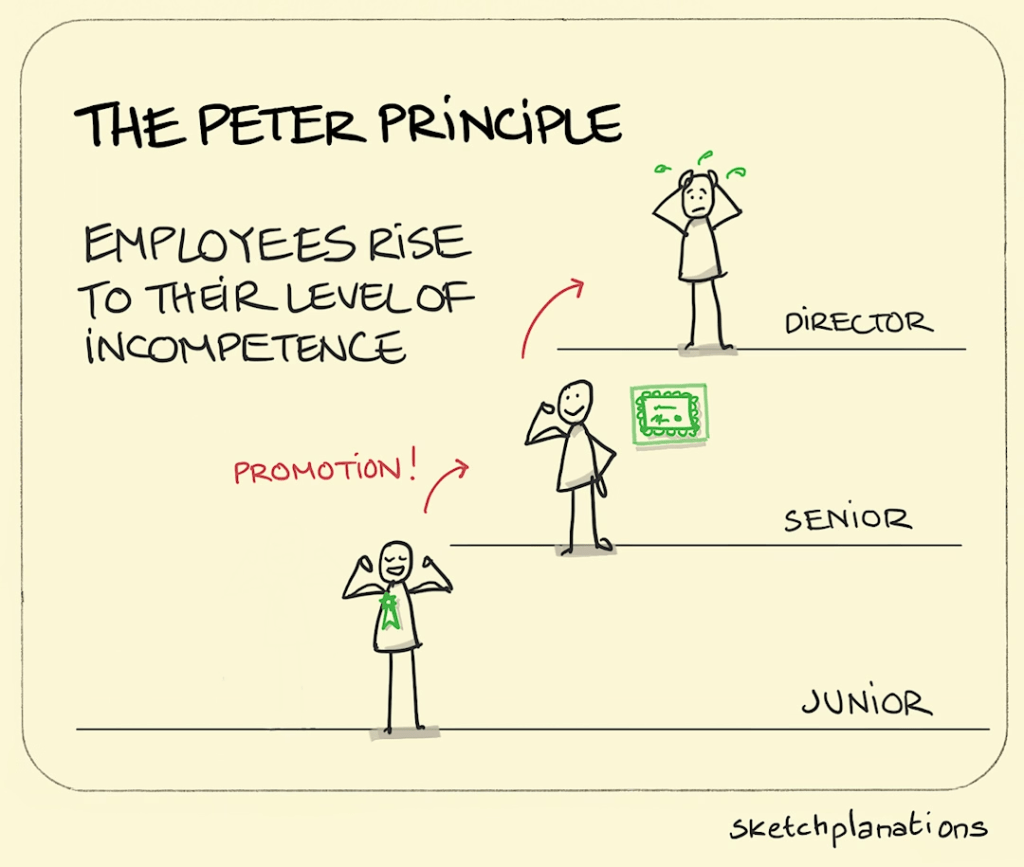
The lead became Inspector Peter Holt, named with deliberate irony after the Peter Principle: the idea that people are promoted to the level of their incompetence. Many organisations quietly run on this logic, though few would admit it. Peter embodies the principle – except he is not merely promoted beyond competence; he may never have possessed it in the first place. We have all met some version of Peter.
He is also the fountain of the story’s faux-English bloviation. Keeping him afloat is his partner, Miss Eleanor Hale. A female inspector in the period is unlikely, but not impossible – and fiction allows a little generosity. She is instrumentally competent, quietly effective. Perhaps, in some small way, she is a gender-swapped fragment of autobiography.

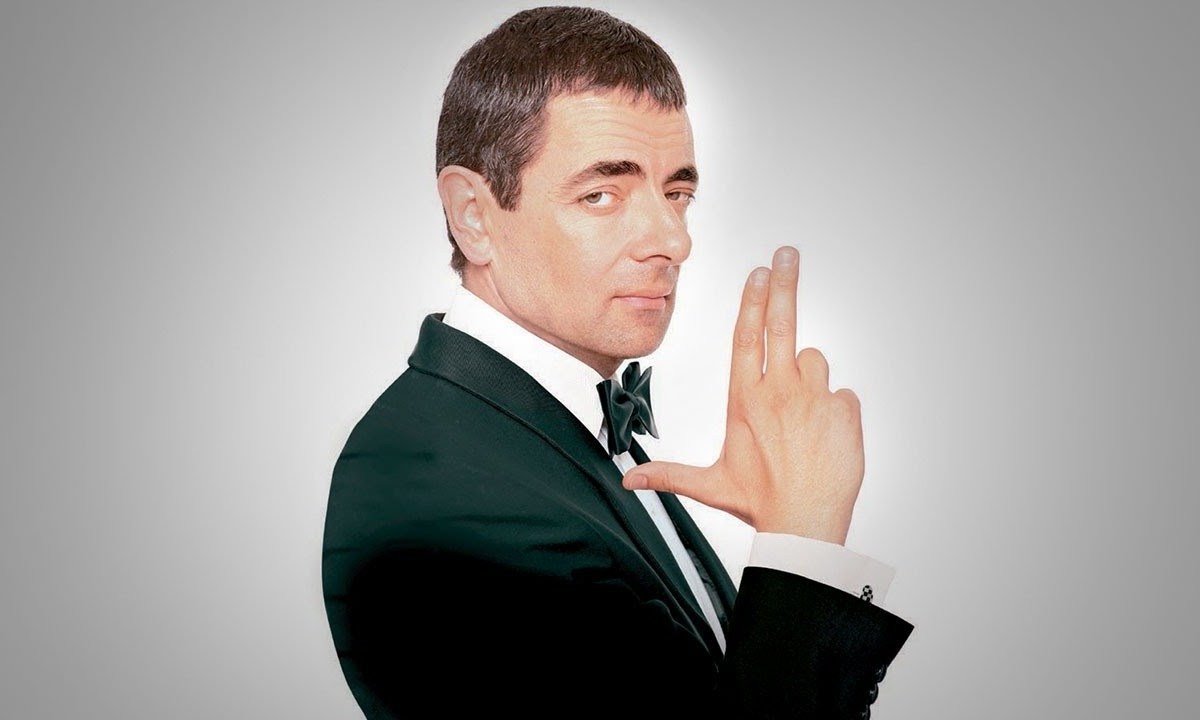
In imagining Peter, I found myself thinking of Inspector Clouseau, or even Mr Bean—figures of confident inadequacy. His language, meanwhile, carries a faint echo of Mr Burns from The Simpsons: ornate, misplaced, and entirely self-satisfied.
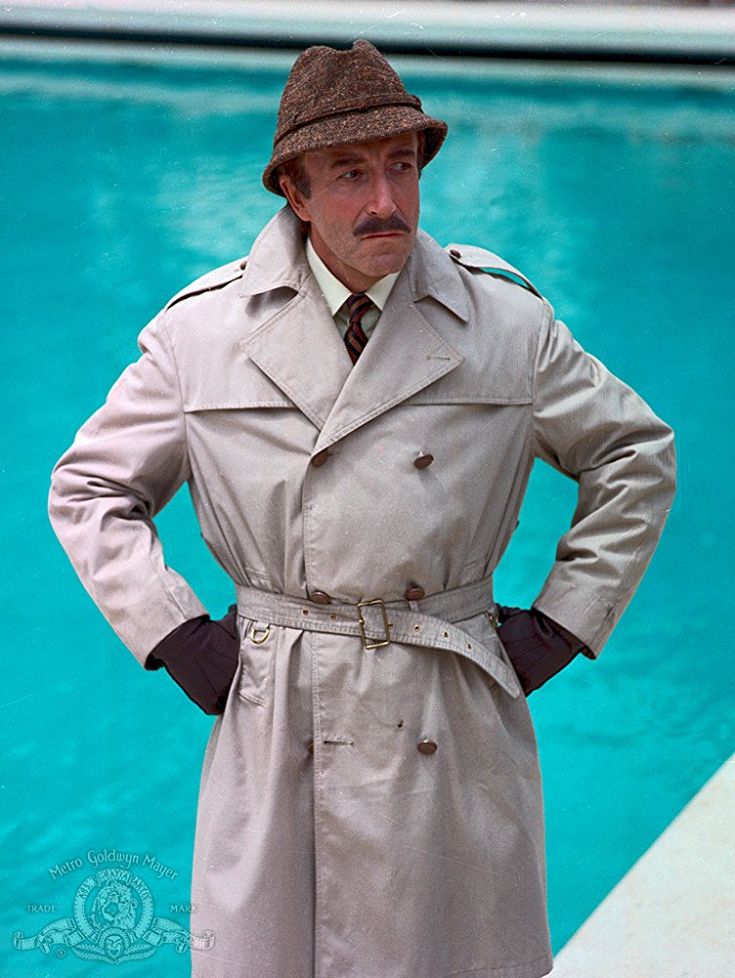
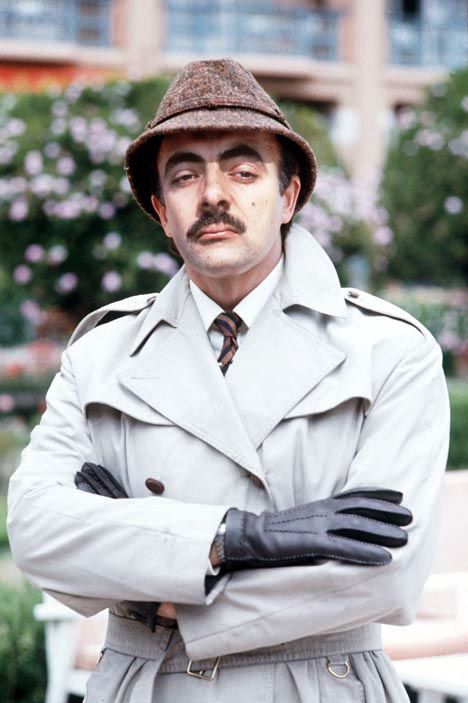
Image: Mr Burns

Hale’s role clarified thanks to my sister, who pointed me toward Agent 99 from Get Smart: the capable partner orbiting Maxwell Smart’s chaos. That pairing felt exactly right.
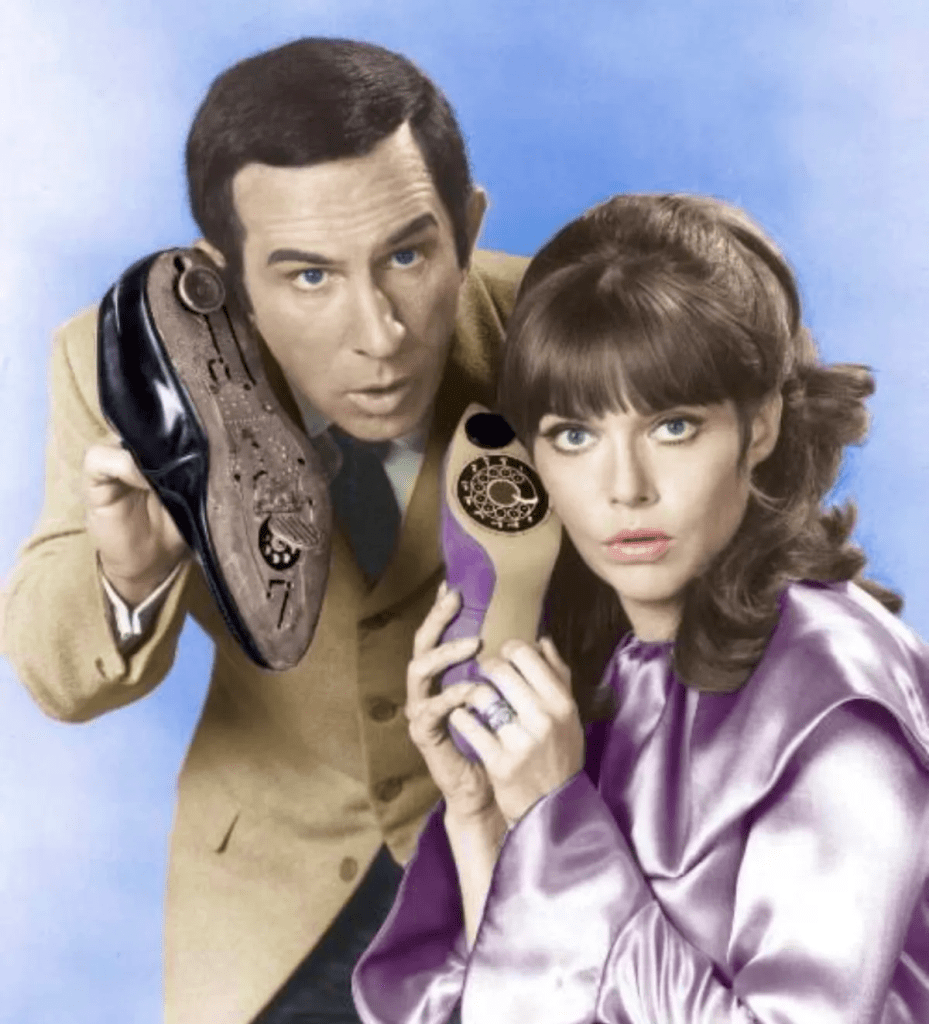
Image: Get Smart: Maxwell Smart (Don Adams) and Agent 99 (Barbara Feldon)

I usually write in silence. This time, by accident, I discovered a NoFX cover of “Linoleum” and left it playing on repeat for hours while drafting. It is playing again as I write this. Something about its restless, unvarnished energy suited Peter’s linguistic theatrics and Hale’s quiet steadiness.

I owe the linguistic spark behind this experiment to a particular pair of word-enthusiasts whose work first nudged the idea into motion. I am, unapologetically, a language geek; this is only one small corner of that fascination, and I will spare you the full catalogue.

In the end, Advantagement became a pleasant detour from my other projects and ongoing side quests. A distraction, perhaps – but a satisfying one.

Thank you, Donald Barthelme, for the historical inspiration.
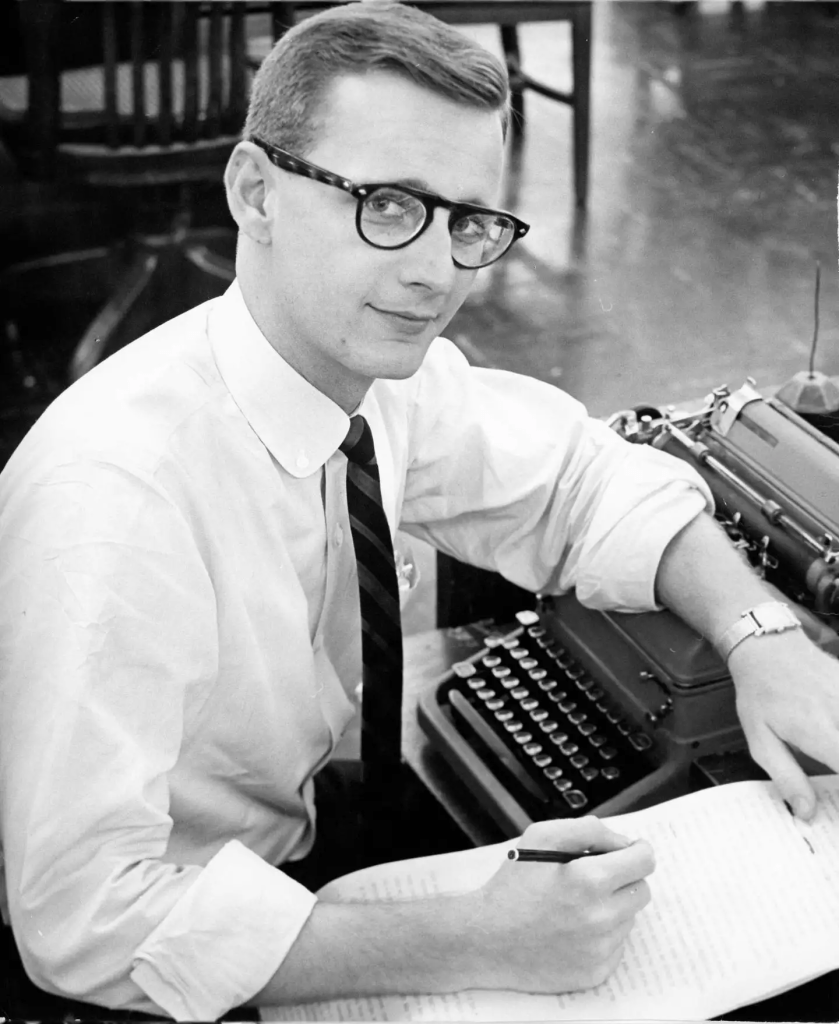
Image: Donald Barthelme, my lowkey Franz Kafka

I hope you enjoy it.

Cybergirl Meets Steampunk Girl

On my Philosophics Blog, I share my experience using Midjourney’s image-to-video feature. In that article, I discuss some benefits and limitations of Midjourney. This is an adjacent discussion.

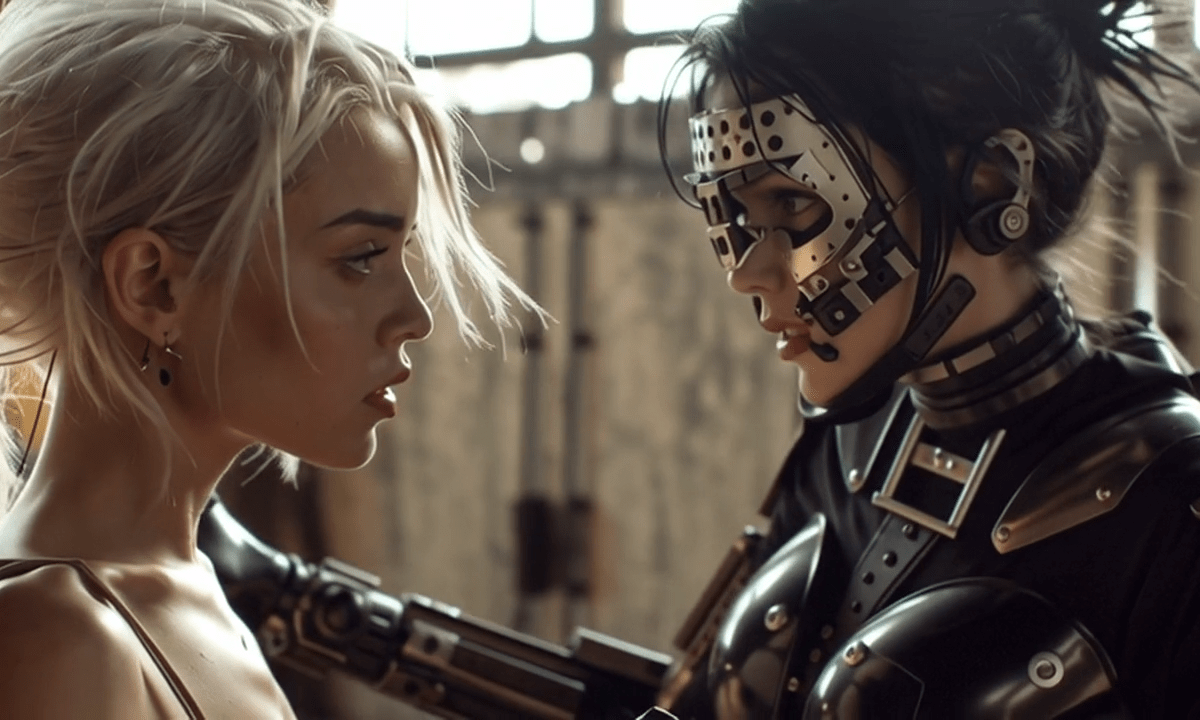
Image, still from video: Cybermech Warrior Meets Steampunk Girl

The clip above was an image I generated about a year ago – a steampunk girl on the left battling a cybermech whatever. This is ostensibly the prompt I used.

cinematic photograph, a pale young European steampunk woman meets a steampunk ninja villain woman dressed in black with mechanical arms

I forgot about the ninja part, hence the black outfit.

tl;dr: When I prompted Midjourney to animate the two, rather than a vicious fight to the death, I got a tender dance and race to the bed. I made that last part up. Watch for yourself.

Now, I am left wondering if I should pursue a trope of a woman falling in love with another cyber-woman. Has this been done?

It would undoubtedly be genre fiction – whether sci-fi, steampunk, or erotica remains to be seen. Perhaps more of a manga.

This isn’t my space, so I’m being facetious, but I can still imagine the implications.

Choosing Beta Readers

After my post yesterday on beta readers, I thought a short YouTube video might make a fine companion.


Here are the timestamps for the content:

  • 00:00 Intro – Why Beta Readers Matter
  • 00:24 What a Beta Reader *Is* (And Isn’t)
  • 01:04 Genre Mismatch: The Common Mistake
  • 01:25 How to Vet Your Beta Reader
  • 01:50 What Good Feedback Sounds Like
  • 02:05 What Bad Feedback Sounds Like
  • 02:18 Building the Relationship
  • 02:38 Final Thoughts (and a Warning)

I hope to create more content focused on writing, particularly my own writing.

Let me know in the comments if you like this and if you have any topics you’d like me to cover. Until then, it’s back to writing… ☼

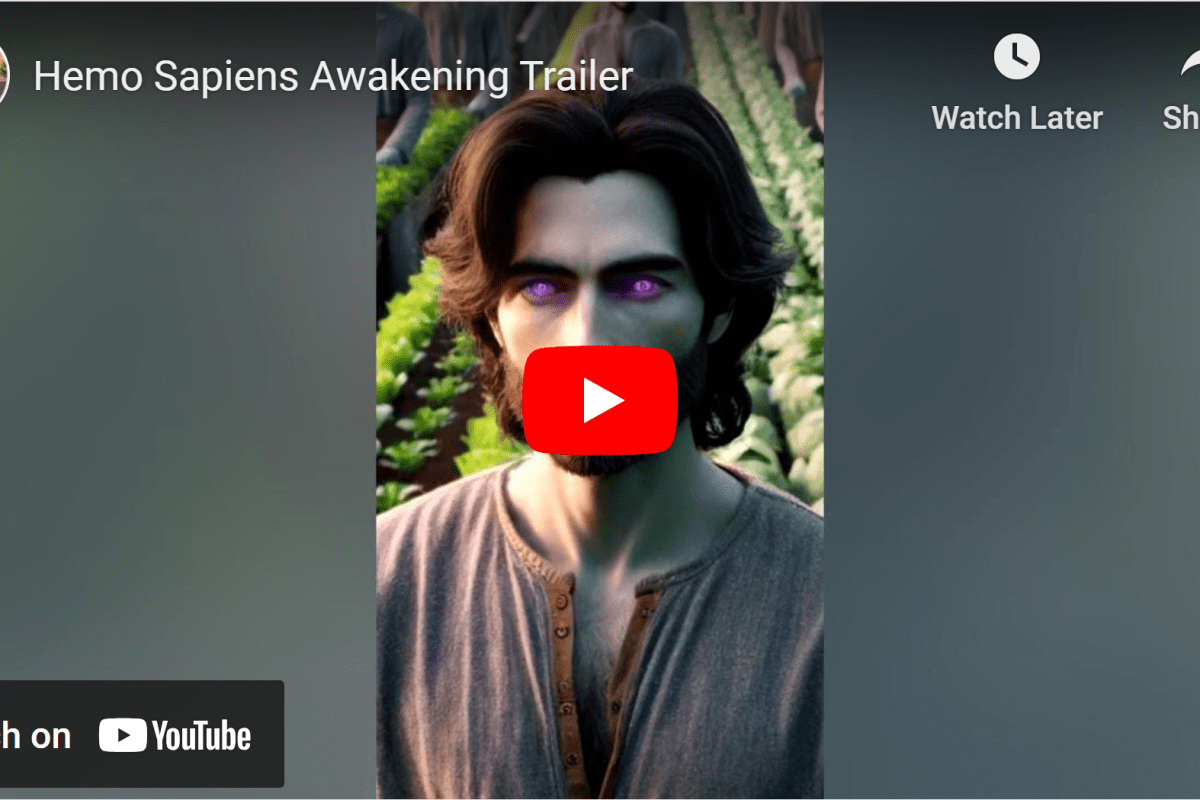
Hemo Sapiens: Awakening Trailer

The trailer advert for Hemo Sapiens: Awakening is now available on YouTube as a 60-second short.

I think I’ll stick to writing. The cover-making wasn’t half bad, but video production with Generative AI is not all it’s cracked up to be.

I considered Artlist.io, but I didn’t want to spend the cash. Maybe next time.

Let me know what you think. You can find a copy of the book from a link on my announcement page. If you get a copy, leave a review. It helps to appease the algorithm gods.

The Sinister Side of AI

This is a wonderful interview with Science Fiction writer, Cory Doctorow, on the desire by some to replace screenwriters with AI. I recommend rewinding to watch the entire clip, but this is cued to his response on AI and writing.

When you see a Hollywood exec saying, effectively, “We want to fire all the screenwriters and replace them with plausible sentence generators’, that’s because, even if the plausible sentence generators aren’t very good, they have this weird hubristic faith in their ability to, through iteration, replace the screenwriter who wrote good dialogue with their own kind of wild-ass ideas. And you know the screenwriter’s experience of getting notes from an executive is already just AI prompting, right? Like, I need you to write me a version of Indiana Jones but in space—and could you make it a horror movie but make the hero a 10-year-old girl, right? That is, you know, your classic executive-to-writer note. And then the writer makes it, and they go, ‘Can you bring in a lovable animal in act two?’ This is just prompting, right? This is just like me writing instructions for removing a grilled cheese sandwich from a VCR in the style of the King James Bible, right? It’s just prompting. And so, you know what you get with automation is not something that’s good but something that doesn’t complain when you try to impose your genius on it. And it’s ever been thus.

— Cory Doctorow

At the beginning of the interview he discusses how he connects with the reader.