Video: Discussing Needle’s Edge, Part 1

Some novels are born in a lightning bolt. Needle’s Edge was forged in sediment: years of observations, contradictions, and lived experience settling into something that could no longer be ignored.

Video: Author Ridley Park Discusses Needle’s Edge

The video is intentionally, if not mercifully, short for all parties considered; it comes in under five minutes.

From the description:

Needle’s Edge is Ridley Park’s latest novel-in-progress, a raw, unvarnished work of literary realism with grit under its nails and philosophy in its bloodstream.

In this first episode of a new series on my writing process, I unpack the origins of Needle’s Edge: from life between the vantage point of an anthropologist and the poetry of Bukowski, to lived experience inside the worlds of sex work, addiction, and the quiet economies of trust and betrayal.

I reflect on the shift from speculative fiction to a tethered, reality-bound narrative, a story that rejects morality tales, subverts tropes, and meets its protagonist, Sarah, in the middle of her life before looping back to her beginnings. Along the way, he weaves in themes from Simone de Beauvoir, explores personae and code-switching, and interrogates the myths of middle-class respectability.

This is not a documentary – twenty years of lived history are compressed into five – but it’s true in its bones. Join me as he begins peeling back the layers of Needle’s Edge and the philosophy that drives it.
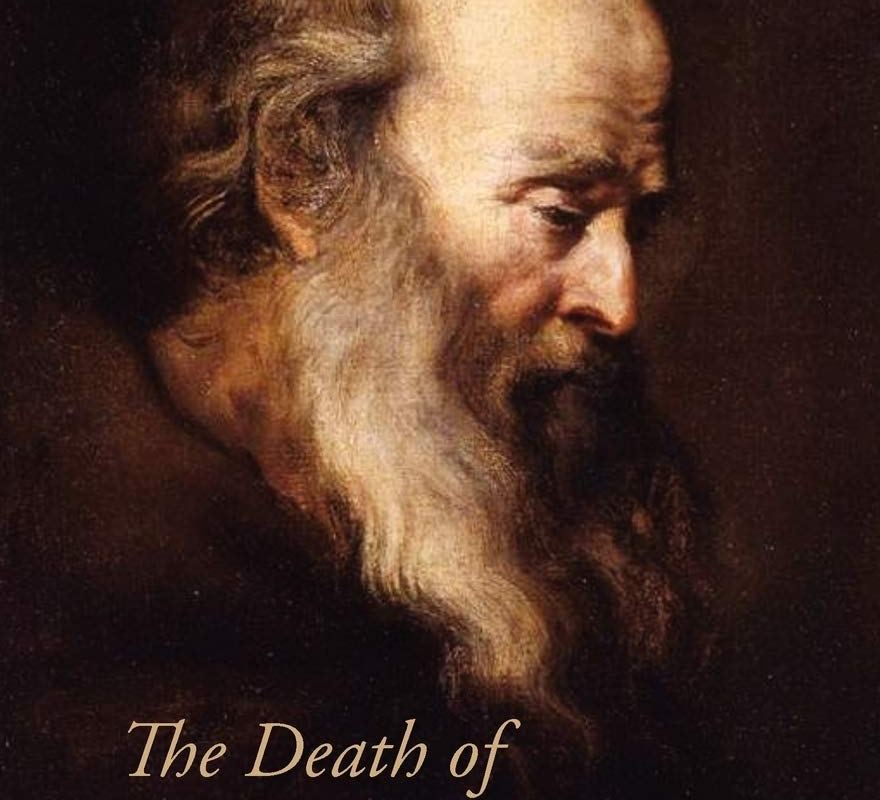
Midway Through Ivan (No, the Other One)

Halfway through The Death of Ivan Ilych. Not to be confused with One Day in the Life of Ivan Denisovich, though honestly, Russian literature does love an Ivan in crisis. I used to binge on it – more Dostoyevsky than Tolstoy, if we’re keeping score – but there’s something about the philosophical dread that still hits like a cold slap.

Ivan’s recently been promoted and is busy feathering his little bourgeois nest:

In reality it was just what is usually seen in the houses of people of moderate means who want to appear rich, and therefore succeed only in resembling others like themselves…”

Damask. Polished bronze. Pretentious plants. It’s all there in Chapter 3—a catalogue of aspirational mediocrity. And here’s the kicker: he thinks it’s exceptional. That’s the tragicomic punchline of late capitalism, isn’t it? Everyone desperate to be unique by copying the same IKEA showroom.

The wallpaper may change, but the existential wallpaper paste remains the same. Conformity with delusions of grandeur.

The Sinister Side of AI

This is a wonderful interview with Science Fiction writer, Cory Doctorow, on the desire by some to replace screenwriters with AI. I recommend rewinding to watch the entire clip, but this is cued to his response on AI and writing.

When you see a Hollywood exec saying, effectively, “We want to fire all the screenwriters and replace them with plausible sentence generators’, that’s because, even if the plausible sentence generators aren’t very good, they have this weird hubristic faith in their ability to, through iteration, replace the screenwriter who wrote good dialogue with their own kind of wild-ass ideas. And you know the screenwriter’s experience of getting notes from an executive is already just AI prompting, right? Like, I need you to write me a version of Indiana Jones but in space—and could you make it a horror movie but make the hero a 10-year-old girl, right? That is, you know, your classic executive-to-writer note. And then the writer makes it, and they go, ‘Can you bring in a lovable animal in act two?’ This is just prompting, right? This is just like me writing instructions for removing a grilled cheese sandwich from a VCR in the style of the King James Bible, right? It’s just prompting. And so, you know what you get with automation is not something that’s good but something that doesn’t complain when you try to impose your genius on it. And it’s ever been thus.

— Cory Doctorow

At the beginning of the interview he discusses how he connects with the reader.