New Book Release: Temporal Babel

An unsolved literary mystery where language fails first.

I’m thrilled to announce the release of my latest novella, Temporal Babel, now available in paperback and hardcover. It’s a story about a man who arrives with no language the world can understand—and the woman who tries to name him anyway.

Audio: NotebookLM podcast on this topic.

Set in small-town New Mexico, Temporal Babel is not a thriller. It’s not about saving the future or rewriting the past. It’s about the weird middle ground where things don’t quite translate—linguistically, temporally, emotionally.

If you’ve ever wondered what it would feel like to encounter someone truly out of place—where even the word where doesn’t land—you’ll find something resonant in these pages.

What’s it about?

A young woman discovers a man on the roadside.
He’s naked. Marked with strange blue scars.
And the words coming out of his mouth aren’t quite English.
Or anything else.

No memory. No ID. No history that the town of Anika can decipher. But as he begins to recover, the sound of his voice becomes its own riddle.

Some readers may call this speculative fiction. Others might shelve it under linguistic noir. I just call it a contact story—minus the aliens, or is it?

Why read it?

  • 🔹 If you enjoy novels that refuse to explain themselves, this one’s for you.
  • 🔹 If you like language play, phonetic drift, and dialect as plot, this one delivers.
  • 🔹 If you like stories where the weirdness builds slowly, quietly, without fireworks—you’ll feel right at home.

“Dis kē?” he asks.
What is this?
No one knows. Not even the narrator.

📖 Temporal Babel is available now in paperback and hardcover.

Read it for free with KindleUnlimited.

You can explore the book page here or head straight to your favourite indie or online retailer.

Thank you for reading, for puzzling, and for letting mystery have the final word.

—Ridley

Why I Create Audiobooks for All My Books

This isn’t a promotional post. I’ve recently discovered the hidden value of audiobooks—and it has nothing to do with selling them.

Back in 2024, when I released Hemo Sapiens: Awakening, I must have read the manuscript a thousand times. I even recorded an audiobook, using an AI voice from ElevenLabs. At the time, Audible wouldn’t accept AI narration. The rules have since changed. It’s now available—though still not on Audible (and therefore not on Amazon).

I’d hired a few proofreaders and beta readers. They helped. The book improved. And yet, even after all that, I still found typos. Those bastards are insidious.

The real revelation came when I started listening.

Since I’d already created the audiobook, I began proofreading by ear. That’s when it hit me: hearing the story is nothing like reading it. Sentences that looked fine on the page fell flat aloud. So I rewrote passages—not for grammar, but for cadence, clarity, flow.

Then came the second benefit: catching mistakes. Typos. Tense slips. I favour first-person, present-tense, limited point of view—it’s immersive, intimate, synchronised with the protagonist’s thoughts. But sometimes, I slip. Listening helped catch those lapses, especially the subtle ones a skim-reading brain politely ignores.

For Sustenance, the audiobook was an afterthought. I submitted the print files, requested a proof copy, and while I waited, I rendered the audio. When the proof arrived, I listened instead of reading. I found errors. Again. Thanks to that timing, I could fix them before production. Of course, fixing the manuscript meant updating the audiobook. A pain—but worth it.

I hadn’t planned to make an audiobook for Propensity—some of the prose is too stylistic, too internal—but I did anyway, because of what I’d learned from Sustenance. And again, I found too many errors. Maybe I need better proofreaders. Or maybe this is just the fallback system now.

I’ve had Temporal Babel, a novelette, on hold for months. I won’t release it until I do the same: make an audiobook, listen, reconcile with the page.

Lesson learned.

I’ve got several more manuscripts waiting in the wings—some have been loitering there for over a year. Their release has been deprioritised for various reasons, but when they go out, they’ll have audio versions too. Not for the sake of listeners. For me.

Honestly, I should do this for my blog posts as well. But editing on the web is easier. The stakes are lower. Mistakes don’t print themselves in ink.

Temporal Babel: A Novelette

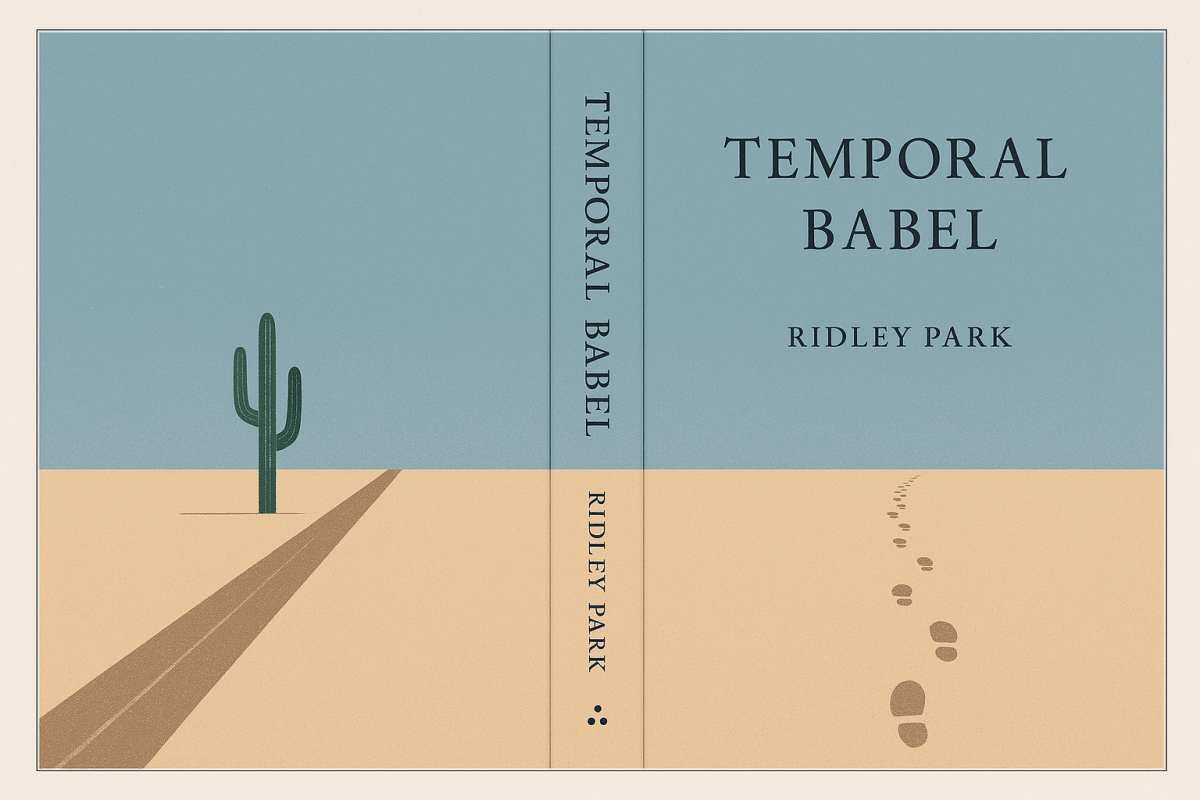
I just completed a second draft of a novelette I’ve been working on. I had ChatGPT (Dall-E) render a quick sample cover.

The story takes place in New Mexico, and I wanted a minimalist visual style to match the prose. I believe that a beige desert set against a blue sky is perfect. The deserted highway with a single cactus speaks volumes. The footprints in the desert are also evocative. I love the simplicity of the palette.

Though it revered the front and back cover art, it generally followed my instructions. Artificial intelligence (AI) has made significant progress in a year. All of the words are spelt correctly. I could Photoshop this into shape with little effort.

I only plan to release this as an ePUB because I am compiling a triptych. Currently, the body copy stands at 105 pages, so with title pages and the rest, it should reach 112 pages, which is perfect for seven 16-page signatures.

It’s a Matter of Time

After an extended hiatus, I’m back in writing mode. I’ve got an unfinished prequesl to Hemo Sapiens and several unfinished short stories.

Currently, I am focusing with themes of language morphology and mundanity of history.

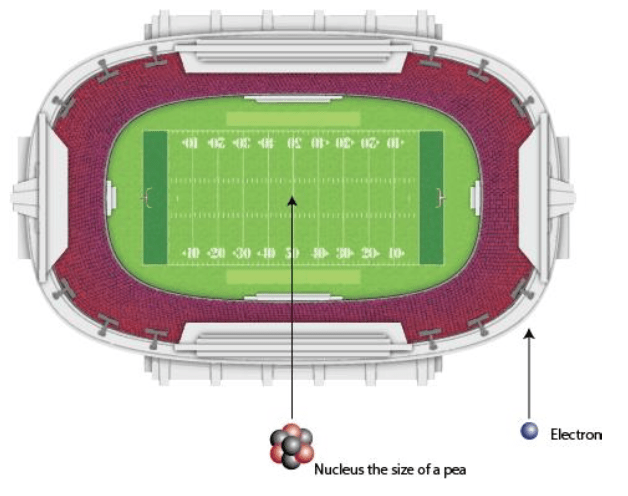
History is like an atom – more space than substance — yet it feels somehow significant to us in the moment. The substance-to-space ration is that of a pea in a football stadium, and yet we perceive these things as solids, liquids, gasses, and plasmas.

History is hitting the only car in an otherwise empty car park. Of course, you and your insurer give it extra significance, but history is more often than not self-absorbed narcisism and filling in the blanks with somewhat cohesive storylines.

As for language, people understand the notion that contemporary language is “living”, but they don’t realise as much that over time tiny perturbations result in huge shifts. Consider Middle English from the days of Chaucer, some 650 years ago, versus Shakespeare, only 450 years ago. The latter, is relatively readable; the former, nosomuch.

In the short term, some complain about incorrect usage, “Save cursive writing”, and “kids forget how to write” with their texts and social media shortcuts. What’s the world coming to?

I ‘ve always questioned time-travel stories where people visit places in the far-future or -past and everyone happens to be perfectly understood, save perhaps for a British accent for good measure – perhaps Germanic for ill measure. lol

I’ve been writing some future-forward stories involving artificial intelligence and more on the nature of time and space, but I’ll save these for another day. Now, I need to focus on Temporal Babel.