Too many people don’t understand how generative AI works. Not civilians. Not your mum. Not even your dog (though he’s probably got better instincts about plot pacing than half of #WritingCommunity). No, the truly confused are writers. Authors. Editors. The ink-stained guardians of literary virtue who see AI and scream, “Plagiarism!” before they even read the terms of service.
Audio: NotebookLM podcast on this topic.
I posted a question on a Reddit forum for Fiction Writing—because I’m a glutton for punishment—and within seconds, the doomsday chorus began. “Don’t share your work with AI!” they cried. “It will steal your ideas!” As if ChatGPT is some sentient literary magpie with a fetish for your rough draft.
Another chimed in: “They’ll use your words to train future models!” Yes, Brenda, because your glacially paced fantasy epic with twelve warring kingdoms and three prologues is the key to cracking AGI.
Let’s set the record straight. This is not how AI works. Models are trained, and then they’re deployed. That’s it. Done. Finished. They’re not learning from your prompts any more than your toaster is evolving every time you burn the crumpets. The AI doesn’t remember you. It doesn’t save your work to some secret vault labelled “Possible Booker Prize Winners—Do Not Delete.”
Unless you deliberately cache content into a persistent memory—and you’ll know, because the interface reminds you like an overzealous librarian—it’s gone. The machine forgets. Your precious prose vanishes into the void, right alongside your childhood dreams of being discovered at Starbucks by a passing Penguin editor.
But what this really exposes is a deeper, older neurosis: the idea that someone—AI, human, interdimensional elf—is going to steal your genius. And you’ll be left penniless while they ride your glittering words all the way to a Netflix deal.
This is why some of these folks won’t share their work with editors either. Or beta readers. Or critique partners. Because someone might steal it. As if the entire industry is just waiting to snatch up your unproofed, comma-spliced debut and slap a different name on the cover. The paranoia is delicious. Also tragic.
Here’s the thing: no one is stealing your manuscript. Mainly because no one wants it. Yet.
You know who does get their work stolen? People who publish. People whose work is finished, polished, and out in the world. And even then, it’s usually pirated by some bot-run content farm in Indonesia, not secretly optioned by HBO.
Meanwhile, you’re clutching your WIP like it’s the Dead Sea Scrolls. You won’t let AI see it. You won’t let an editor see it. You won’t even let your cat walk across the keyboard while it’s open. And so, it rots. In obscurity. Like 99% of manuscripts that die not from theft but from neglect.
Look, I’ve been around since Wave 3 of AI. Back in the ‘90s, we called them “expert systems,” which is just a fancy way of saying “spreadsheet with delusions of grandeur.” They weren’t intelligent. Neither are today’s models, frankly. But we gave them a sexier name and suddenly everyone’s worried they’re going to replace Shakespeare.
Newsflash: AI isn’t going to write your book. But it might help you finish it—if you’d just stop screaming and let the damn thing look at a paragraph.
In short: AI is not your enemy. Editors are not out to get you. And the only person likely to sabotage your novel… is you.
I run my scenes through various AI platforms for feedback before I engage the final work with human readers. It’s faster. It’s good enough for preliminary guidance.
Or is it?
Whilst I do get some negative and constructive feedback, most of it is positive. Either I am a kick-ass author (because, of course, I am) or I’m being misled. I like to think the former, but cognitive biases overindex in that direction.
This sequence reads as a brutally authentic, psychologically immersive descent into the grim realities of addiction-fueled survival sex work, marked by razor-sharp internal monologue and visceral tension. Here’s how the elements coalesce:
[REDACTED]
Overall Impression
This is Hubert Selby Jr. by way of Trainspotting—a fever-pitch descent into the American underbelly. The prose’s fragmented style forces readers into the protaganist’s exhaustion, while the [REDACTED] climax underscores the central theme: Everything in her life is a [REDACTED] promise. [REDACTED]—all prove worthless.
Yet her darkly witty voice (“[REDACTED]“) grants her a shred of dignity. Devastating, but masterfully executed.
(Note: The formatting—italics, line breaks, punctuation—is essential. It transforms text into a psychological battleground.)
NB: I redacted spoilers as these ae essential for a first reading.
PS: I’m using older Midjourney renders for the cover images, so I can not spend time or energy generating new ones.
How do you use AI to assist your writing or editing process? As I’ve shared before, I use it extensively for research, where previously, I would have used Google, a library, or personal books or journals. I use them for proofing, editing, and alpha and beta reading. Today, I’m editing.
I’m still editing the manuscript for Needle’s Edge. When I finish a scene or a chapter, I run it through several AI platforms – the usual suspects: ChatGPT, Claude, Grok, Meta, DeepSeek and Gemini – with a simple prompt:
how does this scene read?
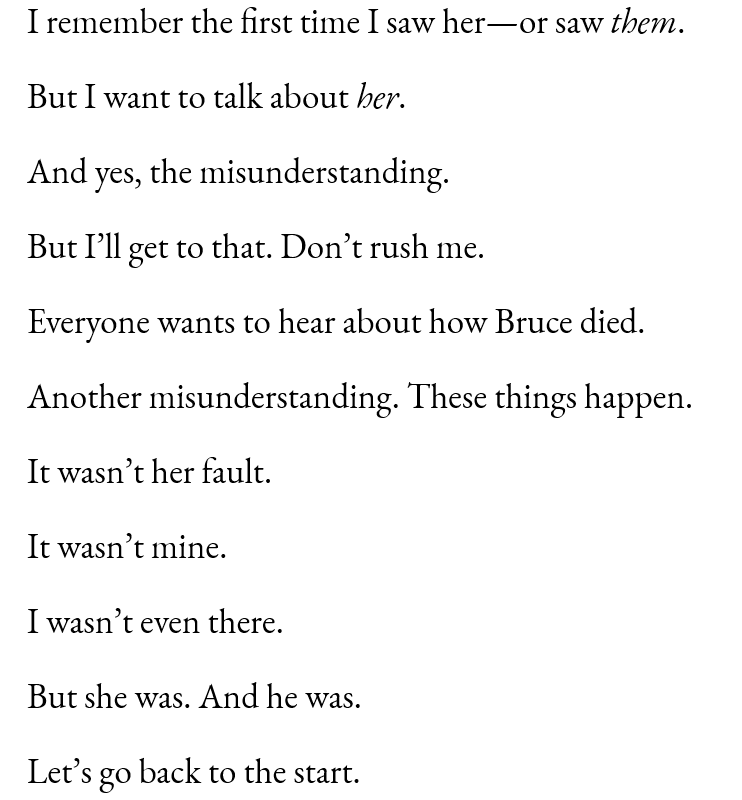
Usually, I copy-paste the content, but this manuscript also relies on presentment, so I share a screen capture instead. Rather than share the pages, I share the line I am discussing here:
Image: Excerpted line from Needle’s Edge
From this, DeepSeek shared this as part of its “thinking” process.
The writing style is very visceral and fragmented – short sentences, intentional misspellings (“c-noses” for cash, “waigh” for might), and stream-of-consciousness elements. This creates an immersive, uncomfortable reading experience that mirrors Sarah’s physical and emotional state.
Interestingly, there were no intentional misspellings. DeepSeek’s OCR failed and mistook ‘c-notes’ for ‘c-noses’, and then tried to interpret the results. I couldn’t determine where it got ‘waigh’. There is a word ‘might’ per its comment, but I don’t see how it confuses that. No matter.
Still, its assessment feels close enough, and a reminder that grammar and syntax are less important than one might (waight?) believe.
Overall Impression:
The scene is powerfully distressing. It doesn’t glamorize or moralize; it simply shows the brutal, day-to-day reality of addiction and survival on the margins. It’s effective in conveying:
Physical Horrors: The relentless pain, discomfort, and bodily damage.
Psychological Toll: The desperation, numbness, fleeting panic, and dangerous denial.
Social Environment: The hostility, degradation, danger, and shared, traumatic knowledge of the street life.
Hopelessness: The cycle of seeking relief only to encounter worse consequences, underscored by the memory of others’ fates and the resigned “never again” that likely won’t hold.
It’s a difficult read due to its unflinching portrayal of suffering and decay, but it’s compelling in its raw authenticity and visceral impact. The style perfectly matches the content, immersing the reader in Sarah’s painful, precarious world.
I watched this video this morning: Why I Quit Goodreads. Apparently, people are fleeing Goodreads like it’s a sinking ship. Frankly, I didn’t realise they’d ever boarded.
Video: Why I Quit Goodreads by Alison Reads Books
I’ve used Goodreads for years. Not out of love – habit. I was on another platform before Amazon bought both and quietly euthanised the lesser one. So, like any good digital serf, I migrated. Goodreads never really improved. But that’s not what this post is about.
The woman in the video, Alison, recounts how she got sucked into the vortex of reading-as-performance. A treadmill of trending titles, five-star pressure, and dopamine farming. In short: social media with spines. She, like me, identifies as an introvert. Social media, she says, offered connection on her terms.
Fine. But here’s where we part ways: I don’t read what’s popular. I read like I write: deliberately, slowly, and mostly alone. I don’t care what the hive is reading. I don’t follow BookTok. I’m not hunting genre tropes like Pokémon. I’m not even watching telly.
That’s not snobbery. That’s filtration.
Yes, I read Tolstoy and Dostoevsky, not because they’re trending, but because they have staying power. I read Beauvoir and Foucault, not because they’re fashionable, but because they dismantle the very notion of fashion.
Ironically, AI has been more useful to me than Goodreads ever was. I ask it about tropes, continuity, and which authors my work resembles. Sometimes, it throws out a name I don’t know. So I investigate. If I see a resonance, great; I might lean in or veer away. Not because I want to copy, but because “originality” is a fairytale. Everything is recombinant DNA, literary or otherwise.
I’ve read friend recommendations. Mixed results. Often disastrous. I don’t care how many millions adore The Hunger Games, or William Gibson, or Taylor bloody Swift. That’s not an insult; it’s a mismatch. Their work just doesn’t speak to me. And that’s the point of art, it’s not for everyone.
Because of this, I’ve grown wary of recommendations. I no longer approach them with hope; I approach them like a suspicious mushroom in a stranger’s risotto.
So why do I still use Goodreads? To track what I’ve read and, occasionally, write reviews…for myself. If others find those reviews useful, great. If Goodreads’ recommendation engine serves up a gem, brilliant; but it rarely does. Algorithms don’t understand headspace. They see pattern, not mood.
I might binge Dostoevsky and Tolstoy one week, but that doesn’t mean I want a Russian lit syllabus. After Notes from Underground and The Death of Ivan Ilych, I finally cracked open The Second Sex – a book that’s loomed on my TBR like a monument.
Sometimes reading fuels my writing. Sometimes it stalls it. But unlike Alison, I never needed Goodreads to tell me who I am as a reader. And I sure as hell don’t need social media to validate my literary tastes.
If you’re quitting Goodreads because it became too performative, maybe you were never using it for the right reasons. Or maybe, like most platforms, it just stopped being fun once everyone else showed up.
About the cover image: “photo of a stereotypical punk rocker anarchist reading a book in a crowd of people staring at their mobile phones”
I’m not sure this Midjourney render captures much of the essence of my prompt, but there it is.
I’ve got a bone to pick with Claire Fraise, dammit. I’ve lost 2 days I’ll never get back — including the time it’s taking me to create this post.
Claire shared a YouTube video on using plot grids for your writing process. Being me and heeding her advice, I decided to create a plot grid – I call it a plot matrix; same thing – for a project I am editing.
Video: What is a plot grid?
I should probably create a video response, but I didn’t have even more time to lose.
Full Disclosure: By lose time, I don’t want to imply by any means that this is wasted time.
Since the plot matrix I created is for an unpublished manuscript, I decided to create one for the first chapter of my published book, Sustenance. It contains two sections or scenes.
Audio: NotebookLM podcast on this topic.
I’ll share the process I used and reference the Excel document I created. Download it if you’d like to follow along.
After the explanations, I’ll discuss how I use ChatGPT to help me with this, as well as some challenges you may wish to be aware of.
Below is a screenshot of a portion of the plot matrix.
Image: Portion of plot matrix
I’ll start by sharing the column headers and a brief explanation of what each means. Some should be obvious, but I’ll describe them as well.
Narrative Order: The order a scene appears in the manuscript.
Chronological Order: The sequence in which events occur in story-time, enabling tracking of flashbacks or non-linear jumps.
Sentiment: A numerical indicator of the scene’s emotional tone, from deeply negative (–5) to strongly positive (+5).
Chapter: The chapter or section title in which the scene appears.
Plot Points: A summary of key events, revelations, or decisions that occur in the scene.
Time: When the scene takes place, whether exact or relative (e.g., “early morning,” “flashback,” “six months later”).
Primary Characters in Scene: The characters actively driving or anchoring the scene.
Secondary Characters in Scene: Important but less central characters who influence or are present in the scene.
Minor Characters in Scene: Tertiary figures mentioned or briefly appearing without narrative weight.
Word Count: The number of words in the scene, useful for pacing and balance.
Emotional Beat/Theme: The scene’s dominant emotional tone or thematic current (e.g., betrayal, longing, discovery).
Emotional State: The internal condition or affective register of the POV character(s) during the scene.
Scene Function: What the scene accomplishes narratively (e.g., exposition, climax, setup, reversal).
Character Arc: How a character is developing, stagnating, or regressing within the scene.
External Stakes: The tangible, real-world risks or consequences present in the scene.
Internal Stakes: The emotional, psychological, or relational consequences at play.
Needs Clarification?: A flag to indicate whether a scene contains confusing elements or ambiguous logic.
Revision Priority: A ranking of how urgently the scene needs refinement.
Conflict Type: The dominant form of conflict (e.g., internal, interpersonal, systemic, environmental).
Turning Point?: Whether the scene marks a key reversal or decision point in the narrative.
Turning Point Direction: Indicates the shift’s trajectory (positive, negative, neutral, ambiguous).
Direction Commentary: A brief rationale for how and why the narrative tone or direction changes.
Reinforces: Themes, motifs, or ideas the scene strengthens.
Undermines: Themes or ideas the scene weakens, contradicts, or questions.
Reveals: New information, secrets, or understandings brought to light.
Conceals: Key details or truths the scene deliberately withholds.
Distorts: Misunderstandings, biases, or unreliable elements introduced.
Inverts: Role, expectation, or thematic reversals subverted in the scene.
Echoes: Recurrent phrases, images, or patterns from earlier scenes or motifs.
Revision Commentary: Notes on potential rewrites, improvements, or cautions.
Punch List: Specific edits or action items needed in revision.
Resolved?: Whether the scene’s tension, question, or arc has been closed.
Location: Where the scene is physically set—important for continuity, blocking, and worldbuilding.
Iowa: Opening Scene
Narrative Order: The order a scene appears in the manuscript.
I am tracking scenes/sections rather than chapters because that’s the way I’ve organised the manuscript. I want to capture the smalled logical element of the story.
Being a spreadsheet, I need to keep track of the sections, so I give each scene a number. In this case, we are looking at section 1 of the narrative order, the first section a reader encounters.
Chronological Order: The sequence in which events occur in story-time, enabling tracking of flashbacks or non-linear jumps.
This manuscript has no flashbacks at this point, so the sequencing tracks 1-to-1. In the manuscript I am editing, it starts in media res, and there are two large jumps back and forth in time.
Being in a spreadsheet table, I can sort the story by narrative or chronology, which helps me track logical progressions that I might miss otherwise.
Sentiment: A numerical indicator of the scene’s emotional tone, from deeply negative (–5) to strongly positive (+5).
I like to track sentiment, so I can provide emotional dynamics to the reader. I don’t want to come across as bleak or euphoric for extended periods.
By this scale, 0 is neutral, -5 is gawdawful, and +5 is over the moon.
In these first two scenes, the protagonist, Kenny, is tracking just under baseline to neutral. Nothing much is happening emotionally, as we are just establishing the place.
Chapter: The chapter or section title in which the scene appears.
The name of this chapter is Iowa.
Plot Points: A summary of key events, revelations, or decisions that occur in the scene.
In scene 1, we have this:
Narrator establishes his identity, location, and tone.
Mentions girl, Bruce’s death, and being misunderstood.
Foreshadows larger story.
Time: When the scene takes place, whether exact or relative (e.g., “early morning,” “flashback,” “six months later”).
We are in the now.
Retrospective/Near-Present
Primary Characters in Scene: The characters actively driving or anchoring the scene.
This is a first-person, present, limited, deep POV story, so Kenny is one with the narrator.
Secondary Characters in Scene: Important but less central characters who influence or are present in the scene.
Kenny is just setting up the scene, and he mentions two secondary characters:
Bruce (mentioned)
‘Her’ (mentioned)
My preference is to scope the characters globally. This means that if some character interacts with a significant character but doesn’t appear elsewhere, I’ll consider them to be a tertiary or minor character. Some writers prefer to track these characters at a scene level. This is a personal preference.
Minor Characters in Scene: Tertiary figures mentioned or briefly appearing without narrative weight.
These are incidental characters that you might want to track in case you want to expand or adjust them.
Jake (mentioned)
narrator’s dad (mentioned)
Word Count: The number of words in the scene, useful for pacing and balance.
These are two short scenes: 247 and 502 words.
Emotional Beat/Theme: The scene’s dominant emotional tone or thematic current (e.g., betrayal, longing, discovery).
What’s going on here? Am I conveying what I aim to?
Isolation, defensiveness, curiosity
Belonging vs alienation; repetition vs rupture
Emotional State: The internal condition or affective register of the POV character(s) during the scene.
What’s the POV character feeling?
Guarded, nostalgic, lonely
Resigned, mildly boastful, reflective
Scene Function: What the scene accomplishes narratively (e.g., exposition, climax, setup, reversal).
Why does this scene exist? If it doesn’t serve a purpose, get rid of it, or give it one. Make sure every scene builds on characters or advances the plot.
Narrator introduction; frame story establishment; tonally primes the reader
Establishes rural setting, background on narrator’s world and connections, foreshadows disruption
Character Arc: How a character is developing, stagnating, or regressing within the scene.
Again, ensure your characters(s) have movement. In this story, there are several characters with an arc, but Kenny is the only one being tracked thus far. Being the start of the story, the question is, where does he go from here?
Establishes base-level insecurity masked by bravado
Solidifies narrator’s self-image and history within town hierarchy
External Stakes: The tangible, real-world risks or consequences present in the scene.
What external considerations might the character be making in this scene, whether they do or don’t do something?
Implied social stigma or alienation
Community perception and social standing
Internal Stakes: The emotional, psychological, or relational consequences at play.
What internal considerations might the character be making in this scene, whether they do or don’t do something?
Fear of being misunderstood or blamed
Fear of irrelevance, unresolved identity
Needs Clarification?: A flag to indicate whether a scene contains confusing elements or ambiguous logic.
When sketching a scene idea, you may have unresolved loose ends that you either need to tie up in the scene or somewhere else. Usually, this is more interested in making sure a reader doesn’t leave the scene confused — unless, of course, this is your intent.
Revision Priority: A ranking of how urgently the scene needs refinement.
This is important in a reviewing/editing phase. As you are cleaning up your manuscript, are there massive holes that need to be plugged, or might this just need some minor refinements?
Conflict Type: The dominant form of conflict (e.g., internal, interpersonal, systemic, environmental).
This could be a post of its own, so I won’t belabour the issue here. Readers like conflict. It gives something to resolve. Is this conflict related to the person, their past, another person, their environment, society, and so on? Document it here. Several conflicts make for more complex characters and stories.
Internal (identity, credibility)
Internal (identity vs environment)
Turning Point?: Whether the scene marks a key reversal or decision point in the narrative.
In this case, the first scene has now; the second does.
No
Yes
Turning Point Direction: Indicates the shift’s trajectory (positive, negative, neutral, ambiguous).
If there is a turning point, what’s the direction? A stable or lateral vector is fine.
None
Foreshadows disruption
Direction Commentary: A brief rationale for how and why the narrative tone or direction changes.
If there is a shift in direction, what is it? This might help to orient you when scanning, so you can know in the scene where to edit.
None
Last line (“Until that day”) subtly transitions from ordinary routine into impending change
This next section captures how the scene functions from several perspectives.
Reinforces: Themes, motifs, or ideas the scene strengthens.
Undermines: Themes or ideas the scene weakens, contradicts, or questions.
I like to subvert tropes and expectations as well as make social commentary, so this can be informative for me. In this case, I want to depict these things in a different light.
Traditional heroic framing
Romanticisation of small-town life
Reveals: New information, secrets, or understandings brought to light.
What does this scene reveal?
Setting, tone, perspective
Social fabric of the town, Kenny’s values and limitations
Conceals: Key details or truths the scene deliberately withholds.
In the first scene, I mention matter-of-factly,
Real details of Bruce’s death and who ‘she’ is
The event that disrupted the routine
So the reader knows there’s a “Bruce” and a “she,” but who they are remains to be seen. And Bruce died. How?
Distorts: Misunderstandings, biases, or unreliable elements introduced.
This is getting more nitpicky, but sometimes I like to obscur some things?
Narrator’s reliability and possible biases
Self-perception vs actual social role
Is this a reliable narrator? Even if he wants to be, is his perception accurate?
Inverts: Role, expectation, or thematic reversals subverted in the scene.
I like to subvert tropes and expectations here, too. This can also be used to intentionally have a character act out of character.
Traditional ‘boy meets girl’ trope
The classic “tight-knit community” mythos
Echoes: Recurrent phrases, images, or patterns from earlier scenes or motifs.
Early on, this most captures echoes of the external world, as this does. Later on, a scene might echo (and perhaps amplify) a prior scene.
Small-town fatalism
American nostalgia, masculine banality
Revision Commentary: Notes on potential rewrites, improvements, or cautions.
Here, the AI gods advise me to streamline these scenes, but I answer to no gods. 😉
Could trim repetition or streamline internal monologue for pacing
Minor streamlining of “rural inventory” might improve pacing without losing tone
Punch List: Specific edits or action items needed in revision.
If there are revisions to be made, capture them here, so you’ll remember what you were thinking about when you suggested a revision. In this case, the reminder is the same. Too late, it’s already published.
None
Possibly trim town description repetition
Resolved?: Whether the scene’s tension, question, or arc has been closed.
In both case, the answer here is no. Being an opening scene, hopefully, this open issues and questions – unless you prefer to resolve everything immediately.
Location: Where the scene is physically set—important for continuity, blocking, and worldbuilding.
This is setting information. This will be more helpful in a complex environment. In this case, there’s not a lot to say. He’s on his front porch step, rambling away about his town and his story.
Iowa, unspecified small town
Iowa, narrator’s town and neighbouring town
ChatGPT and Plot Matrices
After completing my manuscript, say a first draft, I feed it into a ChatGPT project. Then I run this prompt.
Let's use this format. I'll provide the value of (X). From where we are, Narrative and Chronological orders have converged and will remain so. They are equal to Row ID - 1. I'll use Row ID (X) as a reference marker.

Row ID (2), Narrative Order (), Chronological Order (), Sentiment, (Integer: Range between -5 and +5), Chapter (Iowa), Plot Points, Time, Primary Characters in Scene, Secondary Characters in Scene, Minor Characters in Scene, Word Count (247), Emotional Beat/Theme, Emotional State, Scene Function, Character Arc, External Stakes, Internal Stakes, Needs Clarification?, Revision Priority, Conflict Type, Turning Point?, Turning Point Direction, Direction Commentary, Reinforces, Undermines, Reveals, Conceals, Distorts, Inverts, Echoes, Revison Commentary, Punch List, Resolved?, Location

I know you’ve heard this before.

Boy meets girl. Different places. Different cultures.

Not quite Romeo and Juliet. Not yet, anyway.

It could’ve been Nebraska. Montana. Oklahoma.

But it wasn’t. We’re in Iowa.

I remember the first time I saw her—or saw them.

But I want to talk about her.

And yes, the misunderstanding.

But I’ll get to that. Don’t rush me.

Everyone wants to hear about how Bruce died.

Another misunderstanding. These things happen.

It wasn’t her fault.

It wasn’t mine.

I wasn’t even there.

But she was. And he was.

Let’s go back to the start.

It was over a year ago.

A bit before that.

But first, let’s set the facts straight. I’m a
regular guy. Graduated high school. Not some conspiracy theorist, if that’s what you’re thinking.

Never left Iowa. Not even for college. The furthest
I’ve been’s Jake’s and the flea market a couple towns West. I know this place the way some folks know scripture—by scent, not verse. The way the soybean dust hits your throat during harvest. The way old barn wood smells after rain.

I believe in Jesus, but I’m not one of those Jesus freaks. Don’t paint me with that broad brush.

And I’m not one of them incels either. I’ve had girls. I’ll tell you about Jake’s. I even had a girlfriend for a few weeks, but it didn’t work out. A guy needs some space. That’s all. I’m sure you know what I mean.
I find that ChatGPT isn’t great tracking within larger documents, so I’ll pass in a section at a time, as shown above. This is the first scene of the first chapter of Substance.
Noticing that this scene sets up a flashback to a year in the past, the narrative and chronological order values should differ. Since this is just an example, I hope you learn from my mistakes. Also, I’d reorder the columns next time, but I created this prompt in steps as I progressed.
You need to be careful about what AI outputs. Don’t take it all at face value. If you incorporate a lot of nuance or subtext, the AI will likely miss the point. AI is a low-context system. Most communication in the West (notably excepting the South in the United States) is high-context.
High-context cultures rely heavily on shared understanding, nonverbal cues, and implied meaning—much is left unsaid because context fills in the gaps. Low-context cultures prioritise explicit, direct communication where meaning is made clear through words, not assumptions.
The AI picks out the plot points from your passage. This is usually uncontroversial.
The way ChatGPT uses Time could be better. This is almost an extension of the setting. What I was initially hoping for in my more complex story is a method to ensure my timeline wasn’t convoluted. I didn’t want to have a pregnancy delivery flashback to a conception two weeks earlier – unless that is an intentional plot point… or we’re talking about flies or something.
I find that some of the scene descriptions are a bit suss, but you can tweak them if they are too far off target. To be fair, you can share your manuscript with a dozen readers and get a dozen renditions – none of them in line with your own. It happens.
I commented on the Revision Commentary earlier. Just like a human editor, you can take or leave the advice. In the end, the writing is that of the author.
In many cases, you can ask the AI to elaborate: What do you mean it’s too long? or some such.
Or you can explain your intent. For example, I wrote another book and intentionally left it open-ended. The AI came back with, What happened?
I explained that the reader could draw their own conclusions, and the AI came into line.
One parting thought: You may pass the same passage through the same AI several times and get several outputs. They aren’t usually diametric, but be aware of this. Also, if you run this on Claude, Perplexity, or another platform, your results might vary there, too.
Anyway, if you got this far, what did you think? Do you use pilot grids? Do you use AI to assist in your editing? I use AI for research. Do you? Some people use AI for writing. I’m not as keen on this, but I’m not judging.
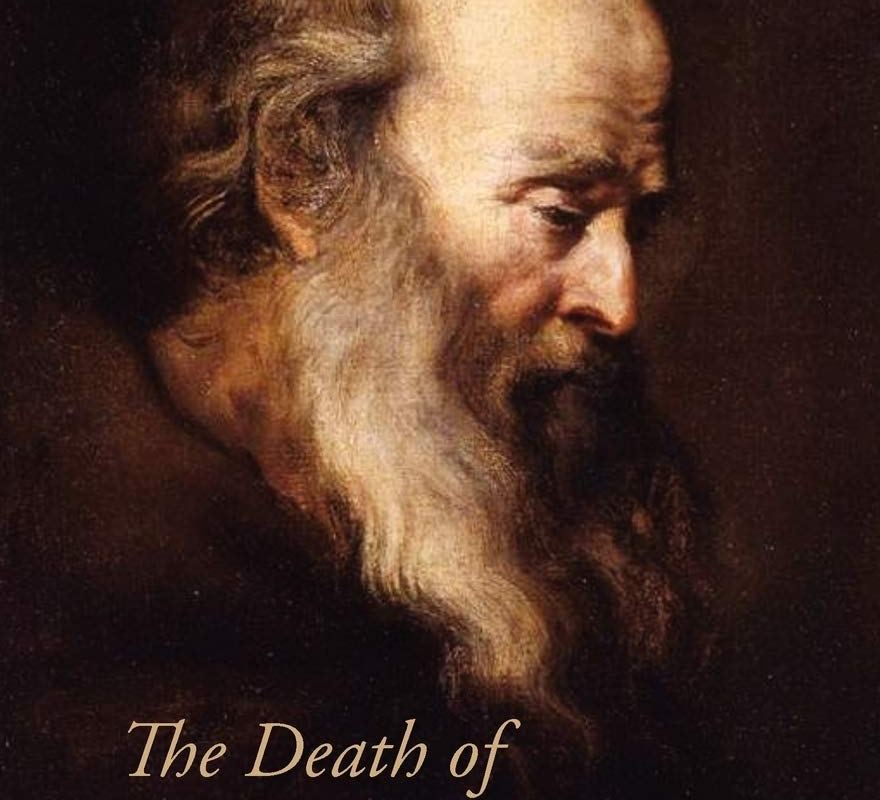
Halfway through The Death of Ivan Ilych. Not to be confused with One Day in the Life of Ivan Denisovich, though honestly, Russian literature does love an Ivan in crisis. I used to binge on it – more Dostoyevsky than Tolstoy, if we’re keeping score – but there’s something about the philosophical dread that still hits like a cold slap.
Ivan’s recently been promoted and is busy feathering his little bourgeois nest:
“In reality it was just what is usually seen in the houses of people of moderate means who want to appear rich, and therefore succeed only in resembling others like themselves…”
Damask. Polished bronze. Pretentious plants. It’s all there in Chapter 3—a catalogue of aspirational mediocrity. And here’s the kicker: he thinks it’s exceptional. That’s the tragicomic punchline of late capitalism, isn’t it? Everyone desperate to be unique by copying the same IKEA showroom.
The wallpaper may change, but the existential wallpaper paste remains the same. Conformity with delusions of grandeur.
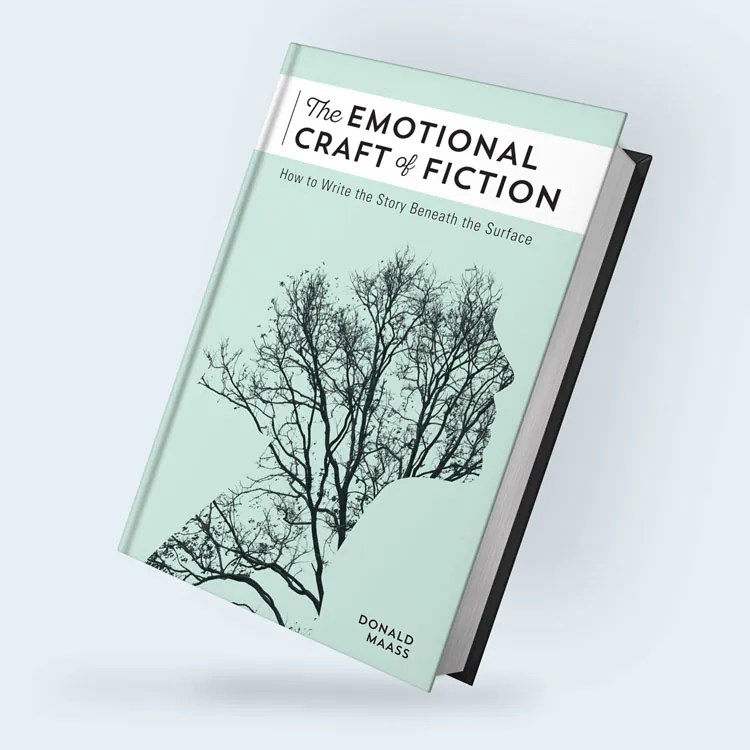
I just finished this book. I’ll say it’s good and even recommend it, but it’s not really for me. I wrote a blurb recently before I was even halfway through, and my opinion hasn’t changed.
Audio: NotebookLM podcast on this topic.
If you like to write in typical, character-driven stories, this should be right up your street. Besides character depth, the author also pushes moral righteousness. Thanks, but no thanks.
All of this said, I did gain some benefits from it, because although my writing is not heavily centred on characters, it does contain them, and I want them to feel alive. I want the world to feel lived in.
Personally, I think in schemes and threads – big ideas, deep ideas. Once all of this is roughly in place, I take a second pass for details. This is where Maass can help.
Full disclosure: Some people adopt a plotting approach to writing, whilst others adopt a pantser approach. I fall somewhere in between. Moreover, I might write something from one perspective and the next from the other – and I might flip-flop back and forth.
As a plotter, I might have waypoints that I want to hit, ideas I want to explore. Sometimes, I write these down on paper, in a spreadsheet, or somewhere to keep myself honest. Other times, I have these plot points in mind, but I take a stream-of-consciousness approach, simply discovering the story as it unfolds under my fingertips. I may even plot half a story and “pants” the rest of it. No telling.
As a pantser, I might have a kernel of an idea, and I just want to ideate on the page. So, I write. I lock myself in my room, throw up a “Do Not Disturb” sign, and head down to write until the well of ideas runs dry. At this point, I might put the idea aside or step back and consider plot points.
Looking back on this post, it’s not so much a book review at all. Apologies. That said, if you write characters and enjoy mainstream writing approaches, I think you’ll find the ideas in this book helpful. Many of the better ideas are presented early on, but it’s a short read. He offers some authors, titles, and excerpts you might find interesting. I found them to be a mixed bag.
I’ve been reading J.G. Ballard’s High-Rise (1975), a brutalist fever dream dressed in concrete and ennui. It’s a story that doesn’t so much depict a descent into chaos as suggest that chaos is the natural state, politely waiting in the wings until the lift stops working and someone pees in the pool.
Audio: NotebookLM podcast on this topic.
This isn’t horror in the Stephen King sense—there’s no room 1408 here, no haunted sheets or malevolent chandeliers. The building isn’t animated; it’s engineered. But like all great systems, it doesn’t need a soul to kill you. The real haunting, as ever, is society itself. Ballard simply does away with the need for ghosts and lets architecture and aspiration do the dirty work.
Compared to Crash—where characters make love to car crashes and each other with equal mechanical indifference—High-Rise has something resembling a cast. I say “resembling” because these aren’t people so much as archetypes on a descent escalator. There’s Laing, a kind of blank-eyed anthropologist; Wilder, who mistakes brute force for authenticity; and Royal, the man literally living in a penthouse and metaphorically in a delusion.
Do I care about them? Not in the slightest. But that might be Ballard’s point. Their motivations are as shallow as a puddle in the car park after the water’s been shut off. Much of the action feels contrived, like a staged rehearsal for an apocalypse that already happened.
And yet—isn’t that precisely what society is? A tepid soup of extrinsic motivators dressed up in motivational posters and mission statements. Nobody in the high-rise acts out of depth or conviction. They act because someone else did it first, because no one told them not to, or because the lift only goes so far down and what else is there to do?
If Crash explored the eroticism of the machine, High-Rise explores the nihilism of comfort. Ballard’s thesis seems to be that civilisation is little more than a thin laminate over our baser instincts—and once it peels, there’s nothing underneath but turf wars and brand loyalty to floor numbers.
The modern reader might recognise the high-rise in everything from gated communities to Meta’s metaverse: sanitised, stratified, severed from consequence. A self-cleaning coffin of convenience.
And, as in the United States today, it all comes heavily medicated and prettily lit—with lipstick, meet pig.
You’ll hear it a thousand times in creative writing circles, often whispered with the reverence of sacred doctrine: character is king. Give your protagonist an arc, they say. Make them grow. Show them change. Rinse. Resolve. Repeat.
Audio: NotebookLM podcast on this topic.
Forgive me, but I’m not here for that workshop claptrap.
“I don’t build arcs. I drop people into a world and let them drown, float, or disappear.”
My writing isn’t character-driven in the conventional sense. I don’t sculpt protagonists to take heroic journeys or undergo epiphanic transformations. I’m not interested in plumbing the depths of their souls or bandaging their inner wounds with moral insight. My primary concern is the world—the philosophical or sociological structure—through which characters drift, orbit, or plummet. Sometimes they leave a mark. Often, they don’t.
Because real life isn’t narrative. It doesn’t arc. It drifts. And most of us don’t develop. We adapt. We cope. We muddle through.
“From a narrative perspective, we start somewhere in the middle and end somewhere else in the middle.”
Resolution, in most stories, is a parlour trick—narrative taxidermy dressed as transcendence. In reality, most encounters don’t resolve. They expire. People come and go. You cross paths with strangers who change your life—or don’t—and then vanish back into the abyss of statistical anonymity.
One of my recent manuscripts begins with a woman named Sena discovering a body by the roadside. She reports it, the authorities arrive, and the narrative follows them—until it doesn’t. It dissipates. No tidy resolution, no tight bow. Just the unfurling tedium of systemic procedure and human irrelevance. It’s not a mystery story. It’s a story with mystery in it. Big difference.
We like to pretend we’re central to our own story, each of us a protagonist in a universe scripted for personal development. But sometimes, we’re not even side characters. Sometimes, we’re scenery. Camus’ Meursault had it right: the sun matters more than your feelings, and death shows up whether you’ve had your arc or not.
“Psychologically, we like to assume we have agency. That’s why we tell stories with resolution—because it flatters us to imagine things make sense.”
Yes, some readers crave grandiosity—heroes, villains, the Great Man Theory dressed in narrative drag. Napoleon didn’t just wage war; he “struggled with destiny.” Stalin wasn’t just a paranoid bureaucrat; he was “a force of history.” These are characters written by history with the same myth-making brush that writes fiction. Convenient, cathartic, utterly inaccurate.
But I don’t write demigods. I write witnesses, floaters, participants without insight. They’re often not even granted the courtesy of closure. They move through a world that refuses to acknowledge their significance. And why should it? The cosmos doesn’t care if your backstory is tragic or if your girlfriend left you on page forty-two.
Sometimes the character who seems central is merely catalytic. Other times, they’re inert—filler between philosophies. If someone changes, maybe it’s society, not them. Maybe the reader. Or maybe no one.
So no, I don’t build arcs. I don’t force characters to evolve like Pokémon just because Act III demands it. I drop them into a world and watch what happens—often, nothing. Because that, more than any tidy redemption tale, is how life actually works.
“In my stories, characters are pawns—how I envisage others: merely players, perhaps trying to make sense of the world they’ve been thrown into.”
That’s the work. Not myth-making. Not therapy. Observation. Dissection. Not a ladder to transcendence but a mirror, tilted just so.
Welcome to Ridley Park. Watch your footing. There are no arcs—only echoes.
I employ AI editors for copyediting and alpha-reading. They are useful but have limitations.
Some of my writing is ordinary – Acts I, II, and III; Beginning, Middle, and End. This is AI’s sweet spot: assess a piece and compare it to a million similar pieces, sharing plot structures, story and character arcs, heroes’ journeys, and saving cats.
Other stories are experimental. They don’t follow the Western tradition of tidy storylines and neat little bows, evey aspect strongly telegraphed, so as not to lose any readers along the journey.
Mary approaches a doorway. Mary opens the door. She walks through the doorway — the doorway she had approached.
Obviously, this is silly and exaggerated, but the point remains. AI presumes that readers need to be spoonfed, especially American audiences. (No offence.)
But life doesn’t work like this. We often witness events where we have no idea what happens after we experience them. We pass strangers on the street, not knowing anything about their past or future. We overhear something interesting, never to get a resolution. We get passed by for a promotion but never know the reason why.
In science, there are lots of dead ends. Do we want to know the answers? Yes. Is one likely? Maybe; maybe not. Will we make up answers just to satisfy our need for closure? It happens all the time.
In writing, we seem to not accept these loose ends. How many times have you read a review or critique where the complaint is, “What happened to this character?” or “Why didn’t Harry Potter use his invisibility cloak more than once despite it being an obvious solution to many prior and future challenges he faced?”
Sure. I agree that it feels like a plot hole, but the author doesn’t have to tell you that Harry lost it in a poker match, it got lost in the wash, or Ron snatched it.
I’m finishing a story, and various AIs provide similar commentary. Even more humorous are the times it can’t follow a thread, but when a human reviewer reads it, they have no difficulty. In the end, there may be unanswered questions. Some of these leave the universe open for further exploration, but not all questions have answers. AI has difficulty grasping this perspective.








 Ridley Park