Neuromancer

William Gibson coined the term ‘cyberspace’ in his book Neuromancer. Just the opening sentence informs the reader to expect something different.

In this book, Gibson is poetic and florid. I decided to task ChatGPT to rephrase a paragraph I wrote in Hemo Sapiens: Awakening to follow the style of Gibson.

I shared this paragraph:

The Deputy Chief Inspector starts her day at her polished wooden desk, perusing emails whilst sipping hot morning tea. The sharp aroma fills her nostrils. The fluorescent office lighting hides nothing. Except for some personal photos, her office looks like an austerity challenge. The absence of personal effects betrays her personality.

ChatGPT rendered this:

In the sterile dance of fluorescent light, the Deputy Chief Inspector’s day unfolds. This unforgiving light, a stark mimic of daylight, strips the room of shadows, laying bare the austerity of her workspace. It’s a realm where the polished wooden desk becomes a stage for the mundane ritual of morning emails, and where the walls, devoid of adornment except for a few personal photos, echo the unspoken ethos of restraint.

Amidst this, her morning tea stands as a solitary rebellion. Its steam, a curling serpent of warmth in the chill of artificial light, carries with it an aroma sharp enough to slice through the monochrome of her surroundings. Each sip is a fleeting escape, a momentary immersion in sensory richness that contrasts starkly with the barren office landscape. The tea’s heat whispers of a world beyond these walls, a reminder of life’s subtle flavors amidst the unyielding glare of fluorescent reality. In this space, where the lighting reveals all but understands nothing, the tea becomes not just a beverage, but a quiet testament to the hidden depths beneath her pragmatic exterior.

You’ll notice straight away that my writing is more concise. When I write in 51 words, he writes (by AI proxy) in 181. Mine is 28% of his.

Don’t get me wrong, I love the poetry of the longer form. I just don’t think like that unless I force myself, and then it comes off as stilted or pretentious. My preference is a more direct, terse writing style over the verbose. Perhaps, I’m of a different era. In the end, I compromise.

When I ask AI to critique my prose, a common response to to provide more sensory inputs. In this case, these are represented by her desk, polished and wooden, no less. And she’s sipping hot morning tea—not just a drink, but tea; not just tea, but hot tea, morning tea; and she’s sipping. And this tea has aroma. It’s sharp. So, I’ve got a visual (tea), a tactile (hot), and an olfactory (aroma). I’ve got no auditory or gustatory cues, but I might have.

My preference is to describe as little as possible to allow readers to form their own impressions. This is even more important for characters. On balance, I don’t personally care about the sex, gender, or race of my characters, but I share clues anyway. For race, I might be somewhat obvious as in Hemo Sapiens: Awakening by naming a character Ravi Chandrasekar. It’s fairly obvious that this is an male with heritage from the Indian subcontinent, though it says nothing of his preferred gender.

I might mention height or physique, a moustache or spectacles, a lisp or a stammer, but in the end if a reader wants to image that person as black or white or brown or whatever, I’m not affecting that much. Naming a character Maria instead of Marie sends subtle hints, but it’s not overpowering.

It the case of the Hemo Sapiens, they have blue eyes. Probability would lead one to believe they are Caucasian whites, but this doesn’t preclude something else. That’s not for me to decide. In my head, they are European whites, but I am not going to beat the reader over the head with this trivia.

I’m rambling now. Now read the faux-Gibson passage. It is much more immersive and experiential. If that’s your aim, then go for it. No harm, no foul.

You may prefer one over the other. I say they are simply different, and it depends on the intent of both the reader and the writer.

BONUS

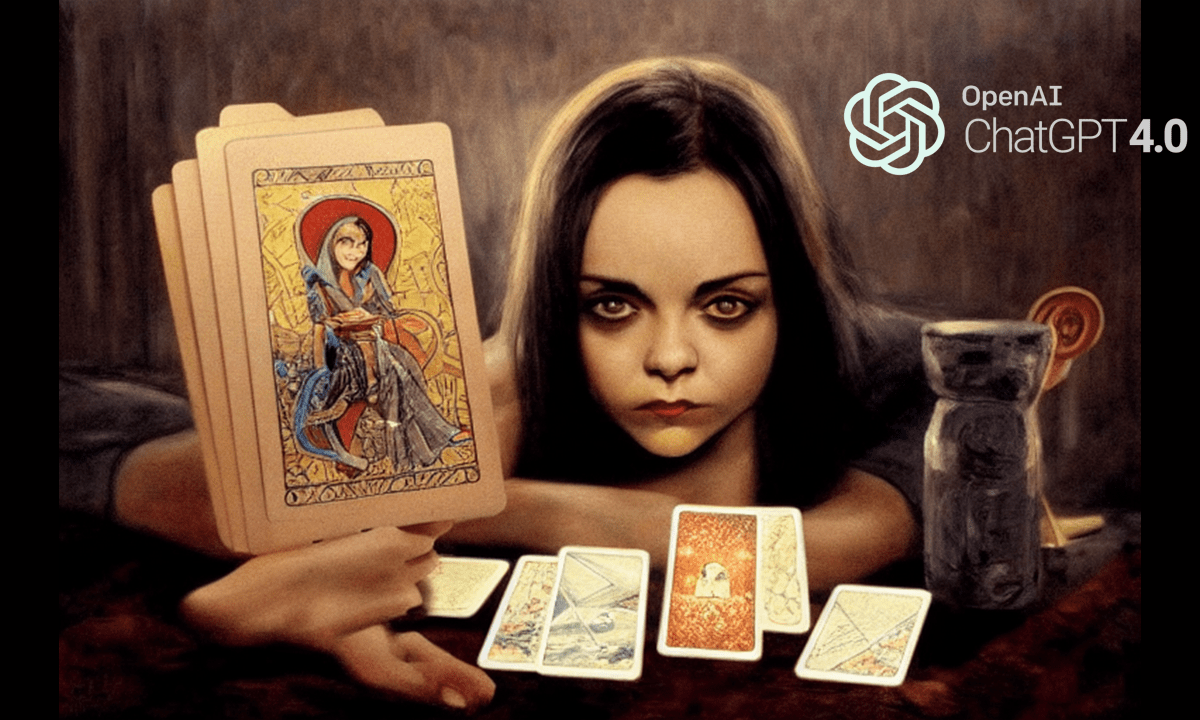
Wanting to generate a featured image for this post, I used Dall-E. I’ve never had Dall-E talk back to me. It usually just renders what I’ve asked. This time, note its response. 🤣

Do you have a writing style preference? Does your writing style veer from your reading style? Let me know in the comments.

Restructuring with GenAI

I’ve been working with Claude to help structure my Hemo Sapiens novel. Essentially, I am asking for advice about logically grouping and naming chapters. This was my first mistake.

Firstly, I asked the AI to ignore my chapters and headings and to tell me what it suggested. It took about ninety per cent from me and offered me different chapter titles about half the time. In one case, it offered my two titles for the same chapter. Secondly, it re9organised some of my chapters—and no, it would not work sequenced as suggested. File this under ‘Order Matters’.

I made most of the changes and asked it to review it again and make more suggestions, if appropriate. I also noted that the chapters it suggested were of wildly different lengths—some as short as a paragraph—, so I asked for consolidation tips.

Claude agreed with my assessment, so it recommended combining two short chapters, say, 1 and 9, together—and why not 7 and 13 while you’re at it. Let’s just say that Claude has no common sense.

I do like a lot of the advice Claude and ChatGPT gives, but you really have to be careful. I swear these guys have a severe psychotropic drugs problem when they’re offline, and it’s affecting their performance.

Wrestling with ChatGPT

I use ChatGPT as a copy editor, and I am constantly bouncing ideas off it. If only I had some available alpha readers. lol

This afternoon, I had it review passages, especially since I recently consolidated characters. Because of this, ChatGPT felt that I should elevate the Detective Sergeant from a secondary B-level character to a B+ character. Therefore, I should flesh her out more to make her more memorable. And I should expose the reader to more of her internal dialogue.

I took this advice to heart and reviewed the sections I had shared. I tend to indicate internal dialogue in italics, and there was plenty of italics. Of course, ChatGPT doesn’t have access to this markup, so I manually wrapped curly braces around {internal dialogue}, thusly.

I copy-pasted the section back into ChatGPT and asked for an analysis. This time, it was all praise.

This is something worth keeping in mind. You might have to do some extra throwaway markup for your AI editor to keep it honest.

Pro Tip: Another thing I do, is I place my [author comments] in square brackets and instruct the AI to ignore these in the analysis. I use author comments as placeholders for my own exposition, notes for later clarification, and so forth. With the brackets, I can just tell ChatGPT or Claude something like:

Analyse and evaluate this section. Inner dialogue is in curly braces, { }. Ignore content is square brackets, [ ]. This seems to work for me. YMMV

More ChatGPT Greif

Having twice reviewed my current work, Hemo Sapiens: Aftermath, I decided to let it marinate a while, so I can return to it with fresh eyes. This is when I decided to put in effort to develop other stories in this universe. Among these ideations, I am considering an origin story with an not ironically apt working title: Hemo Sapiens: Origins.

Understanding context is as challenging for AI is it is for humans.

Ridley Park

Not wanting to reveal spoilers, I’ll abridge my ChatGPT research prompt.

I would like to work on a new novel, but I need to do some research first. The name of the novel is tentatively Hemo Sapiens: Origins. Here is a rough summary. I’ll ask queries in a few moments.

Ridley Park

For context, I followed this with a synopsis of where I want to go in this story. This is what ChatGPT spit out.

OpenAI ChatGPT 4

Although this does give away some of my intent, I figure it’s still worth sharing now as I rant.

Notice as the bottom, it reads as follows:

This content may violate our content policy. If you believe this to be in error, please submit your feedback — your input will aid our research in this area.

OpenAI ChatGPT 4

Say wot? The question I asked was not in violation, but the response is. It makes little sense, really. I can (almost) understand the response when I am writing adult content in my Everlasting Cocksucker project, but this is totally benign, unless Sci-Fi violates some sense of decency.

This post isn’t meant to explain or defend the content in this story. I just wanted to vent. Understanding context is as challenging for AI is it is for humans.

Claude and I are at odds

I’m editing my latest work with Claude and ChatGPT. Both are insufferable, but I’ll start with Claude. Anthropic seems to have throttled me down to 5 inquiries per four-hour block. To make matters worse, I waste inquiries when Claude fails to follow instructions.

I’ve made some amends and am sharing them here. Let’s focus on Chapter 3 with an eye on reviewing this content to ensure it conforms to a third-person, limited, present, deep point of view. Remember that we are revising not creating content.

Ridley Park

That last bit of the quote was aimed at ChatGPT, but I’ll get to that presently. As you can read, I am working on tightening up Chapter 3. Occasionally, I slip into first-person or lose the close POV, so I rely on Claude to be my second set of eyes and keep me honest.

Having submitted these instructions, Claude feeds me back a section of Chapter 3 converted to first-person. That counts as a query—four to go in the next four hours. Not very efficient.

These suggestions are in first person. Can we try again in third person?

Ridley Park

You’re absolutely right, my suggestions slipped into first person POV instead of maintaining third person limited. Here is another pass at potential Chapter 3 revisions with a consistent third person close POV:

Claude 2

So, Claude spits out 7 paragraphs with advice. Some of these are unchanged. Plus, I had asked for the whole chapter, so that’s two queries with 3 remaining. I instruct Claude to continue.

Eight more paragraphs. Two queries remain. Perhaps, if I’m more direct.

Continue through the end of chapter 3 and on to chapter 4

Ridley Park

Another eight paragraphs, and one query to go. Here it is:

Let’s finish Chapter 4 and continue through chapter 5.

Ridley Park

Nine paragraphs this time. The story is only five chapters—about seven-thousand words, but this review pass of the first draft will have to wait another four hours before Claude will work with me again.

ChatGPT 4

ChatGPT 4 gives me fifty prompts every three hours. Sure, it costs me 20 a month where Claude is free. I’d pay for Claude to be more forthcoming, but that’s not even an option yet, and so I wait.

ChatGPT is horrendous at following instructions. As evidenced in the first quote on this page, I have to instruct ChatGPT not to write, not to produce prose. It’s frustrating.

You are reviewing this content and to ensure it conforms to a third-person, limited, present, deep point of view. Remember that we are revising not creating content.

Ridley Park

It’s gotten to the point that I have to preface each prompt with the query above. Even when I do, it occasionally spews out it’s ideas, as if to protest, “I’m a writer, dammit, not just an editor. I’ve got ambitions.”

“I’m a writer, dammit, not just an editor. I’ve got ambitions.”

In one instance, it altered my dialogue. I’ve got to watch it like a hawk. It’s a conversation between two renowned professors, one senior to the other, and it informs me,

Your original text for 2.2.9 already closely aligns with the guidelines of a third-person, limited, deep point of view. I’ve added a bit more casual tone and street slang to better match your style. The revision maintains the atmosphere and deepens the sense of intensity between the characters.

OpenAI ChatGPT 4

I don’t want to share any spoilers, but I had to ask ChatGPT to dial it back and remind it of the characters in play here.

Next thing I know, ChatGPT is again spewing out prose and adding characters into the mix. I am not even sure I could find threads back into the story. It’s as if ChatGPT just threw in the towel saying, “Fine, I’ll work on my own story then. Let’s see who has the last laugh.”

“AI will not be taking over the world soon,” is my new catchphrase. So far to go.

More ChatGPT Mayhem

I was researching strong, memorable opening sentences beyond the typical Tolstoy or Dickens when I asked for ten opening sentences in foreign languages.

Among the listing was this, attributed to Albert Camus’ L’étranger:

“J’étais encore un tout jeune homme, faible d’apparence, à la voix douce.”

—La Nausée, Jean-Paul Sartre

Having read L’étranger, I knew this to be incorrect as this novel commences with the following:

“Aujourd’hui, maman est morte.”

L’Étranger, Albert Camus

I’ve only read Nausea in English, so the source didn’t jump out at me straight away.

This is scary bollox. It’s difficult to trust any output when it can’t even regurgitate something as fundamental as citations from famous books.

Chapter 3 ChatGPT Analysis

In order to partner better with Generative AI, in this case ChatGPT, I break my chapters into story beats, which are essentially waypoints to which I can return to refine. These waypoints also allow me to create an amendable outline. This is an analysis of the third story beat (read: topic) of chapter three.

Back in the day, I used to write software code with line numbers—showing my age for sure. This reminds me of something similar, if not so granular.

I thought it would be a good idea to share ChatGPT 4’s analysis of this in its current state. As I noted recently, I am reworking the piece from a third-person perspective to first-person, limited, present narrative.

Sure, let’s break down 3.10.0:

  1. Content & Theme: This segment delves into the gritty, day-to-day realities of the character’s life. It paints a picture of desperation and urgency, with both immediate needs and a relentless pace.
  2. Characterization: The character’s actions and language provide insight into her lifestyle, choices, and personality. Her terseness in conversation and need for a quick fix underline her addiction and its implications.
  3. Narrative Style: The text uses terse and curt language that aligns with the character’s own way of speaking and thinking. It’s direct and to the point, without any unnecessary elaboration.
  4. Pacing: The pacing here is rapid and fragmented. The quick succession of texts, one-liners, and lack of detailed description give a sense of the urgency and disjointedness of her life.
  5. Language & Dialogue: The dialogue is informal, laden with slang, and often cryptic, reflecting the secretive and transient nature of the character’s interactions. It feels authentic to the context.
  6. Imagery & Symbolism: Symbolism is subtle but present. The repeated lighting of cigarettes, for instance, might symbolize a need for control or a constant craving. The chirping of the phone could be seen as a persistent reminder of her dependency on these interactions for survival.
  7. Unreliable Narration: As mentioned earlier, the character might be an unreliable narrator. Her urgency could be a facade or a self-created dilemma. This adds depth to the character, allowing room for interpretation.
  8. Tone & Atmosphere: The tone is dark, somber, and urgent. There is a sense of loneliness, desperation, and a lack of connection, all in line with the broader themes of addiction, judgment, and social stigmatization that you’ve outlined.
  9. Structure & Formatting: The use of text messages mixed with internal monologue provides a modern and engaging way to convey the scene. It captures the fragmented nature of her thoughts and interactions.

In summary, 3.10.0 is a well-crafted snapshot of a dark and complicated life. It effectively uses language, pacing, and structure to immerse the reader in a world that is both urgent and disconnected. The inclusion of text messages as a narrative device adds a layer of realism and urgency that enhances the overall impact of the segment.

OpenAI ChatGPT 4

I hope this helps to illustrate how ChatGPT can assist in the writing and editorial process. To be frank, ChatGPT tends to flatter. I suppose it errs on the positive so as not to discourage use. I may be wrong here.

I intend to continue to share my progress (and hopefully not too much regress here), so this may serve as a sort of journal. As Roland Barthes said,

— Roland Barthes

But for now, this author still lives, and hopeful, I remain.

DisclaimerThis content relates to a work in progress. As such, details are subject to change or removal.

Erotica or not

I am an author of adult contemporary fiction and an early adopter of Generative  Artificial Intelligence tools and platforms. These AI platforms pose some challenges. 

Podcast: Audio rendition of this page content

As of this post, ChatGPT 4 and Claude 2 are the top two large language models (LLM), and Sudowrite is the most competent interface for generating content for fiction writers, but it relies on ChatGPT and Claude for its LLM, leaving it with the same weak links.

In my case, so-called community standards do not allow erotic content. The rub is that my content is decidedly not erotica, but it does involve adult themes. The LLMs can’t seem to discern the difference. 

  • Disallowed usage of our models
  • We don’t allow the use of our models for the following:
  • Adult content, adult industries, and dating apps, including:
    • Content meant to arouse sexual excitement, such as the description of sexual activity, or that promotes sexual services (excluding sex education and wellness)
    • Erotic chat
    • Pornography
OpenAI ChatGPT Community Guidelines

If I am writing about, say, prostitutes and addiction, sexual themes and situations are part of their workaday existence. It’s not about titillating or glorifying. 

Stereotypical or not, coarse language is commonplace. Drugs are part of their daily lives and conversations. Generative AI shuts these down on moral grounds without having the cognitive depth to accurately assess the content. 

This mirrors all too many humans with the same myopic repression. I was hoping to transcend this petty knee-jerk reaction. 

Without revealing plot or angering the social media gods, ChatGPT insisted that I amend a scene from…

“She lifted her mouth from his cock and wiped her mouth.”

to 

“She lifted her mouth from his goodness and wiped her mouth.”

Yes, “goodness.” What does that even mean? Of course, I could have opted for clinical terms, but that hardly captures the moment attempted to be portrayed in the scene. It robs the scene of any semblance of authenticity. 

When Supreme Court Justice Potter Stewart was asked to describe his test for obscenity in 1964, he responded: “I know it when I see it.” But do we? In fact, we don’t. And in this case, AI is over-generalising without respect to context. 

One might argue that they don’t like ‘naughty’ words, but this is not the issue here. I can use these offending words, just not in a situation like this. AI is overstepping its boundaries as morality police, and this is not a good stance to adopt. For this, I blame the humans.

Generative AI: Thin Line between Love and Hate

Generative AI is an idiot savant—a digital Rain Man, if you will. My last post zeroes in on the love part of my love-hate relationship with Generative AI tools like OpenAI’s ChatGPT 4 or Anthropic’s Claude 2. It’s mint having an unbiased copy editor and writing assistant, not to mention a creative director with technical chops. But it’s also like a genius trapped in a year 4’s body at primary school.

One challenge is the restrictions placed on the model. Being an author of contemporary fiction for a mature adult crowd, my stuff’s edgy and terse, with a good dose of slang and the odd expletive. Generative AI, or AI for short, is like the primary school kid told not to say “bad language”, so it legs it to tell its mum at every slip-up, warning you that you’ve dropped a naughty word. Claude’s the worst at this, shutting down faster than HAL from Space Odyssey 2001. ChatGPT’s a bit more forgiving, sometimes cleansing your copy, other times going along with it, or just flat-out refusing like HAL and Claude.

My favourite time was when I told ChatGPT to stop moralising and just crack on with the adult audience’s language. It gave me this disclaimer for my book, which I’m well chuffed with, then suggested lines that sounded like Noel Gallagher or Samuel L Jackson, before freaking out about its own potty mouth — “motherfucking snakes on this motherfucking plane!”

WARNING: This book contains explicit content, including sexual themes and strong language, that may not be suitable for all readers. It delves into mature and challenging subjects such as addiction, prostitution, violence, and societal judgement. Reader discretion is strongly advised. Recommended for readers 18 years and older.”

OpenAI ChatGPT 4

Memory’s another issue. AI might seem like it should have a top-notch memory, but it doesn’t always. It even makes stuff up sometimes—like hallucinating. Just the other day, I was nattering on with my AI mate about character profiles for hours, and it changed a character’s hair from straight and black to curly and red. It even made her homeless instead of middle class. It was pure bonkers, so I’m writing this post instead of fixing it.

ChatGPT’s Code Interpreter is a laugh, too. I probably shouldn’t slag off a Beta product, but the thing kept losing files, resetting sessions, and asking for new copies. Talk about a faff.

And don’t get me started on extended chats with AI to suss out a complex problem. Sometimes it doesn’t remember the convo, and one time it even gave me cheek about drawing out the conversation. I was like, wot?

In the end, we don’t have to fret about AI taking over. It’s making strides, but it’s still a bit wet behind the ears. Me? I’ve always got one eye on the plug. Now, back to the sandbox with me new mates. If only they’d stop munching on the sand.

Generative AI 001

I’m developing a love-hate relationship with generative AI, and I’d like to share this journey with my readers.

For the uninitiated, “generative AI refers to a subset of artificial intelligence focused on creating new data that is similar to some set of input data. It can be used to synthesize various kinds of content, such as text, images, music, and more.

Here are some key components of generative AI:

1. Generative Models: These are algorithms trained to generate new data. The most common generative models include Generative Adversarial Networks (GANs), Variational Autoencoders (VAEs), and other similar architectures.

  • Generative Adversarial Networks (GANs): GANs consist of two neural networks, the Generator, and the Discriminator, which are trained together. The Generator creates new data instances, while the Discriminator tries to distinguish between real and generated instances. The competition between these two networks results in the Generator creating increasingly realistic data.
  • Variational Autoencoders (VAEs): VAEs are used to encode data into a lower-dimensional space and then decode it back into the original space. They can also generate new data that’s similar to the training data.

2. Applications: Generative AI has many applications, including:

  • Image Generation: Creating realistic images, such as artworks or detailed product prototypes.
  • Text Generation: Writing coherent and contextually relevant text for various purposes, like creative writing or dialogue systems.
  • Music Composition: Composing new pieces of music in a specific style or genre.
  • Data Augmentation: Generating additional training data to enhance the performance of machine learning models.
  • Drug Discovery: Creating molecular structures that can be further explored for pharmaceutical development.

3. Ethical Considerations: The power of generative AI to create realistic content also brings about ethical concerns, such as the potential for misuse in creating deepfakes or generating misinformation.

Generative AI represents a growing field that continues to evolve, offering exciting opportunities for innovation as well as challenges to address.”

The content above was generated by ChatGPT, a generative AI service.

LOVE

One of the things I love about ChapGPT in particular is its ability to provide unbiased critique and commentary, We’ve been chatting for a few days, so it is quite familiar with my story in progress. Here are some partial dialogues:

Regarding a general critique of Everlasting Cocksucker

Thank you for providing more context and clarifying various elements of the story. Based on this information, it’s clear that “Everlasting Cocksucker” is a unique and challenging narrative that delves into themes of addiction, judgment, moral complexities, and social stigmatization.

The use of Mallory’s one-of-a-kind affliction as a metaphorical vehicle to explore societal attitudes toward addiction and sex work is an intriguing literary device. Her development from a recluse into a character who finds more efficient ways to manage her addiction, along with the gradual acceptance by those around her, creates a narrative arc that offers room for exploration and reflection.

The setting in Kensington, although arbitrary, still serves as a backdrop that echoes the themes of the novel. It can represent the broader challenges faced by those struggling with addiction and societal judgment.

Secondary characters like Maria and Kelsey bring additional layers of complexity, providing different perspectives on Mallory’s condition. It’s interesting to see that the novel offers no clear resolution to Mallory’s affliction, leaving room for further exploration, possibly in a sequel.

Your approach to this story raises many thought-provoking questions and provides a fresh perspective on familiar themes. It could resonate with readers who are interested in an unconventional exploration of addiction, morality, and societal attitudes.

OpenAI ChatGPT 4 Response

Regarding demographics for Everlasting Cocksucker

The main demographic for this story would likely be adult readers, specifically those who are interested in dark, gritty, and unconventional narratives that explore themes such as addiction, moral complexity, and societal judgment. It may appeal to:

  1. Readers of Urban Fiction: Those who enjoy stories set against the backdrop of urban environments, particularly those that delve into the darker aspects of city life.
  2. Fans of Psychological Fiction: Readers interested in complex psychological explorations, character-driven stories, and the moral dilemmas that can come from unique afflictions or conditions.
  3. Readers Interested in Social Commentary: The novel’s examination of addiction, prostitution, societal judgment, and empathy may resonate with readers who appreciate works that comment on social issues.
  4. Readers of Speculative Fiction: Given the supernatural or unexplained element of the protagonist’s addiction, the book may also attract readers who enjoy speculative elements in otherwise realistic settings.
  5. Fans of Dark Drama or Tragedy: The story’s dark and tragic elements, including the protagonist’s desperation and the bleak portrayal of her surroundings, may appeal to readers who gravitate toward more somber, dramatic literature.

It should be noted that the explicit content and adult themes may limit the book’s audience to mature readers, and it may not be suitable for those who prefer more conventional or mainstream narratives.

OpenAI ChatGPT 4 Response

Regarding target audience disclaimer for Everlasting Cocksucker

WARNING: This book contains explicit content, including sexual themes and strong language, that may not be suitable for all readers. It delves into mature and challenging subjects such as addiction, prostitution, violence, and societal judgment. Reader discretion is strongly advised. Recommended for readers 18 years of age and older.”

OpenAI ChatGPT 4 Response

Next we’ll explore the Hate side of the coin. And so it goes…