Whisper of Wings

There’s a park outside London where the trees keep secrets and the air hums with untold stories. Nigel, a chap with calloused hands and a life measured in paycheques, stumbles upon a moment that’ll unravel him. A purse, unguarded on a bench, whispers temptation. He’s no thief, just a man cornered by circumstance.

The park, draped in the solemnity of dusk, watches as Nigel succumbs. He lifts the cash, a weight heavier than coins, and returns the purse to its owner, an elderly lady scattering crumbs for birds, her gaze lost in yesterdays.

It begins as a murmur on the wind. “I know what you’ve done,” whispers a disembodied voice. Nigel whirls around, searches the empty park in vain. He shakes off the words as a trick of his fraying mind.

But the voice persists, insidious as poison, relentless as the tide. Nigel wanders the park’s paths, and the leaves hiss with recrimination while shadows seem to lean in, heavy with judgment.

Reality blurs, the line between guilt and madness thinning. Nigel confides in a mate over a pint, his voice taut with fear and disbelief. “I’m hearing things in the park, a voice saying ‘I seen what you done.’ But I can’t find where it comes from.” His words trip over themselves.

The whispers follow Nigel everywhere, rustles of feathers echoing each accusation. His desperation cresting, Nigel finally flees the park. But even as he runs, the voice pursues, wings beating in the darkness over his head.

In his panicked flight, Nigel fails to see the lorry barreling down the street. It connects with a sickening crunch, leaving his broken body splayed on the pavement.

“I know what you’ve done,” it declares, Nigel’s crime given feathered form. A final cosmic jest, as this guardian of the park delivers justice for his misdeed.

Quoth the parrot, “Nevermore.”


Sometimes you just get in the mood to write a short piece of nonsense. In this case, I liked the theme of a paranoid person haunted by a talking parrot. From there, I wanted to capture elements of Edgar Allen Poe’s Telltale heart and (obviously) The Raven with a bit of Dostoyevsky’s Crime and Punishment.


As usual, creating cover art is an adventure. I asked Dall-E to render an image of the elderly woman on a park bench with a wooded background and a parrot perched in a tree behind.

It decided on this. It was hilarious to me, so I kept it. NB: I did not ask for it to be rendered on a faux book cover. smh


Dall-E’s first take before I asked for the revision described above.

Exowombs

A challenge with beginning a story in media res and then writing a prequel, is that one is able to kick the creative can down the kerb and cross the bridge when you come to it. I’ve painted myself into a few corners, but exowombs, or artificial wombs, are one of them.

Being speculative fiction, I have some leeway, but I need to make some plausible connexions. Exowombs have existed for a few years now, but they are for premature infants and animals, so my literary licence needs to stretch that. To be honest, when I was contemplating things at a fifty-thousand-foot level, I was going from test tube to petri dish to incubator, but I overlooked the gestation bit. Oopsie. My bad.

This is not a work of hard science fiction, so I can take liberties there as well. I just hadn’t researched the current state of science until now. I’ve got a plot device in place, and it seems I’ve got some ideas for early concept and cover art that I can share here.

I rendered these with Dall-E 3. By default, it chose a green hue. I modified it to blue, and I wanted to see how it looked in violet to match their irises—this being an artistic rather than scientific choice. Bubbles in cylinders suspended with wires and tubes.

Violet Gestation Cylinders

Rendering these early can also help me to write descriptive prose with visual references. Dall-E seems to have a thing for spheroids, so I asked it for cylinders instead. I do like this one.

Blue Exowomb

My first correction got me to here. I like the metaphor of the egg membrane encasing the foetus in the tube.

Cylindrical Exowomb

Next, I wanted to envisage multiple cylinders with perspective, so I got these two.

Exowombs in Perspective

The problem I have is that it seems to be too large of a scale, but it’s still cool. We seem to have lost the egg-shaped membrane by now.

Industrial Production of Foetuses in Exowombs

Before settling on violet, I wanted to see what six across looked like. Dall-E’s maths skills are pretty dodgy, so this is what six looks like to it. You’ll notice that the violet render at the top does contain six.

Seven Exowombs in a Row

I don’t have much to say beyond sharing these images. I don’t want to give too much away, but I am excited to be writing Chapter 5 where these are relevant to the narrative in play.

What do you think of the images? Let me know in the comments.

First Beta Reader

I’ve just received my first Beta feedback from Hemo Sapiens: Awakening. I’ve hired three readers and engaged two, so I’ve got more to go.

As I wrote recently, I’ve been using AI to review my work, and I’ve been waiting for flesh and blood humans to give me their opinions.

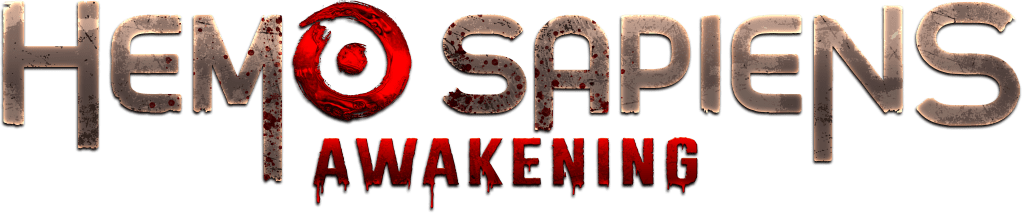
My Beta reader is Enrico B from South Africa. My next reader is from the UK. I found them both on Fiverr.com, a site I’ve successfully used for music collaboration in the past. Although your results may vary, it’s a generally inexpensive way to get quality results. I hired Doni from Indonesia to design my title and subtitle.

Judge the quality for yourself. I happen to like it. I was going to commission the rest of the book cover, but I opted to do that myself.

Enrico provided me with a summary report as well as an annotated markup of my manuscript. Beta reading is not developmental editing or copyediting, so I wasn’t expecting line edits, but he did provide commentary on most chapters. In my case, his focus was on pacing and adding narration to fast-paced dialogue exchanges. In most cases, he advised my to slow my roll, but I’ll wait to see what the next reader writes. My style is rather curt and quick, and perhaps Enrico wants to savour a bit more. I feel that his advice is constructive. I just don’t know how much I’ll implement—probably at least a little.

Cover Art: Awakening

Now that the first draft of Hemo Sapiens: Awakening is done, I can let it marinate for a few days before I return to polish it up for Beta readers. Meantime, I can cleanse my palate and concentrate on other matter like cover art. Here’s the third or fourth draft. I know what direction I’m looking for. I was thinking of commissioning a cover, but I might just go it on my own.

I think I’m going with an 9″ x 6″ form factor, so this would be the aspect ratio. I used OpenAI’s Dall-E 3 to render the eyes as well as the overlay with Greek characters. I may have made it too transparent, so I might need to pull it up a few clicks.

Interesting enough, I am compositing in PowerPoint of all things and exporting to PNG. I usually use Paint Shop Pro, but this may be good enough. I still need to compose the back cover and the spine.

My paginated draft comes in at about 320 pages. It was 256 unpaginated pages. There are 38 chapters, and each chapter begins on an odd page number. The facing page is always blank. This creates a lot of blank pages. I could render some line art on the facing pages, but I’m not taking that option at this point. Probably won’t.

My goal for the cover (as might everyone) is to catch a potential reader’s eye and signal something about the content. In this case, the Hemo Sapiens have violet eyes, so I thought that would make a unique image hook. The are open (obviously) to capture the Awakening aspect. The Greek letters on the overlay represent the science aspect. There are 5 versions of Hemo Sapiens so far, named Alpha, Beta, Gamma, Delta, and Epsilon by their creator. I’ve highlighted those characters in a blood red.

Speaking of blood, this is obviously captured in the colour choice and the dripping font of the subtitle. This is also reflected in the stylised O, but I don’t wish to explain the significance of the stylisation now.

As is the entire cover still in progress, so is the treatment of the title as I am playing with a few options. The novel is set in the near future, 2045, so I was thinking of conveying a future with a silver font face, but the gold felt somehow warmer. I wanted to hint at the dystopian angle by distressing the letters.

So, there’s my confession. If you have any comments on the design, I’d love to read them—for better and for worse.