I don’t read sci-fi. It rarely resonates with me. I’ve read many classics, but I don’t get the hype. As a speculative fiction author, I sometimes operate in an adjacent space – close enough to borrow a few ideas, but never quite belonging. I’m not interested in fetishising technology or celebrating so-called human ingenuity. But if an idea serves the story? I’ll use it.
One concept I wanted to explore: the definition of life itself, and what sentience means when we can barely define it for ourselves.
Not long ago, I began working on a story: some people leave Earth to inhabit another planet in a different solar system. Nothing revolutionary there. They land on what appears to be an uninhabited world – uninhabited, that is, by our current definition of life. Instead, the planet itself is alive. Not in the Gaia hypothesis sense of interconnected ecosystems, but truly interactive. Responsive. Alien in ways that challenge every assumption about consciousness.
Of course, there are more details – dual suns in a figure-eight orbit, shifting gravity, time that expands and contracts, organisms that defy classification. But those are mechanics. The heart of the story is simpler: what happens when survival requires abandoning the frameworks that made you human?
As is my protocol, I fed my manuscript into AI and asked: is this idea unique? If not, what’s it similar to? Who am I adjacent to?
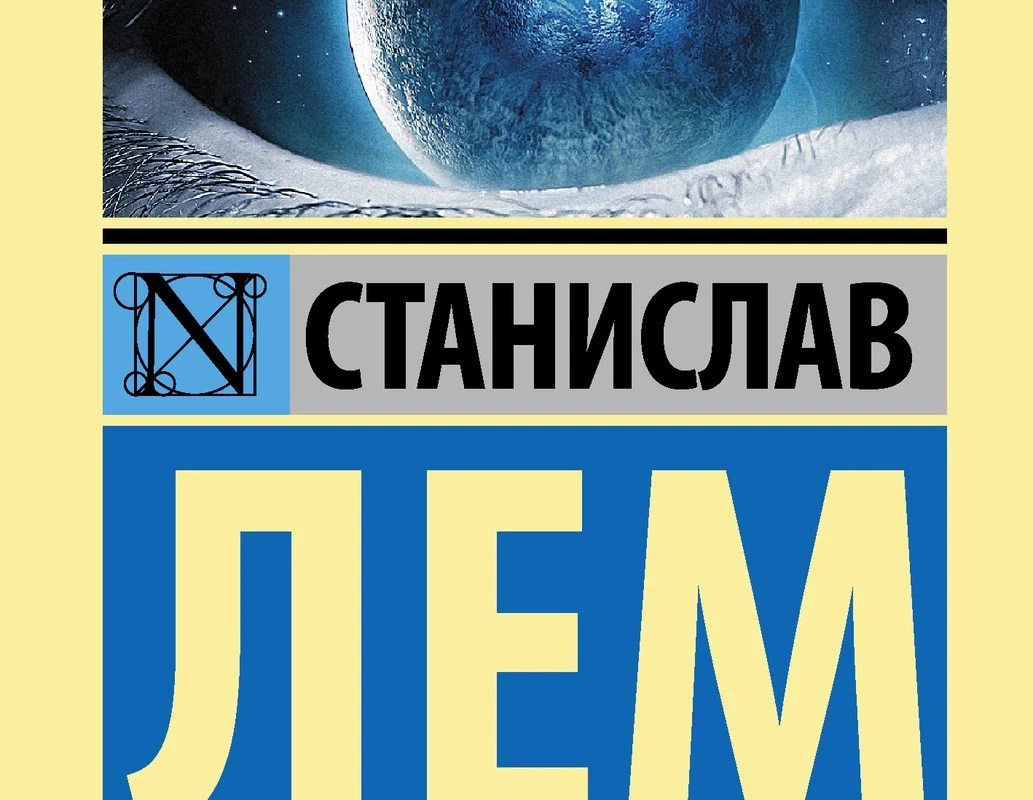
I got names. Titles. Books and films. Most had superficial similarities but different intents. Then one stood out: Solaris, Stanisław Lem’s 1961 novel. I hadn’t read it, so I got a copy.
There were so many commonalities it felt like discovery and defeat in equal measure.
Lem wrote Solaris before humans had meaningfully left Earth’s atmosphere. Published in 1961, it predated material space exploration by years. On October 4, 1957, the Soviets launched Sputnik 1 – the first artificial satellite. Four years later, Yuri Gagarin became the first human to orbit Earth, his flight lasting just 108 minutes. The first American in space, Alan Shepard, flew in 1961. John Glenn orbited in 1962.
Lem imagined a sentient ocean on an alien world orbiting twin suns before we’d even confirmed planets existed beyond our solar system. His protagonist grapples with a consciousness so alien that communication may be impossible – not because of language barriers, but because shared reference points don’t exist.
In some ways, Solaris also shares DNA with Jeff VanderMeer’s Annihilation – that same sense of an environment that isn’t hostile so much as indifferent, operating by rules humans can barely perceive, let alone comprehend. But where VanderMeer leans into existential dread, Lem’s tone is colder, more philosophical. Less visceral horror, more intellectual vertigo.
My story, working title: Goldilocks, sits somewhere between them. It has Lem’s alien sentience and dual-sun orbital mechanics. It has VanderMeer’s gradual unravelling of human perception and sanity. But it also has something neither quite touches: the brutal intimacy of being the last of your species, seeking warmth in a universe that offers none.
So is my idea original? Not entirely. Does that matter? I’m not sure anymore.
Lem wrote his novel sixty years ago, before we’d touched the moon, before we knew what exoplanets looked like, before we’d meaningfully begun asking whether consciousness requires a brain. He imagined sentience beyond human comprehension – and did it so thoroughly that anyone following feels like they’re retracing his steps.
But perhaps that’s the point. Originality isn’t about being first. It’s about what you do with inherited ideas – how you refract them through your own obsessions, anxieties, and questions.
Lem asked: can we ever truly know an alien intelligence?
VanderMeer asked: what happens when the environment rewrites you?
I’m asking: what does it mean to be human when humanity itself is ending?
Maybe that’s enough distance. Maybe it’s not. Either way, the story exists now – half-written, haunted by its predecessors, searching for its own voice in the silence between stars.
 Ridley Park