When Books and Films Complete Each Other

Fresh from my recent post on movies that are better than books, I now consider books and movies with symbiotic or synergistic energy – better together.

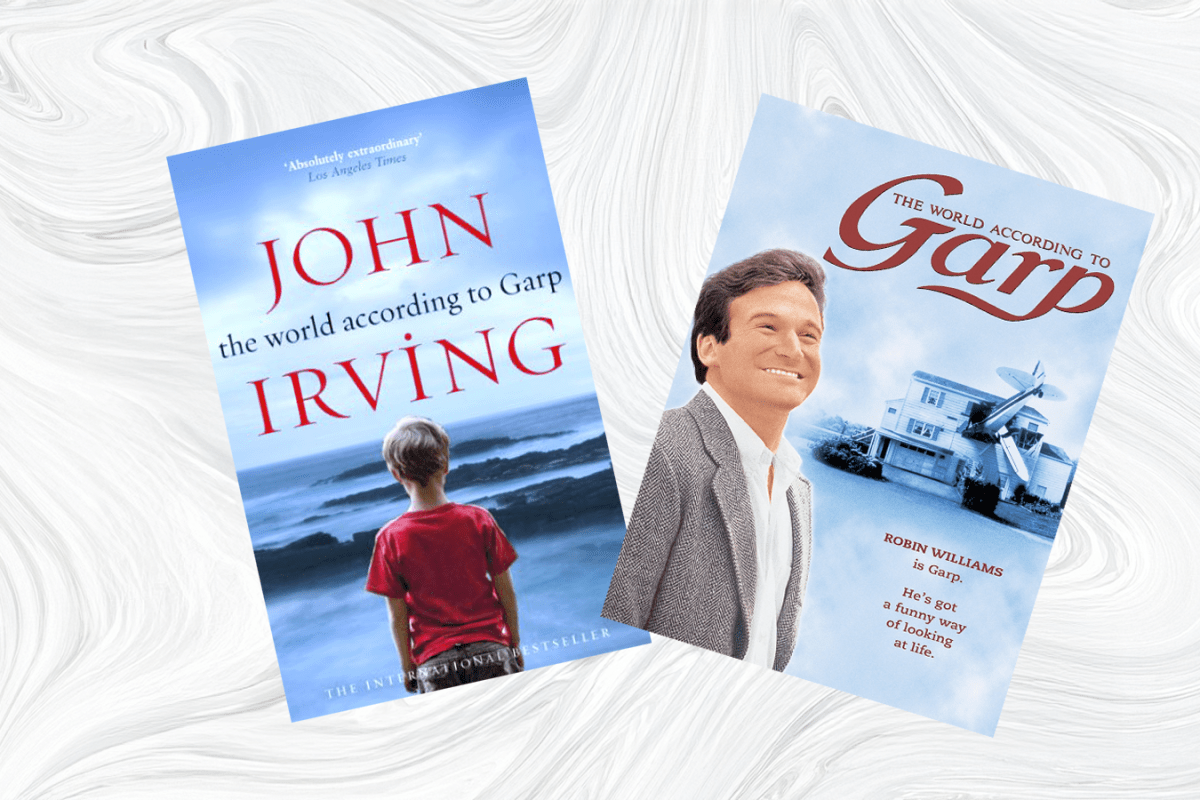
I first stumbled onto this realisation with The World According to Garp. Hearing that the film was about to be released, I bought the book; it was decent. I saw the movie when it came out; it was decent.

  • The book (John Irving, 1978) is sprawling, grotesque, and digressive, with moments of brilliance scattered through longueurs.
  • The film (1982), with Robin Williams and Glenn Close, trims away nuance for two hours of cinematic shorthand.
  • Alone, each feels middling. Together, they fill the gaps. The novel provides texture and detail; the film provides embodiment and immediacy. It’s like puzzle pieces snapping together.

We tend to frame it as a duel: book versus movie, page versus screen. One must be superior, the other a pale imitation. But occasionally, the two work in tandem, not rivals, but co-conspirators. Taken alone, each may be “just okay.” Together, they form a whole greater than their parts. Notice that the IMDB scores are lower for movies that are better than books, due to the synergistic effects.

Here are a few other book–film pairings that work this way:

The Remains of the Day (Book: 1989; Film: 1993)

Ishiguro’s novel is all repressed interiority; Hopkins and Thompson turn repression into visible ache. Read the words, then watch the faces.

Atonement (Book: 2001; Film: 2007)

McEwan’s metafictional games on the page feel cerebral. Wright’s film, with its Dunkirk tracking shot and that infamous green dress, floods the senses. Together they fuse thought and feeling.

Brokeback Mountain (Short story: 1997; Film: 2005)

Proulx’s prose is spare, devastating in its restraint. Ang Lee’s film opens the silences into landscape and longing. Neither feels whole without the other.

The English Patient (Book: 1992; Film: 1996)

Ondaatje’s novel is fragmentary and poetic, but elusive. Minghella’s film distils it into romantic tragedy. One gives the music, the other the melody.

Cloud Atlas (Book: 2004; Film: 2012)

Mitchell’s Russian-doll narratives dazzle but drag; the Wachowskis’ intercutting dazzles but confuses. Together they hint at the ambition neither medium alone quite nails.

I publicly confess that I didn’t really like either version of Cloud Atlas. A mate suggested I read the book ahead of the film. It was convoluted and mid. Ditto for the film, but for different reasons. I felt that the concept was nice; it simply didn’t translate. YMMV.

Lord of the Flies (Book: 1954; Film: 1963)

Golding’s allegory sometimes feels over-determined. Brook’s film, shot with actual boys descending into ferality, restores the anthropology behind the allegory.

Why Symbiosis Matters

When book and film complete one another, it challenges the false binary of better or worse. Sometimes, the text supplies what the film cannot: detail, psychology, interior voice. Sometimes the film supplies what the text cannot: embodiment, atmosphere, a world you can see.

Instead of competition, the relationship becomes conversation.

So perhaps the real question isn’t “Which is better?” but “Which needs the other to feel complete?”

What pairings have you found where book and film together elevate each other beyond what either could manage alone?

When the Movie Outshines the Book

3–4 minutes

I recently watched two movies. The book The Children of Men was published by P.D. James in 1992, and the movie was adapted by Alfonso Cuarón in 2006; Filth was written by Irvine Welsh in 1998 and adapted for film by Jon S. Baird in 2013.

Upon watching Children of Men, I came away feeling that the movie was better than the book – at least it resonated more to my liking. A person with other sensibilities may prefer the other. Taste is never universal. I understand that some people can actually eat seafood.

Audio: NotebookLM podcast on this topic.

The book Filth was more typical in that it was better than the movie, although the movie was interesting in its own right; it still paled in comparison. I also found Trainspotting – another Irvine Welsh story – to be a good movie, but it still doesn’t quite live up to the book.

So where am I going with this?

I decided to consider what movies surpassed their source material. I chatted it up with several colleagues and came up with a short list of titles I suspect many have already encountered at least one or the other. I’ll mention where I disagree with the consensus position.

Here’s my rogue’s gallery of films that managed the rare trick of outshining their ink-and-paper parents. Note that this doesn’t represent the order of importance. It is sorted by IMDB film rating as of today.

Shawshank Redemption (Book: 1982; Film: 1994)

Stephen King’s novella Rita Hayworth and Shawshank Redemption is solid, but Darabont turns it into a near-religious fable of hope, anchored by Tim Robbins and Morgan Freeman.

The Godfather (Book: 1969; Film: 1972)

Mario Puzo’s novel is pulpy, uneven, and bogged down with subplots; e.g., a chapter on vaginal surgery, no joke. Francis Ford Coppola elevates it into a Shakespearean tragedy.

Fight Club (Book: 1996; Film: 1999)

Chuck Palahniuk’s Fight Club is culty fun, but Fincher sharpens it into a pop-culture grenade – stylistically explosive and endlessly quoted.

One Flew Over the Cuckoo’s Nest (Book: 1962; Film: 1975)

Ken Kesey’s novel One Flew Over the Cuckoo’s Nest is beloved but limited by its narrator’s hallucinations. Milos Forman widens the lens, gives Nicholson free rein, and makes Louise Fletcher’s Nurse Ratched iconic.

Silence of the Lambs (Book: 1988; Film: 1991)

Thomas Harris’s prose is serviceable, but hardly the stuff to haunt your dreams; Demme’s film, on the other hand, gnaws at your brainstem.

Psycho (Book: 1959; Film: 1960)

Robert Bloch’s Psycho is a tidy pulp thriller. Hitchcock elevates it to a cultural earthquake: the shower scene, mother’s voice, the birth of the modern slasher film.

The Shining (Book: 1977; Film: 1980)

Stephen King hated Kubrick’s icy interpretation, but cinephiles generally rank the film higher for its visual dread and Nicholson’s unhinged performance.

Apocalypse Now (Book: 1899; Film: 1979)

Inspired by Joseph Conrad’s Heart of Darkness. Conrad’s novella is foundational but slight. Coppola transposes it to Vietnam and creates an operatic nightmare of war.

Apocalypse Now is the consensus masterpiece, and I’ll grant Coppola his fever-dream credentials. But here’s where I part ways with the choir: strip away the meta-theme and you’re left with a bloated war movie that mistakes endurance for profundity.

There Will Be Blood (Book: 1927; Film: 2007)

Upton Sinclair’s socialist novel Oil! is didactic and sprawling. Paul Thomas Anderson cherry-picks a few ideas and creates a volcanic character study of greed and obsession.

Blade Runner (Book: 1968; Film: 1982)

Philip K. Dick’s Do Androids Dream of Electric Sheep? is clever but meandering; Ridley Scott builds a visual and philosophical cathedral around identity, memory, and humanity.

Jaws (Book: 1974; Film: 1975)

Peter Benchley’s novel is a soap opera with adultery and mobsters. Spielberg ditches the melodrama and delivers pure terror and awe.

Stand by Me (Book: 1982; Film: 1986)

Stephen King’s second entry, novella The Body, is a touching coming-of-age tale, but Reiner’s adaptation injects nostalgia, pathos, and one of the best ensemble casts of the ’80s.

Honourable Mentions

What did I miss?