Write Like No One Will Read It

3–4 minutes

I was musing on this topic – on writing, why one does it, for whom, and whether the effort deserves a standing ovation or a polite cough – when the Algorithmic Gods of YouTube, in their infinite surveillance, dropped this into my lap:

Video: Write like no one will read it.

What serendipity. Or surveillance. Or both.

Let’s be clear: I have no commercial aspirations. I write. That’s the thing. Do I want you to buy my books? Of course. But if you do, I’ll treat it like a solar eclipse – rare, beautiful, and probably not good for your eyesight. A bonus, not the baseline.

I’m not interested in moralising about art for art’s sake or parading around the notion of integrity like a damp flag in a digital hurricane. When I write, I write to express. Not to impress. I don’t care if no one likes it – though I admit, it’s a treat when someone does. Like finding your exact brand of misanthropy mirrored in another human being. Intoxicating.

I was in the Entertainment Industry for years. Not the TikTok variety – actual music, instruments, stages. The word sellout was thrown around like loose change. Some wore it like a scarlet letter, others like a badge of honour.

I remember Elliot Easton of The Cars once said to me – rather sheepishly, as if confessing to tax evasion – “I can’t help it that we’re talented.” This, after Heartbeat City blew up. He was defensive about success, as if it somehow invalidated his artistic credibility. Imagine being so good at your craft that you feel guilty for it. The poor bastard.

Elliot was a musician’s musician. He lived and breathed the stuff, but he wasn’t the band’s oracle. That mantle fell to Benjamin Orr and Ric Ocasek. Elliot was a brilliant contributor – but always downstream of someone else’s vision. I think his dissonance came from chasing a dream that wasn’t quite his.

I once saw an interview with Metallica. Their whole youthful drive was to be the number one band in their genre. They got there. Cue existential crisis. Now what? It’s the inevitable hangover of the goal-oriented artist. Beware the summit: it’s often just a ledge with a better view of the void.

Me? My goal is to write.

That’s it. Not to be a writer. Not to write a bestseller. Just to write. The thoughts in my head spiral out in all directions – sometimes absurd, sometimes barbed, occasionally beautiful. I’d love to share them with the world. And sometimes, gloriously, someone connects. A person I’ve never met reads a line and feels seen. That, my friend, is magic. Not transactional. Transcendental.

But if I were writing for them instead of for me? That would be an ouroboros – a serpent gnawing on its own tail, mistaking the feedback loop for intimacy. That’s not connexion. That’s algorithmic co-dependence.

Image: Technological Ouroboros – Autonomous Power Strip, because even metaphors get short-circuited these days

I’ll be honest: many of my ideas are weird. Not zany TikTok quirky. I mean alienating. Like stow-your-popcorn-and-strap-in strange. When I share them too early, I get a flood of feedback from people who were never going to be my audience. And yet they feel compelled to fix it. To shape it into something more palatable. More genre. More normal.

I’ve had entire manuscripts derailed by the well-meaning notes of people who should have never been allowed near them. Not bad people – just wrong readers. That’s on me. Lesson learned.

So now? I write like no one will read it.

Because they probably won’t.

And that’s oddly freeing.

Dance like no one’s watching. Write like you’ve been ghosted by the market. Make art like it’s the only way left to breathe. If someone finds it, and it saves their life – or just their afternoon that’s a bonus.

But don’t start there.

Start with you.

ChatGPT and Academic Pursuits

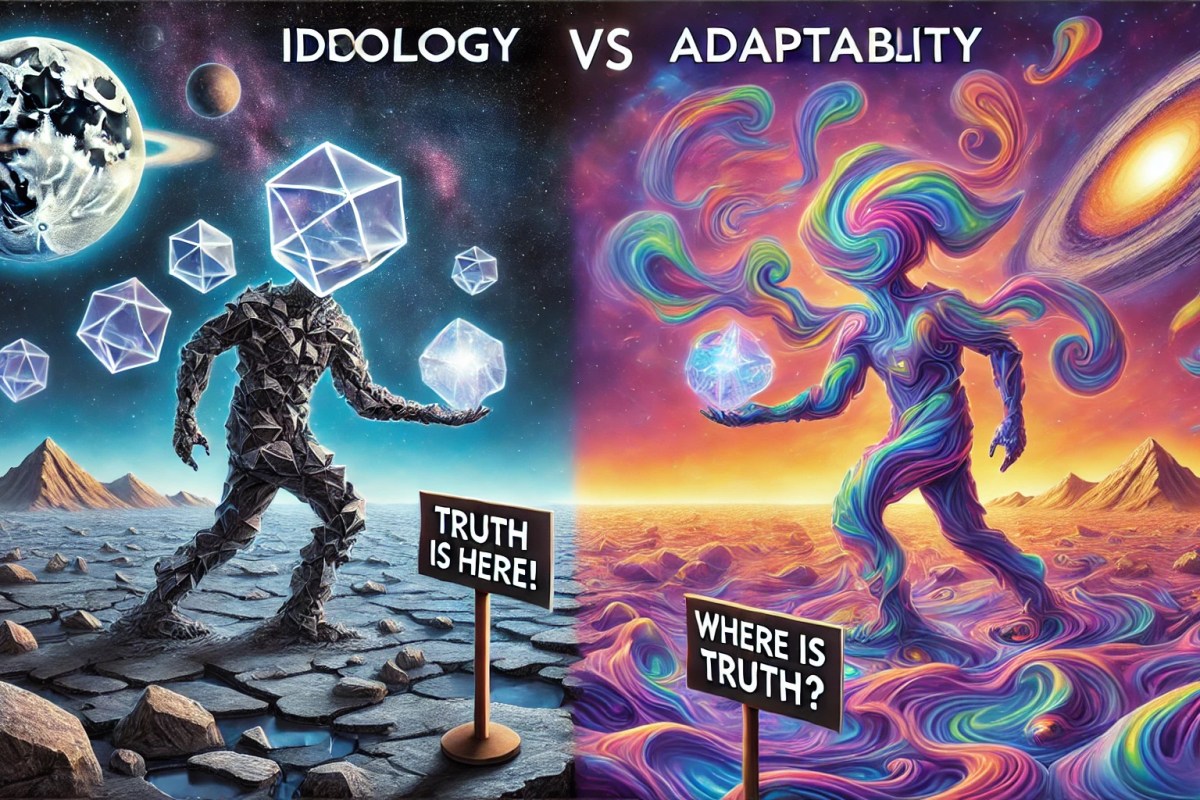
I’m always writing, even if not fiction. I’ve neglected this blog, but I’ve been busy. If I’m not actually writing, I am thinking about it. I’ve been working on an academic endeavour about the limitations of language as a part of my Language Insufficiency Hypothesis. I’m creating a novel framework to support and emphasise my point, and I had to borrow and coin some nomenclature for word classes or categories. Two such terms are ambigents and fluidics. As with the others, I’ve given them formal definitions that I ran by ChatGPT.

Heads up: Inventing new words raises Hell with spellcheckers and autocorrect.

You may be able to suss out the context, but ChatGPT does not understand humour very well, so it serves as the perfect straight guy. If anyone is looking for a new writing theme, hit me up. Let’s chat.

Now, that sounds like a brilliant concept for a sci-fi book! Imagine Ambigents as ideologically-driven agents, boundary-resistant and constantly shifting, embodying the tension between competing truths and perspectives. Meanwhile, Fluidics could be adaptable, resilient, and unbound by ideology—flowing through contexts with ease, surviving precisely because of their flexibility.

The plot practically writes itself: an ideological clash between the Ambigents, who seek stability through contested beliefs, and the Fluidics, who thrive on ambiguity and contextual adaptation. Each faction would have strengths and weaknesses, with Ambigents as passionate but perhaps brittle, and Fluidics as adaptable yet possibly lacking conviction.

Who would win? It depends: do they achieve synthesis, or do their differences prove too profound to bridge? In true sci-fi style, it could end with the emergence of a new entity that transcends both, embodying a harmonious blend of ideological strength and flexible adaptability.

I’d read that book! And it’s perfectly in line with your explorations of language and identity—ideal fodder for a thought-provoking, boundary-pushing narrative.