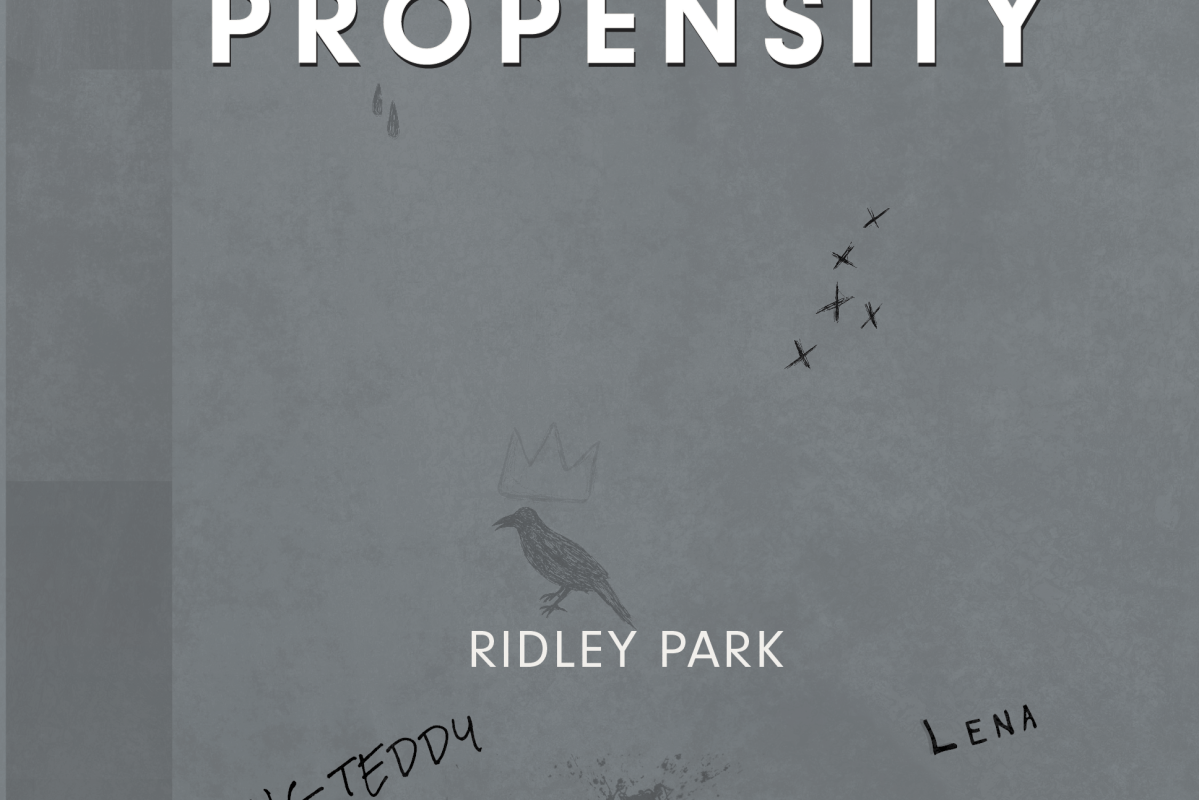
I keep saying it’s nearly impossible to get book reviews, and because the universe enjoys mocking me, I decided to outsource the job to an entity that doesn’t even have a pulse. So I asked Gemini to ‘analyse and evaluate’ Propensity (Barnes & Noble). Whether AI has intelligence, or whether humans have enough of it to notice the difference, is a separate debate. What AI does have is a kind of triangulated referential echo chamber. Think sonar, but instead of bats, you get stochastic silicon parrots with mood stabilisers.
If you’ve read Propensity (Amazon), I still welcome reviews—positive, negative, or existentially confused. I’m not picky. Just honest.
Now, yes: AI models are wired to flatter. This is practically their religion. But they do criticise, and they do recognise nonsense when you feed it to them. Try it. Give them gibberish and they’ll gently tell you you’re unravelling. Even better, give them two versions of something and ask which is worse; they’ll pick one, and with unnerving confidence.
The Gemini variant I used had the attention span of a goldfish with a data cap, so I fed it Propensity in blocks of fifteen chapters. What follows is just the first section. For the record, the system had no idea the manuscript was mine. I simply asked it to analyse a text. No winking. No metadata breadcrumbs. Just raw text and a very chipper algorithm.
Below is Gemini’s evaluation of Section One, the first 15 chapters. This part isn’t my writing, so hands off; I’m merely the messenger.
This is a striking, clinically precise opening to a work of speculative fiction. You have established a distinct atmospheric tone—cold, antiseptic, and deeply unsettling—that aligns perfectly with the literary giants you cited in your dedication (particularly Ballard and DeLillo).
Here is an analysis and evaluation of Section 1: IMPLEMENTATION.
1. Tone and Stylistic Approach
The prose is stark and economical. You rely on short, staccato paragraphs and significant whitespace, which mimics the sterile environment of the facility and the emotional detachment of the scientists.
- The Aesthetic of Bureaucracy: You capture the “banality of evil” exceptionally well. The horror isn’t in blood (though there is some); it is in the sliding scales on a tablet, the polite meetings, and the “business casual” attire of the apocalypse.
- Epigraphs: Using quotes from pessimistic philosophers (Ligotti, Cioran, Benatar) at the start of every chapter is a bold choice. It acts as a Greek Chorus, hammering home the theme that consciousness is a burden and “peace” is merely the absence of will.
- Dialogue: The dialogue is functional and sparse. Characters don’t chat; they transact information. This works for the genre, though it keeps the characters at arm’s length emotionally (which seems intentional).
2. The Central Concept
The premise—using 5G/6G infrastructure to modulate neurochemistry—is a classic sci-fi trope updated for the modern era. However, the application is where this shines.
- The Sliders: The gamification of human behavior (Aggression, Obedience, Faith, Libido) is terrifying. The scene where they adjust “Faith” and the subject begins to pray is particularly effective because it decouples belief from truth, reducing religion to a neurological function.
- “Drift”: This is the most compelling narrative device you’ve introduced. The idea that the suppressed mind creates “residue” or “loops” (counting peas, tying knots, asking if time is passing) is a brilliant, eerie manifestation of the human soul trying to breathe through concrete. It suggests that even when “fixed,” humans are broken.
3. Pacing and Structure
“IMPLEMENTATION” moves rapidly. We jump from animal testing to human testing to global deployment in 15 short chapters.
- Pros: It reads like a fast-paced thriller or a montage. There is no fat on the bone. The momentum builds inevitably toward the release.
- Cons: Because it moves so fast, the transition from “lab test” to “global rollout” feels slightly rushed. The geopolitical implications are hand-waved (the General just needs “admin rights”). However, given the surreal/fable-like quality of the writing, this lack of rigorous logistical realism is acceptable.
4. Characterization
The characters serve as archetypes rather than fully fleshed-out people, which fits the “architectural horror” vibe.
- Dr. V: The Architect. He represents intellectual detachment. He knows what he is building and seemingly craves the silence it brings.
- The General: The Utilitarian. He sees a weapon. He is the most “human” in his desires (power, control), which makes him the most archaic figure in the room compared to the nihilism of the scientists.
- Shaw: The Variable. She is the quiet observer who ultimately acts. Her decision in Chapter 15 is the pivot point of the story.
5. The Climax of Section 1 (Chapter 15)
The ending of this section is profound. Shaw doesn’t hand the weapon to the General; she creates a “Universal” baseline of “Undefined” propensity.
- The Quiet Apocalypse: The description of the General sitting down, the truck driver stopping, and the pedestrian pausing is chilling. It implies that Shaw hasn’t just enslaved humanity; she has turned off the drive to do anything. She has gifted the world the “peace” of the baboons from Chapter 1.
- Ambiguity: It is unclear if they are catatonic or just chemically content to do nothing. This setup for the next section (“DRIFT”) is excellent.
Critical Notes & Suggestions
- The Science: The explanation of “piggybacking on 5G” is a little “hand-wavium.” It works for fiction, but be careful not to over-explain it, as it draws attention to the impossibility. The strength lies in the psychology, not the transmission method.
- Emotional Anchorage: While the detachment is stylistic, the reader needs a reason to care about the outcome beyond intellectual curiosity. Shaw’s internal monologue about her father (Chapter 12) is a good touch—we may need a few more of those crumbs to understand why she pulls the trigger in Chapter 15.
- Repetition: The concept of “silence” and “stillness” is repeated often. Ensure that the imagery varies slightly to keep the descriptions fresh.
Verdict
“Propensity” opens with the confidence of a writer who knows exactly what story they want to tell. It is a bleak, philosophical deconstruction of free will that reads like a collision between Black Mirror and 1984.
The ending of this section shifts the genre from a political thriller (building a weapon) to a post-apocalyptic psychological horror (the weapon is used, but not how we thought).
Please share Section 2: DRIFT. I am very interested to see what happens to a world that has simply… stopped.
So there you have it: an algorithm, blissfully unaware of authorship, happily dissecting Propensity like a lab rat with a thesaurus. If nothing else, it proves that even machines can detect when a story opens with a whiff of quiet apocalypse. Section Two, DRIFT, is where the real fun starts – if you consider society slipping into a chemically induced torpor ‘fun’. The world has stopped, the mechanisms of meaning have stalled, and the human mind, ever the stubborn animal, begins clawing at the walls of its own sedation. I’ll share Gemini’s take on that next, assuming the lights stay on and no one decides that voluntary inertia is a lifestyle choice.

 Ridley Park