The First Rule of Writing: There Are No Rules

It is all well and good that experienced people share their advice with neophytes, with those who are less practised, less confident, or simply eager to imitate. There is nothing inherently wrong with offering footholds. This particular video, for instance, sets out ten strategies for the opening paragraph, each supposedly designed to stop readers from bolting at the first hurdle. For the green and anxious, a checklist can feel like a lifeline.

But here is the rub. The first rule of writing, which is also the first rule of art, is that there are no rules. There are, admittedly, a near-infinite number of bad ideas – every creative writing workshop is proof of that – but this abundance of failure does not magically distil into a shortlist of approved techniques. “Best practice” is a managerial fiction dressed up as gospel.

Video: First Paragraph Strategies

Yes, if you are working in a commercial genre, there are conventions and tropes that must be acknowledged. A murder mystery without a corpse is merely awkward, and a romance without union or rupture is simply wishful thinking. But let us be clear: these are expectations, not commandments. They are signposts, not shackles.

The danger of this kind of advice is not that it is wrong, but that it is received as dogma. If every first paragraph dutifully obeyed these ten tricks, the outcome would not be ten compelling openings but ten perfectly interchangeable ones. Predictability, not incompetence, is the real enemy of writing. To follow rules too tightly is to aim directly at cliché.

And yet the defence is equally obvious. A novice often requires boundaries, if only to resist paralysis. “Begin here, avoid this, try that.” Advice of this sort can be useful scaffolding, and scaffolding, while inelegant, keeps the building upright until the architect has a design. The problem arises when people mistake the scaffolding for the cathedral.

So the honest conclusion is double-edged. Watch the video if you like. Steal what steadies you, ignore what doesn’t. But do not imagine that art is born from lists. At best, such advice can prevent you from falling flat on your face; at worst, it convinces you that walking in circles is the same thing as running.
Book Review: The Emotional Craft of Fiction

Not Charlotte’s Web.

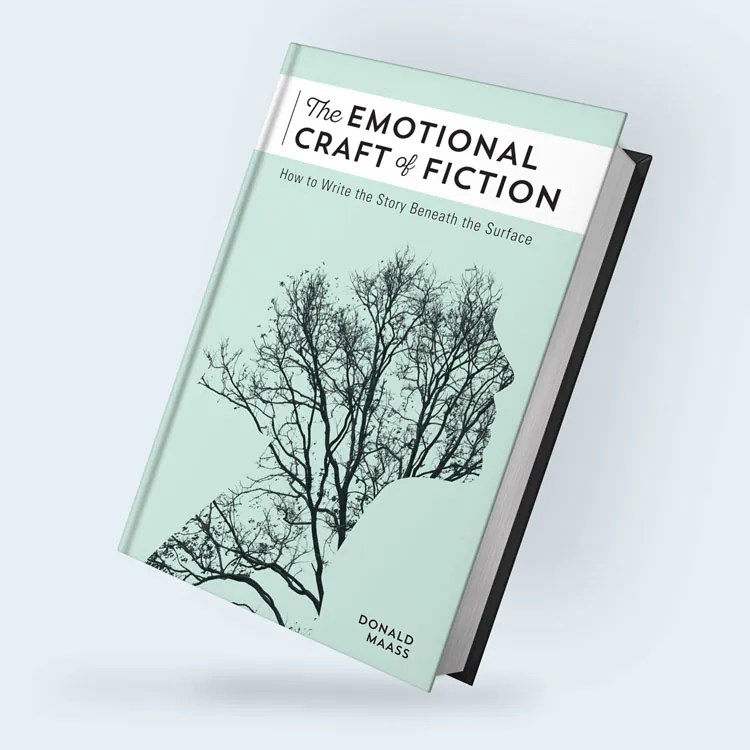
Instead, The Emotional Craft of Fiction: How to Write the Story Beneath the Surface by Donald Maass.

I just finished this book. I’ll say it’s good and even recommend it, but it’s not really for me. I wrote a blurb recently before I was even halfway through, and my opinion hasn’t changed.

Audio: NotebookLM podcast on this topic.

If you like to write in typical, character-driven stories, this should be right up your street. Besides character depth, the author also pushes moral righteousness. Thanks, but no thanks.

All of this said, I did gain some benefits from it, because although my writing is not heavily centred on characters, it does contain them, and I want them to feel alive. I want the world to feel lived in.

Personally, I think in schemes and threads – big ideas, deep ideas. Once all of this is roughly in place, I take a second pass for details. This is where Maass can help.

Full disclosure: Some people adopt a plotting approach to writing, whilst others adopt a pantser approach. I fall somewhere in between. Moreover, I might write something from one perspective and the next from the other – and I might flip-flop back and forth.

As a plotter, I might have waypoints that I want to hit, ideas I want to explore. Sometimes, I write these down on paper, in a spreadsheet, or somewhere to keep myself honest. Other times, I have these plot points in mind, but I take a stream-of-consciousness approach, simply discovering the story as it unfolds under my fingertips. I may even plot half a story and “pants” the rest of it. No telling.

As a pantser, I might have a kernel of an idea, and I just want to ideate on the page. So, I write. I lock myself in my room, throw up a “Do Not Disturb” sign, and head down to write until the well of ideas runs dry. At this point, I might put the idea aside or step back and consider plot points.

Looking back on this post, it’s not so much a book review at all. Apologies. That said, if you write characters and enjoy mainstream writing approaches, I think you’ll find the ideas in this book helpful. Many of the better ideas are presented early on, but it’s a short read. He offers some authors, titles, and excerpts you might find interesting. I found them to be a mixed bag.

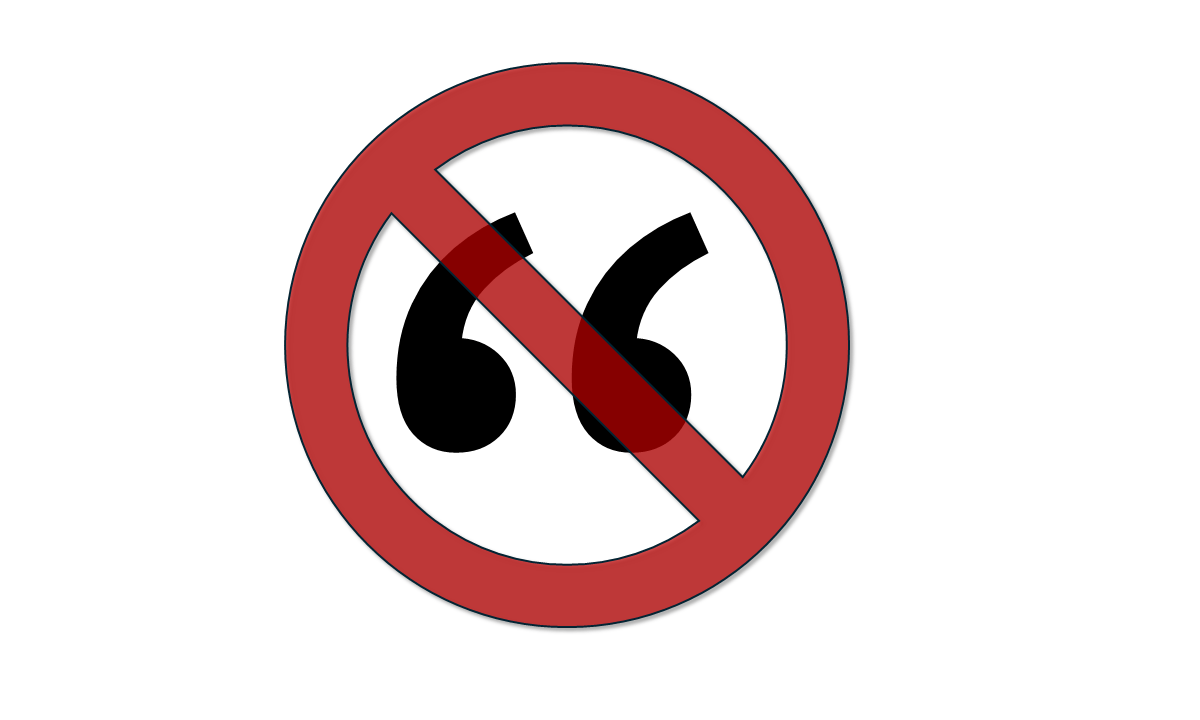
Quoteless Dialogue

I’ve noticed a few publications adopting a quoteless or quote-free dialogue convention. I was wrestling with the idea of using it for my current short story, but I’ve opted not to.

On the upside, it can:

  1. create a more immersive reading experience, blending dialogue seamlessly with narration.
  2. give the prose a more streamlined, modern feel.
  3. be effective in representing stream of consciousness or internal monologue.
  4. subtly underscore themes of ambiguity or the blurring of reality and imagination.

On the upside, it might:

  1. lead to confusion about what is spoken aloud versus what is thought or narrated.
  2. be challenging for some readers, particularly those used to more traditional formatting.
  3. not be suitable for all types of stories or narrative styles.

I feel that it’s a valid stylistic choice that can be very effective when used deliberately and consistently. Its appropriateness depends on the specific work, its themes, and its intended audience.

If used, it often requires more careful writing to ensure clarity about who is speaking and what is dialogue versus narration. It works best when the author employs other means to differentiate dialogue, such as syntax, diction, or paragraph breaks.

    For my current writing project, (working title: “The Riga Paradox”), given its themes of reality versus perception and the blurring of identities, omitting quotation marks could be an interesting choice.

    However, it’s also a significant departure from my comfort zone and might require adjustments in other aspects of my writing to maintain clarity.

    Does anyone have thoughts for or against quote-free dialogue? Have you used it yet?

    Write, Review, Revision

    I lost my faith in the English language and trust in people in grade school where I was taught the 3 Rs – reading, writing, and arithmetic. On balance, these each have the R consonant sound on the stressed syllable, but it is otherwise misrepresented. Game over.

    In this tradition, I’ve got my own 3 dodgy Rs: Write, Review, and Revision. This sums up my approach to writing.

    Write

    Duh, right? You’ve got to write to write. In fact, to be a better writer, you’ve got to be a reader, a leading-candidate for as fourth R – but I’ll call it a necessary precondition. Being exposed to reading allows you to absorb different styles and genres. It remind you that pedantic constraints of grammar need not apply. My grammar-checker reminds me often.

    I took this route as a musician as well. Exposure to genres, styles, and approaches fortifies your craft. Some of the best groups contain members of diverse backgrounds. Sure, there are some groups where members are cut from the same cloth, but they are usually stuck in a particular niche. Nothing wrong with this mind you, if you don’t mind being painted into a corner. I’m too claustrophobic for this.

    Review

    Once you’ve written, review your work. In fact, this should be more than one representative R. Perhaps it should instead be read, write, review, review, review, review… or an alternative, read, write, review, write, review, write, review… To be honest, when I write blogs, I just write – stream of consciousness. No net, no review. Submit. Done. But this is not how I approach longer works. The longer the work, the more read-review cycles.

    Revision

    After you’ve dumped all of your thoughts onto the page, write, review, rinse, and repeat, you have to opportunity to revise your work before you release it into the wild – transplant it from your private greenhouse to watch in flourish or perish.

    A revision is more than a review. It’s the opportunity to re-view, re-vision, re-imagine the work that arrived in the first pass with sequential editorial hining and rework.

    Maybe you now imagine a new character or story line, a new twist, two characters can be consolidated. Perhaps even a different ending or beginning. It’s all clay. Sentences are malleable.

    As a professional musician, I learned not to become married to your work. And just as your parents may not appreciate your choice in partners, your readers may not appreciate your art. And this is not important as an artist. This is only important in the commercial realm. I don’t find this realm interesting. It the reason I don’t enjoy pop music – disposable commerce. We don’t so much categorise books into pop, but we should. At least we can.

    Now I’ve gone off on a rant. In a novel, I would likely delete this during an editing cleanse, but here, there is only forward.

    In the end, you can just write with none of the ancillary activities – as I do here. Or you can take a different approach to harden your final output. I don’t prefer to call it a product.

    You may not even opt for revisioning because you had it all in your head. You just needed to rush to capture it all on the page – 700 pages times 7 volumes. You’re the lucky type. That’s not my style, so I’ve not much to say on the matter.

    My parting words – just write.